What Utah Riders Must Carry on Public Land
What Utah Riders Must Carry on Public Land
A Utah trail ride can involve more paperwork than expected, especially if you are visiting from another state or riding a machine that is not street legal. The basics are straightforward: carry the right registration or permit, have any required education certificate available, and know which rules apply to the land you are using. This guide explains what to bring, what to display, and what to check before unloading.
Start With the Machine’s Registration or Permit
The first question is not just whether your ATV or UTV is registered. It is whether the machine’s paperwork allows it to be operated where you plan to ride in Utah.
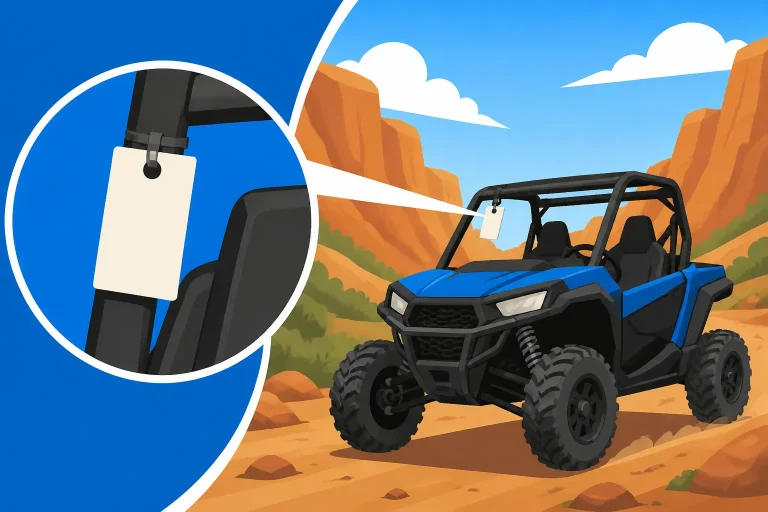
For a Utah-registered off-highway vehicle, keep the current registration documentation with you and make sure the required decal is attached as directed. The decal and paperwork serve different purposes: the decal is displayed on the machine, while the documentation helps show that its registration is current and identifies the vehicle.
Visitors need to check a separate requirement. An out-of-state registration may not, by itself, be enough to ride a non-street-legal machine on Utah public land. Utah ended its prior OHV reciprocity arrangement, so riders should not assume that a home-state sticker or plate automatically substitutes for a Utah non-resident permit. Review Utah Ended OHV Reciprocity: What Visitors Do Now and Utah’s Non-Resident OHV Permit Explained before you travel.
What to have ready
For each machine, identify the paperwork that applies:
- Utah-registered OHV: Carry the current registration document and display the Utah decal in the required place.
- Out-of-state, non-street-legal OHV: Check whether the machine needs a Utah non-resident permit. If it does, obtain the permit and follow the instructions for displaying or carrying its proof.
- Street-legal vehicle: Confirm that its registration status and equipment qualify it for the roads and routes you intend to use. Do not assume that a license plate eliminates every OHV permit or land-use question.
- Rental machine: Ask the rental company what registration or permit documents come with the machine, what you are responsible for carrying, and whether the permit covers the specific vehicle and trip.
Rules can depend on the machine’s classification, the state where it is registered, and whether you are operating on public land, a public road, or a recreation area with its own entry requirements. If anything about the vehicle’s status is unclear, resolve it before the ride rather than relying on a seller’s old sticker or a friend’s interpretation.
| Situation | What to check before riding | Practical item to have available |
|---|---|---|
| Utah-registered OHV | Registration is current and the decal is properly displayed | Registration documentation |
| Out-of-state OHV | Whether Utah requires a non-resident permit for that machine | Permit proof and any required display |
| Street-legal ATV or UTV | Whether its road registration is valid and the route is open to it | Registration and other road-use documents required for that vehicle |
| Rental OHV | Whether the permit and registration are supplied and tied to the machine | Rental paperwork and any permit proof the company provides |
| Machine used at a state park or other managed recreation area | Whether the location has separate entry, camping, or use requirements | Any required entry or reservation confirmation |
The paperwork can be machine-specific. A permit or registration for one quad should not be treated as proof for another machine in the group. If you are bringing several vehicles, check each one individually and keep its documents identifiable.
A title is usually an ownership record, not the everyday trail document riders rely on to show current operating registration. It may be important for buying, selling, or correcting ownership records, but do not confuse it with the registration or permit proof you need while riding. For help with the underlying registration process, see How to Register an ATV or UTV in Utah.
Displayed decal versus carried document
A common point of confusion is assuming that a decal is all the proof you need. The decal may show that the machine has been registered or permitted, but it can be worn, obscured by mud, damaged, or difficult to read. Keep the relevant paper or other accepted proof available as well.
Likewise, a document in your glove box does not take the place of a decal that the rules require you to display. Before departure, check both:
- Is the required decal attached where the instructions say it belongs?
- Is the supporting registration or permit proof available to the rider?
Do not move a decal from one machine to another unless the issuing authority’s instructions expressly allow it. Do not alter a permit to make it fit a different vehicle or to improve its appearance.
For the decal location and display details, use Utah OHV Decals and Where They Go. If an old decal is torn, illegible, or missing, deal with the replacement before the trip rather than hoping a photo of it will settle the issue.
Digital copies are useful, but do not rely on them alone
A phone photo of registration or a permit can help you recover information if paperwork is lost. It is also useful when a group leader needs to confirm which document belongs to which machine. But a photo is not automatically accepted as a substitute for the original document or required display.
Carry the form of proof the issuing authority requires. If the rules allow electronic proof, make sure the file is saved for offline use; a trailhead may have poor or no service. If electronic proof is not clearly accepted, take the paper document. A small waterproof pouch or sealed document sleeve can keep papers readable through dust, rain, and muddy gear. Riders who are organizing several vehicles may use a simple labeled document wallet; a compact pouch from Amazon is one possible way to keep each machine’s papers together, but the pouch itself does not make a copy legally valid.
Visitors Need to Check the Non-Resident Permit Rule
Utah’s permit rules are an especially important pre-trip check for riders from outside the state. A machine can be legally registered at home and still need additional authorization to operate on Utah public land.
The practical starting point is to identify the machine correctly. Is it a non-street-legal OHV? Is it registered for highway use? Is it a rental? Is it exempt under a specific rule? Once you know the category, confirm the current Utah requirement for that exact situation. Do not rely on a general statement such as “my state’s sticker works everywhere” or “I have a plate, so I’m covered.”
Utah no longer participates in the former reciprocity arrangement that some visitors may remember. This is why old trip advice, old forum posts, or a permit bought years ago may not fit the present rules. Start with What Changed for Visitors Since 2020 if you are comparing old information with current instructions.
Make the permit check machine by machine
Before purchasing or printing anything, make a list of the machines you intend to bring. Record each machine’s make, type, registration state, and whether it is street legal. Then verify whether a Utah non-resident permit applies to each one. Permit rules and exemptions can differ by vehicle type or use, so do not assume one permit covers every machine on a trailer.
Once a permit is obtained, read its instructions carefully. Confirm:
- Which machine the permit is associated with.
- Whether it must be displayed on the vehicle, carried by the operator, or both.
- Whether a printed copy is needed.
- Whether the permit has an expiration or other validity limits.
- What proof of residency or registration must be available if requested.
For a detailed look at the paperwork and eligibility questions, see Proof of Out-of-State Residency Utah Asks For and Machines Exempt From the Utah Permit. If you are buying the permit online, save the confirmation and follow the official instructions about what to print and display. A purchase receipt is useful for your records, but it may not replace the permit itself.
Street legal does not mean every route is open
A street-legal plate can change which registration and equipment rules apply, but it does not grant unrestricted access to every trail or public-land route. A road may be closed to OHVs, limited to certain vehicle classes, or subject to a local restriction. A vehicle may be legal on a county road but prohibited on an adjacent trail.
That distinction matters when a ride connects a town, highway, trailhead, and off-highway route. Check the permit question and the route question separately. See Street-Legal Vehicles and the Permit Question for the first issue and Roads Utah Keeps Closed to Street-Legal ATVs for the second.
A street-legal machine may also have road-use documents or obligations beyond the OHV paperwork. The right set depends on how it is registered and where it is being driven. If you plan to ride from a motel to a trailhead on public roads, do not treat the trail permit as a substitute for road registration, insurance, equipment, or driver requirements.
Rentals and borrowed machines
If you are renting, ask the company before pickup whether the machine’s Utah permit is included and how its proof is carried or displayed. Confirm that the permit covers the machine you will actually receive, not merely the company’s fleet in general. Also ask whether the route you want to ride is allowed under the rental agreement. A permit does not override a rental company’s trail restrictions.
If a friend lends you an out-of-state machine, do not assume their registration covers the Utah requirement. The operator should know what paperwork is tied to the vehicle and where it is kept. A borrowed machine can create a confusing situation if the owner has the documents at home or if the permit belongs to another vehicle.
For visitors, the safest sequence is simple: verify the machine’s category, verify the permit requirement, obtain the correct permit if needed, and keep its required proof with the machine before loading the trailer.
Carry Any Required OHV Education Certificate
Registration and permits are not the only documents riders may need. Utah has OHV education requirements for certain operators, and age or birth-date rules can affect who must complete a course and carry proof.
Do not assume that being an adult, having a driver license, or having years of riding experience automatically satisfies an OHV education requirement. The course and certificate address OHV operation specifically. Check the current eligibility rules, including any age-related requirements, supervision provisions, and certificates from other states that Utah accepts.
Start with The Utah OHV Education Certificate and review Age Limits in Utah OHV Education Law if children or teenagers are riding. The details can differ for adult operators, youth operators, and riders who are supervised by someone else. Confirm what applies to each person who will operate a machine, not only the trip organizer.
Carry the certificate for the person who needs it
An education certificate belongs to the individual, not to the machine. If several people will take turns driving one UTV, each potential operator should check whether they need their own certificate. A parent’s certificate does not automatically cover a child, and a certificate belonging to one driver does not establish that another driver meets the requirement.
Before the trip, ask each operator to confirm:
- Whether the Utah course requirement applies to them.
- Whether a certificate from another state is accepted for their situation.
- Whether they need to carry proof while riding.
- Whether a course or supervision rule applies to their age group.
Visitors can find the cross-state certificate issue addressed in Certificates From Other States Utah Accepts. Riders who have not taken the course should avoid leaving the question until the group is at the trailhead. Course access, test completion, and proof retrieval are easier to manage at home, where you can troubleshoot a login or missing certificate.
Make proof accessible without treating a screenshot as guaranteed
A saved digital certificate can be convenient, especially if the paper copy is misplaced. Still, follow Utah’s current instructions for acceptable proof. Keep the certificate available offline and consider carrying a printed copy if the official guidance does not clearly say that a phone image is enough.
For a family trip, make a small document set for each rider who needs proof. Keep it separate from machine registration paperwork so you can find the right item quickly. A named envelope, wallet card sleeve, or sealed pouch is more useful than a stack of loose papers shared across several vehicles.
If you are the adult supervising a young rider, check the details rather than assuming that being present is sufficient. The rule may depend on the supervisor’s age or qualification, the youth’s age, the machine being operated, or where the ride takes place. Review Supervision Rules for Young Utah Riders and How Utah Youth Riders Earn an OHV Certificate before taking a youth group onto public land.
Driver licenses and OHV certificates are different
A driver license and an OHV education certificate serve different purposes. A driver license may be relevant when a machine is operated on a public road or when a particular road-use rule applies. An OHV education certificate relates to OHV training requirements. One document should not be treated as a substitute for the other.
That distinction is easy to miss on a mixed ride. A group may start on a dirt trail and later travel on a road open to street-legal vehicles. The operator may need to satisfy one set of requirements on the trail and a different set on the road. Before the ride, decide whether the planned route includes public-road use and check the relevant rules for every driver.
Public Land Has More Than One Set of Rules
A permit or registration addresses only part of the question: whether the machine is properly authorized for a particular kind of use. It does not mean every route is open, every recreation site is free to enter, or every activity is allowed.
Utah riding areas can involve federal public land, state-managed recreation areas, county roads, municipal streets, private property, or a patchwork of those jurisdictions. Each layer can add rules. A rider may have valid OHV paperwork and still be on a closed route, outside a designated riding area, or crossing land without permission.
Know who manages the place you are riding
Before heading out, identify the land manager and the exact route. The rules for a BLM route may not be the same as the rules at a state park or on a Forest Service road. Some locations also have separate day-use, camping, parking, reservation, or event requirements.
Useful checks include:
- Is the road or trail open to the type and width of machine you are using?
- Is the route open during the planned season?
- Are there temporary closures, fire restrictions, or weather-related limits?
- Does the recreation area charge a separate entry or day-use fee?
- Are there camping or overnight parking rules that apply to your group?
- Does the route cross private or tribal land where separate permission is needed?
Permits do not replace these checks. A Utah non-resident OHV permit, for example, should not be confused with a state park entry payment or a federal land-use authorization. Use BLM Rules That Sit on Top of Utah Permits and Forest Service Rules Riders Overlook when planning routes on those lands. For a broader route-planning overview, see Utah OHV Trail Maps and How to Read Them.
Maps and signs matter in the field
A trail may appear rideable and still be closed. A worn track on the ground is not proof that the route is legal, and a digital map may not reflect a temporary closure or a boundary change. Pay attention to posted signs, gates, barriers, and current land-manager information.
Download maps for offline use before leaving service. Carry a printed map or a second navigation option if the route is remote. If you encounter a closed gate or a sign you cannot interpret, stop and resolve the question rather than riding around it. A detour can put you onto private property or a closed route even when your original trail was open.
For practical map preparation, read Downloading Utah Trail Maps for Offline Use and What a Closed Gate Means on Public Land. If the route crosses private land, check Private Land Crossings on Utah Routes rather than assuming that a public trail continues through a private parcel.
Trailhead checks are broader than paperwork
An officer or land manager may check more than your registration. Depending on the location and circumstances, they may ask about permits, education certificates, vehicle identification, route access, or compliance with local rules. They may also notice practical safety issues such as an obscured decal or an improperly carried passenger.
This does not mean every rider will be asked for every document at every trailhead. It means your group should be ready to show the documents that apply and answer basic questions about where you are going. What Rangers Check at Utah Trailheads offers a useful companion checklist.
A quick, organized response is easier when paperwork is not buried under spare clothes or stored on a phone that has no battery. Put the vehicle documents in a protected place, keep rider certificates accessible, and tell each driver which route the group intends to take.
Road Segments Require a Separate Check
Some Utah rides include public-road connections. You may travel through town, cross a road, reach a fuel stop, or use a road that is open to OHV traffic. The documents and equipment needed for that segment can differ from what is required on an off-highway trail.
Do not assume that an OHV registration or permit makes a non-street-legal machine legal on a public road. Likewise, do not assume that a street-legal registration means the machine may use any dirt trail. The road, vehicle, and route all matter.
Check the route before you drive onto a road
For every planned road segment, establish whether that specific road is open to your vehicle and whether the machine meets the requirements for use there. A short connection through town can involve local restrictions, posted speed limits, road equipment requirements, or rules about who may operate the vehicle.
If the route crosses a highway, check the crossing rules. A road that can be crossed at an approved point may not be one that can be traveled along. Some roads and facilities are closed to OHVs even when nearby county routes allow them.
Start with Utah OHV Registration vs Street-Legal Registration and Where Street-Legal ATVs Can Drive in Utah if you are planning a mixed-use trip. Riders who intend to use a street-legal conversion should also check that the vehicle’s registration and required equipment are current, not merely that the machine has a plate.
Carry the documents appropriate to the machine
A street-legal ATV or UTV may need the normal road-use documentation and equipment applicable to its registration status. The exact requirements depend on the vehicle and how it is registered. An off-highway registration card alone should not be presumed to satisfy road-use requirements.
For a machine that may move between trail and road use, make sure the operator has the right documents for both parts of the route. A driver license, insurance proof, registration, and any required OHV documentation are not interchangeable. Confirm what applies instead of carrying one document and hoping it covers everything.
If the machine is not street legal, plan an alternate route that keeps it off public roads except where the law allows a crossing or other limited use. Do not let a navigation app create the route for you without checking the legal access rules.
Passengers and youth riders need their own checks
Road-use rules may affect passengers, seat belts, helmets, and minimum ages differently from off-highway trail rules. Before a road segment, check who may operate the machine, who may ride as a passenger, and what protective equipment is required. A child who can legally ride as a passenger on a trail may not meet the requirements for every road situation.
These are separate from whether the operator has an OHV education certificate. Check the vehicle’s seating capacity and restraint system, and do not carry more people than the machine is designed and approved for. If the group includes young riders, check Utah Helmet Rules for Riders Under 18 and Utah Seat Belt Rules for UTV Passengers as applicable.
Build a Document Kit for the Ride
The simplest way to avoid a trailhead paperwork scramble is to create a document kit before loading the trailer. Keep machine documents with the machine, rider documents with the person, and location-specific confirmations with the trip organizer.
A practical carry list
For each machine, prepare:
- Current registration documentation, if applicable.
- The required registration decal, correctly attached and readable.
- Utah non-resident permit proof, if required.
- Any road-use registration or insurance proof needed for planned public-road travel.
- Rental paperwork or written confirmation of what the rental company has supplied.
- A note identifying the machine’s make, model, and vehicle identification number for your records.
- Any location-specific entry, camping, or reservation confirmation your group needs.
For each operator, prepare:
- Any required OHV education certificate.
- Driver license or other identification if relevant to road use, rental terms, or the trip.
- A phone number for the trip organizer or emergency contact.
- Any medical or emergency information the rider needs, stored appropriately.
For the group, prepare:
- Offline maps and a backup navigation option.
- The name of the land manager or recreation area.
- A basic route plan and turnaround time.
- A way to contact help if service is unavailable.
- Drinking water, basic first aid, and recovery equipment suited to the route.
Not every item in this list is legally required in every situation. The point is to distinguish legal paperwork from sensible trip preparation. A first-aid kit or offline map does not substitute for a permit; a permit does not substitute for water, navigation, or a safe plan.
Keep papers protected and easy to identify
Dust, water, and spilled drinks can make paper documents unreadable. Use a waterproof sleeve or small pouch, but keep the pouch somewhere the operator can reach without unloading gear. If you ride in a group, label each document set by vehicle or operator. That reduces the chance of presenting the wrong permit or certificate when asked.
A phone can be a backup, not your only storage plan. Save digital copies offline, charge the device, and bring a battery pack if you rely on it for maps. A battery pack or a compact waterproof organizer from Amazon may help with logistics, but neither changes the official proof requirements. Keep the original or accepted proof wherever the rules require it.
Avoid putting every document in the tow vehicle while the group rides several miles away. If the person carrying the papers stays at camp or the trailhead, the operator may not be able to produce them when asked. The machine’s relevant paperwork should travel with the riders in a secure, accessible place.
Make a final check before unloading
At the staging area, take a minute to check the machine and its documents:
- Confirm the decal is present, visible, and attached to the correct vehicle.
- Confirm the registration or permit proof matches that machine.
- Confirm each driver has any certificate required for their situation.
- Check the map and posted information for closures or route restrictions.
- Confirm the planned route is open to that vehicle type.
- Make sure required road-use documents and equipment are available if the route includes public roads.
- Tell the group where the paperwork and emergency supplies are kept.
This routine is especially helpful when several families share a trailer, when drivers switch vehicles, or when a group splits into separate routes. Take a photo of each machine’s identifying information for your own records, but do not treat a photo as official registration or permit proof unless the issuing authority says it is accepted.
Common Mistakes and How to Avoid Them
Most paperwork problems come from a reasonable assumption that turns out not to fit the specific machine or location. A few habits prevent many of them.
Assuming an out-of-state sticker is enough
A home-state registration may establish that the vehicle is registered where it came from. It does not necessarily meet Utah’s visitor-permit requirement. Check the current Utah rule for the vehicle before traveling, especially if you are relying on advice from a previous trip. For a more focused look at the change in visitor rules, read Why Utah Dropped Reciprocity in 2020.
Treating the decal as the complete document set
A decal is important, but it may not replace the associated registration or permit proof. Carry both when required, and make sure the decal is readable. If it is damaged or missing, resolve the issue using the appropriate replacement process. See Replacing a Damaged Utah OHV Decal.
Using one rider’s certificate for the group
Education certificates apply to individual operators. If several people will drive, check each person separately. A parent, guide, or trip leader cannot simply lend their qualification to everyone else.
Assuming the permit opens every route
A permit does not override a trail closure, land-management rule, private boundary, road restriction, or recreation-area fee. Check your route and the land manager’s current information. When in doubt, stop at a posted closure or boundary and verify access before continuing.
Keeping all documents in one vehicle
If the truck remains at the staging area, paperwork locked in the cab may be unavailable to riders on the trail. Carry the necessary documents with the machine or rider, protected from weather and accessible during the ride.
Relying on old advice or an online screenshot
Rules can change, and a forum answer may describe a different machine, land manager, or time period. Use official current instructions for permit, education, registration, and route questions. Keep a printed or saved copy of important confirmations, but understand that a screenshot is only useful if that form of proof is accepted.
Forgetting local fees and reservations
An OHV permit is not necessarily an entrance pass, campsite reservation, event permit, or parking payment. If you are visiting a managed recreation area, check its separate requirements. This is especially important for holiday weekends, group rides, and overnight trips.
A Simple Pre-Trip Plan
You do not need a binder full of paperwork for every ride. You do need the right documents for the machines, operators, and places involved.
A reliable pre-trip plan looks like this:
- List every machine. Note where it is registered, whether it is street legal, and who owns or rents it.
- Check the Utah permit rule. Confirm whether an out-of-state OHV needs a non-resident permit and what proof must be displayed or carried.
- Check every operator. Determine whether each rider needs an OHV education certificate and whether youth or supervision rules apply.
- Check the route. Identify land managers, open routes, road segments, local restrictions, and separate entry requirements.
- Prepare the document kit. Keep vehicle documents with the vehicle and personal certificates with the operator.
- Save information offline. Download maps and save confirmations before entering areas with weak service.
- Recheck before unloading. Look at the decal, paperwork, route information, and equipment at the staging area.
If a requirement is unclear, contact the relevant official agency or land manager before leaving. A little time spent confirming the correct document is much easier than trying to sort it out at a remote trailhead.
Disclaimer
This article is for general informational purposes only and does not constitute professional advice. Laws, prices and regulations vary by location and change over time. Consult a qualified professional for guidance on your specific situation.