Where Street-Legal ATVs Can Drive in Utah
One of the biggest questions I hear from fellow riders after they've gone through the process of making their ATV or UTV street-legal in Utah is, "Okay, now where can I actually drive this thing?" It's a valid concern, and honestly, the answer isn't always as straightforward as we might hope. You've put in the effort, spent the time and money, and now you want to enjoy the freedom of connecting trails, hitting up a local diner, or just cruising through a scenic town. This comprehensive guide is here to unravel the complexities and clearly map out where your street-legal OHV is welcome on Utah's roads, and just as importantly, where it isn't.
Understanding Utah's Street-Legal Landscape for OHVs
When you decide to make your ATV or UTV street-legal in Utah, you're not just adding a few accessories; you're opening up a whole new realm of riding possibilities. The vision often involves effortlessly transitioning from dirt trails to paved roads, connecting distant riding areas without the hassle of trailering, and even making quick runs to town for supplies. It's a dream for many off-road enthusiasts, especially with Utah's incredible and widespread trail systems. However, while the street-legal conversion is absolutely worth it for the added convenience and access, it's vital to understand that "street-legal" doesn't necessarily mean "street-unlimited."
The Promise vs. The Reality of Street-Legal Status
The promise of street-legal status is truly enticing: the ability to seamlessly link up trails, run into town for a burger, or fill up at a gas station without unhooking the trailer. It sounds like pure freedom, doesn't it? And for the most part, it is a game-changer for how you experience Utah's vast and diverse riding areas. No more constantly loading and unloading, no more searching for staging areas miles from the best trails. You can often ride directly from your camp or lodging to the trailhead, and then, if the trail leads somewhere else, take the pavement to the next adventure. This convenience alone makes the conversion appealing to countless riders who want to maximize their time on the trail and minimize logistics.
However, the reality often hits when riders discover there are still significant limitations. Many assume that once their machine has a license plate and the proper equipment, it's just like any other car, free to roam anywhere a car can. This isn't quite true. You still have to adhere to certain rules that cars don't, and some roads remain firmly off-limits. This can be a real source of frustration, especially for riders who've invested in equipping their machine with all the necessary lights, mirrors, and horns, only to find they can't take the most direct route. It's crucial to temper the excitement with a clear understanding of these boundaries, so you don't find yourself in a sticky situation or, worse, with a citation. To truly grasp the foundation of these rules, it helps to understand [The Utah Law Behind Street-Legal ATVs].
Distinguishing State, County, and City Jurisdictions
One of the biggest reasons for confusion among street-legal OHV owners is the layered legal landscape. In Utah, like many states, roads are not all governed by the same authority. You have state highways, county roads, and city streets, and each of these governmental levels has the power to set its own specific rules and restrictions for OHV use, even for street-legal machines. What's perfectly legal on a state route might be prohibited on a city street, or vice versa, and this patchwork of regulations can be maddening to navigate if you're not aware of it.
For instance, the state of Utah sets the overarching framework for street-legal OHV operation, including equipment requirements and general speed limits. But then, individual counties and municipalities have the authority to create their own ordinances that either open up more roads or, in some cases, restrict access further. This means a town might explicitly allow OHVs on all its streets, while a neighboring community might only allow them on specific routes for ingress and egress to trails. The frustrating part is that these local rules aren't always clearly marked, and a rider passing through might be completely unaware they're violating a local ordinance. This is why understanding [City and County OHV Rules Across Utah] is so important—it's not just about knowing the state law, but also being aware of the local nuances that can make or break your ride. The key is to never assume; always check local rules before you head out, especially when planning a multi-county or multi-city trip.
Statewide Rules for Street-Legal ATVs on Utah Roads
While local rules add complexity, there are fundamental statewide regulations that apply to all street-legal OHVs operating on public roads in Utah. These are the baseline rules you absolutely must know, regardless of which city or county you're in. They dictate the general types of roads you can use, the maximum speeds, and how you should operate your machine in traffic. These rules are put in place for safety, both for OHV riders and for other motorists, and adhering to them is paramount for a smooth and enjoyable ride.
Highways and Byways: What's Open and What's Not
Navigating Utah's state highway system with a street-legal ATV or UTV comes with distinct parameters. Generally speaking, street-legal OHVs are permitted on most state roads and highways with posted speed limits of 50 mph or less. This is excellent news for connecting trails, reaching small towns, and accessing various riding areas across the state. However, it's crucial to understand the exceptions and limitations. The most important "no-go" areas are interstate highways (like I-15, I-70, I-80, etc.). These high-speed, limited-access roads are strictly off-limits to OHVs, even if they are street-legal. The speed differentials and the nature of interstate traffic make it unsafe and illegal for these machines.
Furthermore, while the general rule is "50 mph or less," some state highways with higher posted speeds might still have specific segments where OHVs are restricted. These restrictions are often related to traffic volume, road design, or proximity to urban areas. It's not uncommon to find signs explicitly prohibiting OHVs on certain stretches, even if the general state law might otherwise permit it. Always look for signage and obey local directives. The goal is to provide access where it's safe, but safety always comes first, and a street-legal OHV simply isn't designed for sustained high-speed highway travel. Remember that your machine needs to be able to maintain minimum speeds on these roads without impeding traffic, but also keep in mind the maximum speed limit for OHVs. For more on this, check out [Utah's 50 mph Limit Means for Riders].
Crossing Highways and Riding Shoulders
Even when a highway is off-limits for sustained travel, there are often provisions for street-legal OHVs to interact with them in specific, limited ways. For example, it's generally permissible to cross a state highway, including some interstates, at an intersection where it's otherwise safe and legal to do so. This is a critical point for connecting trail systems that might be bisected by major roads. You can approach the highway, stop, and cross directly to continue on your route, but you cannot enter the flow of traffic on the highway itself for extended travel. This rule is designed to allow necessary connections while minimizing the time spent on dangerous roadways.
Riding on the shoulder of a highway is another area that can cause confusion. While you might occasionally see other vehicles pulled over or using the shoulder, it is generally not permitted for street-legal OHVs to travel consistently on the shoulder as a bypass for prohibited roadways or to avoid traffic. Shoulders are typically for emergencies, breakdowns, or very specific circumstances like emergency vehicle use, not regular travel. You might be allowed to pull onto the shoulder briefly to allow faster traffic to pass if you are on a legal OHV road, but relying on the shoulder for continuous travel is usually a violation and a safety hazard. Always stick to the designated travel lanes where your OHV is allowed, or cross directly and safely when permitted. Knowing these subtle differences is key to preventing problems, especially considering advice sometimes given about [Crossing a Utah Highway on an Unregistered Quad] (which is a different scenario, but highlights the distinction between crossing and riding).
Speed Limits and Safe Operation
This is a point that bears repeating because it's so frequently misunderstood: even if you're on a road where the posted speed limit is 65 mph, your street-legal OHV is generally capped at 50 mph in Utah. This means you must operate your machine at or below 50 mph, regardless of the flow of traffic or the posted speed limit for other vehicles. It's a fundamental aspect of operating these machines on public roads and is firmly enforced. It's designed to account for the inherent differences in handling, braking, and stability between an OHV and a passenger car, particularly at higher speeds. Pushing your machine beyond its safe design limits or beyond the legal speed limit puts you, your passengers, and other motorists at undue risk.
Safe operation extends beyond just speed. It also involves being highly visible and predictable. Ensure all your street-legal equipment, such as headlights, tail lights, turn signals, and mirrors, are functioning perfectly. Consider adding additional visibility accessories, like a whip flag (though typically for dunes, it helps on roads too) or reflective tape, especially if you're riding in low light conditions. The more visible you are to other drivers, the safer your experience will be. Always signal your turns well in advance, maintain safe following distances, and be extra cautious at intersections. Remember, your OHV looks different to other drivers, and they may not anticipate your movements in the same way they would a car. For more detail on these limitations, it's worth reviewing [Highway Speed Limits a Street-Legal ATV Must Respect].
| Road Type | Street-Legal OHV Access (General) | Common Caveats & Restrictions |
|---|---|---|
| Interstate Highways | No | Strictly prohibited for travel; crossing at designated intersections may be allowed. |
| State Highways (under 50 mph) | Yes | Must obey 50 mph maximum OHV speed limit, regardless of posted limit. Some specific sections may be prohibited by local ordinance. |
| State Highways (over 50 mph) | Generally No | OHV speed cap usually applies; can only use if able to maintain 50 mph and road is not specifically prohibited. Some local discretion applies. |
| City/Town Streets | Yes, with local variations | Local ordinances vary widely; check for specific speed limits (e.g., Moab 15 mph), noise restrictions, or prohibited streets. |
| County Roads (Paved) | Yes | Must obey 50 mph maximum OHV speed limit. |
| County Roads (Unpaved/Gravel) | Yes | Excellent for connecting trails; often fewer restrictions than paved roads, but still subject to local rules. |
| National Parks/Monuments | Generally No (internal roads only) | Prohibited for recreational OHV use; may be permitted on main paved park roads for access only, not off-road. |
| BLM/Forest Service Roads | Yes (check MVUMs) | Open to street-legal OHVs unless specifically designated otherwise on Motor Vehicle Use Maps (MVUMs). |
| Sidewalks/Bike Lanes | No | Prohibited; OHVs must operate in designated vehicle lanes. |
| Private Property | No (without permission) | Always require owner's explicit permission to access. |
Navigating City and Town Streets with Your OHV
This is where the street-legal designation truly shines for many riders, offering a level of convenience and integration into local communities that was previously unimaginable. The ability to ride into a town from the trail, grab a bite, or refuel without the hassle of a truck and trailer is a huge advantage. However, this access comes with a critical caveat: every city and town can have its own specific rules. It's not a free-for-all, and showing respect for local ordinances is crucial for maintaining this privilege.
General Principles of City Access
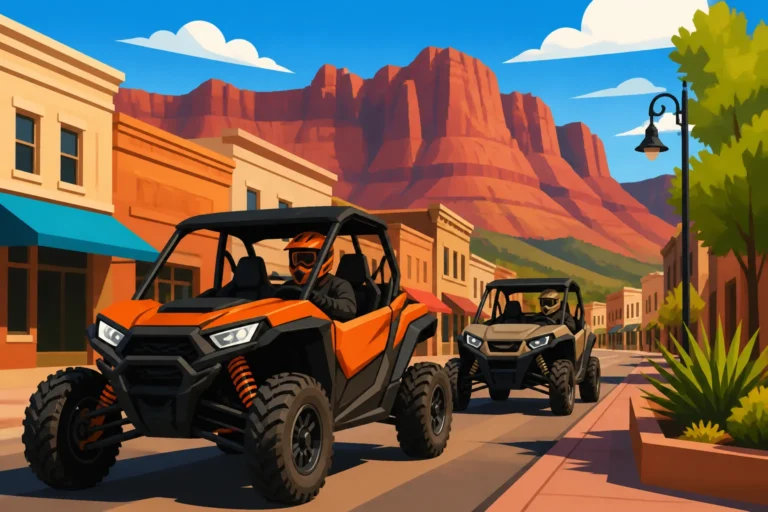
The fantastic news is that many towns across Utah, particularly those that embrace outdoor recreation and serve as hubs for extensive OHV trail systems, are incredibly welcoming to street-legal ATVs and UTVs. These communities understand that riders contribute significantly to their local economies, and allowing street-legal access makes it easier for visitors to support local businesses. This means you can often ride directly from your motel to a restaurant, a general store, or, most importantly, to the nearest trailhead without ever needing to load your machine onto a trailer. The freedom this offers is immense, transforming a multi-step process into a simple drive.
However, the key phrase here is "many towns," not "all towns." While the state provides the framework, individual municipalities can layer on additional rules. These might include specific speed limits for OHVs that are lower than for cars, designated routes that OHVs must follow, or even time-of-day restrictions. It’s a good idea to seek out information from local visitor centers or municipal websites for the specific town you plan to visit. The general principle is: if you see signs indicating OHV use is permitted, and you adhere to all standard traffic laws, you're usually good to go. The overall aim is to enhance the rider experience while ensuring public safety and minimizing disruption for local residents. It’s this access that makes [Riding Main Street in Southern Utah Towns] a real possibility.
Specific Trail Towns and Their Unique Rules
Utah is dotted with incredible trail towns, each with its own charm and, often, its own set of rules for street-legal OHVs. Knowing these specifics can save you a lot of grief. Take Moab, for example, a world-renowned destination. While street-legal OHVs are very welcome and can be seen cruising all over town, there's a strict [Moab's Speed Limit for OHVs on City Streets] of 15 mph. They also have noise ordinances that are enforced, meaning that loud aftermarket exhausts could get you a citation. These rules are in place to balance the needs of residents and the influx of visitors.
Another prime example is Kanab, a gateway to some stunning southern Utah trails, including Coral Pink Sand Dunes. Here, you can typically ride your street-legal OHV right from your lodging, allowing you to bypass trailering entirely. Imagine being able to just hop on your machine and head out for a ride, directly from your motel, as described in [Kanab, Utah: Riding From Your Motel]. Similarly, towns like Hurricane and St. George are crucial access points for Sand Hollow State Park, and their local ordinances facilitate easy travel between the towns and the park's amazing dunes and trails. Communities along the Paiute Trail, like Marysvale, Beaver, and Richfield, also generally welcome street-legal OHVs on their main streets, recognizing the economic benefit. When planning your trip, consider that you might be able to ride from your lodging directly to the trailhead, bypassing the need for a truck and trailer entirely, which is a huge convenience, especially for places like [Riding to a Trailhead From a Moab Motel].
Parking, Fuel, and Basic Errands
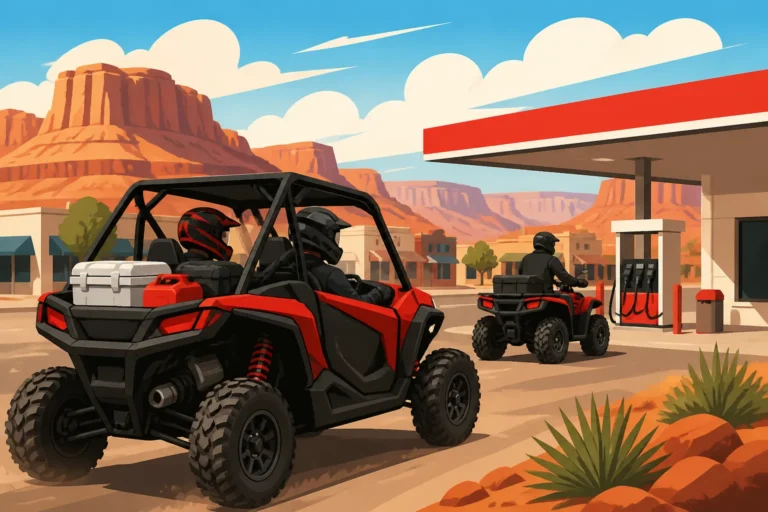
One of the most practical benefits of a street-legal OHV is the ability to handle basic errands while you're out riding. Need gas? Just pull into a gas station. Feeling hungry? Cruise into town and park in front of a diner. This greatly enhances the self-sufficiency of your rides, allowing for longer excursions without having to return to your base camp for every necessity. For many riders, the convenience of being able to grab supplies or a hot meal is a significant factor in deciding to go street-legal.
When it comes to parking, street-legal OHVs generally follow the same rules as cars. You can park in designated parking spots, and often, in trail-friendly towns, you'll find plenty of space for OHVs. However, always be mindful of local parking restrictions and avoid blocking access or parking in prohibited areas. Just like with a car, common sense and courtesy go a long way. When getting fuel or picking up groceries, be considerate of other patrons. Turn off your engine, avoid excessive noise, and generally be a good ambassador for the OHV community. The more positively street-legal OHVs are viewed by local businesses and residents, the more likely these valuable access privileges will be maintained. These practical aspects are really highlighted when considering [Fuel Stops and Parking in Utah Trail Towns].
County Roads, Forest Service, and BLM Land Access
Beyond the specific rules of towns and state highways, much of Utah's vast and breathtaking landscape is crisscrossed by county roads and managed by federal agencies like the Bureau of Land Management (BLM) and the Forest Service. These areas represent an enormous amount of riding opportunity for street-legal OHVs, often serving as crucial connectors between designated trail systems and offering scenic routes in their own right. This is where your street-legal machine can truly shine, allowing you to explore remote areas and expand your horizons far beyond what an unregistered OHV could.
Unpaved County Roads: A Street-Legal OHV's Paradise
If there's one area where street-legal OHVs absolutely excel, it's on Utah's extensive network of unpaved, gravel, and dirt county roads. These roads often weave through stunning backcountry, past ranches, and into remote landscapes, connecting small communities and opening up access to thousands of miles of public land. For a street-legal OHV, these roads are a paradise. You can cruise along at appropriate speeds, enjoying the scenery and the freedom of the open road, knowing you're fully compliant. Many of these roads would otherwise be inaccessible without trailering, forcing riders onto more crowded designated trails.
The beauty of these unpaved county roads is that they often serve as the arteries of Utah's OHV country. They link up different trail systems, provide access to dispersed camping areas, and allow you to explore regions far off the beaten path. While you still need to respect posted speed limits and any specific county ordinances, these roads generally offer the least restrictive environment for street-legal machines. They're a fantastic way to connect the dots between your favorite riding spots or to simply take a scenic drive through the heart of Utah's wilderness. Think of them as your personal highways through the backcountry, as described in [Snow, Gravel and Dirt County Roads in Utah].
Forest Service and BLM Roads: Understanding MVUMs
A significant portion of Utah's incredible OHV opportunities lies within lands managed by the U.S. Forest Service and the Bureau of Land Management (BLM). These federal agencies designate routes for motorized use, and generally, street-legal OHVs are permitted on any road that is open to other licensed vehicles. However, simply having a street-legal machine doesn't grant you carte blanche. The critical tool for navigating these lands is the Motor Vehicle Use Map (MVUM).
MVUMs are issued by each National Forest and BLM field office, and they are the only official documents that designate which roads, trails, and areas are open to motorized travel. These maps clearly mark roads and trails as open, closed, or restricted for specific vehicle types or seasons. Even if a road looks like a simple dirt track, if it's not marked as open on an MVUM, you cannot legally drive your OHV on it, street-legal or not. It's imperative to consult the relevant MVUM for the area you plan to ride in before you go. Many agencies offer these maps for free online or at their local offices. Using an MVUM isn't just about avoiding a ticket; it's about protecting sensitive ecosystems and respecting wildlife closures. Remember that a street-legal OHV simply means you can use roads open to vehicles; it doesn't change the designation of a trail. This process of using maps is detailed in [Reading a Motor Vehicle Use Map].
"Roads" vs. "Trails": The Subtle But Critical Difference
This distinction is perhaps one of the most important for street-legal OHV owners to grasp when riding on federal lands. On MVUMs, and in the language of land management, there's a clear difference between a "road" and a "trail." A road, even if it's unpaved and barely more than two tracks, is typically designed for wider vehicles and is part of the general transportation network. A trail, on the other hand, might be narrower, more technical, and specifically designated for OHVs or non-motorized use, sometimes with restrictions on vehicle type or size.
Your street-legal OHV is generally permitted on designated roads that are open to licensed motor vehicles. This is because it possesses all the necessary safety equipment and registration to operate on a public thoroughfare. However, your street-legal status does not automatically grant you access to all designated OHV trails. Some trails might be too narrow for your side-by-side, or they might be restricted to specific types of machines (e.g., motorcycles only), or even reserved for non-motorized use like hiking or mountain biking. It's crucial to look at the MVUM and identify whether the route you intend to take is classified as a "road" open to full-size vehicles or a "trail" with specific restrictions. Always err on the side of caution and stick to clearly marked open roads unless a trail is explicitly designated for your type of street-legal OHV.
Common Restrictions and Places You Cannot Drive
While the ability to make your ATV or UTV street-legal opens up a world of possibilities in Utah, it's just as important to understand the places where even a fully compliant machine cannot legally go. Ignoring these restrictions can lead to serious fines, impoundment, or even dangerous situations. These limitations are generally in place for safety, environmental protection, or to preserve the non-motorized experience in certain areas. Knowing these boundaries is key to responsible and enjoyable street-legal riding.
The Absolute No-Gos: Interstates and Restricted Highways
Let's reiterate this point clearly: street-legal or not, your ATV or UTV is absolutely prohibited from operating on interstate highways (like I-15, I-80, I-70, etc.) in Utah. These are high-speed, controlled-access roads designed for heavy vehicle traffic, and OHVs simply do not belong there. The speed differential between an OHV and other vehicles, coupled with the lack of shoulders or escape routes, creates an extremely dangerous environment. This prohibition is statewide and unwavering.
Furthermore, there might be other specific state highways or sections of highways that are explicitly restricted for OHV use, even if they technically fall within the "under 50 mph" guideline. These restrictions are often due to unique local conditions, high traffic volumes, or urban encroachment. Always pay attention to posted signage. If you see a sign prohibiting OHVs, even if you think you should be allowed, respect that local directive. Getting caught on a prohibited highway can result in a hefty fine and a stern lecture from law enforcement. For a deeper understanding of these prohibitions, refer to [Interstates, Freeways and Utah OHV Law].
National Parks and Wilderness Areas
This is another common misconception: having a street-legal OHV does not grant you access to national parks or designated wilderness areas for recreational off-road use. Places like Zion National Park, Bryce Canyon National Park, Arches National Park, and Canyonlands National Park are managed under strict federal regulations that prioritize natural resource protection and often restrict motorized travel to designated paved roads for access only. You might be able to drive your street-legal UTV on the main paved park roads to get from one point of interest to another, but you cannot take it off-road or onto any of the backcountry trails within the park boundaries.
Similarly, designated Wilderness Areas are strictly off-limits to all motorized and mechanized vehicles, including street-legal OHVs. These areas are preserved for their pristine, untrammeled nature, and any form of motorized intrusion is prohibited by federal law. Always check the specific rules for any national park, monument, or wilderness area before planning a trip, as their regulations often supersede state or local OHV laws. Your street-legal status allows you more access to the periphery of these areas, but rarely into their core recreational zones. For more on this, see [Street-Legal ATVs and Utah's National Parks].
Sidewalks, Bike Lanes, and Private Property
Just like any other street-legal vehicle, your ATV or UTV is subject to basic traffic laws that govern where you can and cannot drive. This includes the prohibition of driving on sidewalks or in designated bike lanes. Sidewalks are for pedestrians, and bike lanes are for bicycles; operating a motor vehicle, even an OHV, in these areas is illegal and extremely dangerous. Always stay in the designated vehicle lanes on roads where your OHV is permitted.
Another critical restriction, which might seem obvious but is worth stating, is private property. You cannot drive your street-legal OHV, or any vehicle for that matter, on private land without the express permission of the landowner. This includes fields, pastures, driveways, or any land not designated as public access. Trespassing is illegal and can lead to severe penalties, not to mention creating a negative image for the entire OHV community. Always be aware of property boundaries, marked or unmarked, and never assume access. Respect for property rights, whether public or private, is fundamental to responsible riding. These rules are generally covered by [Sidewalks, Bike Lanes and Utah OHV Law].
Practical Tips for Street-Legal Riding in Utah
Beyond knowing the specific places you can and cannot drive, adopting a few practical habits can significantly enhance your street-legal OHV experience in Utah. These tips revolve around preparedness, situational awareness, and being a responsible ambassador for the OHV community. A little foresight goes a long way in ensuring your rides are safe, legal, and enjoyable for everyone.
Always Carry Your Paperwork (Digital or Physical)
This is a non-negotiable. Anytime you're operating your street-legal ATV or UTV on public roads, you must have your essential documentation with you. This includes your valid driver's license, your vehicle registration, and proof of insurance. Just like a car, these documents are required by law, and law enforcement officers will ask for them during any stop. While many people now rely on digital copies of their insurance cards or registration on their smartphones, it's always a good idea to have physical copies as a backup. What if your phone battery dies, or you're in an area with no cell service? A printed copy can save you a lot of hassle.
Keep these documents in a waterproof bag or container to protect them from dust, rain, and mud, which are all too common out on the trails. A glove box or a secure storage compartment on your machine is a perfect place. Being prepared with your paperwork demonstrates responsibility and can make any interaction with law enforcement much smoother. It's simply part of [What Paperwork Utah Riders Must Carry] when you head out. Even if you rely on a digital version, make sure it's accessible, as discussed in [Carrying Digital Proof of Registration on the Trail].
Know Before You Go: Research Your Route
The adage "know before you go" is incredibly relevant for street-legal OHV riding in Utah, especially given the varying regulations between state, county, and city jurisdictions. Never assume that a road is open or that a local rule is the same everywhere. Before embarking on any ride that involves paved roads, take the time to research your route thoroughly. This means checking local ordinances for every town you plan to pass through, consulting MVUMs for federal lands, and looking for any state highway restrictions.
Utilize online resources from the Utah Division of Parks and Recreation, county tourism boards, and individual city websites. Many towns that welcome OHVs will have clear information available for riders. GPS apps can be helpful, but remember that they don't always reflect local OHV-specific restrictions. A call to a local visitor center or even a quick stop at a gas station for a local map can provide invaluable, up-to-date information. Planning ahead prevents surprises, ensures compliance, and allows you to relax and enjoy the ride. A great place to start your planning is with [Utah OHV Trail Maps and How to Read Them].
Be a Courteous and Visible Rider
As street-legal OHVs become more common on Utah's roads, every rider has a responsibility to be a good ambassador for the entire OHV community. This means riding courteously, obeying all traffic laws, and making your presence known to other motorists. Drive predictably, use your turn signals, and maintain appropriate speeds. Avoid aggressive driving or weaving through traffic. Remember that other drivers might not be accustomed to seeing an OHV on the road, so exercise extra caution and defensive driving.
Visibility is also paramount. Ensure your headlights, tail lights, and turn signals are always clean and functioning, especially during dusk, dawn, or in adverse weather. Consider adding aftermarket lights, like those offered by SuperATV, to enhance your machine's visibility. Brightly colored machines or clothing can also help. A well-maintained, clearly visible, and courteously operated street-legal OHV contributes to a positive public perception, which in turn helps ensure that these valuable road access privileges continue for all riders. It’s not just about staying safe; it’s about preserving the future of street-legal riding in Utah for everyone.
Disclaimer
This article is for general informational purposes only and does not constitute professional advice. Laws, prices and regulations vary by location and change over time. Consult a qualified professional for guidance on your specific situation.