Roads Utah Keeps Closed to Street-Legal ATVs
You've gone through the hoops, meticulously installed all the required gear, passed inspection, and finally got that shiny street-legal license plate on your ATV or UTV. The open road beckons, promising endless possibilities to connect trails, grab a quick burger, or simply enjoy a cruise through a charming Utah town. But then reality hits: not every paved road is truly open to your newly legal off-highway vehicle. It's a common point of frustration for riders, feeling like you've done everything right only to discover more restrictions. This guide is here to help you navigate the often-confusing landscape of Utah's road restrictions for street-legal OHVs, ensuring you know exactly where you can and cannot ride, saving you from potential fines and headaches.
The Underlying Reasons for Road Restrictions
It can feel arbitrary when you're fully street-legal, but still barred from certain roads. The truth is, these restrictions stem from a mix of safety concerns, vehicle design limitations, and legislative intent to protect both OHV riders and the general public. It’s not about singling out OHVs; it's about fitting these unique vehicles into a road system primarily designed for cars and trucks.
Speed and Safety Considerations
One of the primary reasons certain roads are off-limits for street-legal ATVs and UTVs revolves around speed and the inherent design differences between an OHV and a conventional vehicle. Most off-highway vehicles, even modified ones, simply aren't engineered for sustained high-speed travel, nor do they offer the same level of occupant protection as a passenger car.
Imagine trying to maintain 70 mph on an interstate highway in your UTV. The engine might be capable, but the chassis, suspension, and overall stability are designed for varied terrain, not smooth, high-speed asphalt. This becomes a significant safety issue, not just for the OHV occupants but also for other traffic. A slower-moving, less protected vehicle creates a hazard on roads where vehicles are moving at much higher speeds. This disparity in design and performance is a major contributing factor to why highways, especially interstates, remain closed.
Legislative Intent and Vehicle Classifications
Another key factor is how lawmakers classify and regulate vehicles. When Utah adopted its street-legal OHV laws, the intent was to facilitate access to trails and provide convenience for riders within a certain operational envelope, not to create a substitute for cars on all public roadways. The legislation often specifies vehicle types and where they can operate.
These laws often draw clear lines between "off-highway vehicles" and "motor vehicles" (cars, trucks). While a street-legal OHV gains some privileges of a motor vehicle, it doesn't shed its core OHV classification entirely. This distinction impacts everything from road access to [Driver License Rules on Utah Roads] and even insurance requirements. The state's careful approach aims to balance rider freedom with public safety, preventing OHVs from becoming a common fixture on roads where they might pose an undue risk or disrupt traffic flow.
Interstate and Freeway Restrictions: The Major No-Go Zones
When you’re dreaming of wide-open roads, it’s crucial to understand that Utah’s interstates and freeways are almost entirely off-limits for street-legal OHVs. This isn't just a suggestion; it's a hard rule with serious implications for your safety and your wallet.
Federal and State Highway Laws
The primary reason street-legal ATVs and UTVs are banned from interstates (like I-15, I-70, I-80, I-84) and other controlled-access freeways is a combination of federal and state laws that prioritize safety and traffic flow. These roads are designed for high-speed, high-volume traffic. OHVs, by their nature, generally have lower top speeds, different handling characteristics, and less protective enclosures compared to cars or trucks.
Utah's state law specifically restricts OHV use on "interstate highways" and "freeways." These are typically defined as multi-lane, divided highways with limited access points, designed for continuous through-traffic at speeds often exceeding 65 mph. Even if your street-legal UTV can technically hit 70 mph, the sustained speed, buffeting from semi-trucks, and the sheer difference in mass and protection make it an incredibly dangerous environment for an OHV. It's simply not what these machines were built for. This restriction is consistent across most states, reflecting a universal concern for safety on these high-speed thoroughfares. For a deeper dive, check out [Interstates, Freeways and Utah OHV Law].
The Speed Limit Hurdle
Beyond the legal definitions, the practical reality of speed limits on interstates and freeways presents an insurmountable hurdle. Most of these roads have posted speed limits of 65 mph or higher, with some stretches reaching 80 mph. While Utah's street-legal OHV law allows operation on roads with speed limits up to 50 mph, this often excludes most state highways and certainly all interstates.
The [What Utah's 50 mph Limit Means for Riders] provision means that even on a two-lane highway where the limit might be 55 mph, your street-legal OHV is generally not permitted. This isn't just about whether your machine can go that fast, but whether it's legally allowed to operate on a road with that posted speed limit. It’s a significant distinction that catches many riders off guard. Always pay close attention to the posted speed limit signs, as they are a clear indicator of whether a road is accessible to your OHV.
City and County Roads: Local Laws and Exceptions
While state law carves out the big "no" for interstates, the rules get a bit more nuanced when it comes to local city streets and county roads. This is where you really need to be aware of local ordinances, as they can vary significantly from one town to the next.
Municipal Ordinances and Designated Routes
Many Utah cities and counties have embraced the street-legal OHV movement, recognizing the economic and recreational benefits it brings. Towns like Moab, Kanab, and Marysvale have specific ordinances that designate certain city streets and county roads as open to street-legal OHVs, often creating seamless connections from lodging to trailheads. You might find yourself [Riding Through Town to the Trailhead in Utah] with ease in these areas.
However, it's never a blanket permission slip for all municipal roads. Some cities may restrict OHVs from their busiest main streets, residential areas, or roads with heavy pedestrian traffic. These restrictions are often based on concerns about noise, traffic congestion, or safety within more densely populated areas. For example, Moab has specific [Moab's Speed Limit for OHVs on City Streets] and [Moab's Noise Ordinance and What It Measures]. It's crucial to consult local government websites or visitor centers for maps and lists of approved routes, as these can change. A general rule of thumb: if it looks like a major arterial road within a city, there's a good chance it might be restricted.
County Road Classifications and Restrictions
County roads in Utah offer a vast network of routes, many of which are perfect for OHV travel. Often, these roads are unpaved or lightly paved and lead directly to trail systems. For the most part, if a county road has a posted speed limit of 50 mph or less, it's fair game for your street-legal OHV. This is where you’ll typically experience the most freedom.
However, counties can also implement their own specific restrictions. Some county roads might be designated as "primitive" or "seasonal" and only open to certain types of vehicles. Others, particularly those that function more like highways connecting larger towns, might have speed limits exceeding 50 mph, making them off-limits. There's also the question of [Snow, Gravel and Dirt County Roads in Utah] which may have different rules than paved ones. Always look for signage, and if in doubt, check with the county sheriff's office or local land management agency. The patchwork of rules means a route that's open in one county might be closed just across the line in the next.
Private and Special Use Roads
Beyond public roadways, there are other types of roads that, while seemingly accessible, are actually restricted to street-legal OHVs for different reasons. These include roads within private communities, on private land, or those under special jurisdiction.
Homeowners Associations and Private Communities
Just because a road looks like a typical residential street doesn't mean it's public. Many planned communities, gated communities, or large subdivisions have roads that are privately owned and maintained by a Homeowners Association (HOA). These HOAs have the authority to set their own rules regarding vehicle access, and many explicitly prohibit OHV use, even if the vehicle is street-legal.
The logic here is often about noise control, property values, and maintaining a specific aesthetic or safety standard within their private domain. Before riding your street-legal UTV through any such area, even just to visit a friend, it’s wise to confirm with the HOA. Ignoring these rules could lead to complaints, fines, or even being towed, turning a pleasant ride into a major hassle. Always be respectful of private property rules; a street-legal plate doesn't grant universal access to all paved surfaces.
Roads on Private Land and Construction Zones
Accessing roads that traverse private land, even if they appear to lead to public trails, requires explicit permission from the landowner. While some landowners are accommodating, allowing passage with signage, others may have "No Trespassing" policies. A street-legal OHV is still an OHV, and without permission, you're trespassing, regardless of your registration.
Similarly, roads within active construction zones, mining operations, or other industrial sites are generally off-limits. These areas present significant safety hazards, and access is typically restricted to authorized personnel only. While your street-legal OHV might be capable of handling the terrain, the liability and danger associated with these zones mean they are strictly no-go areas. Always look for posted signs, fencing, or barriers that indicate restricted access.
Specific Vehicle Limitations: When Your OHV Doesn't Fit
Even if a road technically falls within the speed limit and isn't a freeway, certain characteristics of your specific OHV can still effectively close that road to you. These limitations aren't always about the law explicitly banning the road, but rather about the vehicle not meeting implicit or explicit operational requirements.
Width, Weight, and Trailering Restrictions
The physical dimensions of your OHV can sometimes be a limiting factor, even for street-legal machines. While street-legal conversions allow wider machines on many roads, some older or more narrow roads, or very specific historic pathways, might have width restrictions that prevent larger side-by-sides from passing. This is less common on typical public roads but can pop up in very specific, often charming, locales.
More commonly, the weight of your OHV, especially if you're towing a trailer with another machine or gear, can become an issue. While the OHV itself might be street-legal, the combined weight of your OHV and trailer might exceed the posted limits for certain small bridges or lesser-maintained county roads. [Towing a Trailer on Utah Roads] with your street-legal UTV means you're now subject to all the same towing regulations as any other vehicle, including weight limits. Always be mindful of posted weight restrictions, especially on older infrastructure.
Noise Limits and Local Ordinances
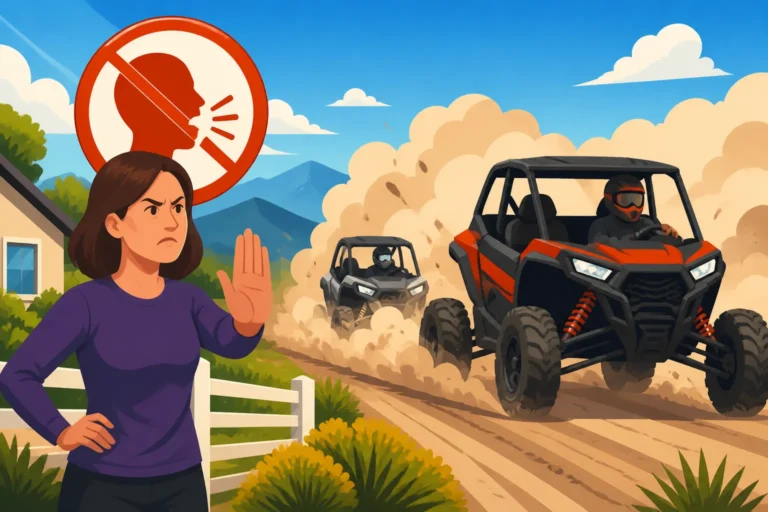
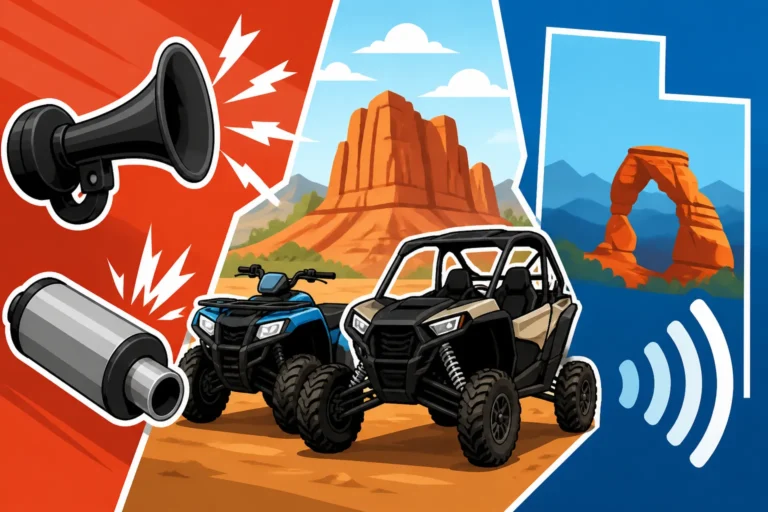
One of the most frequent complaints related to street-legal OHVs in urban or residential settings is noise. While you likely installed a quieter muffler to pass inspection, some cities and counties have strict [Moab's Noise Ordinance and What It Measures] that can be a real hurdle. Even if your machine is legally street-legal, if it's consistently exceeding local noise limits, you could be cited.
This isn't about specific roads being closed, but rather certain times of day or behaviors on those roads that lead to issues. Riding loudly through a residential neighborhood late at night, even on an otherwise open street, is an easy way to attract unwanted attention from law enforcement and upset local residents. This often results in calls for further restrictions or stricter enforcement. Riders looking to comply might even consider [Quiet Exhaust Options for Utah Trips] for certain areas. Always be a good neighbor and mindful of your machine's sound output, especially in populated areas.
Understanding Signage and Enforcement
Navigating Utah's roads successfully with your street-legal OHV often comes down to paying close attention to signage and understanding what law enforcement officers are looking for. It's not always about knowing every single ordinance by heart, but rather recognizing the clear indicators on the ground.
Identifying Restricted Roads
The most important tool for identifying restricted roads is signage. Look for:
- Speed Limit Signs: As discussed, anything over 50 mph generally means "no OHVs."
- "No OHV" or "No ATV/UTV" Signs: These are usually explicitly posted where access is prohibited, such as at the entrance ramps to interstates or on certain municipal roads.
- "No Through Traffic" or "Private Road" Signs: These indicate areas where public access is not permitted, regardless of your vehicle's street-legal status.
- Weight Limit Signs: If you're towing, these are crucial.
- Seasonal or Time-Based Restrictions: Some roads might be closed seasonally (e.g., due to snow or mud) or have time-of-day restrictions for OHVs.
If you don't see specific OHV signage, the general rule of thumb is to look at the speed limit. If it's 50 mph or less, and it's not a freeway or interstate, it's generally open. However, always exercise caution and local inquiry, especially in unfamiliar areas. Keeping a copy of [What Paperwork Utah Riders Must Carry] with you, including registration details, can also be helpful if you encounter questions.
What an Officer Looks For
When a Utah officer encounters a street-legal OHV on the road, they're typically checking for a few key things to ensure compliance and safety. They’re not out to get you, but they are ensuring you’re operating safely and legally.
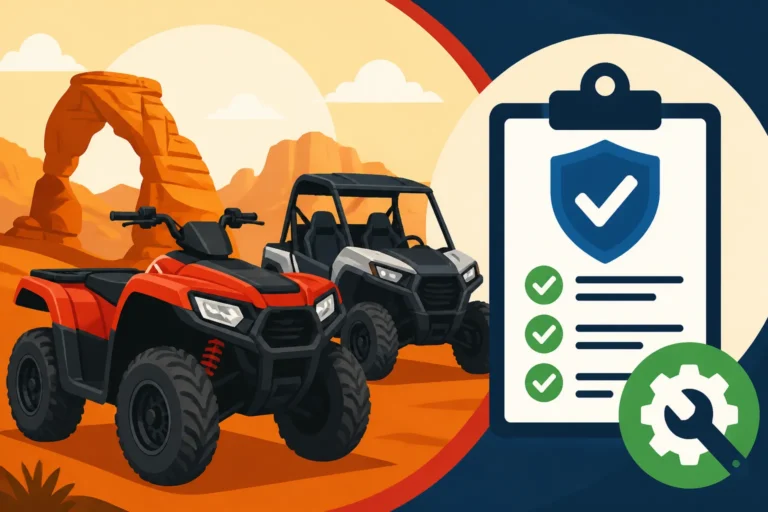
First and foremost, they'll verify that your OHV is actually street-legal. This means checking for a valid, current license plate and registration. They'll also likely look for the required equipment: working headlights, tail lights, brake lights, turn signals, mirrors on both sides, a horn, and a functioning speedometer. Companies like SuperATV provide many of the parts required for these essential safety conversions, but ultimately, it's about making sure everything is installed and working. For a complete list, consult [Utah Street-Legal ATV Equipment Requirements]. They’ll also be looking at your driving behavior, ensuring you're following [Utah Traffic Rules for Street-Legal Side-by-Sides], obeying speed limits, and not operating erratically or unsafely. Compliance with these basic rules helps ensure a smooth experience if you happen to get pulled over.
| Road Type | General Access for Street-Legal OHVs | Key Considerations |
|---|---|---|
| Interstate Highways | Closed | Federal and state law prohibit OHVs. High speed limits (65-80 mph) and safety concerns. |
| Controlled-Access Freeways | Closed | Similar to interstates; high speed limits. |
| State Highways (over 50 mph) | Closed | Utah law restricts OHVs from roads with posted speed limits above 50 mph, regardless of machine capability. |
| State Highways (50 mph or less) | Generally Open | Permitted unless explicitly signed otherwise, or if a specific municipal/county ordinance restricts it. Always check local rules. |
| County Roads | Generally Open | Most county roads with 50 mph or less speed limits are open. Watch for specific county ordinances, seasonal closures, or weight limits (if towing). |
| City/Town Streets | Varies by Municipality | Many towns have designated routes open to OHVs (e.g., Moab, Kanab, Marysvale). Others may have restrictions on main streets, residential areas, or noise limits. Always check local ordinances or maps. |
| Private Roads/HOA | Closed (Without Permission) | Requires explicit permission from landowner or Homeowners Association. Trespassing applies if no permission. |
| Construction Zones/Industrial | Closed | Safety hazards and restricted access for authorized personnel only. |
| Off-Highway Trails | Open (Requires OHV Registration) | These are your primary destinations. Still require a separate OHV registration and often a non-resident permit if visiting from out-of-state. |
Conclusion: Riding Smart and Staying Informed
Making your ATV or UTV street-legal in Utah opens up a world of convenience and adventure, allowing you to seamlessly connect trails and enjoy the unique experience of exploring small towns from your side-by-side. However, the excitement of having a license plate doesn't mean every road is suddenly accessible. The key to a hassle-free experience is understanding the nuances of Utah's laws, paying close attention to local signage, and respecting the reasons behind the restrictions.
By staying off interstates and high-speed highways, checking local municipal and county ordinances, and being mindful of private property, you’ll ensure that your street-legal OHV experience in Utah is safe, legal, and truly enjoyable. Always ride responsibly, stay informed, and respect the rules of the road, whether it's a paved city street or a remote county route.
Disclaimer
This article is for general informational purposes only and does not constitute professional advice. Laws, prices and regulations vary by location and change over time. Consult a qualified professional for guidance on your specific situation.