Utah Seat Belt Rules for UTV Passengers
It's an absolute joy to hit the trails in Utah with friends and family in your side-by-side or ATV. The vistas are incredible, and the feeling of adventure is unmatched. But amidst all that excitement, it's easy to overlook crucial safety details, especially when it comes to passengers. One common area of confusion and concern for many riders is exactly what Utah's laws say about seat belts for UTV occupants, and believe me, getting it wrong can have serious consequences. This guide will help clarify Utah's seat belt rules for UTV passengers, ensuring you and your crew stay safe and legal on every ride.
The Core Utah Law: Seat Belts Are Non-Negotiable
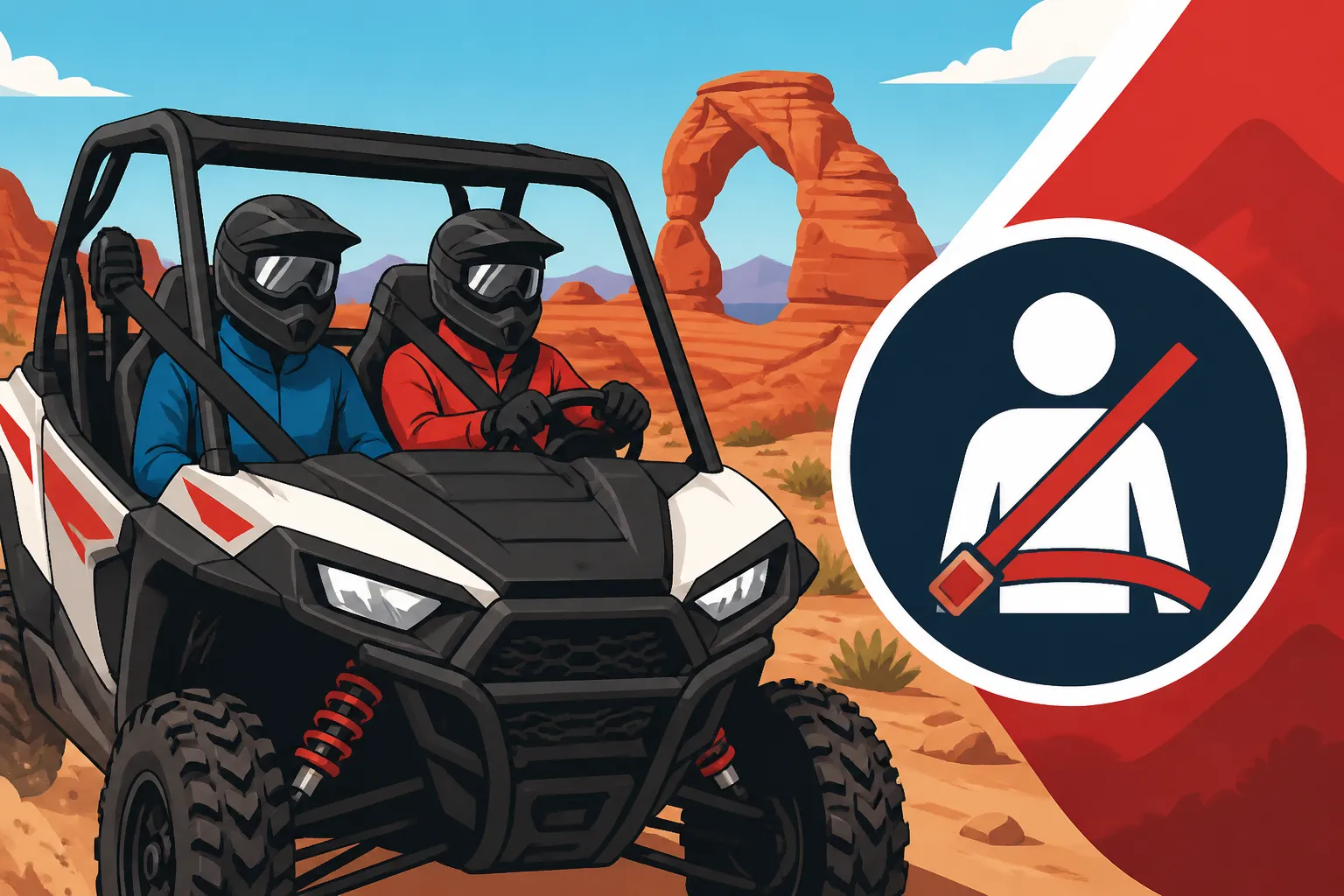
Let's cut right to the chase: In Utah, if your UTV is equipped with seat belts, every single occupant must wear them whenever the machine is in motion. This isn't a suggestion; it's a legal requirement designed to protect everyone on board. Whether you're cruising down a scenic backcountry road, navigating a rocky trail, or just moving your rig around the campsite, those belts need to be buckled. The state of Utah, like many others, recognizes the inherent risks of off-highway vehicle (OHV) riding and has put these rules in place for a very good reason: safety.
Why Utah Takes Seat Belts Seriously for OHVs
Riding an OHV, especially a UTV, exposes occupants to dynamic and often unpredictable conditions. Unlike a passenger car on a paved road, an off-road trail can present sudden changes in terrain, unexpected obstacles, steep inclines, and sharp descents. These conditions dramatically increase the risk of rollovers, ejections, or impacts within the vehicle itself. Imagine hitting an unseen wash out at speed, or sliding sideways on a steep climb. Without proper restraints, passengers can be thrown from the vehicle, strike the roll cage, or even be crushed if the UTV rolls. The forces involved in even a low-speed off-road incident can be tremendous.
Utah's commitment to seat belt enforcement for OHVs stems directly from these very real dangers. State officials and search and rescue teams have seen firsthand the devastating difference a properly worn seat belt can make in mitigating injuries or saving lives. It’s not about restricting your fun; it's about making sure you can keep having fun for many years to come. They've identified that the vast majority of severe injuries and fatalities in OHV accidents occur when occupants are not wearing their seat belts or are ejected from the vehicle. This legal mandate is a direct response to that data, aiming to reduce the number of preventable tragedies on our trails.
Distinguishing OHV Rules from Passenger Car Rules
While the underlying principle of seat belt safety is the same for both passenger cars and OHVs, it's important to understand that the specific application and enforcement can differ due to the unique nature of off-road environments. On the surface, the rule seems identical: buckle up. However, the context of OHV use introduces nuances. For instance, an OHV often operates in areas without immediate emergency services, on terrain that is inherently less stable than a paved road, and at angles a car would never attempt. This means that while a passenger car might have airbags and crumple zones designed for forward collisions, a UTV's primary safety features revolve around its roll cage and occupant restraint system to protect against rollovers and ejections.
Many riders mistakenly assume that because they're "off the grid" or on private land, standard road rules don't apply. This simply isn't true for essential safety regulations like seat belt use, especially on designated OHV trails or public lands. Utah's OHV laws are specifically tailored to the characteristics of these vehicles and the environments they operate in. They consider factors like speeds, terrain, and the specific design of UTVs to ensure that safety standards are met, regardless of whether you're technically on a "road" or a "trail." So, don't confuse the freedom of off-road riding with a freedom from safety rules. You can learn more about general passenger safety in our guide, [Passengers and Seat Belts on Utah Roads].
Who Needs to Buckle Up? Defining "Passenger" in Utah OHV Law
The law in Utah is quite clear: if you are an occupant of a UTV designed with seating positions that include seat belts, you must wear one. This applies universally, regardless of age, the specific type of UTV, or where you're riding. There's no magical "passenger" definition that exempts certain people based on their role in the vehicle or their age. If there's a seat belt there, it's there to be used.
Every Occupant, Every Time
This means exactly what it sounds like. Whether you're in a nimble two-seater sport UTV, a four-seat family cruiser, or a six-seat utility rig, every person occupying a seat equipped with a seat belt must be buckled in. The driver is responsible not only for their own safety but also for ensuring that all passengers comply with this rule. Imagine taking your family out to Sand Hollow or the Paiute Trail. You've got your spouse in the front, two kids in the back, and maybe a friend or two in a six-seater. Each and every one of those individuals needs to be properly restrained for the duration of the ride. This isn't just about avoiding a ticket; it's about preventing injury to your loved ones. Even a quick jaunt from the trailer to the trailhead warrants buckling up. It’s the unexpected bumps or stops that often cause injuries in seemingly safe situations.
Age, Size, and Child Restraint Considerations
This is where things can get a little more nuanced, and it’s a point of serious concern for parents. While Utah OHV law mandates seat belt use for all occupants, it doesn't generally have specific child car seat laws identical to those for passenger cars. However, that doesn't mean you can disregard the safety of your smallest passengers. The spirit of the law, and plain common sense, dictates that children must be secured appropriately.
For children, especially those too small for a standard UTV seat belt to fit correctly, it is highly recommended to use an appropriate child restraint system, similar to what you'd use in a car. A standard UTV seat belt might not provide adequate protection for a small child, potentially riding too high on their abdomen or neck, which can cause severe internal injuries in a crash. You can find more detailed guidance in our article, [Child Seats in a Utah Side-by-Side]. Always ensure any child restraint system is properly installed and compatible with your UTV's seating and seat belt configuration. The goal is to keep the child securely in place, preventing them from being thrown around the cab or ejected during an incident. Think of the unique dynamics of off-road riding – sharp turns, bumps, and varying terrain – these can be even more impactful on a child's smaller body. Utah's OHV safety course for youth, which you can read about in [The Adult OHV Education Course in Utah], emphasizes these points.
Types of Seat Belts and What Utah Expects
Most UTVs come from the factory with either 3-point or, less commonly, 4-point harnesses. For street-legal conversions, the requirements often mirror those for passenger vehicles, ensuring adequate safety on public roads. However, off-road riding presents unique challenges, and many riders choose to upgrade their restraint systems to enhance safety beyond the factory standard.
Factory-Installed 3-Point and 4-Point Harnesses
A 3-point seat belt is what you'll find in most passenger cars and many UTVs. It crosses your lap and one shoulder, anchoring at three points. This design is highly effective at keeping occupants restrained during most forward or side impacts and sudden stops. It allows for some upper body movement, which can be beneficial in certain dynamic off-road situations where the body needs to absorb some impact.
Some UTVs, particularly more performance-oriented models, might come with a 4-point harness. These typically have two shoulder straps and two lap straps, anchoring at four points. The advantage of a 4-point harness is that it holds the rider more securely against the seat, significantly reducing movement within the vehicle. This is especially beneficial in rollovers or severe bumps, as it minimizes the risk of the rider's body striking internal components of the UTV or being ejected. While Utah law generally just requires a seat belt where provided, moving from a 3-point to a 4-point can be a substantial safety upgrade, especially for more aggressive riding.
Aftermarket Upgrades: Enhancing Safety Beyond Stock
For many avid UTV enthusiasts, the factory seat belts are just the starting point. The aftermarket industry offers a wide range of harness systems designed to provide superior protection, particularly for high-performance riding, racing, or simply for peace of mind on challenging trails. These often include 4-point, 5-point, or even 6-point harnesses.
- 4-point harnesses: As mentioned, these provide a tighter, more secure fit than 3-point belts.
- 5-point harnesses: These add a strap that runs between the legs, anchoring at a fifth point, preventing the rider from sliding down or "submarining" under the lap belt in a collision. This is a critical safety feature for serious off-road use.
- 6-point harnesses: Similar to 5-point, but with two straps between the legs for even greater security and comfort, distributing pressure more evenly.
Brands like SuperATV are well-known for offering robust aftermarket harness systems, often featuring wider straps, thicker padding, and more secure buckles designed for the rigors of off-road use. When considering an upgrade, it's crucial to ensure proper installation. An improperly installed harness can be just as dangerous as not wearing one at all. Many of these systems require specific mounting points and reinforcement, so if you're not comfortable with the installation yourself, it's best to seek professional help. The goal with any upgrade is to enhance safety, and that means choosing high-quality components and ensuring they are correctly fitted to your machine and to each individual occupant.
Consequences of Ignoring Seat Belt Rules
Nobody wants to face a ranger or a state trooper when they're out enjoying the trails. And believe me, they are out there, especially in popular OHV areas like Moab, Sand Hollow, or the Paiute Trail. Ignoring Utah's seat belt rules for UTV passengers can lead to both immediate legal penalties and far more severe, long-term consequences.
Fines and Legal Repercussions
When a Utah Division of Outdoor Recreation (DOR) ranger, a sheriff's deputy, or a state trooper spots an unbuckled occupant in a UTV, you can expect to be pulled over. They are trained to look for these infractions as part of their routine checks for safety compliance. What exactly are they checking for? Beyond the visible lack of a buckled belt, they're often observing general safety practices. Our guide, [What a Utah Trooper Checks at a Trailhead], elaborates on what officers look for. The driver, as the operator of the vehicle, is typically held responsible for ensuring all passengers are properly restrained. This means you, as the driver, will likely receive the citation.
The fines for not wearing a seat belt in a UTV in Utah can add up. While the specific amount can vary depending on the county and the officer's discretion, it's typically a minor infraction but still a hit to your wallet. More importantly, it creates an unnecessary interaction with law enforcement and detracts from your riding experience. It's a preventable penalty that can easily be avoided by simply ensuring everyone buckles up. And if an accident were to occur while occupants are unbuckled, you could face additional charges or increased liability.
The Ultimate Cost: Injury and Liability
Beyond the financial penalty, the true cost of ignoring seat belt rules is paid in physical pain, emotional distress, and potential long-term disability. In the event of an accident – even a relatively minor rollover or impact – an unbuckled passenger is at significantly higher risk of severe injury or fatality. They can be ejected from the vehicle, suffer head trauma, broken bones, internal injuries, or even be crushed by the vehicle itself. I've heard too many stories from first responders about injuries that could have been prevented or dramatically lessened if only a seat belt had been worn.
Consider the medical bills, rehabilitation costs, and lost wages that can result from a serious injury. These expenses can be astronomical, far outweighing any fine. Furthermore, if an unbuckled passenger is injured, it can open the door to complex liability issues. While most personal injury law is complicated, failing to adhere to basic safety laws like mandatory seat belt use can impact insurance claims and legal proceedings, potentially making you, as the driver, more liable for the passenger's injuries. It’s a tragic scenario that is entirely avoidable with a simple click of a buckle.
Practical Tips for Ensuring Passenger Safety
Ensuring passenger safety isn't just about following the law; it's about fostering a culture of safety for everyone who rides with you. A few simple habits can make a huge difference in preventing accidents and ensuring everyone has an enjoyable and secure experience.
Pre-Ride Checks and Passenger Briefings
Before you even start the engine, take a moment to do a quick safety check. This should include ensuring all seat belts are easily accessible, free of twists or damage, and that the buckles function correctly. Then, and this is crucial, have a quick "safety briefing" with your passengers. This is especially important if you have new riders, children, or anyone who might not be familiar with off-road riding protocols.
Clearly communicate the rule: "Hey everyone, just a quick reminder before we hit the trail – seat belts must be worn at all times while we're moving. Even for short distances. If you need to unbuckle, please let me know, and we'll stop completely." For kids, make it a game: "Buckle up buttercup!" or have them give a thumbs-up when they're secure. Explain why it's important – because the trails can be bumpy, and you want everyone to stay safe. Emphasize that you won't start moving until everyone is properly buckled. This brief conversation sets the expectation and reinforces the importance of safety for all. You might even find it helpful to review some of the points in a guide like [Safety Briefings Before a Utah Tour], especially if you're leading a larger group or going on a guided trip.
Maintaining and Inspecting Your UTV's Restraints
Just like any other safety component on your UTV, seat belts and harnesses need regular inspection and maintenance. They are exposed to sun, dirt, dust, and moisture, all of which can degrade the material over time. Before each riding season, and ideally before any major trip, take a few minutes to inspect all seat belts:
- Check the webbing: Look for fraying, cuts, tears, or excessive wear. If the webbing is compromised, it won't offer the same level of protection.
- Inspect the buckles: Ensure they latch securely with an audible click and release easily when the button is pressed. If a buckle is sticky, jammed, or doesn't feel secure, it needs attention.
- Examine anchor points: Make sure the seat belts are securely bolted to the UTV frame. Check for any loose bolts, rust, or damage to the mounting hardware. Aftermarket harnesses, particularly those from brands like SuperATV, often come with specific installation instructions that include torque specifications for bolts – follow these diligently.
- Clean the belts: Dirt and grit can get into the webbing and buckles, causing wear or malfunction. A gentle cleaning with soap and water can help prolong their life.
If you find any significant damage or malfunction, it's essential to replace the affected components immediately. Do not ride with damaged seat belts. The integrity of your restraint system is paramount to the safety of everyone in your UTV.
Here's a quick checklist for UTV passenger safety:
| Item | Check Before Every Ride | Check Periodically (e.g., Seasonally) | Notes |
|---|---|---|---|
| Seat Belt Function | All buckles latch and release cleanly. | Inspect webbing for fraying/cuts. Check anchor points. | Replace any damaged belts immediately. |
| Passenger Briefing | Explain "buckle up" rule, even for short distances. | Review terrain, speed expectations, and hand signals. | Especially important for new riders or children. |
| Child Restraints | Securely installed for appropriate age/size. | Ensure belts fit correctly over car seats. | Consider age/weight limits for child seats. |
| Head/Eye Protection | Helmets/goggles available and encouraged/required. | Clean and inspect helmets/goggles for damage. | [Utah Helmet Rules for Riders Under 18] outlines specific requirements. |
| Cab Area Clear | No loose items that can become projectiles. | Secure cargo, tools, and coolers. | Secure items with straps or nets to prevent injury during bumps. |
| Driver Awareness | Adjust speed to terrain and passenger comfort. | Communicate upcoming obstacles. | Gradual acceleration/braking helps keep passengers comfortable and secure. |
| Communication | Establish clear communication methods (e.g., hand signals). | Check comms devices if used (e.g., intercoms). | Crucial for spotting hazards or if a passenger needs to stop. |
Remember, off-roading is an incredible experience, but it comes with responsibilities. Prioritizing safety, especially when it comes to seat belts, ensures that every ride is memorable for the right reasons.
Disclaimer
This article is for general informational purposes only and does not constitute professional advice. Laws, prices and regulations vary by location and change over time. Consult a qualified professional for guidance on your specific situation.