Permit Rules for a Jamboree Week
A Utah ATV or UTV jamboree can make a trip easier to organize, but an event invitation does not automatically answer every permit question. If you are bringing an out-of-state machine, confirm whether the jamboree’s organized rides qualify for a permit exception—and whether that covers any riding you do outside the event. Here is what to check before you tow.
Does a jamboree waive Utah’s nonresident OHV permit?
Utah generally requires a nonresident permit for an out-of-state OHV used on public land, unless an exemption applies. An organized event may qualify for a permit exception, but that does not mean every gathering described as a “jamboree” automatically exempts every participant and machine.
The event organizer’s arrangements matter. Ask whether the jamboree has confirmed that its rides qualify under Utah’s organized-event rules, and whether the exception applies to your particular activity. Do not rely on the event name, a registration confirmation, or another rider’s assumption as proof. The rules and event arrangements can differ from one ride to another.
The key distinction is between riding as part of the organized event and riding independently. An exception arranged for a scheduled jamboree ride may not cover an extra day on the trails, an early arrival ride, or a route you take after the event ends. Before traveling, check Organized Events That Waive the Permit and Utah’s Non-Resident OHV Permit Explained, then get a clear answer from the jamboree organizer.
| Your riding plan | What to confirm |
|---|---|
| You will ride only on scheduled jamboree activities | Ask whether the event qualifies for an exception and which rides, dates, machines, and participants it covers |
| You plan to ride before or after the jamboree | Confirm whether you need a nonresident permit for those separate rides |
| You are bringing more than one OHV | Ask whether the event arrangements apply to each machine or whether any machine needs its own permit |
| You may leave the event route to ride elsewhere | Check whether that independent riding is covered; do not assume it is |
| You will use a street-legal vehicle | Confirm how Utah classifies the vehicle and whether an OHV permit applies to your intended use |
If the organizer cannot confirm that the exception applies, treat the permit as a separate item to resolve before riding. Who Needs a Utah Non-Resident OHV Permit can help you identify whether your machine and visitor status put you in the group that normally needs one.
Questions to ask before the event
Contact the organizer early enough to act on the answer. A useful reply should tell you what the event has arranged, not just say that “jamboree riders are covered.” If there is uncertainty, ask the organizer to check with the relevant Utah authority or event contact.
Use questions like these:
- Does this specific event qualify for Utah’s organized-event permit exception? Ask for confirmation about the current event, rather than relying on a general statement about past jamborees.
- Which rides and dates are included? A scheduled group ride may be treated differently from free time before or after the event.
- Does the arrangement cover my machine? Give the organizer the machine type and explain whether it is registered out of state.
- Does it cover every participant and machine in my group? Do not assume that one person’s event registration covers several vehicles.
- What should I carry to show that I am participating? Ask whether event confirmation, a wristband, ride assignment, or other proof is expected.
- What do I need if I ride outside the jamboree schedule? Get separate instructions for independent riding, including any permit steps.
- Are there other land or event fees? A permit exception does not necessarily include park entry, day-use charges, camping, or other fees.
Keep the organizer’s answer with your travel paperwork. A saved email or printed event information can help explain why you are riding with the group, but it is not a substitute for a permit if Utah requires one for a separate ride. Also check for updates close to departure: an event schedule, route, or permit arrangement can change.
This is especially important for visitors who have relied on another state’s registration or permit in the past. Utah ended OHV reciprocity, so an out-of-state registration should not be treated as a blanket substitute for Utah’s nonresident requirements. See Utah Ended OHV Reciprocity: What Visitors Do Now for the distinction.
What the jamboree exception does not settle
Even when an event has arranged an exception for its organized rides, that addresses only one part of trip planning. It does not automatically settle the rules for every machine, rider, trail, or activity.
Independent rides
A common mistake is treating event participation as coverage for an entire vacation. If you arrive early to explore, stay afterward, or split off for an unscheduled ride, ask whether those activities fall outside the event arrangement. If they do, check whether you need a nonresident permit before using public trails.
If your plans change after you arrive, pause and confirm rather than assuming the group’s event status follows you. A permit exception tied to an organized ride should not be treated as a general pass for Utah riding.
Machine registration and street-legal status
A Utah nonresident OHV permit is not the same thing as vehicle registration, and neither automatically makes a machine street legal. Your out-of-state registration documents may still be relevant, but they do not by themselves answer whether Utah’s nonresident permit applies. For street-legal vehicles, classification and where you intend to ride can affect the answer; confirm the details for your specific machine.
Rider education and age-related rules
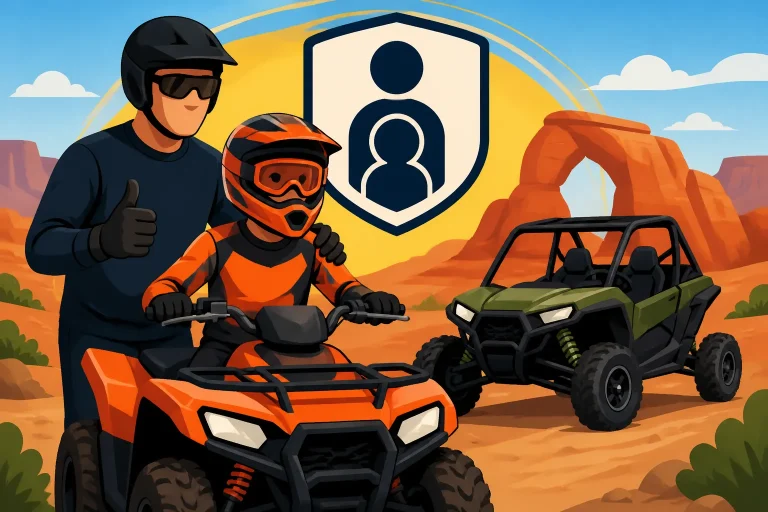
Permit status is separate from rider education requirements. Utah’s OHV education rules may depend on a rider’s age, circumstances, and the activity involved. A jamboree registration or permit exception does not automatically replace an education certificate where one is required. Check The Utah OHV Education Certificate and Carrying Your Certificate and Permit on the Trail for the requirements relevant to your group, and verify any questions about younger riders directly.
Land, trail, and site rules
An event’s permit arrangement does not guarantee that every route is open or that every destination fee is included. Trail closures, land-manager restrictions, state park entry charges, camping rules, and local requirements may still apply. Follow the route and instructions provided by the event, and check the rules for the areas where you will ride. Permits and Fees for Utah’s Riding Areas explains why a permit and a recreation-site fee are not interchangeable.
A practical way to think about it is: the event may address the permit requirement for specific organized activities, while other rules continue to apply to the trip. Do not read a permit exception as permission to use a closed route, ignore a site fee, or ride a machine in a way its registration does not allow.
A jamboree-week checklist for out-of-state riders
Use this checklist before loading the trailer. It helps separate the event’s arrangements from the requirements that remain your responsibility.
- List every machine and rider. Note which machines are registered out of state, who will operate each one, and whether anyone plans to ride independently.
- Ask the organizer about the exception. Confirm that the current jamboree and its scheduled rides qualify, and ask which dates, routes, machines, and participants are included.
- Make a separate plan for non-event riding. If you intend to ride outside the scheduled activities, determine whether Utah requires a nonresident permit for that use. Do not assume the event arrangement covers it.
- Check education requirements. Verify whether each rider needs an OHV education certificate, and carry required proof. This is a different question from whether the machine needs a permit.
- Review registration and machine documents. Bring the registration and other documents that apply to your machine. Ask the organizer what additional proof of event participation is useful to carry.
- Check the ride area and fees. Confirm that planned routes are open and ask whether a state park, recreation area, or other destination charges a separate fee.
- Keep proof accessible. Carry the documents or digital confirmations the event recommends, but do not rely on a phone alone if you expect poor service or a dead battery. A clear document sleeve can protect paper copies from dust; if buying one from Amazon, choose a size that keeps your event details and documents readable.
- Recheck before departure. Look for event updates and confirm the official requirements if anything has changed, including your route or the number of machines.
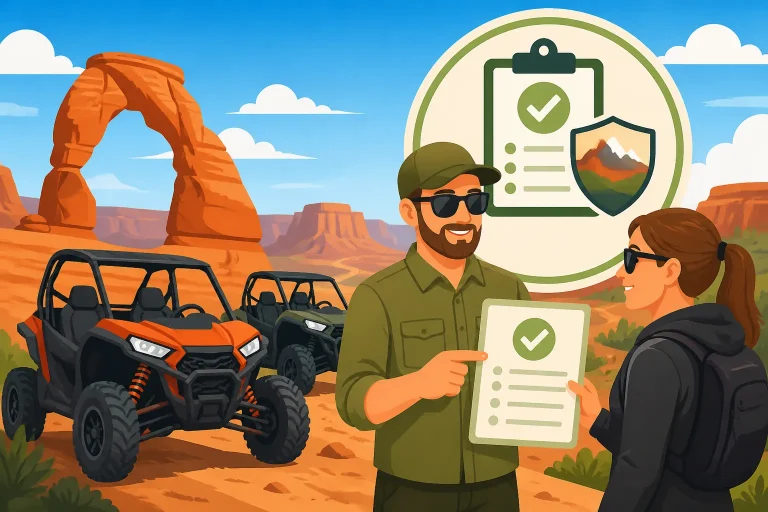
At a trailhead or during a compliance check, an officer or ranger may ask about registration, permits, education requirements, or where you are riding. Event paperwork can help show that you are part of a scheduled jamboree activity, but it should not be confused with documents required for other reasons. For a broader list of what visitors may need to carry, see What Utah Riders Must Carry on Public Land and What Rangers Check at Utah Trailheads.
The safest approach is straightforward: get the event’s permit answer in writing, understand exactly what it covers, and handle any separate rides as separate rides. If an answer is vague, confirm the requirement with the appropriate Utah authority before you operate the machine. That small check is easier than trying to sort out a permit question at the start of a group ride.
Disclaimer
This article is for general informational purposes only and does not constitute professional advice. Laws, prices and regulations vary by location and change over time. Consult a qualified professional for guidance on your specific situation.