Permits for Two Visits in One Year
Two Utah riding trips in the same year do not automatically mean you need to buy a new permit for the second visit. The key is whether your nonresident OHV permit is still valid, and whether it covers the machine you bring. Check its expiration date, keep the required proof with you, and confirm the rules again before traveling.
The short answer: check the permit’s validity dates
Utah’s nonresident OHV permit is not simply a one-trip pass. If your permit remains valid for your second visit, you can generally use that same permit again for the machine it was issued for. If it has expired, you will need to obtain a new one before riding where a permit is required.
The dates on the permit matter more than the fact that you have already used it once. Don’t assume that “two visits in one year” means one permit will cover both: your trips might fall outside its validity period, depending on when you bought it and the expiration date shown on the permit. Conversely, two trips several months apart may both fall within the same valid period.
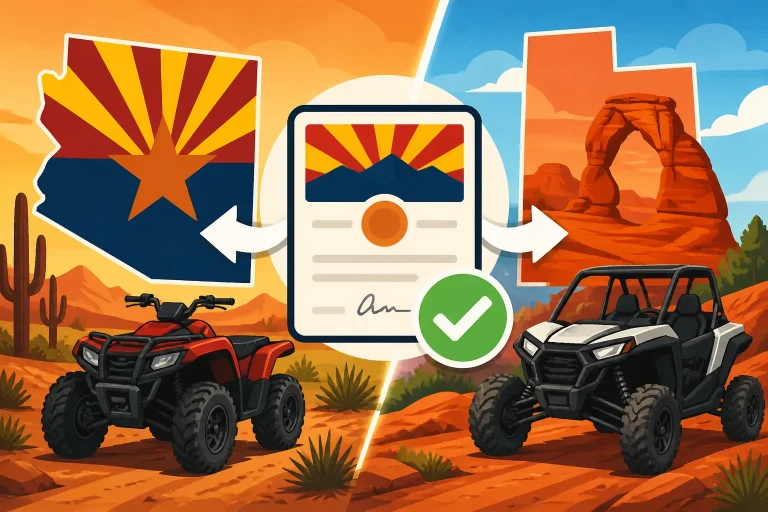
Utah’s permit requirements are separate from the registration your machine carries in its home state. For visitors, having current out-of-state registration does not necessarily replace Utah’s nonresident permit. For background on the basic requirement, see Utah’s Non-Resident OHV Permit Explained and Who Needs a Utah Non-Resident OHV Permit.
A useful way to plan is to check these three things before each trip:
- The permit’s expiration date. Make sure it remains valid for every day you plan to ride.
- Which machine it covers. Don’t assume a permit for one ATV or UTV covers another.
- Any additional rider requirements. A permit and an education certificate are separate requirements; check which apply to the people in your group.
If the permit’s date is unclear, or the machine or rider details have changed, confirm the situation with Utah’s official OHV information before setting out. It is easier to resolve a question at home than at a trailhead.
What determines whether the same permit works on both visits
The practical question is not how many times you enter Utah. It is whether the permit remains valid and whether you are using it in the way it was issued to be used.
| Situation | What to check before the second trip |
|---|---|
| Same machine, permit still valid | Confirm the printed expiration date covers your riding dates and follow the display instructions |
| Same machine, permit expired | Obtain a current permit before riding where one is required |
| Different machine | Check whether that machine needs its own permit |
| Permit damaged or missing | Find out how to replace or reprint the required proof before travel |
| New rider joins the group | Check education and age requirements for that rider separately |
| Rental machine | Ask the rental company what permit coverage it provides and what you must carry |
The permit’s validity period
Treat the dates printed or provided with your permit as the deciding information. Don’t infer an expiration date from the calendar year, the purchase date in your email, or the date of your first visit. If you bought the permit well before your first trip, the remaining time for the second trip may be shorter than you expect.
When you buy online, save the confirmation and review the permit document itself. Buying the Non-Resident Permit Online explains the purchase process, while How Long a Utah Non-Resident Permit Lasts focuses on the validity period. If your travel dates are close to the expiration date, verify the final date before you tow.
The machine it applies to
A permit is associated with a machine, not a whole group’s collection of ATVs and UTVs. If the second visit uses the same machine, check that its permit remains valid. If you changed machines, borrowed another quad, or are bringing an extra UTV, do not assume that the original permit moves with you.
Check Do You Need a Permit for Each Machine? if your group is bringing more than one OHV. For a machine you borrow, confirm both its permit status and who is responsible for providing the required proof. A friend’s permit should not be treated as a general pass that can be shifted among machines.
The rider’s separate requirements
A valid permit does not necessarily satisfy every requirement for the person operating the machine. Utah has OHV education requirements that can apply separately from the permit. Riders should check the rules for their age and circumstances rather than assuming the permit covers the whole group. Carrying Your Certificate and Permit on the Trail can help you distinguish what to carry.
Plan two visits without paying for the wrong thing
If you expect to return to Utah, check the timing before buying. The goal is not to buy as early as possible; it is to make sure you have the right permit for the machine and that it will still be valid when you ride.
Before the first visit
Make a simple record for each machine:
- The machine’s make, model, and identifying details
- Its home-state registration status
- The permit purchase or issue information
- The permit’s expiration date
- Where the physical permit or confirmation is stored
Then compare the expiration date with both trips. If the second visit falls after that date, plan to obtain a new permit before the later trip. If you are unsure about how the validity period is calculated, confirm it with the official source rather than relying on an old receipt or a previous season’s advice.
Buying online can be convenient, but don’t leave the purchase until the last moment without checking how you will receive and display the permit. Review Buying the Non-Resident Permit Online and follow the instructions that come with the permit. If you keep a paper confirmation as backup, a small waterproof document sleeve from an outdoor retailer or Amazon can protect it from dust and moisture. A sleeve does not replace any required decal or display method; follow Utah’s instructions for the actual permit.
Between visits
Store the permit proof with your trip records, and avoid removing or altering anything that must remain displayed on the machine. Before the second trip, check that the permit is still readable and that the vehicle details match the machine you are bringing.
If the permit is lost, damaged, or no longer attached as instructed, don’t count on a photo of it being enough. Check the official replacement or reprint process and make sure you have the required proof before riding. You can also keep a digital backup for your records, but a backup is not a substitute for any physical display requirement.
If you sell or replace the machine between visits, the permit question changes. A permit associated with the original machine may not cover the replacement. Confirm the rule before assuming it can be transferred.
Before the second visit
Do a final check shortly before leaving:
- Compare the trip dates with the permit’s expiration date.
- Confirm you are bringing the same machine covered by the permit.
- Check that any required decal or other proof is present and in usable condition.
- Confirm each rider has any required education certificate or other documentation.
- Check current land, trail, and area rules for your planned rides.
That last step matters because a state permit does not guarantee access to every route or recreation area. A trail may be closed, subject to a separate fee, or governed by additional land-management rules. Permits and Fees for Utah’s Riding Areas explains why the state permit and an area’s own fees or rules should not be confused.
Common situations that cause confusion
The second trip is in a different calendar year
A calendar-year change by itself does not tell you whether a permit is valid. Check the date printed on the permit or confirmation. A permit may remain valid across a year boundary, or it may expire before your second trip; the actual validity dates decide.
You are bringing a different ATV or UTV
Treat a different machine as a separate permit question. The permit for your first vehicle should not be assumed to cover a replacement, a second machine, or a friend’s vehicle. Check the requirements for each machine before traveling, especially if the group will split up or use different vehicles on different days.
A rental company says the permit is included
Ask what “included” means. Does the rental machine already have the required permit? Is it valid for your planned dates and routes? What proof do you need to carry? Rental arrangements vary, so get a clear answer from the company rather than relying on a general statement. Does a Rental Shop’s Permit Cover You? covers the questions to ask.
You are relying on old reciprocity advice
Rules for visitors have changed over time, and advice from a previous trip may no longer apply. Do not assume that an out-of-state registration or permit is accepted in Utah just because it worked somewhere else. Review Utah Ended OHV Reciprocity: What Visitors Do Now and verify current requirements before each season.
You are riding in an organized event
Some events may have specific arrangements or exemptions, but don’t assume that registering for an event automatically replaces your permit. Ask the organizer what applies to your machine and whether you must bring separate proof. If your trip includes riding outside the event, check the ordinary permit rules for those rides as well.
A simple decision rule for repeat visitors
For two visits in one year, start with the permit you already have rather than buying another automatically. If it is still valid on the dates of your second trip and applies to the same machine, it may be usable again. If it has expired, the machine has changed, or you cannot verify what the permit covers, resolve that before you ride.
Keep the permit issue separate from education certificates, area fees, trail closures, and machine registration. They answer different questions. A quick check of dates, vehicle details, and required proof before each trip can prevent the most common repeat-visit mistake: arriving with paperwork that was valid for the first ride but not the second.
Disclaimer
This article is for general informational purposes only and does not constitute professional advice. Laws, prices and regulations vary by location and change over time. Consult a qualified professional for guidance on your specific situation.