Which Utah Highways Allow OHV Traffic
One of the biggest head-scratchers for Utah ATV and UTV owners who've gone through the effort of making their machines street-legal is figuring out exactly where they can legally drive them. It's not always as simple as "if it's street-legal, it can go anywhere a car can," and the thought of accidentally ending up on a forbidden highway can be really stressful. This guide will help you understand Utah's specific rules regarding OHV access on its highways, helping you plan your rides with confidence and avoid those pesky tickets.
Understanding Utah's Road Access Laws for OHVs
When you finally get that street-legal sticker and license plate on your UTV, a whole new world of connecting trails and riding through towns opens up. But let's be real, the distinction between a "road" and a "highway" can feel pretty blurry, especially when you're looking at a map. Utah has some clear guidelines, but it's easy to get tangled up if you don't know the specifics.
The General Rule: No Interstates, But What About the Rest?
First things first, and this is a non-negotiable: You absolutely cannot ride your ATV or UTV, even if it's street-legal, on interstate highways in Utah. That means no I-15, no I-80, no I-70, and so on. These are high-speed, controlled-access roads designed for conventional vehicles, and an OHV simply doesn't belong there. Trying to cruise down the interstate on your side-by-side isn't just illegal, it's incredibly dangerous for you and everyone else on the road. This is the primary distinction you need to etch into your mind. If you see an "I-" prefix, stay off it.
Now, what about everything else? When people say "highway," they often mean any major paved road. In Utah, this typically refers to state routes, which are designated with an "SR-" or simply by their number (like Highway 12 or Highway 89). The good news is that many of these state routes are accessible to street-legal OHVs, with some important caveats we'll dive into. The key distinction is the "street-legal" part; your machine has to meet all the equipment requirements. If you're still working on that, check out [Making a UTV Street Legal in Utah] for a full rundown on what you need to do.
The 50 MPH Speed Limit and How It Shapes Access
Here's where it gets a bit tricky for many state routes: Utah law generally restricts OHVs on paved public roads to a maximum speed of 50 miles per hour. This isn't just a suggestion; it's the law. While your UTV might be capable of going faster, you're legally capped at 50 mph when driving on a public highway. This single rule significantly impacts which state routes are practical, or even advisable, for OHV travel.
Think about it: many state highways have posted speed limits of 55, 65, or even 70 mph in certain rural stretches. If you're driving your OHV at a maximum of 50 mph on a road where traffic is flowing at 65 mph, you're creating a substantial speed differential. This can be nerve-wracking for you and a hazard for other drivers. It means that while a specific state route might not be explicitly banned, the 50 mph rule effectively makes it impractical or unsafe to ride on faster sections. It's crucial to understand [Riding a 50 mph Machine on a 55 mph Road] and the implications it has for your safety and legal compliance. So, even if the road isn't an interstate, if the typical flow of traffic is significantly faster than 50 mph, it's generally best to seek an alternative route for your OHV.
Designated OHV Routes and Exceptions
While interstates are always off-limits and many fast state highways are functionally off-limits due to the 50 mph rule, Utah also has a fantastic system of designated OHV routes. Many of these utilize segments of state routes or county roads that specifically welcome OHV traffic, often connecting major trail systems. These are the golden tickets for many riders!
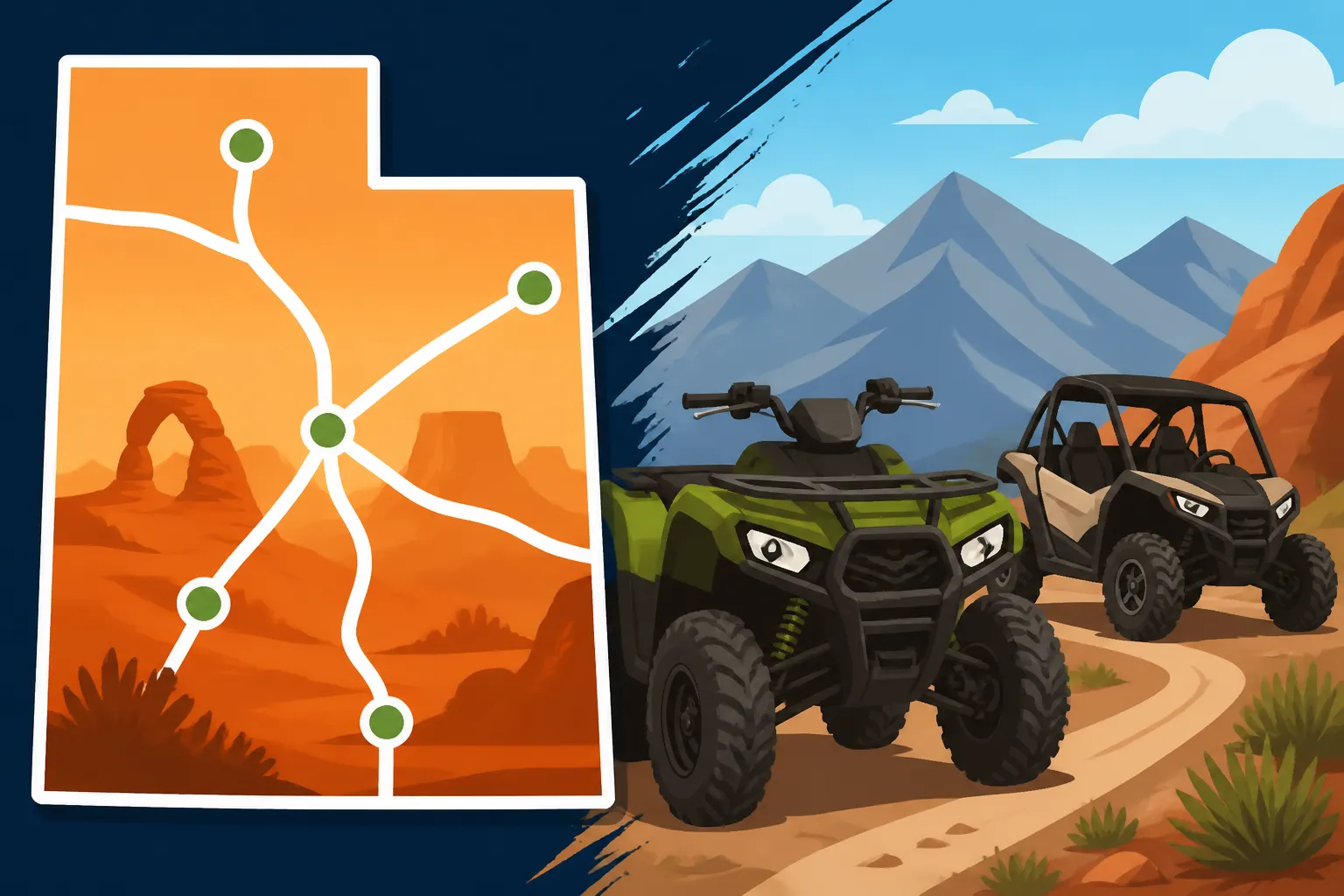
A prime example is the world-famous Paiute ATV Trail system, which uses many miles of paved state highways (like portions of SR-153 and SR-130) to connect its extensive network of dirt trails. In towns like Marysvale, Beaver, or Richfield, you'll see OHVs legally driving on state routes right through the heart of town, often with clearly marked signage. These designated routes usually have lower speed limits, less traffic, or are integral to accessing trailheads. These are the routes where a street-legal machine truly shines, allowing you to ride directly from your lodging to the trail without having to trailer your machine every time. Always look for signage indicating OHV-friendly roads, as these are your clearest indicators of where you can legally and safely roam.
Navigating State Routes and Scenic Byways
Beyond the blanket "no interstates" rule and the practical speed limit considerations, understanding the nuances of Utah's state routes and scenic byways is key to unlocking incredible riding adventures. Utah is crisscrossed with a diverse network of roads, and knowing which ones are generally welcoming to OHVs can make all the difference in your ride planning.
State Highways in Rural Areas
This is where the magic often happens for street-legal OHV enthusiasts. Many of Utah's two-lane state highways, particularly those winding through rural areas, mountains, or desert landscapes, offer ideal conditions for OHV travel. These roads often have speed limits that are more in line with the 50 mph cap for OHVs, making it safer and more comfortable to share the road with other vehicles. Think about routes like SR-24 through Capitol Reef country, or SR-12, the iconic "Scenic Byway 12" often called one of America's most beautiful roads. While you need to be mindful of speed and traffic, these types of roads are frequently used by OHV riders to connect between trail systems, access small towns, or simply enjoy a scenic drive.
It's important to remember that even when you're on a state route, any time that highway passes through an incorporated city or town, local ordinances can come into play. A town might have specific restrictions on OHV noise, parking, or even certain streets, even if the state route itself permits OHVs. This is why understanding [City and County OHV Rules Across Utah] is so vital. Always keep an eye out for local signage as you enter and leave communities, as these signs will alert you to any special rules that apply. The freedom of riding through places like Kanab or Marysvale directly to the trails is fantastic, but it comes with the responsibility of knowing and following all applicable rules.
Scenic Byways and Tourist Routes
Utah boasts some of the most stunning scenic byways in the country, and many of these are state routes that can be enjoyed from the seat of your street-legal OHV. Imagine cruising along the dizzying heights of the Nebo Loop Scenic Byway or through the red rock country of SR-279 (Potash Road) near Moab, taking in views that would be impossible to appreciate from a closed vehicle. These routes are designed for leisurely travel and sightseeing, making them a natural fit for OHVs.
However, the same speed limit considerations apply here. While a scenic byway might have an overall lower average speed, there can still be sections where the posted speed limit exceeds 50 mph, or where traffic is heavier. Also, a critical distinction to remember is that while a scenic byway might lead to a national park or monument, your street-legal OHV is generally not permitted on roads inside national parks themselves. For example, you can ride SR-9 to the entrance of Zion National Park, but you usually can't drive your OHV on the scenic drive within the park boundaries. For more on this, check out [Street-Legal ATVs and Utah's National Parks]. Always verify specific park rules before you plan to enter. Many of these scenic routes are perfect for enjoying the journey, not just the destination, and your UTV can offer an immersive experience that few other vehicles can match.
Crossing Highways and Riding Shoulders
There are times when you might be on an off-highway trail and need to cross a paved state highway to reach the next section of trail. This is generally permissible for street-legal OHVs, provided you do so safely and legally. Treat it exactly as you would in a regular vehicle: stop at stop signs, yield to traffic, and proceed only when it's safe. While the internal link [Crossing a Utah Highway on an Unregistered Quad] focuses on unregistered machines, the basic principles of safe highway crossing apply universally, with the added benefit for street-legal OHVs that they are permitted on the road for the crossing.
A common question is about riding on the shoulder of a highway. Generally speaking, OHVs are expected to operate in the travel lane of a public road, just like any other vehicle. You should not rely on riding the shoulder as a substitute for being in the lane. Riding the shoulder can be dangerous due to debris, uneven surfaces, and a lack of visibility to other drivers who don't expect traffic there. There are very few, if any, circumstances where riding the shoulder of a Utah highway is explicitly permitted for an OHV. If you're on a road and feeling unsafe due to traffic or speed, it's usually better to find an alternative route rather than resort to riding the shoulder. The article [Riding the Shoulder of a Utah Highway] further elaborates on this and why it's typically not allowed or recommended. Always prioritize safety and legal operation over convenience.
Local Ordinances and Planning Your Ride
While Utah's state laws provide a general framework for where street-legal OHVs can and cannot go, the reality on the ground is often shaped by local rules. Ignoring these can lead to frustration, fines, and a less enjoyable trip. Planning your ride effectively means looking beyond the statewide statutes and diving into the specifics of the areas you intend to visit.
The Impact of City and County Rules
This is perhaps one of the most significant points of confusion for many riders. You might have your street-legal OHV perfectly equipped with SuperATV mirrors, turn signals, and a horn, and you know you're not on an interstate. Yet, you could still run afoul of local ordinances. Many cities and counties in Utah have their own specific rules that apply to OHVs on their local roads, and even on segments of state highways that pass through their jurisdiction.
For instance, iconic riding destinations like Moab, Kanab, or Hurricane, while generally welcoming to OHVs, often have specific regulations. Moab, for example, has a 15 mph speed limit for OHVs on most city streets, even if the posted limit for cars is higher. They also have noise ordinances that are strictly enforced. Imagine getting a ticket because your exhaust, while legal on the trail, is too loud for Moab's downtown, as discussed in [Moab's Noise Ordinance and What It Measures]. Similarly, towns might restrict OHV access on certain residential streets, or have specific parking regulations. Always, always, always check the local rules for any town you plan to ride through. The same goes for unincorporated county roads; while less common, some counties might have specific restrictions beyond the state rules. Don't assume that just because the state route allows it, the city portion of that route automatically does too. Be a good guest and know the local expectations.
Resources for Planning Your Route
Navigating all these layers of rules can seem daunting, but thankfully, there are excellent resources available to help you plan.
The first stop should always be the Utah State Parks OHV Program website. They maintain current information on laws, designated routes, and often link to county and city ordinances. For detailed trail information and to see exactly which roads are open to OHVs, especially on federal lands (like Forest Service or BLM), Motor Vehicle Use Maps (MVUMs) are invaluable. These maps explicitly show which routes are open to what type of vehicle. Learning to read them is a skill worth developing, as detailed in [Utah OHV Trail Maps and How to Read Them].
Beyond official sources, rider forums, local OHV clubs, and even calling the local sheriff's office or visitor center in the town you're visiting can provide up-to-the-minute information. Apps like Gaia GPS or OnX Offroad also offer layers that can show OHV-legal routes, though it's always wise to cross-reference with official maps. Being proactive in your planning will save you headaches on your trip, ensuring you can stop for [Fuel Stops and Parking in Utah Trail Towns] without worry.
Equipment and Safety Considerations
Finally, beyond the legal aspects of where you can ride, it's critical to ensure you're equipped to ride safely on public roads. Even on those lower-speed state routes, you're sharing the road with cars, trucks, and potentially heavy equipment. Your street-legal OHV needs to be more than just legally compliant; it needs to be visibly safe.
This means having all your street-legal equipment in working order: bright headlights and taillights for visibility, functional [Turn Signals on a Street-Legal Utah UTV] to clearly communicate your intentions, and proper mirrors for situational awareness. Many riders invest in high-quality aftermarket components from brands like SuperATV to ensure their machines meet and exceed these safety standards. Think about the conditions you'll be riding in: Will it be dusty? Will it be dark? Do you have proper eye protection and a helmet if required?
Even if your machine technically meets the minimum requirements, consider adding additional safety features for highway use. Defensive driving is paramount. Assume other drivers don't see you, especially when merging or turning. Give yourself plenty of space, and be extra cautious at intersections. While the freedom of a street-legal UTV is incredible, it comes with the added responsibility of sharing the road safely and respectfully with all users.
To help summarize, here's a general guide to different road types and typical OHV access in Utah:
| Road Type | Description | Typical OHV Access | Key Considerations |
|---|---|---|---|
| Interstate Highways | I-15, I-80, I-70. High-speed, multi-lane, controlled access. | NO ACCESS | Always avoid. Highly illegal and extremely dangerous. |
| State Routes (SR) | Numbered highways (e.g., SR-12, SR-89, SR-24). Varies from 2-lane rural to multi-lane urban. | Generally ALLOWED with street-legal OHV | Max 50 mph speed limit for OHVs. Check local ordinances if passing through towns. Be mindful of traffic speed. |
| Scenic Byways | Designated state routes known for natural beauty. | Generally ALLOWED with street-legal OHV | Max 50 mph. Often ideal for OHV touring due to lower average speeds. National Park roads often excluded. |
| County Roads | Maintained by counties, often paved or well-graded dirt. | Generally ALLOWED with street-legal OHV | Check county ordinances. Often connect state routes to trails. |
| City/Town Streets | Local roads within incorporated areas. | ALLOWED if city ordinance permits and OHV is street-legal | Highly dependent on specific city ordinances (speed limits, noise, parking). Always check local rules. For example, [Moab's Speed Limit for OHVs on City Streets] |
| Federal Land Roads | Roads within National Forests, BLM land, etc. | Varies by MVUM designation | Consult Motor Vehicle Use Maps (MVUMs) to confirm specific routes are open to OHVs. |
Disclaimer
This article is for general informational purposes only and does not constitute professional advice. Laws, prices and regulations vary by location and change over time. Consult a qualified professional for guidance on your specific situation.