Rules for Crossing a State Highway
It’s a scenario every Utah ATV or UTV rider has faced: you're out on an incredible trail, only to find a state highway cutting right through your path, separating you from the next section of your adventure or even your campsite. The frustration is real – you want to keep riding, but you're not sure if you're allowed to cross, or what the rules even are. This guide is here to untangle the complexities of Utah's laws regarding crossing state highways with your off-highway vehicle, ensuring you know exactly how to stay legal and safe.
Understanding Utah's Highway Crossing Laws
Navigating Utah's vast network of trails often means encountering paved roads, and state highways present a unique challenge. Unlike county roads or city streets where street-legal OHVs might have broader access, state highways are generally designed for faster, higher-volume traffic. This distinction is critical, and many riders get it wrong, thinking that if they can ride on one paved road, they can ride on them all. That’s a mistake that can lead to a hefty fine or, worse, a dangerous situation.
The Utah legislature has put specific provisions in place to allow OHVs to cross these higher-traffic arteries, but these provisions come with strict limitations. It’s not about cruising down the highway for miles; it’s about making a direct and swift crossing to connect approved trails. The spirit of the law is to facilitate trail access, not to integrate OHVs fully into highway traffic, and understanding that intent helps clarify the detailed rules you need to follow.
Distinguishing State Highways from Other Roads
One of the biggest sources of confusion for riders is simply identifying what constitutes a "state highway" versus other public roads. Utah's road system includes state highways (maintained by the Utah Department of Transportation, or UDOT), county roads, and municipal streets. While many county roads and city streets have been opened to street-legal OHV use in recent years, state highways have much stricter regulations.
Generally, state highways are numbered routes, often marked with distinctive shields (like a beehive symbol for Utah state routes). They are typically wider, have higher speed limits, and carry significantly more traffic than the dirt tracks or minor paved roads that crisscross the backcountry. It's not always obvious, though. Some state highways might feel like quiet country roads, especially in remote areas. Your best bet is to check a detailed map, use a GPS app with road classifications, or simply assume any paved, numbered road is a state highway unless explicitly signed otherwise for OHV travel. Erring on the side of caution is always wise.
The Difference for Street-Legal vs. Non-Street-Legal OHVs
This is where the rules diverge significantly, and it’s a point of frequent misunderstanding. If your OHV is not street legal, meaning it hasn't gone through the [Street-Legal ATV Equipment Requirements] and inspection process, your ability to even touch a state highway is severely limited. For these machines, the law generally permits only a direct, perpendicular crossing at an intersection or designated crossing point. You cannot travel along the highway, even on the shoulder, for any distance.
However, if your OHV is street legal and properly plated, registered, and insured for road use, the situation changes. A street-legal OHV is generally permitted to travel on state highways where the speed limit is 50 mph or less, unless specifically prohibited by local ordinance or signage. This doesn't mean you can hop on I-15 and cruise to Salt Lake City; that's strictly forbidden. But it does mean you might be able to ride along a two-lane state highway for a short distance to connect trails, much like a car. Even with a street-legal machine, though, the primary intent for highway travel is often still about connecting trails, not using it as your main mode of transport. Remember, when you're street legal, you're essentially sharing the road with regular vehicles and must obey all traffic laws, as highlighted in [Utah Traffic Rules for Street-Legal Side-by-Sides].
Specific Requirements for Making the Crossing
Whether your OHV is street legal or not, if you intend to cross a state highway, there are specific legal requirements you must meet to ensure you're doing it safely and lawfully. This isn't just about avoiding a ticket; it's about minimizing the risk of a serious accident on roads not designed for the speeds and maneuverability of most OHVs. Cutting corners here can have dire consequences, so paying close attention to these details is paramount.
Riders often get caught up in the excitement of the trail and might try to "just zip across" without thinking. But even a quick dash across a paved road needs to be treated with the utmost respect for traffic laws and safety. It's a quick transition from the freedom of the trail to the structured environment of a public road, and that requires a mental shift and adherence to a different set of rules.
Legal Equipment for Crossing (Even for Non-Street Legal)
Even if your machine isn't fully street legal, Utah law often requires certain basic equipment to make a highway crossing. While a full array of street-legal gear like turn signals and a horn isn't mandated for a simple crossing, visibility is key. For any OHV, you should have at least a working headlight and taillight. These aren't just for night riding; they make you much more visible to oncoming traffic, especially at dusk or dawn, or in less-than-ideal weather conditions.
Think about what a car driver sees: a small, often camouflaged machine appearing suddenly at the side of a highway. Anything you can do to stand out is a plus. Some riders add an aftermarket whip flag, even for crossing, for extra daytime visibility. Reputable accessory companies like SuperATV offer a range of lighting and visibility products that can make a huge difference in how safely you can navigate these crossing points. It's an investment in your safety and the safety of others on the road. Remember, [What Paperwork Utah Riders Must Carry] also applies, so have your registration and any required permits handy, as a crossing could still draw the attention of law enforcement.
Duration and Manner of Crossing
The law is very clear on how a non-street-legal OHV must cross a state highway: it must be a direct, perpendicular crossing. This means you approach the highway, stop, check for traffic, and then proceed directly across to the opposite shoulder or trail entrance. You cannot turn and ride along the shoulder for any distance, even if it feels like a very short jog to the next trail. The idea is to minimize your time spent in the roadway or on its immediate edge.
For street-legal machines, as mentioned, you have more flexibility. If the speed limit is 50 mph or less, you can travel along the highway, obeying all traffic laws. However, common sense still dictates minimizing your time on these roads. The intention of [The Utah Law Behind Street-Legal ATVs] is to allow connectivity, not to encourage long-distance highway travel on machines that, while legal, are often less stable and slower than cars at highway speeds. Always prioritize getting back to the trails quickly and safely.
Speed Limits and Traffic Flow
When making any crossing or traveling on a state highway with a street-legal OHV, you must obey the posted speed limits. This can be tricky for many OHVs, as some models simply aren't designed to maintain speeds that match typical highway traffic. [Riding a 50 mph Machine on a 55 mph Road] highlights the challenge, as you cannot exceed 50 mph on a street-legal OHV on most highways, even if the posted limit is higher. If the highway speed limit is above 50 mph, you are generally not permitted to travel on that section, even if your machine is street legal. In such cases, you are restricted to a direct, perpendicular crossing if allowed, or finding an alternative route.
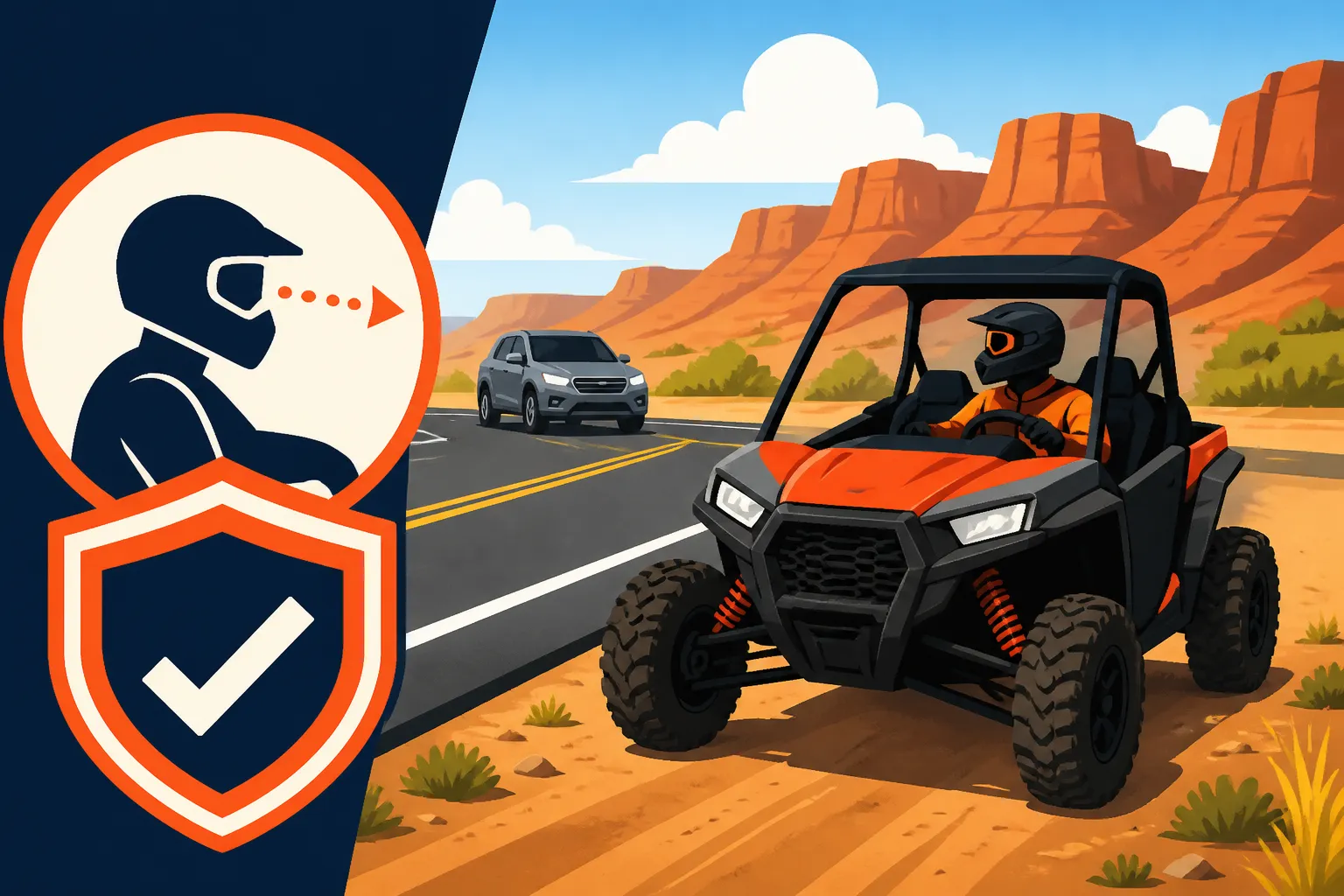
Always be acutely aware of traffic flow. State highways can have fast-moving vehicles. Accelerating from a dead stop on a shoulder and merging into traffic, or crossing multiple lanes, requires careful judgment. Never assume drivers see you; make eye contact if possible, and be prepared for them not to slow down. If traffic is heavy or fast, it’s far better to wait for a significant gap than to rush and put yourself at risk.
Safety Considerations and Best Practices
Legal compliance is one thing, but actual safety on a state highway, even for a brief moment, is paramount. Off-highway vehicles, by their nature, are often smaller, less visible, and have different acceleration and braking characteristics than cars or trucks. This means you need to be extra vigilant and proactive in ensuring your safety and the safety of others when crossing or riding on these higher-speed roads.
Many riders, especially those new to street-legal conversions or simply making a quick crossing, underestimate the dangers. The change from a forgiving dirt trail to hard pavement and fast-moving steel is jarring. Taking a moment to assess the situation and plan your move can prevent a lifetime of regret.
Visibility and Awareness
Your visibility to other drivers is your first line of defense. Wear brightly colored clothing or even a high-visibility vest. Ensure all your lights are clean and working – headlights, taillights, and if street legal, turn signals and brake lights. Consider adding aftermarket LED lights from companies like SuperATV for enhanced brightness, especially if you anticipate riding near dawn, dusk, or in inclement weather. The more visible you are, the better.
Beyond being seen, you need to be aware of everything around you. Before crossing, stop completely at the edge of the highway. Look left, right, and left again. Check your mirrors. Don't just glance; actively scan for approaching vehicles. Listen for engine noise. Pay attention to any blind spots, especially if there are curves or hills that obstruct your view. If you're riding in a group, communicate clearly with hand signals or comms systems about your intentions to cross. One rider might spot traffic another misses.
Choosing Your Crossing Point Wisely
Not all potential crossing points are equal in terms of safety. Ideally, you want to cross at an intersection with a clear line of sight in both directions, where traffic might naturally be slowing down or expecting cross-traffic. Avoid crossing on blind curves, at the crest of a hill, or immediately after an interchange where traffic patterns are complex and unpredictable. Look for areas with wide, stable shoulders where you can stage safely without being a hazard to highway traffic while you wait for a clear opening.
If there isn't an obviously safe crossing point, you might need to reconsider your route. Sometimes, backtracking a bit to find a safer, perhaps slightly longer, path to an underpass, an overpass, or a signalized intersection is the wisest choice. Your life, and the lives of your riding companions, are worth the extra few minutes.
Communication with Fellow Riders
Riding in a group adds a layer of complexity but also a layer of safety if handled correctly. Before you even approach a state highway, have a clear plan for crossing. Discuss who goes first, who watches for traffic, and what signals will be used. A common practice is for the lead rider to stop and assess, then signal when it's safe for the group to proceed, perhaps one by one or in small clusters. The last rider should confirm everyone made it across safely.
For street-legal groups traveling along a highway, maintain appropriate spacing. Don't ride bumper-to-bumper. Give each rider enough room to react to sudden braking or evasive maneuvers. Use standard hand signals for turns and stops. If you have helmet-to-helmet communicators, use them to call out hazards, upcoming turns, or traffic conditions. A coordinated, disciplined approach to highway crossings makes the experience much safer and smoother for everyone involved.
Penalties and Common Misconceptions
It's easy to dismiss a quick dash across a state highway as a minor infraction, a "no harm, no foul" situation. But Utah law enforcement takes these rules seriously because the risk of accident is so high. The penalties for improper crossing or illegal operation on a state highway can range from costly fines to impoundment of your machine, which can quickly turn an enjoyable ride into a very expensive headache. Understanding these consequences, and dispelling common myths, is crucial for responsible riding.
Don't let a momentary lapse in judgment or a misunderstanding of the rules spoil your entire trip. A little preparation and respect for the law go a long way in keeping you and your machine on the trails and out of trouble.
Fines and Citations for Improper Crossings
Operating an unregistered or non-street-legal OHV illegally on a state highway, even for a brief crossing, can result in a citation. Fines can be substantial, often hundreds of dollars, and can be compounded if there are other infractions like an expired registration or lack of required safety equipment. Depending on the severity and whether it contributes to a dangerous situation, you could face more serious charges. [The Fine for an Expired OHV Registration in Utah] already tells you how quickly costs add up, so imagine combining that with a highway violation.
Furthermore, repeated violations, or those deemed particularly reckless, could lead to your machine being impounded. This means not only a fine but also impound fees, storage fees, and the hassle of retrieving your OHV, which can quickly climb into the thousands of dollars. As warned in [Impound Risk for Unregistered Machines in Utah], it's a consequence you absolutely want to avoid. A quick dash across a road simply isn't worth that kind of risk.
The "Just for a Second" Mentality
This is perhaps the most dangerous misconception. Many riders think, "It's just for a second, I'll be fine," or "There's no traffic, I'll just sprint across." This mentality completely disregards the unpredictable nature of highway traffic and the inherent dangers of an OHV on pavement. A "second" is all it takes for a vehicle traveling at 65 mph to cover a significant distance. The moment you pull out, you're in a high-risk zone.
Law enforcement officers don't care if you were only on the road "for a second." If they observe you violating the law, they will act. More importantly, that "second" is enough time for an inattentive driver, a sudden brake check, or a loss of control on gravel shoulders to turn a simple crossing into a catastrophic event. It’s a gamble that smart riders simply won’t take. Always assume that the consequences of being on a highway illegally are immediate and severe.
When in Doubt, Don't
This is perhaps the simplest and most important piece of advice regarding state highway crossings: if you are unsure about the legality, the safety, or your ability to make a crossing safely and efficiently, don't do it. There's almost always an alternative route, even if it means a little backtracking or a longer ride. Getting stuck behind a closed gate or finding a trail unexpectedly ending at a state highway can be annoying, but it's never an excuse to break the law or endanger yourself.
Before heading out, especially on new trails, consult detailed maps or GPS apps that show road classifications. Many trail systems now have designated OHV routes that connect across or alongside state highways, and these are usually well-marked. Look for signs that specifically permit OHV crossings or parallel travel. If you don't see such signage and you're not street legal, it's best to find another way. Being prepared and cautious ensures your Utah riding adventures remain thrilling for all the right reasons.
| Aspect of Crossing | Non-Street-Legal OHV | Street-Legal OHV |
|---|---|---|
| Permitted Action | Direct, perpendicular crossing only. | Direct crossing OR travel along highway (if speed limit <= 50 mph). |
| Travel Along Hwy | NOT ALLOWED (even on shoulder). | Allowed (obey speed/traffic laws). |
| Equipment Minimums | Headlight, taillight required; high visibility recommended. | All street-legal equipment (lights, turn signals, horn, mirrors, etc.). |
| Speed Limit | No specific speed on the highway, but must be swift and direct. | Obey posted speed limits; cannot exceed 50 mph on most state highways. |
| Traffic Rules | Yield to all highway traffic. | Must obey all Utah traffic laws, yield, signal, etc. |
| Registration | Current OHV registration decal required. | Current OHV registration + street-legal vehicle registration/plate. |
| Where to Ride | Only at designated crossings or intersections. | Where permitted by speed limit & local ordinance; [Where Street-Legal ATVs Can Drive in Utah] applies. |
Disclaimer
This article is for general informational purposes only and does not constitute professional advice. Laws, prices and regulations vary by location and change over time. Consult a qualified professional for guidance on your specific situation.