What Fails a Utah Street-Legal Inspection
It's incredibly frustrating, isn't it? You've spent countless hours, and probably a good chunk of change, outfitting your beloved ATV or UTV with all the gear you need to make it street-legal here in Utah. You've installed the turn signals, the horn, the mirrors, and you’re feeling confident. But then, you pull into the inspection station, heart pounding a little, only to have the inspector shake their head and tell you it failed. That gut punch feeling is real, and it often comes down to some subtle, easily overlooked details. This guide is here to walk you through the most common reasons why OHVs fail Utah street-legal inspections, helping you anticipate those snags and pass on your first try.
Understanding the Utah Street-Legal Inspection Process
Before we dive into the nitty-gritty of what fails an inspection, let's take a moment to understand why these inspections are even necessary and what the process typically entails. It's not just about making more paperwork for us; it's genuinely about safety on shared roads.
The Purpose of the Inspection
Think about it: an off-highway vehicle is designed for, well, off-highway use. It's built for dirt, rocks, and mud, not necessarily for sharing the asphalt with sedans and semi-trucks. When you convert your UTV or ATV to be street-legal, you're essentially asking the state to certify that it's now safe enough to operate in a completely different environment. The inspection process is Utah's way of making sure your machine has the fundamental safety equipment to interact predictably and safely with other vehicles and pedestrians. This isn't just about protecting you, the rider, but also everyone else on the road. It ensures that your brakes work, your lights signal your intentions, and you can see what's happening around you. It's a critical step in making sure that our unique Utah [Street-Legal ATVs and UTVs] can coexist safely with traditional traffic.
What Happens at a Certified Station
When you pull into a certified inspection station – often a mechanic shop or a dealership that has met the state's requirements – a trained technician will go through a detailed checklist. They aren't just giving it a quick once-over; they're meticulously checking every required component to ensure it meets Utah's specific standards. They'll look at everything from your tires to your turn signals, your horn to your mirrors, and they'll even check your documentation. This isn't just a visual check either; they'll test your lights, honk your horn, and likely check your brakes. They are looking for functionality, proper installation, and compliance with the state's regulations. It's a professional assessment, and understanding their checklist, which we'll cover in detail, is your best defense against a frustrating failure. You can find out more about the whole process in [Utah's Street-Legal ATV Inspection, Step by Step].
Critical Lighting and Electrical System Failures
Lighting and electrical systems are paramount for road safety, especially when you're sharing the road after dark or in inclement weather. These are often the first things an inspector will check, and slight non-compliance can lead to an immediate failure.
Headlights, Tail Lights, and Brake Lights
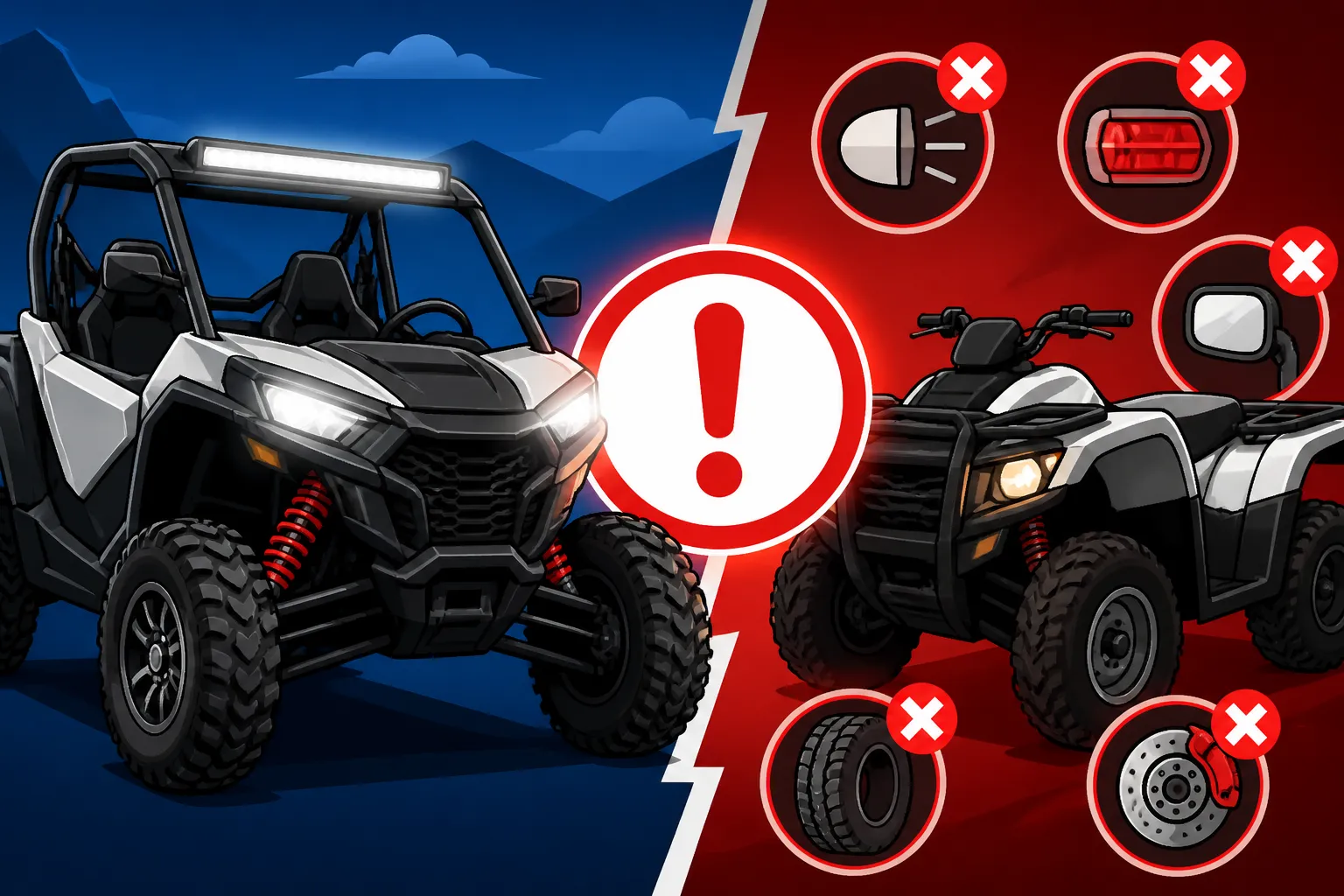
One of the most common reasons for failing an inspection is incorrect or non-functional lighting. Your headlights need to be working, obviously, but they also need to be properly aimed and provide sufficient illumination. Headlights that are too dim, improperly aimed (blinding oncoming traffic or not illuminating the road ahead), or that simply don't switch between high and low beams are a no-go. For tail lights, both must be present, visible from a specific distance, and illuminate when your headlights are on. Brake lights are even more critical: both must light up brightly and immediately when the brake pedal or lever is pressed, and sometimes even the hand brake. If one light is out, flickers, or doesn't activate reliably, you'll fail. Make sure all lenses are clean and free of cracks. For a detailed list, check out [Headlights and Tail Lamps Utah Requires].
This seems basic, but sometimes riders install aftermarket light bars that are great for the trail but don't function as street-legal headlights with high/low beams. Or perhaps a wire has come loose in a tail light housing after a bumpy ride, and now only one brake light works. These are the kinds of small details that get missed in a home garage but will be caught by an inspector. It’s not enough for them to be there; they must function correctly according to street-legal standards.
Turn Signals and Hazard Lights
Ah, turn signals – often an afterthought for many off-roaders! But on the road, they are your primary means of communicating your intentions to other drivers. Utah law requires working turn signals on both the front and rear of your OHV, visible from specific distances. If even one bulb is out, if the blink rate is too fast or too slow, or if the lights aren't amber to the front and red/amber to the rear, you'll be sent home. Similarly, your hazard lights (all four turn signals flashing simultaneously) must also function correctly. This usually means a separate switch for hazards or an integrated hazard function with your turn signal kit.
I've seen so many setups where riders assume their rear brake lights can double as turn signals, or they only install them on one end of the machine. That won't fly. You need dedicated turn signal indicators that flash clearly and consistently. Many riders opt for universal [Turn Signals on a Street-Legal Utah UTV] kits from brands like SuperATV, but even with quality components, installation is key. A loose connection or a ground wire that's not quite right can lead to intermittent failures that might escape your notice until the inspector points it out. Double-check all wiring and ensure the indicator lights on your dash (if you have them) also work, confirming the signals are active.
Horn and Electrical System Integrity
A functional horn is not just a polite way to greet fellow riders; it's a vital safety device for alerting others to your presence or to potential hazards. The horn must be audible from a specific distance – usually 200 feet – and be operated by a clearly marked, easily accessible button. A faint "meep" or a horn that only works intermittently won't pass. The inspector will press that button, and they expect a clear, consistent honk.
Beyond the horn itself, the overall integrity of your electrical system is under scrutiny. This means no frayed wires, no exposed connections, and no signs of makeshift repairs that could lead to shorts or failures. The battery should be securely mounted, and all components drawing power should do so reliably without dimming other lights or causing system instability. An inspector might notice if your lights dim significantly when you hit the brake or use the turn signal, indicating an underlying electrical issue that needs to be addressed for reliable street operation.
Vision, Sound, and Safety Component Showstoppers
These are the elements that ensure you can see, be heard, and stop safely – all fundamental aspects of driving on public roads. Skipping over details here can quickly lead to a failed inspection.
Mirrors and Windshield/Eye Protection
Visibility is non-negotiable on the road. Utah law requires at least one rearview mirror, typically mounted to provide a clear view of the road behind you. Many riders opt for two mirrors – one on each side – for better situational awareness. The mirror(s) must be securely mounted, not cracked or broken, and provide an unobstructed view. If your mirror vibrates so much you can't see anything, or if it's placed in an awkward spot, it might be deemed insufficient. [Mirrors Utah Requires on Both Sides] covers the specifics.
Additionally, a windshield or approved eye protection (like goggles or safety glasses) is mandatory. If your OHV has a windshield, it must be free of cracks that obstruct vision and must be made of safety glass or an approved material that won't shatter dangerously. If you don't have a windshield, then carrying and wearing appropriate eye protection is required while operating on the road. An inspector will ensure you have one or the other. Sometimes, riders install half-windshields that don't quite offer enough protection, or they forget to ensure their full windshield is clean and scratch-free, especially after a dusty trail ride.
Muffler, Spark Arrestor, and Noise Limits
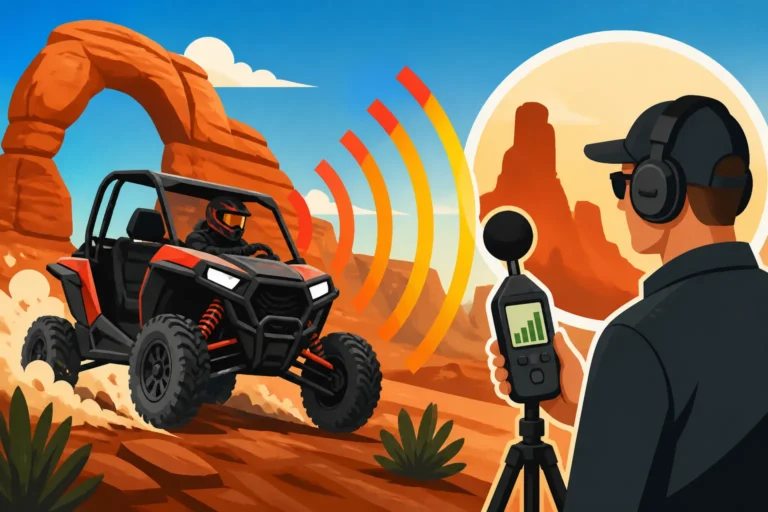
Noise pollution is a big deal in many communities, and Utah has specific regulations about how loud your OHV can be on public roads. Your machine must be equipped with a muffler that effectively reduces engine noise. A straight pipe or a modified exhaust system that's excessively loud will absolutely fail the inspection. Inspectors often have a good ear for what's too loud, and some stations might even use a decibel meter.
Furthermore, a spark arrestor is a requirement for OHVs operating on public lands (which includes most street-legal routes that access trails), preventing hot carbon particles from escaping your exhaust and potentially starting wildfires. While primarily a trail requirement, inspectors often check for it as part of overall compliance. If your exhaust system is missing its spark arrestor, or if it's been tampered with and is now too loud, you'll be denied. Even a quality aftermarket exhaust from a brand like SuperATV might fail if it doesn't meet the noise limits or lacks a proper spark arrestor. Remember, quiet means legal when it comes to exhaust on public roads. Details on this can be found in [Horns, Mufflers and Utah Noise Limits].
Brakes and Steering System Issues
This goes without saying, but functional brakes are absolutely essential. The inspector will check both your service brakes (foot or hand lever) and your parking brake. They'll ensure the brakes engage firmly, stop the machine effectively, and don't pull excessively to one side. Worn brake pads, leaky brake lines, soft brake pedals, or a parking brake that doesn't hold the vehicle on an incline will all lead to a failed inspection. This isn't just about passing; it's about your life and the lives of others on the road.
Your steering system must also be tight and responsive. Excessive play in the steering wheel or handlebars, loose tie rods, worn ball joints, or any component that indicates sloppy steering will be a red flag. The inspector might wiggle your wheels or turn the steering to feel for looseness. Aftermarket steering modifications that compromise safety or control will also be scrutinized. A UTV that wanders or has too much slop in the steering is a hazard waiting to happen.
Tire, Suspension, and Structural Pitfalls
The parts that connect your OHV to the ground are critical. How your machine rides, handles, and interacts with the road surface is under strict review.
Tire Condition and Wheel Fitment
Your tires are your only contact with the road, and their condition is paramount for safety. Inspectors will check for adequate tread depth, ensuring there's no excessive wear, exposed cords, or significant damage like cuts or bulges. Tires designed only for off-road use, especially those with extremely aggressive, sharp lugs that could damage road surfaces, might also be an issue, depending on the specific inspector and their interpretation of local road wear. Your tires must also be suitable for the speed you'll be traveling on the road; often, this means they need to be DOT-approved, though Utah's specific wording for OHVs can be a little nuanced here. Always opt for tires with a "DOT" stamp if you want to be completely safe.
Wheel fitment is also important. Wheels should be securely fastened, with no missing lug nuts. Oversized wheels or tires that extend excessively beyond the fenders without proper mud flaps could also be a point of contention, as they can kick up rocks and debris, endangering other drivers. For clarity on what's expected, look at [Tire Rules for Street-Legal Machines].
Lift Kits and Suspension Modifications
Aftermarket lift kits are popular for trail clearance, but they can significantly alter a vehicle's handling characteristics on pavement. While Utah doesn't explicitly ban lift kits for street-legal OHVs, an inspector will be looking for anything that compromises stability, steering geometry, or overall safety. If your machine is lifted to an extreme degree, causes erratic handling, or puts excessive stress on suspension components, it could fail. Poorly installed lift kits, those with loose bolts, or those that lead to excessive body roll will raise serious concerns. The goal is a stable platform for road use, not just maximum articulation for rocks.
Similarly, other suspension modifications, like aftermarket shocks or A-arms, must be properly installed and maintained. Any signs of wear, damage, or improper alignment in your suspension system can lead to a failure, as these components are vital for controlling the vehicle at speed and over varied road surfaces.
Frame Integrity and Passenger Seating
The structural integrity of your OHV's frame is fundamental. Any visible damage to the frame, such as significant bends, cracks, or rust that compromises strength, will be an immediate red flag. Aftermarket roll cages or modifications must be professionally installed and provide adequate protection. Makeshift repairs or weakened frame sections are a serious safety hazard on the road.
Passenger seating is also under scrutiny. If your UTV is designed for multiple passengers, each seat must be securely mounted, and there must be working seatbelts for every occupant. These aren't just for show; the inspector will likely tug on the seatbelts to ensure they latch and retract correctly. Any additional seats you've added must also meet safety standards and be properly secured. A loose seat or a frayed seatbelt will not pass. Remember, [Passengers and Seat Belts on Utah Roads] are critical for road safety.
Overlooked Details and Documentation Mistakes
Sometimes, it's not the big components but the small, often-forgotten details or paperwork errors that trip up an inspection. Don't let these easy fixes send you back to the garage.
Speedometer and Odometer Functionality
You might not think much about your speedometer on the trail, but on the road, knowing your speed is crucial for obeying traffic laws. Your OHV must have a functional speedometer that accurately displays your speed. If it's broken, inaccurate, or missing, it's an automatic fail. Similarly, while not always explicitly checked for accuracy during a street-legal conversion inspection, a working odometer is generally expected as part of a functional gauge cluster, especially for newer machines. It helps track mileage for maintenance and potential future sale. If your machine lacks one or it's non-functional, it’s best to address it. Many riders add aftermarket speedometers, which is fine, as long as it's correctly calibrated and clearly visible. More on this can be found in [Speedometers and Night Riding in Utah].
License Plate Mounting and Lighting
This is a common one! You've gone through all the trouble of getting your machine street-legal, and you finally get that shiny new license plate. But where do you put it? Utah law requires your license plate to be securely mounted, visible, and illuminated by a white light during nighttime hours. If your plate is dangling, obscured by a tire or mud flap, or if the light that shines on it is out, you'll fail. It sounds simple, but I’ve seen so many machines fail because the rider forgot about the plate light or mounted the plate in an awkward, easily damaged spot. Make sure it's mounted in a location that is protected but still clearly visible to anyone behind you.
Required Paperwork and Identification
Finally, don't forget the paperwork! Even if your machine is mechanically perfect, incorrect or missing documentation will halt your inspection cold. You'll need proof of ownership (like your title or bill of sale), proof of current off-highway vehicle registration, and your personal identification. If your VIN (Vehicle Identification Number) doesn't match the paperwork, or if there are any discrepancies, the inspector won't proceed. Make sure your VIN plate is legible and matches all your documents exactly.
Here's a quick summary of common failure points:
| Category | Common Failure Points | Solution |
|---|---|---|
| Lighting & Electrical | Non-functional headlights/tail lights/brake lights | Replace bulbs, check wiring, ensure proper aim, test all lights. |
| Missing or non-functional turn signals/hazards | Install DOT-compliant turn signal kit, check all bulbs & wiring. | |
| Horn not working or too faint | Replace horn, check electrical connections. | |
| Vision & Sound | Mirrors cracked, loose, or insufficient view | Securely mount or replace mirrors; ensure clear view to rear. |
| No windshield or approved eye protection | Install DOT-compliant windshield or carry goggles. | |
| Muffler too loud, missing spark arrestor | Install/repair muffler, ensure spark arrestor is present and functional. | |
| Brakes & Steering | Worn brake pads, soft pedal, parking brake failure | Inspect and replace brake components, bleed lines, adjust parking brake. |
| Excessive steering play, loose components | Inspect steering linkage, replace worn ball joints/tie rods. | |
| Tires & Suspension | Worn or damaged tires, non-DOT (for some) | Replace damaged tires, consider DOT-compliant options. |
| Unstable or poorly installed lift kit | Re-evaluate lift kit installation, ensure stability. | |
| Structure & Seating | Frame damage, compromised roll cage | Repair or reinforce frame; ensure roll cage is secure. |
| Missing or non-functional seatbelts, loose seats | Install/repair seatbelts, securely mount all seats. | |
| Minor Details & Docs | Broken or inaccurate speedometer | Repair or replace speedometer, ensure accuracy. |
| License plate not illuminated or improperly mounted | Install plate light, securely mount plate in visible location. | |
| Missing title/registration, VIN discrepancies | Gather all required paperwork; verify VIN matches documents. |
Before you head to the inspection station, go through this list yourself. Get a friend to help you check lights, test the horn, and watch for brake lights while you push the pedal. A little self-inspection can save you a whole lot of hassle and make sure you're out on Utah's scenic roads with your [Street-Legal UTV] in no time!
Disclaimer
This article is for general informational purposes only and does not constitute professional advice. Laws, prices and regulations vary by location and change over time. Consult a qualified professional for guidance on your specific situation.