Utah Street-Legal ATV Equipment Requirements
It's incredibly frustrating when you're ready to hit the open road in your UTV or ATV, only to be met with a long, confusing list of requirements to make it street legal in Utah. Many riders just want to enjoy the freedom of connecting trails or running into town for gas without breaking the law, but figuring out what exactly your machine needs to pass muster can feel like deciphering an ancient text. This guide aims to cut through that confusion, breaking down every piece of equipment your off-highway vehicle (OHV) needs to meet Utah's street-legal standards, ensuring you're prepared for inspection and ready for adventure.
Why Going Street-Legal in Utah Makes Sense for OHV Owners
The allure of off-road riding in Utah is undeniable, with vast expanses of stunning wilderness and iconic trails like the Paiute and the legendary routes around Moab. But let's be real: sometimes you need to get from one trail system to another, or maybe you just want to grab a burger in town without having to load your machine back onto a trailer. That's where the magic of making your ATV or UTV street legal comes in. It opens up a whole new world of convenience and connectivity that dramatically enhances your riding experience.
Imagine finishing a fantastic morning ride on a remote trail and being able to simply drive your side-by-side a few miles down a paved county road to the next trailhead, or even cruise into a trailside town for lunch and fuel. This freedom from constantly loading and unloading, or having to plan your route meticulously to avoid any pavement, is a game-changer for many riders. It’s not just about convenience, though; it’s about maximizing your time on the trails and making the entire adventure more seamless and enjoyable. It means more riding and less logistics.
The Freedom and Convenience of Road Access
For those of us who spend a lot of time exploring Utah's diverse terrain, the ability to legally drive our OHVs on designated public roads is a massive benefit. It connects the dots between isolated trail sections, allowing for much longer, more continuous rides that would otherwise require multiple trailering efforts. Think of piecing together different parts of the [Paiute ATV Trail] without ever having to unhook your truck. This level of freedom is especially appreciated in areas like Southern Utah, where many towns, like Kanab or Marysvale, are specifically designed to welcome OHV traffic, allowing you to ride right from your motel to the trail.
Beyond just connecting trails, street-legal status also means you can run errands in your OHV. Need to swing by the gas station, grab some groceries for the campsite, or even just visit a local restaurant? If the road is open to OHVs, you're good to go. This makes your OHV a more versatile vehicle, blending recreational use with practical utility. It simplifies trips, reduces wear and tear on your tow rig, and honestly, it just makes the whole experience more fun.
Understanding Utah's Intent for Street-Legal OHVs
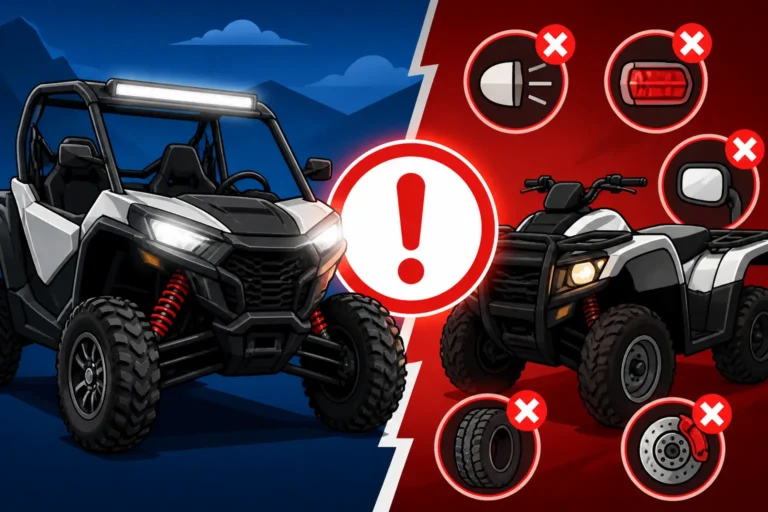
Utah's street-legal OHV laws are designed with a primary goal: safety. The state wants to ensure that if your off-highway vehicle is going to share the road with traditional automobiles, it has the necessary equipment to be visible, controllable, and predictable. This isn't about making it difficult for riders; it's about minimizing risks for everyone on the road. The requirements essentially aim to bring your OHV's safety features up to a standard comparable to other motor vehicles.
This means that while your UTV might be a beast on the dirt, when it transitions to pavement, it needs to behave and be equipped like a responsible road vehicle. Inspectors at the DMV or a certified station will be looking for specific items to ensure your machine can signal, stop, see, and be seen. They're checking to make sure your machine isn't a hazard and that you, as the operator, have the tools to operate it safely within traffic. So, when you're adding equipment, always keep the spirit of "road safety" in mind, not just checking off boxes on a list.
Essential Lighting and Visibility Components
When you’re sharing the road, visibility is paramount. It’s not just about you seeing where you’re going, but crucially, about other drivers seeing you. Utah’s street-legal requirements for lighting and visibility ensure that your OHV stands out, especially during dawn, dusk, or less-than-ideal weather conditions. Skimping on these items isn't just a way to fail your inspection; it's a dangerous gamble on public roads.
Think about driving your machine on a public road in the late afternoon. You're merging with cars that are much larger, often faster, and whose drivers might not expect an OHV. Bright, functional lights are your first line of defense. They communicate your presence and intentions clearly to everyone else on the road. Without proper illumination and signaling, you're essentially an invisible hazard, and that's exactly what the state wants to avoid.
Headlights and Tail Lamps Utah Requires
For your OHV to be street legal, it absolutely needs functioning headlights and tail lamps. These aren't just for looking cool; they're fundamental safety features. Your headlights must emit a white light and be capable of illuminating the road sufficiently, typically meeting a certain beam distance requirement. This usually means a low beam and a high beam functionality, just like a car. Most modern UTVs come with decent headlights, but older ATVs or basic models might need an upgrade. You'll want to ensure they are properly aimed so as not to blind oncoming traffic, but still provide ample light for you to see.
Likewise, your tail lamps must emit a red light visible from a specific distance to the rear. This is crucial for other drivers approaching from behind, especially at night or in low visibility. If your existing tail lights are dim, or if you're rocking an older quad with basic incandescent bulbs, consider upgrading to brighter LED units. They consume less power and are significantly more visible, which is a big plus for safety. The inspector will verify that both your headlights and tail lights are fully operational, properly mounted, and meet visibility standards. If one bulb is out, or if a lens is cracked, you'll likely fail the [Utah Street-Legal ATV Inspection, Step by Step].
Turn Signals and Brake Lights
Signaling your intentions is non-negotiable on public roads. This means your OHV must be equipped with working turn signals for both the front and rear, and they must flash with an amber or red light. Many OHVs come with brake lights, but often lack factory turn signals. This is a common add-on for street-legal conversions. You'll need to install a turn signal kit, which usually includes the lights, a switch, and the necessary wiring. Companies like SuperATV offer excellent universal and model-specific kits that make [Installing Turn Signals on a Polaris RZR] or other popular machines relatively straightforward. It’s vital that the turn signals are visible from both the front and rear of the vehicle, so ensure proper placement.
Brake lights are equally important, signaling to drivers behind you when you're slowing down or stopping. Your OHV must have at least one red brake light that illuminates when the brake pedal or lever is engaged. Most modern OHVs have a factory brake light, but it's crucial to ensure it's bright and fully functional. If you have multiple tail lights, it's often best to wire them all to function as brake lights for maximum visibility. The inspector will check both front and rear turn signals for proper operation and color, and verify that your brake lights activate immediately and brightly when you hit the brakes.
License Plate Light and Mounting
Even your license plate needs to be illuminated for night driving. Utah law requires a white light that clearly illuminates your rear license plate, making it visible from a certain distance. This small detail is often overlooked by riders until inspection day. If your machine doesn't have a plate light integrated into its rear tail assembly, you'll need to add one. These are typically small LED units that mount above or beside the plate.
Beyond the light, the license plate itself must be securely mounted in a position that is clearly visible and free from obstruction. It can't be tucked under a fender where it's hard to see, nor can it be obscured by cargo or mud. Proper mounting also means using a bracket that prevents the plate from flapping around or getting damaged on bumpy roads. You'll also need a valid, current license plate, which you'll receive after your [Utah OHV Registration vs Street-Legal Registration] process is complete. Make sure you understand the rules for [License Plate Lights and Mounting in Utah] to avoid a frustrating re-inspection.
Seeing and Being Seen: Mirrors and Horn
Beyond lights, the ability to see what's around you and alert others to your presence are fundamental for road safety. Mirrors and a horn might seem like minor details, but they are critical pieces of equipment that bridge the gap between an off-road toy and a legitimate road vehicle. Without them, you're driving blind in key areas and unable to communicate effectively with other traffic.
Imagine trying to change lanes on a busy street without side mirrors, or navigate a parking lot without a horn to alert a distracted driver. It's not just impractical; it's genuinely dangerous. Utah's requirements for these items are straightforward and aim to put your OHV on par with cars and trucks when it comes to situational awareness and audible warnings.
Mirrors Utah Requires on Both Sides
One of the most common additions for street-legal conversion is side mirrors. Utah law mandates that your OHV must have at least one rearview mirror and also a side mirror on both the left and right sides of the vehicle. This allows you to monitor traffic approaching from behind and to your sides, crucial for lane changes, turns, and simply being aware of your surroundings. Most ATVs will need a handlebar-mounted rearview mirror and two side mirrors that clamp onto the handlebars. UTVs typically need a center rearview mirror (if not already factory equipped) and two robust side mirrors that attach to the roll cage.
When choosing mirrors, consider durability and adjustability. Off-road machines can take a beating, so mirrors that can withstand vibrations and occasional impacts are a plus. Many riders opt for breakaway or folding mirrors that can be pushed out of the way on tight trails. Just make sure they offer a clear, unobstructed view to the rear and side. The inspector will check that all three required mirrors are present, securely mounted, and provide an adequate field of vision. High-quality options from brands like SuperATV can significantly improve your visibility and are often part of a comprehensive [Street-Legal Kits That Suit Utah's Rules].
Horns, Mufflers and Utah Noise Limits
Your OHV needs a functional horn that produces a sound audible from a specified distance. This isn't just for honking at friends; it's a vital safety device to alert pedestrians, other drivers, or even wildlife to your presence. The horn should be a standard automotive-style horn, not just a weak bicycle bell. It needs to be easily accessible to the driver and produce a consistent sound. You'll typically wire this into your machine's electrical system with a dedicated button or switch on the dash or handlebars.
In addition to a horn, your OHV's exhaust system is scrutinized. While Utah has specific noise limits for off-road use, when you take your machine onto public roads, it must comply with general vehicle noise ordinances. This typically means having an effective muffler that keeps exhaust noise within acceptable limits, preventing excessive or offensive noise. A loud, straight-piped exhaust that might be fine on the dunes will likely fail a street-legal inspection. Your muffler must be in good working order, free of leaks, and effectively reduce engine noise. If your current muffler is modified or excessively loud, you might need to replace it with a quieter, baffled unit to comply with [Horns, Mufflers and Utah Noise Limits].
Stopping Power and Safety: Brakes and Tires
When you're driving on public roads, the ability to stop safely and maintain control is paramount. Utah's regulations for street-legal OHVs reflect this, focusing on ensuring your braking system is up to par and your tires are suitable for paved surfaces. These aren't just recommendations; they are fundamental safety requirements that prevent accidents and protect both you and other road users.
Think about the difference between braking hard on loose dirt versus grabbing the brakes on wet asphalt. The demands are entirely different. Your OHV's components must be robust enough to handle the stresses of road driving, where traction, stopping distance, and vehicle stability are critical. An inspection will pay close attention to these elements, understanding that a failure here could have severe consequences.
Utah Brake Rules Beyond the Parking Brake
Your OHV must have a reliable service brake system capable of stopping the vehicle safely and efficiently. This typically means disc brakes on all four wheels for UTVs, or hydraulic disc brakes on the front and rear for ATVs. The brakes must operate independently of the parking brake and be able to bring the machine to a controlled stop within a certain distance at a given speed. This means your brake pads, rotors, and hydraulic lines all need to be in excellent condition. Any leaks in the brake lines, worn pads, or spongy brake feel will be an immediate red flag during inspection.
In addition to the service brakes, a functional parking brake is also required. This is essential for parking on inclines or keeping the vehicle stationary when stopped. The parking brake should be able to hold the machine securely on a reasonable grade. If your machine's parking brake is weak or doesn't hold, it will need to be repaired or adjusted. The inspector will test both the primary service brakes for effectiveness and the parking brake for its ability to hold the vehicle. Don't overlook the importance of these systems; they are literally life-savers on the road, as outlined in [Utah Brake Rules Beyond the Parking Brake].
Tire Rules for Street-Legal Machines
While your aggressive knobby tires might be perfect for mud and rocks, they might not always be ideal, or even legal, for extended road use. Utah's street-legal rules dictate that your tires must be in good condition, with adequate tread depth, and suitable for highway use. This typically means they should be DOT-approved (Department of Transportation) for highway use. While many off-road tires carry a DOT stamp, it's crucial to check. Tires designed purely for off-road competition might not be rated for the speeds and sustained temperatures of road driving, leading to premature wear or even failure.
The tread depth will also be measured, ensuring there's enough rubber to maintain traction, especially in wet conditions. You also need to ensure your tires are properly inflated for road use, which might be different from your preferred off-road pressure. Lift kits and modified suspensions can sometimes lead to issues with [Tire Rules for Street-Legal Machines] if not installed correctly, affecting steering geometry and tire wear. Furthermore, some overly aggressive paddle tires or track systems are explicitly prohibited for street use. Always check your tire sidewalls for the "DOT" stamp and ensure they meet the minimum tread depth requirements to avoid failing inspection.
Beyond the Basics: Windshield, Wipers, and More
Once you’ve got the fundamental lights, mirrors, horn, brakes, and tires covered, there are a few other pieces of equipment that Utah requires for street-legal OHVs. These might seem like smaller details, but they contribute to overall safety and compliance, ensuring your machine can operate reliably and legally on public roads. Overlooking these items can be just as detrimental to passing inspection as forgetting a turn signal.
These additional requirements often address environmental factors, driver comfort, and the overall longevity of your street-legal setup. They round out the package, transforming your dedicated off-road machine into a more civil and compliant road-going vehicle. It's about preparedness for a variety of conditions you'll encounter on paved surfaces that are very different from the dirt.
Windshield or Eye Protection in Utah
Utah law requires that operators of street-legal OHVs have either a windshield or wear appropriate eye protection. This is a crucial safety measure to protect your eyes from debris, insects, and wind, especially at road speeds. If your UTV doesn't have a full windshield, you'll need to make sure you wear goggles or safety glasses whenever you're on public roads. For ATVs, goggles are almost always the standard. A half windshield might pass if it's tall enough to deflect wind and debris over your head, but a full windshield offers the best protection and often comes with the added benefit of being able to install a wiper system.
When considering a windshield for your UTV, you have options from full glass to polycarbonate, fixed to tilt-out designs. Ensure it's clear, free of obstructions, and securely mounted. If you opt for eye protection instead, make sure it's ANSI Z87.1 certified, which means it meets industrial safety standards. The inspector will confirm that either a compliant windshield is present or that you are prepared to use eye protection. It’s an easy check to fail if you’re not aware of this dual requirement, so make sure you understand [Windshield or Eye Protection in Utah].
Speedometers and Night Riding in Utah
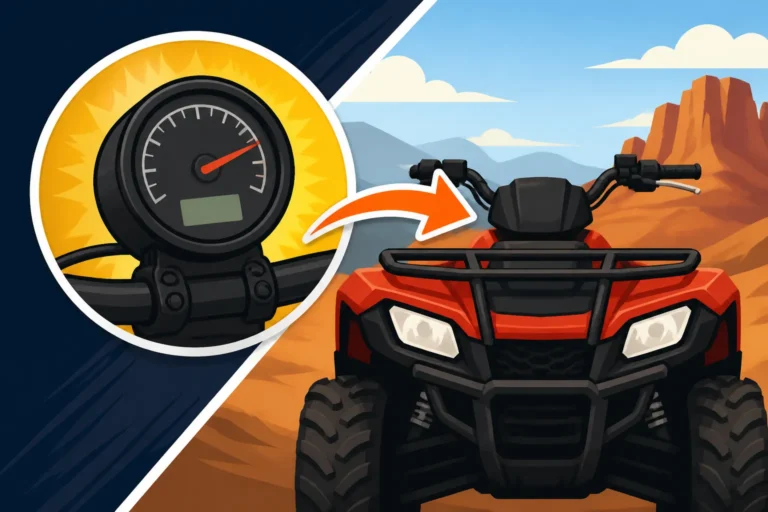
Knowing your speed is critical for road safety and compliance with posted speed limits. Therefore, a functional speedometer is required for a street-legal OHV. This device must accurately display your current speed. Most modern UTVs come with integrated speedometers, but older ATVs or customized builds might lack this feature. If your machine doesn't have one, you'll need to install an aftermarket unit. These can range from simple GPS-based speedometers to more elaborate wheel-speed sensor systems. Accuracy is key here, so ensure your speedometer is calibrated correctly.
For night riding, beyond the headlights and tail lights, your OHV must also be equipped with any additional lighting required by law for other vehicles. This typically means no forward-facing lights that are not part of your headlight system should be on when driving on public roads at night (unless specifically designed as legal driving lights). Also, ensure your instrument cluster lights are working so you can read your speedometer and other gauges after dark. Your ability to operate safely at night, including knowing your speed, is part of the overall assessment for street-legal status, covered in more detail in [Speedometers and Night Riding in Utah].
Mud Flaps and Fenders Utah Expects
This is one that often catches riders off guard: mud flaps and fenders. Utah requires your street-legal OHV to have fenders that cover the full width of the tire and mud flaps that extend downwards from the rear fenders. This is to prevent rocks, mud, water, and other debris from being thrown up by your tires, potentially impacting other vehicles or pedestrians. This requirement is especially relevant for UTVs with wide stances and aggressive tires, which can easily spray debris.
If your factory fenders don't adequately cover your tires, or if you've installed wider tires or a lift kit, you may need to add fender flares or extenders. Mud flaps can often be purchased as aftermarket accessories and bolted to the rear of your machine. The key is that they must be effective at containing spray. An inspector will look for this, especially on machines with larger, more aggressive tires. This is a practical safety measure that prevents your OHV from being a nuisance or a hazard to other drivers, and it’s important to address [Mud Flaps and Fenders Utah Expects].
Here's a quick summary table of the key equipment:
| Equipment Category | Specific Requirement | Inspection Check | Common Considerations |
|---|---|---|---|
| Visibility (Front) | Headlights (white, low/high beam) | Functional, bright, proper aim | Upgrade older halogens to LED for better visibility |
| Visibility (Rear) | Tail Lamps (red, visible from distance) | Functional, bright, proper color | Ensure all rear lights illuminate for maximum safety |
| Signaling | Turn Signals (front/rear, amber/red) | Functional, clearly visible, correct color | Many machines need aftermarket kits (e.g., from SuperATV) |
| Brake Light (red, activates with brake) | Functional, bright, immediate activation | Check wiring for solid connection | |
| Identification | License Plate Light (white, illuminates plate) | Functional, illuminates plate clearly | Mount plate securely, keep clean |
| Awareness | Rearview Mirror (center) | Provides clear view to rear | Ensure it's securely mounted and adjustable |
| Side Mirrors (left & right) | Provide clear view to sides, securely mounted, adjustable | Breakaway mirrors are great for off-road use | |
| Horn (audible from specified distance) | Functional, easily accessible, standard sound | Test before inspection, ensure it's loud enough | |
| Control & Stopping | Service Brakes (independent, effective) | Stop vehicle safely and efficiently | Check pads, rotors, fluid levels, no leaks |
| Parking Brake (holds vehicle on grade) | Functional, holds machine securely | Adjust if weak or doesn't hold | |
| Tires | DOT-approved, adequate tread, good condition | Visual inspection of tread depth, sidewall markings | Avoid overly aggressive paddle or non-DOT tires |
| Protection | Windshield OR Eye Protection (goggles/glasses) | Windshield clear and secure OR driver wears eye protection | Full windshield offers best protection and comfort |
| Instrumentation | Speedometer (accurate) | Functional, displays speed accurately | Install aftermarket if not factory equipped |
| Containment | Fenders (full width of tire) | Cover tire width adequately | Add flares or extenders if tires are wider than stock |
| Mud Flaps (extend from rear fenders) | Prevent debris from being thrown backward | Often an aftermarket add-on for most OHVs |
Getting Your Machine Certified: The Inspection Process
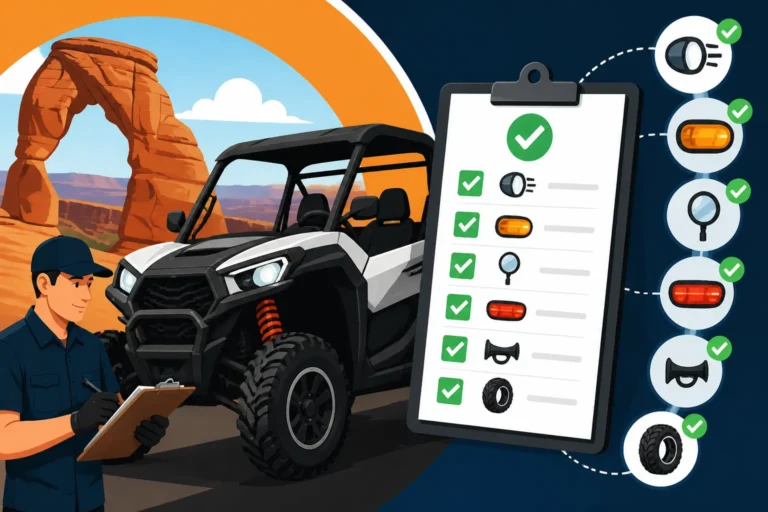
So, you’ve meticulously installed all the required equipment, double-checked every light, tightened every mirror, and ensured your tires are DOT-approved. Now comes the moment of truth: the inspection. This isn't just a formality; it's a critical step to ensure your OHV is truly road-ready and compliant with Utah law. Understanding what to expect during this process can alleviate a lot of stress and help you avoid common pitfalls that lead to re-inspections.
The inspection process is designed to be thorough, ensuring that your machine meets every one of the [Utah Street-Legal ATV Equipment Requirements]. It's not uncommon for riders to miss a small detail, like a non-functional license plate light or a slightly dim turn signal, which can result in a failed inspection. Thinking proactively about what the inspector will look for can save you time, money, and frustration.
Where to Get Your Street-Legal Inspection Done
In Utah, street-legal OHV inspections are typically performed at a certified safety inspection station. These are usually automotive repair shops or dealerships that have technicians certified to perform vehicle safety inspections. It's a good idea to call ahead to confirm they perform OHV inspections, as not every station does. When you call, ask if they have specific experience with street-legal UTVs or ATVs, as their familiarity with the unique requirements can make the process smoother.
Before you even head to the station, make sure all your paperwork is in order. You'll need proof of ownership (like a title or MCO) and potentially your registration application. The inspection itself isn't a complex mechanical deep-dive, but rather a checklist of safety equipment and functionality. Finding a knowledgeable inspector who understands OHVs can be a huge benefit, as they might offer helpful pointers if something is slightly off, rather than just outright failing you.
Common Reasons for Failing a Street-Legal Inspection
Even with the best intentions, it's easy to overlook something that will cause your OHV to fail its street-legal inspection. Here are some of the most common culprits:
- Non-functional Lights: A burnt-out bulb in a headlight, tail light, brake light, turn signal, or license plate light is a guaranteed fail. Ensure all lights are bright and work consistently.
- Improper Turn Signal Operation: Turn signals must be clearly visible from both front and rear, and often, new installations might have wiring issues or an incorrect flasher relay.
- Missing Mirrors: Forgetting one of the three required mirrors (rearview, left side, right side) is a common mistake.
- Weak Horn: The horn must be loud enough to be heard. A weak or sputtering horn won't cut it.
- Worn or Non-DOT Tires: Tires with insufficient tread or those not explicitly marked "DOT" on the sidewall will cause a failure.
- No Windshield or Eye Protection: If your UTV lacks a windshield, you need to assure the inspector you will always wear eye protection on public roads. Forgetting to mention this, or not having appropriate eye protection on hand, can be an issue.
- Loud Exhaust: If your muffler is modified, damaged, or simply too loud, it won't pass Utah's noise limits for road use.
- Missing Mud Flaps/Fenders: This is often an afterthought. Ensure your tires are adequately covered and mud flaps are present.
Reviewing [What Fails a Utah Street-Legal Inspection] can give you a more detailed list of things to watch out for. A pre-inspection checklist, where you go through every item yourself, can save you a lot of hassle and ensure your visit to the inspection station is a successful one.
Kit or Custom? Making the Right Choices
When it comes to outfitting your OHV for street-legal status, you essentially have two main paths: buying a comprehensive kit or sourcing individual components and building a custom setup. Both approaches have their pros and cons, and the best choice often depends on your budget, your mechanical skills, and how much you enjoy tinkering with your machine.
There’s no single right answer, and many riders end up doing a hybrid approach, using a kit for core components like turn signals and then adding specific mirrors or windshields separately. The key is to ensure that whatever route you take, all the required equipment is met with quality components that will stand up to both road and trail abuse.
Pros and Cons of Street-Legal Kits
Street-legal kits, often offered by aftermarket companies like SuperATV, are designed to provide many of the necessary components in one package. They often include turn signals, a horn, a license plate bracket with a light, and sometimes even mirrors and a speedometer.
Pros of Kits:
- Convenience: All the major electrical components are often bundled together, with wiring harnesses designed for specific models, making installation quicker and easier.
- Compatibility: Kits are usually designed to work together, reducing the guesswork of mixing and matching different brands and ensuring electrical compatibility.
- Cost-Effective: Often, buying a kit can be more affordable than purchasing each component individually, especially for the core electrical items.
- Guaranteed Compliance (often): Reputable kit manufacturers design their products to meet state-specific requirements, giving you peace of mind.
Cons of Kits:
- Less Customization: You might be stuck with the specific style or quality of components included in the kit, even if you prefer something different.
- Not All-Inclusive: Many kits don't include items like a windshield, specific tire upgrades, or comprehensive fender flares, meaning you'll still need to buy additional parts.
- Model Specificity: A kit for a Polaris RZR might not fit your Can-Am Maverick, so you need to ensure you're buying the correct one.
Ultimately, kits are a fantastic option for riders who want a relatively straightforward installation and a high degree of confidence that they're getting compliant parts. Understanding [What a Street-Legal Kit Includes] is crucial before making a purchase.
Building Your Own Street-Legal Setup
For the mechanically inclined or those who want complete control over every component, building a custom street-legal setup is a rewarding option. This involves researching each requirement, selecting individual parts, and installing them one by one.
Pros of Custom Builds:
- Full Customization: You can choose exactly what brand and style of headlights, mirrors, turn signals, and horn you want, tailoring the setup to your preferences and budget.
- Higher Quality Components: If you're willing to spend more, you can select premium-grade components for each function, potentially exceeding the quality of some kit components.
- Flexibility: You can adapt your build to unique machine configurations or specific aesthetic desires.
Cons of Custom Builds:
- More Research and Planning: It requires a deeper understanding of electrical systems, wiring diagrams, and component compatibility.
- Potentially More Expensive: Sourcing individual high-quality components can sometimes cost more than a bundled kit.
- Time-Consuming: Installation can take longer, especially if you're dealing with custom wiring or fabrication.
- Risk of Non-Compliance: If you're not careful, you might inadvertently choose a component that doesn't fully meet Utah's requirements.
Whether you go with a kit or a custom build, the most important thing is to ensure that every single item on the [Utah Street-Legal ATV Equipment Requirements] list is met with functional, compliant, and durable parts. Don't rush the process, and test everything thoroughly before heading to the inspection station.
Maintaining Your Street-Legal Status
Getting your OHV inspected and approved for street-legal use is a significant achievement, but it's not a one-and-done deal. Just like any other registered vehicle, maintaining your street-legal status requires ongoing attention to ensure your machine remains compliant with Utah law. This isn't just about avoiding tickets; it's about continued safety for yourself and everyone else on the road.
Regular checks, proper maintenance, and understanding the renewal process are all part of responsible street-legal OHV ownership. Life happens—bulbs burn out, mirrors get bumped, and tires wear down. Being proactive ensures your adventure doesn't get cut short by an unexpected issue or a run-in with law enforcement.
Routine Checks for Ongoing Compliance
Once your OHV is street legal, make it a habit to perform quick checks before every road ride. This "pre-flight" routine can save you from a roadside ticket or, more importantly, a safety incident.
Here's a quick checklist to run through:
- All Lights: Turn on your headlights (low and high beam), tail lights, brake lights, turn signals (both sides, front and rear), and license plate light. Walk around your machine to confirm every single bulb is working and bright.
- Mirrors: Ensure all three mirrors are securely mounted, clean, and adjusted for optimal visibility.
- Horn: Give a quick honk to ensure it's loud and clear.
- Brakes: Test both your service brakes (for stopping power) and your parking brake (to ensure it holds the machine).
- Tires: Visually inspect for any damage, proper inflation, and adequate tread depth.
- Windshield/Eye Protection: Check for cracks or damage on your windshield, or confirm you have your goggles/glasses readily available.
- Speedometer: Verify it's working when you start moving.
- Fenders/Mud Flaps: Ensure they are still in place and effectively covering your tires.
These quick checks take only a few minutes but can prevent a world of headaches. If you find something isn't working, get it fixed before you hit the pavement. Riding with malfunctioning street-legal equipment is just asking for trouble, both from a safety and legal perspective.
Renewing Your Utah Street-Legal Registration
Just like your off-highway registration, your street-legal registration needs to be renewed periodically. When you initially make your OHV street legal, you're essentially getting two registrations: an OHV registration (which typically covers off-road use and state trail fees) and a street-legal vehicle registration (which covers road use and often involves a different fee structure, including sales tax and uniform fees). The specifics of [Renewing a Street-Legal ATV Registration] can sometimes be tricky because you're dealing with two layers of paperwork.
You'll usually receive a renewal notice in the mail from the Utah DMV. It's crucial to pay attention to the expiration dates for both the OHV registration and the street-legal portion. Sometimes they might align, but not always. The good news is that for many street-legal OHVs, once you've passed the initial safety inspection, you typically don't need to get re-inspected annually, as long as your machine remains in compliance and doesn't undergo significant modifications that would impact safety. However, this is always subject to change, so it's wise to check current DMV guidelines. Missing a renewal can result in fines and the loss of your street-legal privileges, so mark those calendars!
Disclaimer
This article is for general informational purposes only and does not constitute professional advice. Laws, prices and regulations vary by location and change over time. Consult a qualified professional for guidance on your specific situation.