Headlight Rules After Sunset in Utah
There's nothing quite like extending a day of riding into the cool, crisp air of a Utah evening. Maybe you've just finished a thrilling climb on the trails and you're making your way back to your campsite or a local diner for a well-earned meal. If your ATV or UTV is street legal, those twilight and nighttime hours open up a whole new world of adventure on public roads. But here’s the rub: navigating Utah's headlight rules after sunset can feel a bit like trying to read a trail map in the dark, leaving many riders unsure of what's truly required. This comprehensive guide is here to illuminate those rules, ensuring your machine is not only street-legal but also safely equipped for any night riding you plan to do on Utah’s roads.
What Makes a Headlight "Legal" for Night Riding on Utah Roads?
When you’ve invested time and money to get that street-legal plate on your side-by-side or quad, you want to make sure every component meets the mark, especially your headlights. This isn't just a suggestion; it's a critical safety and legal requirement for anyone venturing onto public roads after dark. Think about it: a car or truck has a whole array of lighting designed for nighttime visibility, and your OHV needs to meet a similar standard to blend safely into that traffic flow.
Brightness and Beam Pattern: Seeing and Being Seen
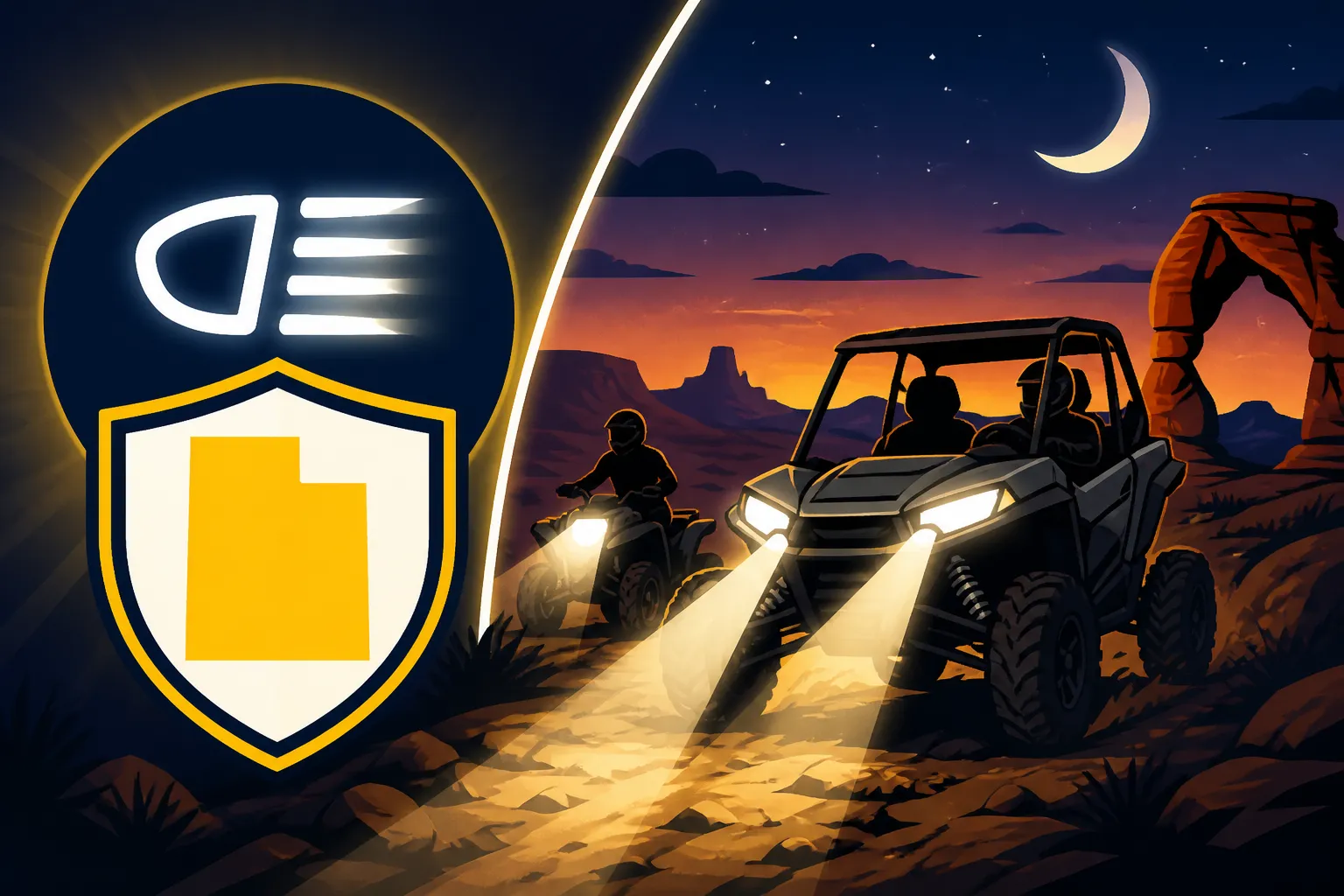
Utah law isn't vague when it comes to headlights; it specifies that your street-legal OHV must have at least one, and preferably two, headlamps that are capable of projecting a beam of light a certain distance ahead. The key here is visibility – not just for you to see what’s coming, but for other drivers to see you clearly, even from a distance. These aren't just decorative lights; they're functional safety devices.
A legal headlight needs to provide adequate illumination without blinding oncoming traffic. This is where the beam pattern comes into play. A proper beam should illuminate the road ahead, showing you obstacles, turns, and other vehicles, but it also needs a defined cutoff to prevent excessive glare. Many aftermarket lights, while incredibly bright, might not have this crucial beam pattern, scattering light everywhere and potentially making you a hazard to others. Imagine trying to drive down a dark county road only to be suddenly hit with a wall of bright, uncontrolled light from an oncoming OHV; it’s disorienting and dangerous. This is why standard automotive-style headlights with proper low and high beam functions are typically required. The goal is to see clearly, but also to be seen responsibly.
Mounting and Aiming: The Law's Specifics
It’s not enough to simply have bright lights; where and how they’re mounted, and their aiming, are just as crucial. Utah regulations often align with federal motor vehicle safety standards (FMVSS) regarding lighting, which dictate specific height requirements for headlamps. Generally, headlights must be mounted between a certain minimum and maximum height from the ground. This ensures that the light can effectively illuminate the road without being too low to be useful or too high to cause excessive glare.
Beyond height, proper aiming is paramount. Misaimed headlights, even if they're otherwise compliant, can either illuminate the treetops or blind oncoming drivers. When you take your machine for a [Utah's Street-Legal ATV Inspection, Step by Step], the inspector will almost certainly check your headlight aim. They'll look for your low beams to cut off at a certain point, ensuring they don't project too high, and your high beams to provide that extra reach when the road is clear. Many riders don't realize that even a small bump or off-road excursion can knock their headlights out of alignment, so it's a good practice to periodically check their aiming, especially if you're frequently transitioning between trail and road use.
High Beams and Low Beams: When and How to Use Them
Just like a car, a street-legal ATV or UTV in Utah must have both high beam and low beam functionality. Low beams are for general driving, especially when there's oncoming traffic or you're following another vehicle. They provide sufficient light for safe travel without causing glare. High beams, on the other hand, are designed to give you maximum visibility on unlit roads where there's no risk of blinding others. They project a much longer and wider beam, essential for spotting wildlife, potholes, or other hazards far down the road.
The law is pretty clear on when you should switch from high beams to low beams. Generally, you need to dim your lights to low beam when you're within a certain distance of an oncoming vehicle (typically around 500 feet) or when you're following another vehicle within a similar distance (often 200-300 feet). Failing to do so isn't just impolite; it's a traffic violation that can lead to a ticket and, more importantly, can cause a dangerous situation for other drivers. Understanding and correctly using your high and low beams is a fundamental aspect of safe night riding on Utah's public roads, aligning with the broader [Utah Traffic Rules for Street-Legal Side-by-Sides].
Practical Considerations for Headlights After Dark
Beyond just meeting the letter of the law, there are plenty of practical considerations that come into play when you’re relying on your headlights for safety after the sun goes down. It's one thing to pass an inspection, but it's another entirely to ride confidently and safely hour after hour in varying conditions.
Visibility for Other Drivers: It's a Two-Way Street
While you're focused on seeing the road ahead, remember that your headlights also play a crucial role in making you visible to other drivers. ATVs and UTVs, by their very nature, are often smaller and sit lower than many passenger vehicles, making them harder to spot, especially in rural areas or on winding roads. Bright, properly aimed headlights help compensate for this size difference.
Consider your riding environment: are you on a well-lit city street or a dark, desolate highway between small towns? On those darker roads, your lights are often the only thing indicating your presence. Reflective tape on your machine, bright tail lamps, and even auxiliary lighting can complement your headlights, creating a more comprehensive visibility profile. You want to be so visible that there's no question about your presence on the road. This also extends to how your machine appears from the side; while not a headlight function, overall illumination, including [Headlights and Tail Lamps Utah Requires], ensures a safer ride.
Keeping Your Lights Clean and Clear: Maintenance Matters
It might seem obvious, but dusty, muddy, or even bug-splattered headlights are dramatically less effective. Imagine trying to see through a dirty windshield – now apply that to your primary source of illumination. Off-road riding often means encountering conditions that will quickly obscure your lights, whether it's fine desert dust clinging to every surface or splashes of mud from a creek crossing.
Before every evening ride, and even during a long day of riding if conditions are particularly dirty, take a moment to wipe down your headlight lenses. Carry a small microfiber cloth and some water or a cleaning spray if needed. This simple act can significantly improve your light output and ensure you’re meeting the spirit of the law, not just the letter. Over time, plastic headlight lenses can also become hazy or yellowed due to UV exposure. This degradation severely reduces light output. Consider restoration kits or replacement lenses if your lights are showing signs of age, as compromised visibility isn't worth the risk.
Auxiliary Lighting: Is More Always Better?
Many riders are tempted to add auxiliary light bars or spot lamps to their street-legal OHVs, and for good reason—they offer incredible illumination off-road. However, when it comes to public roads, "more" isn't always "better" or even legal. Most auxiliary off-road lights are not designed for on-road use. They lack the proper beam pattern and cutoff, meaning they will blind oncoming drivers, even when aimed low.
Utah law, like most states, has specific regulations about auxiliary lighting on public roads. Generally, off-road lights must be covered when driving on public highways, or they must be wired to only operate with your high beams and conform to specific brightness and aiming standards. Simply flicking on a 50-inch LED light bar while cruising down Main Street in Moab is a surefire way to get pulled over. If you absolutely need additional forward illumination for specific legal purposes on the road (like plowing snow where allowed), look for SAE/DOT approved driving lights, which are designed to complement your high beams without creating illegal glare. Otherwise, save those powerful light bars for the trails, where they truly shine.
Avoiding Issues: Common Mistakes with Street-Legal Headlights in Utah
Even with the best intentions, it's easy to make mistakes when it comes to street-legal lighting. These pitfalls can lead to frustrating encounters with law enforcement, unsafe riding conditions, or even accidents. Being aware of the most common issues can save you a lot of headache down the road.
The Dangers of Aftermarket Lights That Don't Comply
One of the biggest traps riders fall into is assuming that any bright light is a legal light. The aftermarket is flooded with incredibly powerful LED light bars, cube lights, and replacement bulbs that promise superior illumination. While many of these are fantastic for off-road use, they often fail to meet the specific requirements for street-legal headlights. As mentioned before, the key isn't just brightness, but the beam pattern, which directs light precisely where it's needed without scattering it into oncoming drivers' eyes.
Many low-cost LED replacement bulbs, for example, simply flood the reflector housing with light, creating a dazzling glare instead of a focused beam. This not only makes you a road hazard but can also make it harder for you to see effectively, as your eyes will struggle to adjust to the uncontrolled light. When choosing upgrades, always look for products that are DOT (Department of Transportation) compliant or SAE (Society of Automotive Engineers) approved for on-road use. Reputable brands understand these distinctions. For instance, companies like SuperATV offer a range of lighting solutions, and while many are geared for off-road performance, they also provide information and products that help riders comply with street-legal requirements, ensuring you're not just bright, but legally bright. Choosing correctly can prevent you from failing your [Utah's Street-Legal ATV Inspection, Step by Step] or getting cited by a trooper.
Understanding What an Officer Looks For
When a Utah Highway Patrol trooper or a local sheriff’s deputy pulls you over after dark, they're not just admiring your shiny new side-by-side. They’re conducting a safety check, and your lights are a primary focus. They'll be looking for several things:
- Functionality: Do your headlights turn on? Do both high and low beams work?
- Color: Are they white or amber? (Red or blue lights are illegal for non-emergency vehicles).
- Beam Pattern: Is the light properly focused, or is it scattered and glaring?
- Aim: Are the lights aimed correctly, or are they pointing too high or too low?
- Compliance: Do they appear to be DOT-compliant, or are they clearly off-road only lights being used on the highway?
An officer's concern is safety. If your lights are blinding other drivers, or if they don't provide adequate illumination for you to see, you're a hazard. They might also be checking for other required [Utah Street-Legal ATV Equipment Requirements] like turn signals or a horn. Being proactive and ensuring your lighting is fully compliant before you hit the road after sunset will save you a lot of potential hassle and allow you to enjoy your ride stress-free. Remember, [What a Utah Officer Looks for on a Street-Legal ATV] often includes proper lighting.
Avoiding Glare for Oncoming Traffic
This point cannot be stressed enough: avoiding glare for oncoming traffic is a moral and legal imperative. When you’re riding at night, you share the road with everyone, and the responsibility to not impair another driver’s vision rests heavily on you. Glare doesn't just annoy other drivers; it momentarily blinds them, creating a dangerous situation where they can’t see the road, obstacles, or even you.
If you’re driving with your high beams on and you see headlights approaching in the distance, dim your lights. If you're following another vehicle, keep your low beams on. If you've installed aftermarket lights, and you notice other drivers flashing their high beams at you even when your low beams are on, that's a huge red flag. It means your lights are likely not compliant and are creating excessive glare. Take that feedback seriously and investigate your lighting setup. It might be time to adjust their aim, or even replace non-compliant components with proper street-legal headlights. Your safety and the safety of others depend on it.
Choosing the Right Headlights for Your Street-Legal Machine
Selecting the right headlights for your street-legal ATV or UTV is crucial. It’s a balance between performance, durability, and legal compliance. You want lights that can handle the rigors of off-road life but still perform flawlessly and legally on the pavement.
OEM Replacements vs. Upgrades
When your factory headlights are no longer cutting it, you have two main paths:
- OEM Replacements: These are direct replacements for your original headlights. They are guaranteed to meet all the necessary street-legal requirements and fit perfectly. If your original lights were adequate and you're happy with their performance, this is the simplest and safest route to maintain compliance. The downside is that they may not offer any performance improvements over your old, worn-out units.
- Aftermarket Upgrades: This is where you can see significant improvements in light output, durability, and even aesthetics. However, this path requires careful selection. Not all aftermarket headlights are created equal, and many are designed primarily for off-road use. If you're going for an upgrade, prioritize those explicitly labeled as DOT or SAE compliant for on-road use. These often feature advanced optics and better LED technology that can provide a brighter, crisper light with a legal beam pattern. Some kits, like those from SuperATV, might even offer complete headlight assemblies that are designed to be street-legal in many jurisdictions, providing a significant upgrade from stock. Always double-check product specifications to ensure they meet Utah's specific criteria for [Headlights and Tail Lamps Utah Requires].
LED vs. Halogen: Pros and Cons
The debate between LED and Halogen headlights is a common one among riders. Here’s a quick rundown to help you decide:
| Feature | Halogen Headlights | LED Headlights |
|---|---|---|
| Brightness | Good, but often less intense than modern LEDs. | Excellent, generally much brighter and whiter. |
| Energy Use | Higher power draw, generates more heat. | Much lower power draw, more energy-efficient. |
| Lifespan | Shorter lifespan (500-1000 hours typically). | Very long lifespan (tens of thousands of hours). |
| Durability | Filament is susceptible to vibration and impacts. | More resistant to vibration and shock. |
| Cost | Generally less expensive for replacement bulbs/assemblies. | Higher upfront cost for quality units, but lower long-term maintenance. |
| Beam Pattern | Established, generally easy to comply with regulations. | Can be tricky to get a compliant beam pattern with cheap kits. |
| Color Temp | Warm, yellowish light (around 3200K). | Cool, white light (5000K-6000K), closer to daylight. |
For street-legal machines, LEDs are increasingly popular due to their brightness, efficiency, and longevity. However, it's absolutely critical to ensure any LED upgrade comes with a proper projector housing or is designed specifically to produce a DOT-compliant beam pattern. Simply dropping an LED bulb into a halogen reflector housing often leads to excessive glare and an illegal setup.
Finding Kits That Meet Utah Standards
The best way to ensure your headlights meet Utah standards is to look for reputable manufacturers who specifically design and market street-legal lighting kits. These kits will often include everything you need, from headlight assemblies to wiring harnesses, all designed to integrate seamlessly and comply with regulations.
When shopping, look for:
- DOT/SAE Compliance: This is your strongest indicator that the product is designed for on-road use.
- Vehicle-Specific Fitment: Kits designed for your specific make and model (e.g., Polaris RZR, Can-Am Maverick, Honda Pioneer) will ensure proper fit and often easier installation, helping you avoid mistakes like improper mounting or aiming.
- Complete Solutions: Some kits, especially from brands like SuperATV, offer comprehensive street-legal conversion packages that include not just headlights but also turn signals, mirrors, and other required components. While this article focuses on headlights, getting a package that addresses multiple [Utah Street-Legal ATV Equipment Requirements] can simplify the process of making your machine fully compliant.
- User Reviews and Support: Read reviews from other riders who have used the lights on street-legal machines. Good customer support from the manufacturer can also be invaluable if you run into installation questions or need clarification on compliance.
Remember, the goal is not just to have "lights" but to have legal and safe lights for those awesome evening rides across Utah's diverse landscapes. Getting your lighting right is a major step towards enjoying your street-legal OHV fully, whether you're heading to a trailhead in Moab or just grabbing groceries in town after dark.
Disclaimer
This article is for general informational purposes only and does not constitute professional advice. Laws, prices and regulations vary by location and change over time. Consult a qualified professional for guidance on your specific situation.