Making a UTV Street Legal in Utah
For many Utah UTV and ATV enthusiasts, the dream of seamlessly transitioning from a rugged trail ride to a quick trip into town for gas or a bite to eat often bumps up against a wall of regulations. It's frustrating to constantly load and unload your machine, or to feel tethered to a truck and trailer when the perfect shortcut down a county road is just out of reach. This comprehensive guide is here to untangle the complexities of making your UTV truly street legal in Utah, providing you with the peace of mind and freedom to explore without constant logistical headaches.
The Dream of Street-Legal Riding: Why It Matters to Utah Enthusiasts
There’s a unique feeling of liberation that comes with being able to ride your UTV directly from your driveway to the trailhead, or to cruise into a small town for supplies without the hassle of hitching up a trailer. Utah’s vast network of trails often connects directly to rural roads, and the ability to legally use those roads can fundamentally change how you experience the state's incredible backcountry. It's not just about convenience; it's about unlocking a new level of adventure and integration into the OHV-friendly communities that dot our landscape.
Bridging the Gap: Trail to Town Convenience
Think about those moments when you’re deep into an epic ride on the Paiute Trail, and your fuel gauge starts to dip. The nearest gas station might be just a few miles down a paved county road. Without street-legal status, that short distance becomes a major operation: find a safe spot, unload your gas cans (if you remembered them), or even worse, call for someone to bring you fuel. It breaks the flow of your ride, adds stress, and takes valuable time away from the fun. With a street-legal UTV, that same scenario is transformed. You simply turn onto the road, head to the gas station, fill up, maybe grab a cold drink, and then continue your adventure. It removes a significant barrier between your trail experience and the practical necessities of a long ride. No more hunting for staging areas or worrying about leaving your truck and trailer unattended for hours.
This convenience extends beyond fuel. Imagine finishing a dusty ride at Sand Hollow and being able to drive right over to a local restaurant in Hurricane or St. George for a well-deserved meal, rather than having to load up your mud-splattered machine first. It integrates your riding experience with the local community in a way that truly enhances the adventure. For many, this ability to bridge the gap between rough terrain and paved roads is the primary motivation for making the conversion. It means less time spent on logistics and more time enjoying the ride, wherever that ride may take you.
Expanding Your Riding Horizons in Utah
Utah boasts some of the most diverse and stunning OHV riding in the country, from the red rocks of Moab and Sand Hollow to the high mountain trails of the Uintas and the vast expanse of the San Rafael Swell. While dedicated trailering works for many, making your UTV street legal opens up new possibilities for connecting these incredible areas. You might be able to ride sections of scenic byways that connect one trail system to another, or access less-traveled county roads that lead to hidden gems you never knew existed. This isn't about flying down I-15 at 70 mph; it's about connecting the dots, exploring the fringes of towns, and experiencing the landscape from a different perspective.
Consider planning a multi-day trip where you can stay at a hotel in a trail-friendly town like Marysvale and drive your UTV directly from your lodging to various sections of the [Paiute ATV Trail] each day. This eliminates the daily chore of loading and unloading, allowing for a more relaxed and immersive experience. It can even allow you to explore regions that are otherwise difficult to access without a dedicated trailering vehicle, making those long-held dreams of exploring remote Utah canyons and forests a tangible reality. The ability to ride legal roads also broadens your opportunities for [Camping Beside Utah's OHV Trails], allowing direct access to dispersed camping spots that might be a short drive off a main paved route.
The Local Buzz: Why Everyone's Talking About It
If you spend any time in Utah's OHV communities, you've probably heard chatter about "street-legal" side-by-sides. You see more and more machines driving around Moab, Hurricane, or Kanab with license plates, and it sparks curiosity. "How did they do that?" or "Is that even legal?" are common questions. This increasing visibility creates a bit of a buzz, but also a fair amount of confusion. Many riders see the freedom others are enjoying and want a piece of that action, but the process can seem daunting and the rules a little murky.
It’s easy to feel left out or overwhelmed by conflicting information you hear at the trailhead or read online. Some folks swear by certain conversion kits, while others insist on doing it piece by piece. The truth is, the process is straightforward once you understand the specific requirements, but it does demand attention to detail. This guide aims to clear up that confusion, offering a clear path forward so you can join the ranks of those enjoying the extended freedom of street-legal riding without worrying about getting pulled over or failing an inspection. When done correctly, your street-legal UTV becomes a point of pride, a testament to your commitment to fully embracing the Utah OHV lifestyle.
Understanding Utah's Street-Legal UTV Laws and Regulations
Before you start bolting on turn signals and new mirrors, it's crucial to understand the legal foundation that allows UTVs to operate on Utah's public roads. This isn't about loopholes or gray areas; Utah has specific legislation designed to integrate OHVs into its road network, provided they meet certain safety and equipment standards. Getting this right from the start will save you a lot of headache and potential fines down the road. It’s a bit like learning the rules of the trail before you hit it – essential for a safe and enjoyable experience.
The Core Legislation: What the Law Says
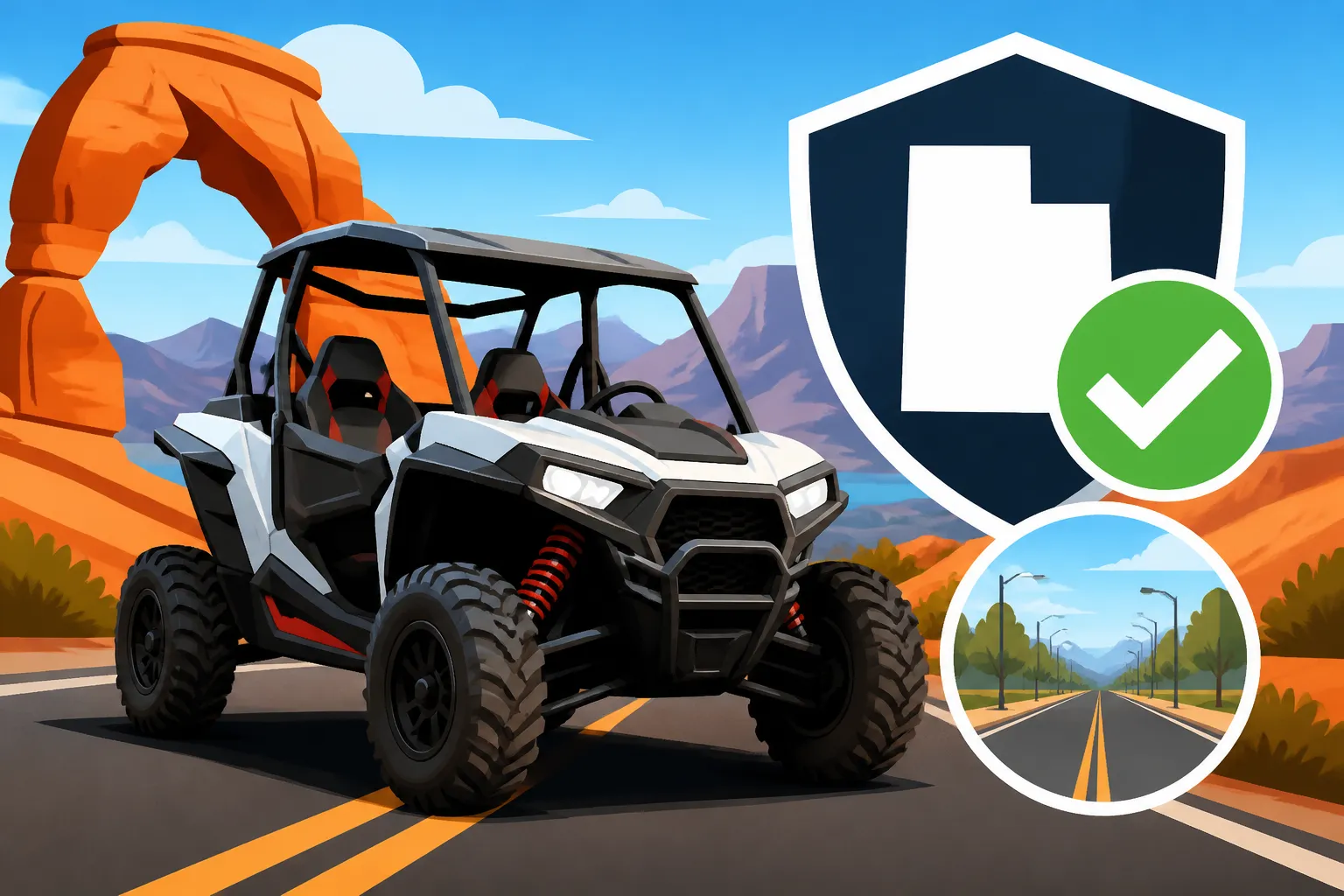
Utah’s laws regarding street-legal OHVs are primarily found within the state's motor vehicle code, specifically under sections pertaining to off-highway vehicles and their operation on public roads. The key takeaway is that Utah permits OHVs, including UTVs, to be operated on public highways and roads if they meet certain equipment standards and are properly registered and insured. This isn't blanket permission to drive anywhere; there are limitations, but the foundational principle is one of inclusion rather than exclusion. The intent is to allow riders to access trails and services, not to use UTVs as primary commuter vehicles on high-speed roadways.
It's important to differentiate between general OHV registration for trail use and the specific requirements for street-legal operation. While all OHVs used on public lands in Utah need to be registered with the Division of Motor Vehicles (DMV) and display an OHV decal, becoming street legal involves an additional set of steps and equipment that allows for a separate motor vehicle license plate. This distinction is vital for understanding what paperwork you'll need and what authorities will be looking for. When you visit the DMV, you'll effectively be applying for both your standard OHV registration and the street-legal designation, resulting in both an OHV decal and a standard license plate. For more details on the general requirements, you can look up [How to Register an ATV or UTV in Utah].
Key Definitions: What Qualifies as an OHV in Utah
Utah law defines an "off-highway vehicle" (OHV) quite broadly, encompassing ATVs, UTVs (or side-by-sides), off-highway motorcycles, and even snowmobiles. For the purpose of street-legal conversion, we're primarily focused on UTVs and ATVs. These machines must meet certain criteria regarding their original design and intent. Generally, a UTV is a motor vehicle that is designed for off-highway use and has a width of 72 inches or less, dry weight of 3,500 pounds or less, and a non-straddle seating position. It’s typically steered with a wheel and has foot pedals for control. There are specific rules regarding [Which Machines Utah Registers as Off-Highway Vehicles], so it's worth a quick check to ensure your machine fits the state's definition before investing in conversion parts.
The critical distinction for street legality isn't just that it's an OHV, but that it can be modified to meet conventional motor vehicle safety standards. This means adding turn signals, mirrors, and other equipment that an inspector expects to see on a regular car or truck. It’s not about changing the fundamental nature of your UTV, but rather equipping it to safely interact with other vehicles on public roads. This ensures that when you're driving your side-by-side through a small town, you can signal turns, see traffic behind you, and otherwise operate predictably in a mixed traffic environment, prioritizing safety for everyone on the road.
Road Restrictions: Where You Can and Cannot Ride
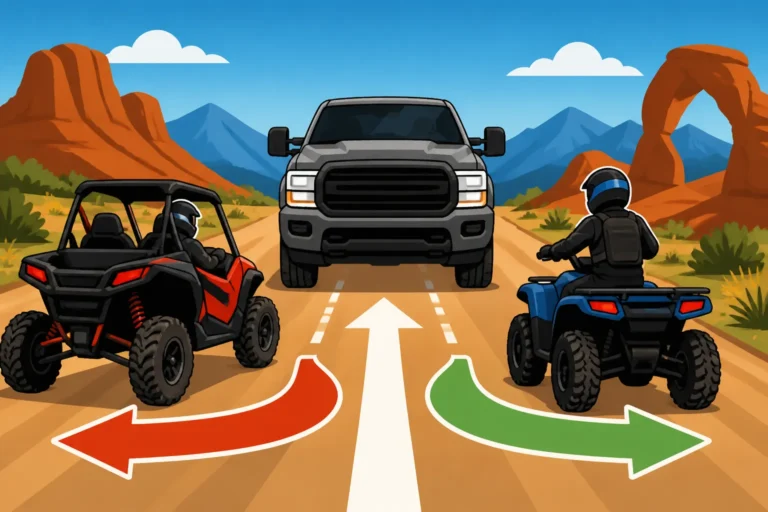
Even with a street-legal UTV, there are specific limitations on where you can and cannot ride on Utah’s public roads. This is probably one of the most misunderstood aspects of the law. Generally, street-legal OHVs are allowed on any public highway or road with a posted speed limit of 50 mph or less. This covers the vast majority of county roads, city streets, and smaller state highways. However, there are significant exclusions. You absolutely cannot operate a street-legal UTV on an interstate highway or freeway, regardless of its speed limit or the type of road. Think I-15, I-80, or I-70 – those are strictly off-limits.
Additionally, some cities or counties may have specific ordinances that further restrict OHV use on certain streets or within certain areas, even if those roads technically fall under the 50 mph rule. While Utah state law broadly permits street-legal UTVs, local jurisdictions retain some control. For instance, while Moab is famously OHV-friendly, it has specific noise ordinances and speed limits on its main streets. It's always a good idea to check with the local city or county offices of the area you plan to visit, especially in more populated zones. Knowing [Where Street-Legal ATVs Can Drive in Utah] will prevent you from accidentally riding into a restricted zone and incurring a ticket, which would definitely put a damper on your ride. Always pay attention to signage, as local restrictions are often clearly posted at city limits or on specific roads.
Essential Equipment for Street-Legal Conversion in Utah
Now that you understand the legal landscape, it's time to dive into the practical side: what specific equipment your UTV needs to become street legal in Utah. This isn't just a suggestion; these are mandatory safety features that your vehicle must have to pass inspection and comply with state law. Cutting corners here isn't just risky for your wallet if you fail inspection; it's risky for your safety and the safety of others on the road. Many companies, like SuperATV, offer comprehensive kits that include most of these components, making the process much simpler than buying each piece individually.
Lighting the Way: Headlights, Taillights, and Turn Signals
When you’re driving on public roads, visibility is paramount, both for you to see and for other drivers to see you. Utah law requires that your street-legal UTV have specific lighting equipment. This includes functional headlights, taillights, and brake lights that operate correctly. Your headlights must illuminate the road sufficiently, and your taillights must be visible from a certain distance. The brake lights should activate when you apply the brakes, just like on any car. Most modern UTVs come with adequate headlights and taillights, but it’s crucial to ensure they are in good working order and properly aimed for road use.
The biggest addition for most UTVs will be turn signals. These are non-negotiable for street legality. You'll need amber turn signals on both the front and rear of your machine, clearly visible and operational. Many riders opt for a full [Street-Legal Kits That Suit Utah's Rules] from companies like SuperATV because they often include all the necessary wiring, switches, and lights in one package, simplifying the installation process. These kits are designed to integrate cleanly with your UTV's existing electrical system, ensuring a professional look and reliable operation. Don't forget [License Plate Lights and Mounting in Utah] – your rear license plate must be illuminated after dark so it's readable. This is a common oversight that can lead to inspection failure.
Safety and Visibility: Mirrors, Horns, and Windshields
Beyond lighting, your UTV needs to ensure you have clear visibility of your surroundings and the ability to alert other drivers. This means functional mirrors and a horn. Utah law specifically requires at least one mirror that provides a clear view of the highway to the rear for a distance of at least 200 feet. Most riders opt for two mirrors – one on each side of the vehicle – for enhanced safety and compliance. These can be simple side mirrors or more robust options designed for off-road durability. Again, brands like SuperATV offer a variety of mirror options, from basic clamp-on styles to full rearview mirrors.
A working horn is also mandatory. It must be audible from at least 200 feet away and is used for warning other motorists, just like in a regular car. This isn't just a formality; it's a critical safety device for communicating on the road. Finally, while a full windshield isn't always strictly required by Utah law (eye protection like goggles can suffice if there's no windshield), having one significantly enhances comfort and safety on paved roads by protecting you from wind, dust, and debris. If you do install a windshield, ensure it's made of safety glass or an equivalent material that won't shatter dangerously. [Windshield or Eye Protection in Utah] is key, so consider what setup makes the most sense for your riding style and safety preferences.
Brake Systems, Tires, and Mud Flaps: Staying Road-Ready
While many focus on the flashy lights and obvious additions, other less visible components are equally critical for street legality. Your UTV's brake system must be fully functional and capable of stopping the vehicle safely. This includes both foot brakes and a parking brake. An inspector will check that your brakes engage properly and hold the vehicle securely. You might think, "Well, my brakes work fine off-road!" but the inspection is about road-worthiness, which can sometimes highlight issues you hadn't noticed on the trail.
Tires are another crucial element. While aggressive off-road tires are perfect for the dirt, they must still be safe for road use. Utah law does not specify a particular type of tire for street-legal OHVs, but they must be in good condition with adequate tread. If you’re running extremely soft, low-pressure paddle tires for dune riding, you’ll likely need to swap them for more appropriate road-friendly treads if you plan to hit the pavement for more than a very short distance. Lastly, mud flaps are required if the vehicle's design (specifically the fenders) doesn't adequately prevent spray from the tires from being thrown onto other vehicles or pedestrians. This is particularly relevant for many UTVs with aggressive tires that stick out beyond the fender flares. Adding small, durable mud flaps is a simple and inexpensive way to ensure compliance and avoid issues during inspection.
Navigating the Utah Street-Legal Inspection Process
You’ve got all your shiny new gear installed, wires neatly tucked away, and your UTV is looking ready for the road. The next critical step is getting it inspected. This isn't just a bureaucratic hurdle; it's a safety check designed to ensure your converted UTV can operate safely alongside other vehicles. Knowing what to expect and how to prepare can make the difference between a quick pass and a frustrating re-inspection. It's often the most nerve-wracking part of the process, but with a little preparation, you can sail through it.
Finding a Certified Inspection Station in Utah
Unlike some other states, Utah requires a specific safety inspection for any vehicle that will receive a standard license plate, and this includes your street-legal UTV. You can't just roll into any mechanic's shop. You need to find a certified safety inspection station. These are typically auto repair shops that have technicians certified by the state to perform safety inspections. Many service centers for cars and trucks can perform this, but it’s always a good idea to call ahead and confirm they are equipped and willing to inspect an OHV. Some smaller shops might be unfamiliar with UTVs, so finding one that has experience with them, or at least isn't intimidated, can make the process smoother.
You can usually find a list of certified inspection stations on the Utah Department of Public Safety's website or by asking around at local dealerships or trusted mechanic shops. When you call, explicitly state that you need a safety inspection for an off-highway vehicle (UTV/side-by-side) that you intend to make street legal. This clarifies your purpose and ensures they can accommodate you. Expect to pay a fee for the inspection, which is standard across all certified stations in the state. Don't be afraid to ask questions about their process or what they specifically look for on OHVs; a good inspection station will be happy to guide you. For a comprehensive overview of the process, check out [Utah's Street-Legal ATV Inspection, Step by Step].
What the Inspector Looks For: A Checklist for Success
The inspector's job is to verify that your UTV meets all the mandated safety requirements for road operation. They'll go through a checklist, much like inspecting a car or truck, but tailored to the OHV. Expect them to meticulously check all the equipment you've just installed or upgraded. This includes:
- Brakes: Both service (foot) brakes and parking brake must be functional and stop the vehicle safely.
- Lights: Headlights, taillights, brake lights, and all turn signals (front and rear) must work correctly. They'll check for proper color (amber for signals), brightness, and aiming.
- Mirrors: Ensure you have at least one, preferably two, that provide adequate rear visibility.
- Horn: Must be audible from 200 feet.
- Windshield/Wipers (if applicable): If you have a windshield, it should be clear and not significantly cracked. Wipers aren't strictly required for OHVs but are a nice addition for comfort.
- Tires: Must be in good condition with adequate tread and no obvious damage.
- Suspension: No broken or severely worn components.
- Steering: No excessive play or looseness.
- Exhaust: Must have a muffler that keeps noise levels within legal limits. No excessive smoke. [Do You Need a Muffler Stamp in Utah?] might be something to look into.
- Mud Flaps: Required if your tires extend beyond the bodywork.
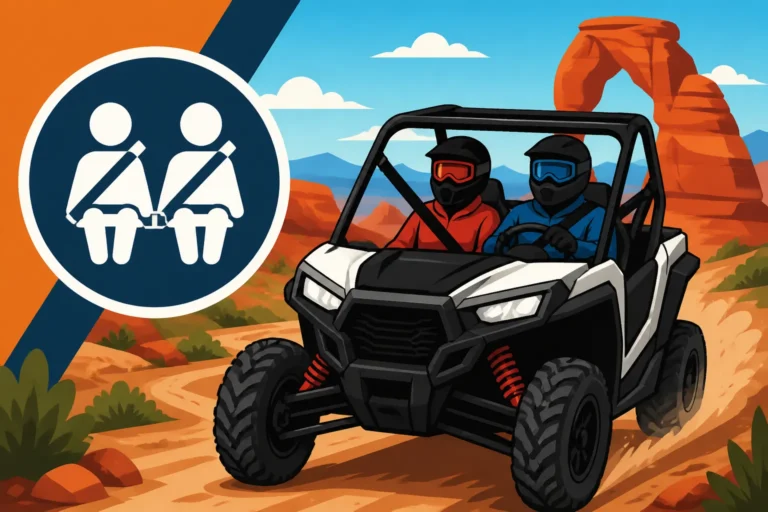
- Seat Belts: All passenger seating positions must have functional seat belts.
- License Plate Mount and Light: The rear license plate must be securely mounted and illuminated.
Before your appointment, do your own pre-inspection. Walk around your UTV with this checklist in hand and test everything. Make sure all your electrical connections are secure and every light illuminates. This simple step can save you a return trip.
Common Reasons for Inspection Failure and How to Avoid Them
It's common for vehicles to fail inspection the first time around, especially a converted OHV. Don't get discouraged if it happens; just treat it as a to-do list for making your machine even safer. The most frequent reasons for failure often revolve around the newly installed components:
- Non-functional or poorly installed turn signals: This is a big one. An improperly wired switch, a loose connection, or a burned-out bulb will cause a fail. Double-check all wiring and ensure the lights flash consistently.
- Insufficient mirrors: Only having one small mirror, or one that's obstructed, isn't enough. Ensure your mirrors provide a clear and wide view.
- No horn or a weak horn: Make sure it honks loudly and clearly.
- Brake light issues: Sometimes one of the brake lights might not illuminate, or they might not come on instantly when the pedal is pressed.
- Missing license plate light: Often forgotten, but essential for nighttime visibility.
- Excessive tire protrusion without mud flaps: If your aggressive off-road tires stick way out, you'll need those mud flaps.
- Excessive noise: If your aftermarket exhaust is too loud, it could be an issue.
To avoid these pitfalls, thorough pre-inspection is key. Invest in quality components; sometimes a cheap kit might have unreliable wiring or switches. Consider having a mechanically inclined friend double-check your work. If you fail, the inspector will provide a written list of deficiencies. Address each item, then return for a re-inspection, usually within a certain timeframe to avoid paying the full fee again. Think of it as an extra layer of quality control for your street-legal conversion.
Registration, Licensing, and Insurance for Street-Legal UTVs
Once your UTV passes its safety inspection, you’re on the home stretch! The final steps involve the necessary paperwork to make your UTV officially street legal: getting it registered with a license plate, ensuring you have the proper driver’s license, and securing adequate insurance. These administrative tasks are just as important as the physical modifications and safety inspection, as they represent your legal right to operate on Utah’s roads.
Getting Your Utah License Plate and Registration
After receiving a passing safety inspection certificate, your next stop is the Utah Division of Motor Vehicles (DMV) or a county motor vehicle office. This is where your UTV transforms from a strictly off-highway vehicle into one that’s also road-legal. You’ll need to bring several key documents with you:
- Your UTV's Certificate of Title: This proves ownership. Make sure it's in your name.
- Bill of Sale (if recently purchased): Especially important for tax purposes and if the title isn't yet in your name.
- Passed Safety Inspection Certificate: The document you just received from the certified inspection station.
- Proof of Insurance: You'll need an insurance policy that specifically covers your UTV for road use, not just off-road.
- Valid Photo ID: Your driver's license or state ID.
At the DMV, you’ll complete an application for vehicle registration and title. You’ll pay registration fees, which will include both the standard OHV registration fee (which gets you the OHV decal) and the additional fees associated with getting a standard license plate and road-legal status. Don't be surprised by the various fees – there's usually a registration fee, a uniform fee, and potentially county fees. You will then be issued a metal license plate for your UTV, which needs to be mounted on the rear of the machine, along with your new OHV decal. Ensure you understand [Utah OHV Registration Fees, Start to Finish] to budget accordingly.
Driver's License and Age Requirements on Utah Roads
Operating a street-legal UTV on public roads in Utah means you are essentially driving a motor vehicle, and thus you must adhere to standard driver's license requirements. Anyone operating a street-legal UTV on a public road must possess a valid driver's license. This means a standard automobile driver's license (Class D) is sufficient; you do not need a special motorcycle endorsement or commercial driver's license. If you are a minor, you must hold at least a learner permit, and be accompanied by a licensed adult in the passenger seat, or a full provisional license, depending on your age and the specific rules for minors driving regular vehicles.
Passenger rules also apply. Just like in a car, all occupants must be in designated seating positions and wear seat belts. For younger passengers, child seat laws that apply to automobiles also extend to street-legal UTVs. The age-old question of [Age to Drive a Street-Legal ATV in Utah] is clear: if you're on a public road, standard driver's license laws apply. This is a significant difference from off-road operation, where OHV education certificates are the primary requirement for minors. Ensure everyone in your UTV is properly licensed or supervised according to road-driving regulations before hitting the pavement.
Insuring Your Street-Legal UTV: Beyond Off-Road Coverage
This is a critical area that many UTV owners overlook. Your standard off-road OHV insurance policy, while great for trail riding, may not provide adequate coverage for operating on public roads. When you take your UTV onto a highway, it becomes subject to the same insurance requirements as any other motor vehicle. This means you need a policy that provides at least the minimum liability coverage mandated by Utah law for street-legal vehicles. This typically covers damage or injury you might cause to another vehicle or person while driving on the road.
When you contact your insurance provider, be very clear that you are making your UTV street legal and require road-legal coverage. Your current policy might be able to be upgraded, or you might need a separate endorsement or policy entirely. Provide them with your VIN and inform them of the modifications. They will likely issue you an insurance card that you can carry, just like you would for your car. This proof of insurance will be required at the DMV for registration and is something a law enforcement officer might ask for during a traffic stop. Understanding [Insurance for a Street-Legal Machine in Utah] is not just about compliance; it's about protecting yourself financially in case of an accident on public roads.
The Costs Involved in Making Your UTV Street Legal
Let's talk money. Converting your UTV to be street legal isn't usually a massive expense compared to the machine itself, but it does involve several line items that can add up. It’s important to budget for both the parts and the administrative fees to avoid any surprises. Being prepared financially means you can complete the conversion without cutting corners, ensuring your safety and compliance. When considering the [Cost to Make a UTV Street Legal in Utah], it's helpful to break it down.
Equipment Investment: Kits vs. Individual Components
The equipment needed for street legality is the most significant upfront cost. This includes items like turn signals, a horn, mirrors, and potentially a windshield or mud flaps. You essentially have two main approaches to acquiring these parts:
-
Buying a Pre-made Street-Legal Kit: Many manufacturers, including SuperATV, offer comprehensive street-legal conversion kits specifically designed for various UTV models. These kits typically include all the necessary lighting (turn signals, horn, sometimes even a license plate light), switches, and wiring harnesses.
- Pros: Convenience, often designed for easy installation, all parts are usually compatible, and can be more cost-effective than buying individually. SuperATV kits are known for their plug-and-play simplicity for many popular models.
- Cons: Might include components you already have or don't strictly need, or might not be the exact style you prefer.
- Cost Shape: Generally in the mid to high hundreds of dollars for a good quality kit.
-
Purchasing Individual Components: If you prefer to customize your setup, or if you already have some of the required parts, you can buy each component separately.
- Pros: Maximum customization, you only buy what you need.
- Cons: Requires more research to ensure compatibility, wiring can be more complex, and might end up being more expensive if you're not careful about sourcing.
- Cost Shape: Can range from a few hundred dollars to well over a thousand, depending on the quality and brand of each component.
| Component Category | Typical Cost Range (Individual) | Notes | Included in Most Kits? |
|---|---|---|---|
| Lighting | $150 – $400 | Turn signals (front/rear), wiring, switches, license plate light. | Yes |
| Horn | $20 – $80 | Simple electric horn. | Yes |
| Mirrors | $50 – $200 | Side mirrors (pair), rearview mirror. | Sometimes |
| Windshield | $200 – $800+ | Full or half windshield (not always legally required, but common). | No (usually separate) |
| Mud Flaps | $30 – $100 | Basic splash guards. | Rarely |
| Installation | $0 (DIY) – $500+ (Shop) | Depends on complexity and your mechanical skills. | N/A |
| Total Equipment | $450 – $1,000+ | Varies greatly based on brand, kit vs. individual, and specific needs. | Varies |
Inspection, Registration, and Annual Fees
Beyond the physical parts, there are several fees associated with making your UTV legally street-ready:
- Safety Inspection Fee: This is a fixed fee charged by certified inspection stations. It’s usually a nominal amount, typically in the range of $20-$40, though it can vary slightly. You'll pay this whether you pass or fail, and if you require a re-inspection after a certain period, you might have to pay it again.
- Registration Fees: When you register your UTV at the DMV, you’ll pay the standard [Utah OHV Registration Fees, Start to Finish], which cover your OHV decal. On top of this, you’ll pay additional fees for the privilege of having a standard license plate and operating on public roads. These include a standard motor vehicle registration fee and a uniform fee based on the value and age of your machine. These fees are assessed annually or biennially, depending on your renewal choice. The cost varies widely based on your UTV's value and age, but expect to pay a few hundred dollars initially, and then annually or every two years for renewal.
- Title Fees: If you’re transferring a title or applying for a new one, there might be a small fee associated with that paperwork. This is usually a one-time fee unless you transfer ownership again.
Remember that most of these fees, particularly the registration and uniform fees, are recurring. You'll need to factor them into your annual budget to keep your street-legal status current.
Unexpected Expenses and Budgeting Tips
While the equipment and official fees are predictable, sometimes unforeseen costs pop up. For example, if your UTV has an older, worn-out exhaust system, it might fail the noise portion of the inspection, requiring you to purchase a new, quieter muffler. Or perhaps a bulb is out in your existing headlights, adding a small but unexpected cost. If you're not mechanically inclined, you might need to factor in labor costs for a shop to install your conversion kit or individual components. [Street-Legal Conversion Costs in Utah] can fluctuate, so always leave a little wiggle room in your budget.
Budgeting Tips:
- Research your UTV model: Some models have more straightforward conversion options than others. Read forums and ask other owners what kits they used.
- DIY vs. Professional Installation: If you're handy, installing a kit yourself can save a lot on labor. However, if you're unsure about wiring, a professional installation ensures safety and compliance.
- Compare kit prices: Shop around for different kits and individual components from reputable brands like SuperATV.
- Factor in insurance: Get a quote for street-legal insurance coverage before you commit to the conversion, as this can be a significant recurring cost.
- Keep a buffer: Always set aside an extra 10-20% of your estimated budget for unexpected issues or minor repairs that might arise during the inspection process.
By being thorough in your planning and budgeting, you can make the transition to a street-legal UTV a smooth and stress-free process, ultimately leading to more enjoyable rides and fewer headaches.
The Real-World Benefits and Challenges of Street-Legal Riding
Making your UTV street legal in Utah is a big step, one that offers a tremendous amount of freedom and convenience. However, it also comes with new responsibilities and considerations. Understanding both the positive impacts and the potential challenges will help you maximize your enjoyment and ensure you remain a safe and responsible rider on Utah’s diverse roads and trails. It’s about more than just a license plate; it’s about becoming a part of the broader traffic ecosystem.
The Freedom and Convenience You'll Gain
The most immediate and obvious benefit of having a street-legal UTV is the sheer freedom it offers. Imagine waking up at your motel in Moab, hopping directly into your UTV, and driving through town to the trailhead for Hell's Revenge, without ever having to load it onto a trailer. Or after a long day of riding at Sand Hollow, being able to drive into St. George for dinner and then back to your campsite. This kind of direct access transforms your riding experience. It eliminates the frustration and time expenditure associated with trailering, making spontaneous rides or quick errands in town a simple reality.
This freedom also opens up new possibilities for exploration. You can connect different trail systems by using short stretches of paved roads, access remote gas stations or convenience stores, and visit small, OHV-friendly towns that welcome UTV traffic on their streets. For many, it allows them to use their UTV as more than just a weekend toy; it becomes a versatile vehicle capable of navigating both the wilderness and the necessities of daily life in a trail-adjacent community. The ability to ride from your lodging to the [Best ATV and UTV Trails in Utah] is a game-changer for many enthusiasts, turning logistical headaches into seamless adventure.
Sharing the Road: Etiquette and Safety Practices
With the freedom of street legality comes the responsibility of sharing the road safely with other motorists. A UTV, even when street legal, is still different from a car or truck. It’s often slower, narrower, and might handle differently on pavement. It's crucial for street-legal UTV operators to practice impeccable road etiquette and maintain heightened awareness.
- Obey all traffic laws: This means adhering to speed limits, stopping at stop signs and red lights, using turn signals, and yielding right-of-way. Treat your UTV like any other vehicle on the road. Familiarize yourself with [Utah Traffic Rules for Street-Legal Side-by-Sides].
- Be predictable: Use your turn signals well in advance, maintain consistent speeds (where appropriate), and avoid sudden maneuvers.
- Stay visible: While your UTV has all the required lights, consider bright clothing, especially if riding at dawn, dusk, or night.
- Respect other drivers: Some drivers might not be accustomed to sharing the road with UTVs. Be patient, avoid aggressive driving, and give way to faster traffic when safe to do so.
- Maintain your machine: Regularly check your lights, brakes, and tires to ensure they are always in safe operating condition.
Practicing safe and courteous driving not only ensures your own safety but also helps maintain a positive public perception of OHVs on Utah’s roads, which is vital for preserving these riding privileges for everyone.
Local Ordinances and Staying Informed in Utah
While Utah state law provides the framework for street-legal OHVs, it's incredibly important to remember that local jurisdictions (cities and counties) retain some authority to implement additional restrictions. What’s perfectly legal in one town might be prohibited just a few miles away. For example, while many towns welcome UTVs on their streets, some might have specific noise ordinances, speed limits on certain roads, or even restrictions on parking.
Before riding your street-legal UTV in an unfamiliar area, especially within city limits, take a few minutes to check for local ordinances. Often, a quick search on the city’s official website or a call to their police department or city office can provide the necessary information. Look for signs at city limits that might indicate OHV restrictions. [City and County OHV Rules Across Utah] can vary significantly, so don't assume that because you can ride your UTV through Kanab, you can do the same in every neighborhood of Salt Lake City. Staying informed and respectful of local rules ensures a smooth ride and helps prevent unnecessary fines or conflicts. The responsibility falls on you, the rider, to know and follow all applicable laws – state and local – to ensure a safe and legal journey.
Disclaimer
This article is for general informational purposes only and does not constitute professional advice. Laws, prices and regulations vary by location and change over time. Consult a qualified professional for guidance on your specific situation.