Does Street-Legal Status Change Trail Access?
It’s a common scenario: you’ve invested in making your ATV or UTV street-legal in Utah, picturing seamless rides from your driveway to the trailhead, through charming little towns, and back again. But then the nagging question hits you: Does all that effort actually change where you can ride off-road, or just how you get there? This guide will dive deep into this very real point of confusion, clarifying exactly how street-legal status impacts your trail access in the Beehive State.
Understanding Utah's Dual Registration System
For many riders, the path to street-legal status feels like navigating a maze of paperwork, inspections, and modifications. It's a significant undertaking, often driven by the desire for more freedom and less time spent trailering. But it's crucial to understand that Utah operates with a dual system, and each part serves a distinct purpose.
The "Off-Highway" Mindset
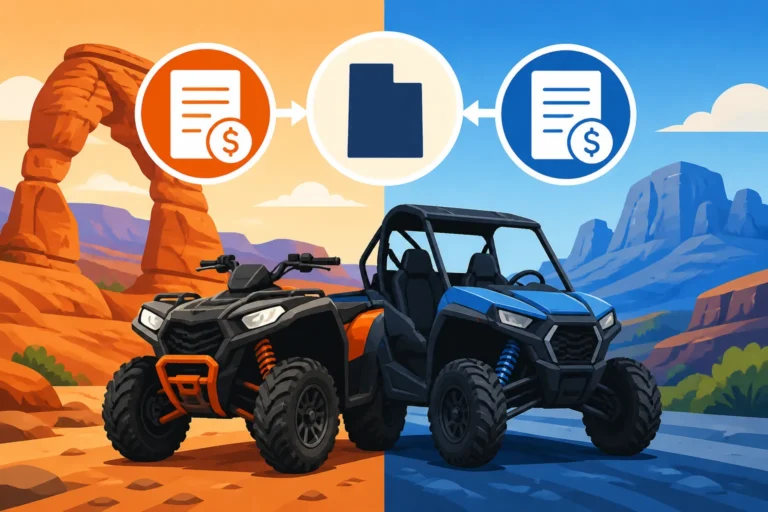
Before anything else, your ATV or UTV is categorized as an Off-Highway Vehicle (OHV) in Utah. This means it's designed and intended primarily for off-road use. To legally ride it on Utah's vast network of trails, designated OHV routes, and public lands, it must be registered as an OHV. This involves getting your OHV decal, paying the necessary fees, and ensuring your machine meets the basic safety requirements for off-road use. Think of this as your foundational pass to the dirt. Without it, even if you could drive it on the road, you couldn't legally be on many of the trails you want to ride. The off-highway registration is about preserving and maintaining those incredible trails we all love, with fees going towards things like trail maintenance and signage.
The "Street-Legal" Transformation
Transforming your OHV into a street-legal machine involves a whole other layer of requirements. You’re essentially equipping it to meet safety and equipment standards typically reserved for passenger vehicles. We're talking about [Utah Street-Legal ATV Equipment Requirements] like turn signals, rearview mirrors, a horn, a lighted license plate, and often a windshield or eye protection. Once it passes inspection and you’ve completed the required paperwork at the DMV, you’ll receive a standard license plate and vehicle registration, just like a car. This allows you to drive on most public roads, highways, and city streets where OHVs are generally prohibited, acting as a bridge to connect trail systems or access town amenities. Companies like SuperATV offer a range of products designed to help you meet these conversion requirements, from full kits to individual components like mirrors and signal lights.
The Underlying Confusion
It's completely understandable why riders get mixed up here. You've gone through all the trouble, spent the money, and jumped through the hoops to make your machine street-legal. Naturally, you might assume this new status grants you universal access, or somehow supersedes the need for traditional OHV registration on trails. It feels like you've upgraded your vehicle, so it should have upgraded privileges, right? This misconception often leads to frustration when riders encounter trail closures or are reminded that their street-legal plate doesn't automatically open every gate or bypass every trail rule. It's like having a driver's license that lets you drive on highways, but you still need a fishing license to fish in certain areas – different licenses for different activities, even if performed with the same vehicle.
What Street-Legal Does for Trail Access
While street-legal status might not change the inherent rules of the trail itself, it dramatically alters how you interact with the surrounding infrastructure. This is where the real convenience and added value of a street-legal machine come into play.
Bridging the Gaps Between Trails
One of the most significant advantages of having a street-legal ATV or UTV in Utah is the ability to connect disparate trail sections. Imagine you're riding a fantastic trail system, but it's broken up by a paved county road or a short stretch of state highway. Before, you might have had to trailer your machine for just a few miles, or worse, risk an illegal road crossing. With a street-legal setup, you can simply drive that short distance on the road, following all traffic laws, and pick up the next section of trail without interruption. This opens up entirely new possibilities for creating longer, more varied rides, transforming fragmented routes into seamless adventures. It means less time loading and unloading, and more time actually riding. Think of riding the famous Paiute Trail – being street-legal allows you to [Riding the Paiute ATV Trail] without constantly worrying about where the next designated OHV road segment begins or ends.
Accessing Trail Towns and Amenities
Utah is dotted with incredible trail towns that welcome OHV enthusiasts with open arms. Places like Marysvale, Moab, and Hurricane have embraced the OHV tourism boom. Being street-legal means you can legally drive your UTV right from the trailhead into the heart of town. Need to [Riding to Fuel in a Small Utah Town]? No problem, pull right up to the gas station. Want to grab a burger, restock on snacks, or pick up a souvenir? You can park your machine just like any other vehicle (observing local parking rules, of course). This eliminates the need to return to your truck and trailer, drive into town, and then return to the staging area. It enhances the immersive experience of exploring these communities and makes multi-day trips much more convenient, allowing you to [Lodging in Marysvale for Trail Riders] directly from the trail.
Navigating City and County OHV Routes
Many Utah cities and counties have enacted specific ordinances to allow street-legal OHVs on certain roads within their limits. These are typically lower-speed roads, often those that lead directly to trailheads or connect different parts of an OHV-friendly community. Having a street-legal machine allows you to take advantage of these local allowances. For instance, in Moab, there are specific rules for [Moab's Speed Limit for OHVs on City Streets] and noise ordinances to be aware of. By being street-legal, you're compliant with these local rules, which means you can ride from your motel to the grocery store, or directly to the Sand Flats Recreation Area. It integrates your OHV much more smoothly into the local fabric, granting access to areas that would otherwise be off-limits. This ability to operate within town limits is often the primary reason riders go through the street-legal conversion process.
What Street-Legal Doesn't Change About Trail Access
Despite the newfound freedom on public roads, it's vital to grasp that street-legal status is not a golden ticket that overrides all existing trail regulations. There are critical limitations to understand to avoid disappointment and potential legal trouble.
Federal Land Restrictions Remain
Many of Utah's most iconic riding areas are located on federal lands managed by agencies like the Bureau of Land Management (BLM) and the U.S. Forest Service (USFS). These agencies have their own comprehensive rules and regulations regarding motorized travel, often outlined in Motor Vehicle Use Maps (MVUMs). Your street-legal status does not automatically grant you access to trails or areas designated as closed to OHVs by these federal agencies. If a trail is marked "no motorized vehicles," "closed to OHV use," or "designated for non-motorized only," your street-legal plate won't change that. You still need to [Reading a Motor Vehicle Use Map] and adhere to the specific designations for each route and area. Similarly, National Parks, while often having roads open to street-legal vehicles, almost universally restrict OHV use on their backcountry trails, regardless of street-legal status. So, don't plan on [Street-Legal ATVs and Utah's National Parks] for off-road adventures within their boundaries.
Private Land and Closed Areas
This might seem obvious, but it bears repeating: a street-legal registration does not give you permission to ride on private land without the owner's explicit consent. Just as a car can't drive across someone's backyard, your street-legal UTV can't either. Additionally, trails or areas that are temporarily or permanently closed due to environmental concerns, wildlife protection, restoration efforts, or safety hazards remain closed to all vehicles, regardless of their registration status. Respecting these closures is paramount for both safety and the continued access to our riding areas. Always [Checking Utah Trail Conditions Before You Tow] and be aware of any [Trail Closures Utah Riders Should Check First] before heading out. A closed gate on public land, for example, typically means just that—closed, even if you could technically drive a street-legal machine on the road leading to it.
The Need for OHV Registration (Still!)
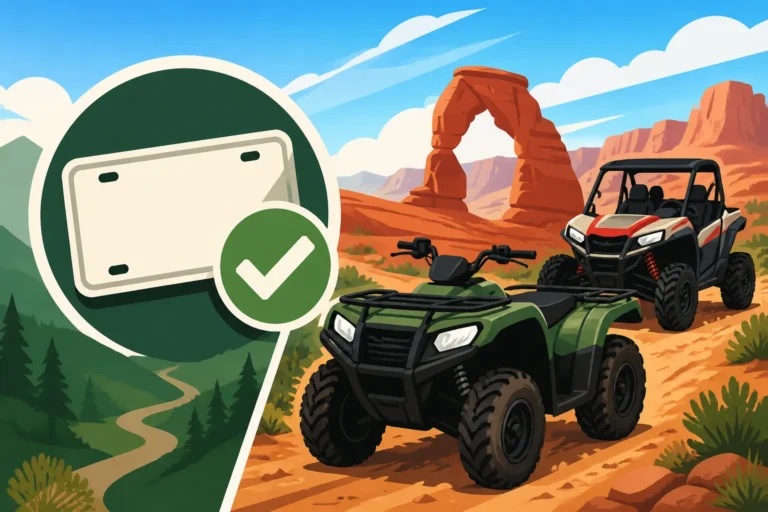
This is perhaps the biggest point of misunderstanding. Making your UTV street-legal means it also needs to comply with on-road rules, but it doesn't exempt it from the off-road rules. For the vast majority of designated OHV trails in Utah, your machine still needs its valid Utah OHV registration and decal (or a valid non-resident permit if you're visiting from out of state). You are essentially running two different registrations on one machine: one for street use and one for off-highway use. If you only have a street plate and drive onto a trail that requires an OHV decal, you could still be ticketed for riding an unregistered OHV. The street-legal plate gets you to the trailhead and allows you to use public roads, but the OHV decal is your permit to actually ride on the trails themselves. This means you should get familiar with [How to Register an ATV or UTV in Utah] even if you plan to make it street legal.
Managing Your Paperwork: Double Duty for Dual Status
Navigating the dual world of street-legal and off-highway can feel like having two different personalities for your machine. It requires a bit of extra attention to your paperwork to ensure you're always compliant, whether you're cruising down Main Street or tackling a rocky technical trail.
Carrying Both Registrations on One Machine
Since your machine needs to be compliant for both road and trail, you'll effectively be carrying two sets of "proof" that your vehicle is legal. For the street-legal aspect, you'll have your vehicle registration card (the one that matches your license plate), driver's license, and proof of insurance for on-road use. For off-highway use, you'll need your Utah OHV registration card (with the associated decal properly displayed on your machine, as detailed in [Utah OHV Decals and Where They Go]) or, if you're from out of state, your [Utah's Non-Resident OHV Permit Explained]. Many riders find it easiest to keep all these documents together in a waterproof bag or container, either on their person or securely stowed on the machine. Some even laminate copies of their registration cards to protect them from the elements. [What Paperwork Utah Riders Must Carry] is a must-read to make sure you're always prepared for a ranger or trooper check.
The Non-Resident Permit Factor
If you’re visiting Utah from another state and have made your OHV street-legal in your home state, it's critical to understand that your out-of-state street-legal plate does not exempt you from Utah's non-resident OHV permit requirement for trail riding. Utah ended its OHV reciprocity with other states, meaning almost all out-of-state OHVs need a Utah non-resident permit to ride on Utah's trails. This applies even if your machine is street-legal. The street-legal plate lets you use Utah's roads, but for the actual dirt and rock trails, you'll still need that specific Utah permit. It's an additional, but necessary, step to support the maintenance of the trails you'll be enjoying. You can typically purchase these permits online, and it's always best to do so before your trip to avoid any last-minute stress or fines. Don't assume your home state's street-legal status covers you for all trail access here.
Avoiding Fines and Frustration
The last thing you want is to be pulled over or stopped by a ranger, only to discover you're missing a crucial piece of paper. Troopers and park rangers are well-versed in Utah's OHV laws and can quickly determine if you're compliant. They'll be checking for your valid street-legal plate and registration on the road, and when you're on a trail, they'll be looking for your current OHV decal or non-resident permit. They may also ask for your OHV education certificate if applicable. Ensuring all your paperwork is in order and easily accessible can save you from [The Fine for an Expired OHV Registration in Utah] or other penalties. Double-check everything before each ride, especially if you're crossing from street-legal roads to designated OHV trails. It's better to spend five minutes verifying your documents than hours dealing with a citation.
Here's a quick reference table to help clarify what street-legal status does and doesn't impact regarding access in Utah:
| Aspect of Access | Street-Legal Status Impact | What Else Is Required? |
|---|---|---|
| Connecting Paved Roads | YES, allows legal travel on most public roads to link trails. | Valid driver's license, vehicle registration, and insurance. |
| Accessing Trail Towns | YES, allows legal entry into towns for amenities (fuel, food, etc.). | Valid driver's license, vehicle registration, and insurance. |
| Designated City/County OHV Routes | YES, allows legal use of specific routes within communities. | Valid driver's license, vehicle registration, and insurance. |
| Federal OHV Trails (BLM/USFS) | NO, street-legal status does not change trail designation. | Valid Utah OHV registration/decal (or non-resident permit). |
| Private Land Trails | NO, still requires landowner permission. | Owner's permission (and OHV registration for trail riding). |
| Closed Trails/Areas | NO, closures apply universally regardless of vehicle type. | N/A (avoid closed areas). |
| Driving on Major Highways/Interstates | NO, generally prohibited for OHVs, even street-legal ones. | Check specific regulations for [Interstates, Freeways and Utah OHV Law]. |
| Riding on Off-Highway Trails | NO, still requires off-highway specific registration. | Valid Utah OHV registration/decal (or non-resident permit). |
Ultimately, making your ATV or UTV street-legal in Utah is a fantastic investment for convenience and expanding your riding possibilities on public roads. It's a game-changer for seamlessly moving between trailheads and engaging with trail towns. However, it’s not a substitute for proper OHV registration when you venture onto the dirt and rocks of designated off-highway trails. You need both. Keep your paperwork in order, respect all regulations, and you'll be set for incredible adventures across Utah's diverse landscapes, truly getting the best of both worlds.
Disclaimer
This article is for general informational purposes only and does not constitute professional advice. Laws, prices and regulations vary by location and change over time. Consult a qualified professional for guidance on your specific situation.