Cattle Guards, Gates and Open Range
It's happened to all of us. You're out enjoying the breathtaking beauty of Utah's backcountry on your ATV or UTV, cruising along a dirt road or a designated trail, when suddenly you see it: a strange-looking metal grate across the path, a sturdy fence with a gate, or even a herd of cattle just casually sauntering down the road. You might pause, a little unsure of what to do. Is it okay to cross that grate? Should you open that gate? What do you do if a cow is blocking your path? These encounters with cattle guards, gates, and open range livestock can be confusing and even intimidating if you're not prepared, leading to frustration and uncertainty on your ride. This guide is here to clear up the mystery, helping you navigate these common situations with confidence and respect for Utah's working landscapes.
Understanding Cattle Guards and Safe Navigation
Cattle guards are a ubiquitous feature in many of Utah's rural and backcountry areas, especially where public lands intersect with ranching operations. They're designed to keep livestock contained without the need for constantly opening and closing gates. But for an ATV or UTV rider, they can look a bit daunting.
What Exactly is a Cattle Guard, Anyway?
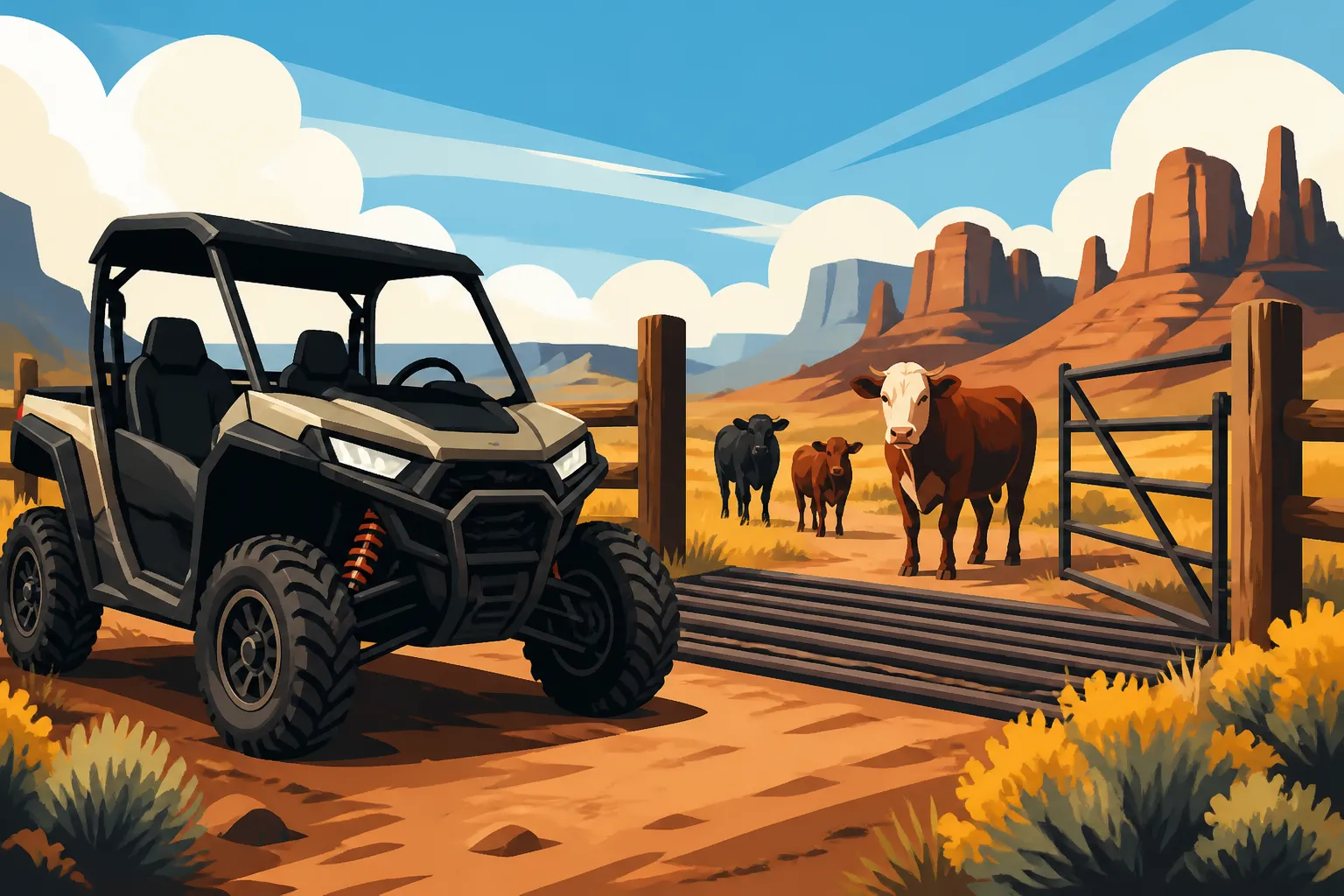
Think of a cattle guard as a "virtual gate." It's essentially a series of parallel metal or wooden pipes, sometimes even concrete blocks, set into the road surface with gaps in between. The idea is simple: cattle and other livestock don't like to walk across the uneven, unsecured footing, as their hooves could slip between the gaps, causing injury. For a human or a vehicle, however, it's generally a smooth transition, assuming you approach it correctly. These guards allow vehicles and people to pass freely while deterring animals from crossing a boundary, be it into private property, onto a highway, or out of a grazing allotment. They're a testament to the long-standing tradition of ranching in Utah and the need to coexist with those who work the land.
When you're out exploring, especially in areas like the Paiute Trail system or within national forests, you'll undoubtedly encounter them. They're a sign you're entering or leaving an area where livestock are present, and it's a subtle reminder to be extra vigilant for animals. Sometimes, especially on less-trafficked routes, you might find a gate right next to a cattle guard. This is usually for herding livestock, or for equipment that's too heavy or wide to safely cross the guard itself. Don't assume the presence of a cattle guard means you can just ignore any nearby gates; always assess the situation.
Techniques for Crossing on Your ATV or UTV
Crossing a cattle guard safely is usually straightforward, but it requires a bit of attention. Your primary goal is to maintain control and avoid sudden movements that could cause you to lose balance or traction. The key is to approach slowly and steadily. Reduce your speed significantly as you come up to the guard. You don't want to hit it at full throttle, as that could jar your machine and potentially damage your suspension or even the guard itself. Think of it like a series of small, closely spaced speed bumps, but with gaps.
As your tires roll over the pipes, you'll feel a slight bumpiness, and the machine might wiggle a little. Keep your handlebars straight and avoid turning sharply while on the guard. If you have an all-wheel-drive or four-wheel-drive UTV, engaging it can sometimes offer a bit more stability, but it's not strictly necessary for most cattle guards. Just maintain a light, firm grip on the handlebars and let your machine's suspension do its job. After you've cleared the last pipe, you can gradually increase your speed. Pay attention to the conditions; a muddy or wet cattle guard can be more slippery, so extra caution is warranted. If your machine feels a bit soft on the suspension, consider looking at aftermarket upgrades like those from SuperATV, which offer lift kits and improved shocks that can handle rougher terrain with more stability.
Common Pitfalls and How to Avoid Them
One of the biggest mistakes riders make is approaching a cattle guard too fast. This can lead to a rough, uncontrolled crossing, potentially damaging your machine or, worse, causing you to lose control and have an accident. Another pitfall is trying to make a sharp turn while on the guard. The uneven surface isn't designed for lateral movement, and you could find your tires slipping into the gaps, leading to a nasty jolt or even a tip-over. Always straighten out before you start to cross and wait until you're completely clear before turning.
Some older or less-maintained cattle guards might have loose pipes or larger-than-usual gaps. A quick visual inspection before crossing can save you trouble. If it looks particularly rough or damaged, consider if there's an alternative route, or dismount and walk your ATV across if you're on a solo quad. For UTVs, if the guard looks extremely sketchy, you might need to find a bypass if one exists, or simply turn back. Don't risk damaging your machine or yourself. Always remember to check [Trail Closures Utah Riders Should Check First] before heading out, as sometimes areas with damaged infrastructure might be temporarily closed. Finally, always be aware of your surroundings immediately after crossing a cattle guard – you're now likely in an area with active livestock, so keep an eye out for animals.
Decoding Gates: Open, Closed, and Why It Matters
Gates are another common feature you'll encounter on Utah's trails and rural roads, especially when traversing between private and public lands, or within grazing allotments. How you handle them can have a significant impact on landowner relations and the well-being of livestock.
The Different Kinds of Gates You'll Encounter
You'll see a variety of gates out on the trails. The most common are simple wire gates, often stretched between two posts and secured with a loop of wire or a chain. Then there are wooden gates, which might be hinged and have a latch, or more often, a chain and hook. You might also encounter metal tube gates, similar to what you'd see on a ranch, often secured with a pin or chain. Each type has its own mechanism, but the principle remains the same: they are there for a reason, usually to control the movement of livestock or to mark a property boundary.
Sometimes, you'll find a pedestrian gate or "kissing gate" right next to a larger vehicle gate. These are for foot traffic or perhaps single ATV riders but aren't typically wide enough for UTVs. Always use the appropriate gate for your vehicle type. If you're on an ATV, a small walk-through gate might be easier, but if it's clearly for foot traffic, use the vehicle gate. In some areas, particularly in agricultural zones, you might even see signs regarding [Farm and Ranch Exemptions in Utah OHV Law], which can sometimes influence how gates are managed.
The Golden Rule: Leave Gates as You Find Them
This is perhaps the most crucial piece of etiquette and responsible riding advice when it comes to gates: if you open a gate to pass through, close it immediately behind you. Conversely, if you find a gate open, leave it open. The logic here is simple: gates are intentionally left in a certain position by landowners or land managers for a specific purpose, usually related to livestock management. An open gate means livestock are free to roam or are being moved. A closed gate means they are being contained.
Failing to follow this rule can have serious consequences. If you leave a closed gate open, you could allow cattle to wander onto a highway, escape a grazing allotment, or mix with other herds, causing significant financial loss and stress for ranchers. Imagine the frustration of a rancher who finds their cattle scattered because a rider didn't bother to close a gate. It only fosters animosity towards OHV users and can lead to trail closures. Always make sure the latch, chain, or wire is securely fastened after you pass through. Take the extra minute; it’s a small effort with a big impact. This simple act of respect goes a long way in fostering good relationships with the people who live and work in these areas.
Legal Aspects and Rider Responsibility
Beyond etiquette, there can be legal ramifications for mismanaging gates. While outright criminal charges might be rare for simply leaving a gate open, you could be held liable for damages if your actions lead to livestock escaping and causing an accident or becoming lost. More broadly, ignoring gate protocols can lead to private landowners revoking access across their property, which can impact public access to trails that cross those lands. This affects everyone in the OHV community.
It's also important to understand that many trails crisscross various land ownerships – private, state, and federal. Gates are often the visual demarcation of these boundaries. Always respect "No Trespassing" signs. Even if a gate is open, if there's a sign clearly indicating private property and no public access, do not proceed. Always be aware of [Private Land Crossings on Utah Routes] and ensure you have permission or are on a designated public easement. The responsibility ultimately lies with the rider to know where they are and to respect the rules of the land. Carrying physical or digital maps that show land ownership can be extremely helpful.
Navigating Utah's Open Range: Sharing the Land Responsibly
Utah is a state with vast expanses of open land, much of which is used for grazing livestock. This means that encountering cattle, sheep, or even horses on roads and trails is not just a possibility, but an expectation.
What "Open Range" Truly Means for Riders
In Utah, "open range" means exactly what it sounds like: certain areas are designated where livestock are allowed to roam freely on public and private lands without being fenced in. This includes state highways and county roads passing through these areas. The critical legal distinction in open range areas is that the burden of responsibility for avoiding collisions with livestock falls on the driver or rider, not the livestock owner. This is a significant difference from "closed range" areas, where livestock owners are responsible for containing their animals.
When you see signs that say "Open Range" or "Watch for Livestock," it's not just a friendly suggestion; it's a legal warning. It means you must be extra vigilant. You are essentially sharing the road with animals who have the right of way. This legal framework reflects the historical importance of ranching in Utah and seeks to protect agricultural livelihoods. Therefore, understanding [What a Utah Trooper Checks at a Trailhead] might include ensuring riders are aware of open range laws and are prepared to encounter livestock.
Sharing the Road With Livestock: Safety First
Encountering livestock on the trail or road requires a calm and cautious approach. First and foremost, slow down immediately. Animals can be unpredictable, especially if they have young with them. Give them plenty of space. Do not rev your engine, honk your horn, or make any sudden, loud noises that could spook them. A startled cow or horse can kick, run into your path, or even stampede, creating a dangerous situation for you and the animals.
If the animals are blocking the entire path, stop your machine and wait. They will often move on their own eventually. If they don't, and you need to pass, move very slowly and quietly, trying to go around them with the widest berth possible. Never try to "herd" them with your ATV or UTV; you're not a cowboy, and they're not your cattle. If you're riding with a group, communicate with hand signals and keep the noise down. Remember the advice for [Riding Etiquette When You Meet Horses], which largely applies to all livestock: be respectful and give them space. You might find gear from SuperATV, like their mirrors or windshields, can help you keep a better eye on your surroundings and spot livestock sooner, giving you more time to react.
Your Role in Preserving Access and Respecting Ranchers
Your actions in open range areas directly impact the future of OHV access. Every time a rider acts carelessly around livestock, it chips away at the goodwill between the riding community and ranchers. This can lead to increased pressure for trail closures, stricter regulations, or even the loss of cherished riding areas. By riding responsibly, you're not just ensuring your own safety, you're advocating for the entire OHV community.
Here's a quick rundown of your responsibilities:
| Responsibility | Description | Impact if Ignored |
|---|---|---|
| Maintain Low Speed | Reduce speed drastically when approaching or within open range areas. Animals are unpredictable. | Risk of collision with livestock, potential injury to rider and animal, legal liability. |
| Give Wide Berth | When passing livestock, provide as much space as possible. Do not crowd them or try to "push" them. | May startle animals, leading to unpredictable movements, kicks, or stampedes. |
| Avoid Sudden Noises | Refrain from revving engines, honking, or loud music. | Can stress animals, causing them to bolt or become aggressive. |
| Close Gates | If you open a gate to pass through, close it securely behind you. If you find a gate open, leave it open. | Livestock escape, mixing of herds, financial loss for ranchers, road hazards, loss of OHV access. |
| Respect Property | Stay on designated trails and roads. Do not trespass on private property. | Legal issues, damage to private land, strained relations with landowners, leading to trail closures. |
| Report Issues | If you see damaged fences, open gates that should be closed, or injured livestock, report it to the nearest land management agency (Forest Service, BLM) or local sheriff's office if it's an emergency. | Uncontained livestock can cause accidents or become lost. Injured animals suffer. Early reporting helps prevent larger problems. |
| Carry Proper Paperwork | Ensure your ATV or UTV is properly registered and you have your [What Paperwork Utah Riders Must Carry] on hand, as this shows you are a responsible rider who follows the rules. | Fines and potential impoundment if caught without proper registration, further eroding trust in the riding community. |
| Be Prepared | Having reliable gear, like a winch from SuperATV or extra tie-down straps, can be crucial if you encounter unexpected obstacles or need to secure a fence temporarily (never alter private property, but assist in emergencies). | Getting stuck or unable to assist in an emergency can exacerbate problems or put yourself in a dangerous situation. |
Remember that the land you ride on is often a working landscape, vital to Utah's agricultural economy. By being a considerate and responsible rider, you help maintain access for everyone and ensure that the spirit of sharing the trails remains strong. This awareness is a core part of enjoying the freedom of Utah's backcountry while being a good neighbor to the ranchers and landowners.
Disclaimer
This article is for general informational purposes only and does not constitute professional advice. Laws, prices and regulations vary by location and change over time. Consult a qualified professional for guidance on your specific situation.