Riding Through Town to the Trailhead in Utah
There’s nothing quite like the freedom of hopping on your ATV or UTV and heading straight for the trails, especially when your motel or campsite is just a stone's throw from the trailhead. But let's be real, the thought of trailering your rig everywhere, constantly loading and unloading, can be a huge hassle. If you've ever wished you could just drive your side-by-side through town to get to the dirt, you're not alone. This guide is here to untangle the often-confusing rules and show you exactly what it takes to legally ride your OHV on Utah's city and county roads, connecting you seamlessly to the adventures that await.
The Dream vs. The Reality: Why Riding Through Town Matters
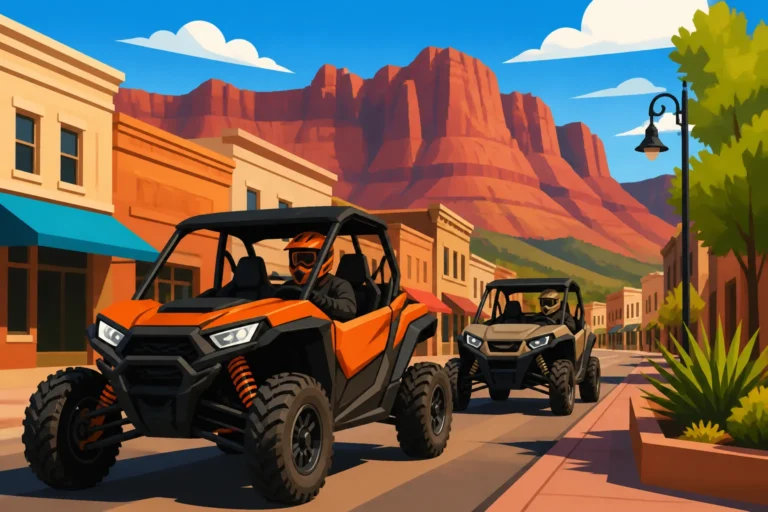
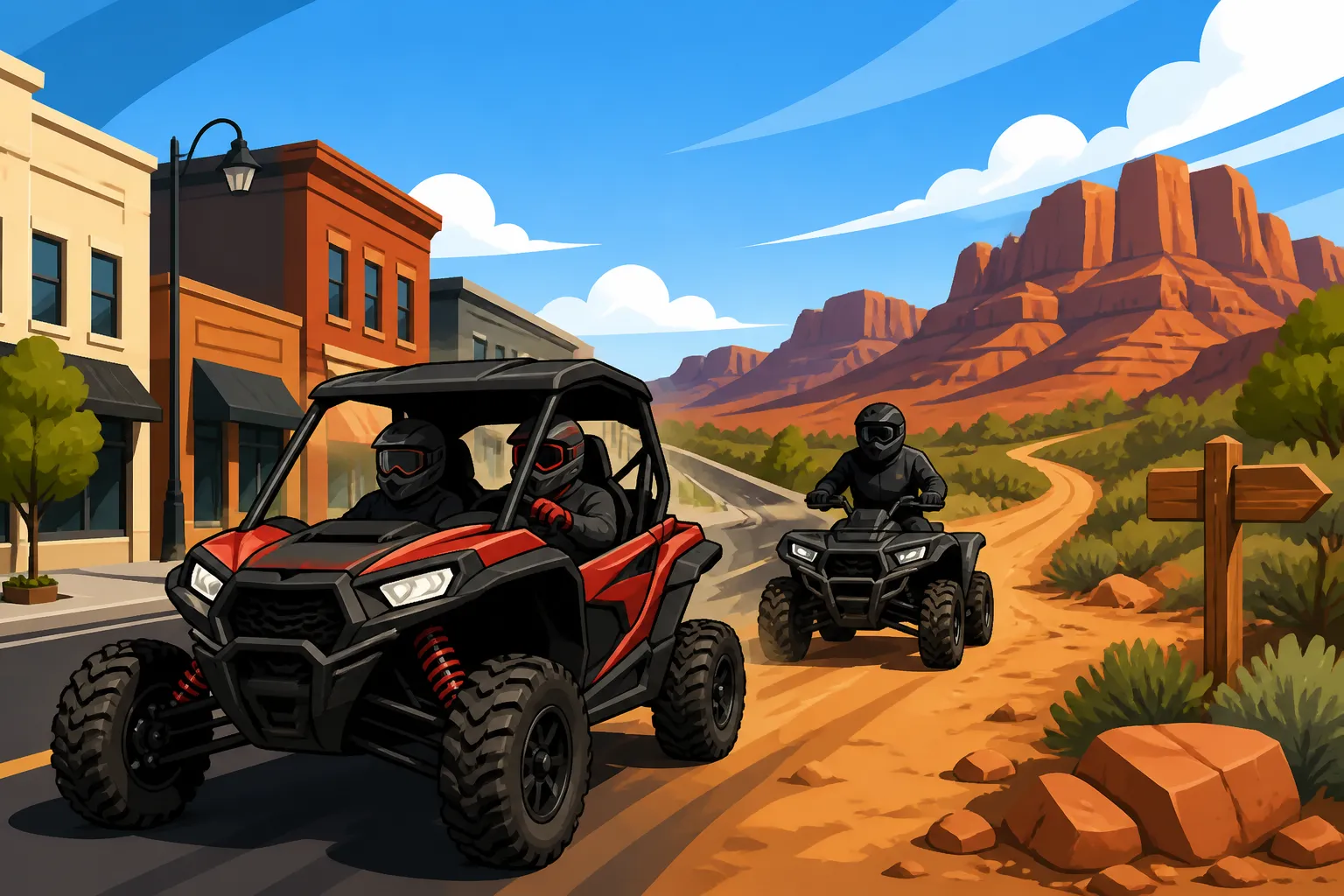
For so many of us, the ultimate riding experience in Utah isn't just about the trails themselves, but the whole immersion into a trail town. The idea of waking up, grabbing a quick breakfast, and then simply firing up the engine to drive down Main Street, past the local shops, and directly onto the dirt access road is incredibly appealing. It transforms your entire trip, making it feel less like a logistics puzzle and more like a true adventure.
The Convenience Factor: Saving Time and Hassle
Let's face it, nobody enjoys the constant dance of loading and unloading a heavy UTV or ATV from a trailer. It's a workout in itself, often involves backing into tight spots, and can eat up valuable riding time. Imagine arriving at your destination in Moab, Kanab, or Marysvale, settling into your lodging, and then realizing you have to hitch up the trailer again just to get to the nearest staging area. It's frustrating, right? The dream of a street-legal machine is that it completely bypasses this headache. You park your truck and trailer once, and your OHV becomes your primary mode of transportation for the duration of your stay.
Beyond the physical effort, there's the mental load. Constantly planning parking for your truck and trailer at crowded trailheads, worrying about security, and navigating tight turns with a large rig can take away from the joy of the trip. When your machine is street legal, you can often leave your tow vehicle behind, reducing wear and tear, saving on fuel for unnecessary trailer hauls, and giving you one less thing to stress about. This convenience isn't just a luxury; for many, it's what makes a multi-day riding trip truly relaxing and enjoyable.
Exploring Trail Towns: A Unique Experience
Riding through a quaint Utah town on your side-by-side isn't just about efficiency; it's about enhancing the entire cultural experience. Picture yourself cruising down the main drag in Kanab, feeling the buzz of a bustling Moab street, or waving to locals as you head through Richfield. These moments connect you more deeply to the places you visit. You can easily pull over for a quick coffee, grab a bite to eat at a local diner, or pop into an outfitter for last-minute supplies, all without having to switch vehicles. It adds a whole new dimension to your adventure.
This kind of accessibility also supports the local economies of these incredible trail towns. When riders can easily stop at a gas station, visit a hardware store, or browse a souvenir shop directly from their OHVs, it encourages more spending and interaction. It fosters a vibrant atmosphere where the OHV community feels welcomed and integrated, rather than just passing through. It’s a win-win, offering riders unparalleled freedom while bringing life and business to the communities that embrace them.
Understanding Utah's Street-Legal OHV Law: The Foundation
Utah is known for being incredibly rider-friendly, and a big part of that is its progressive stance on allowing off-highway vehicles on public roads. However, "rider-friendly" doesn't mean "anything goes." There are very specific rules and requirements you need to understand and follow to make your machine street legal and truly enjoy the freedom of riding through towns to the trailhead.
The Basics: What "Street Legal" Truly Means in Utah
In Utah, "street legal" for an OHV essentially means your machine has been equipped with specific safety features, inspected, and then registered as a regular motor vehicle (in addition to or in place of its off-highway registration, depending on how you look at it). It's not enough to just have an OHV registration sticker; that only covers you for off-highway trails. To ride on a public street, your machine must meet a checklist of safety standards that make it comparable to a low-speed vehicle or car for basic road use.
This often surprises people who assume their OHV registration is all they need. The standard OHV decal is for trail access, but it doesn't grant you permission to drive on paved roads outside of designated trail systems. The state of Utah has specific statutes that outline the required equipment, creating a clear pathway for riders to get their machines approved for road use. Without adhering to these equipment and registration rules, driving your OHV on public roads can lead to fines and headaches. You can dive deeper into the distinctions in [Utah OHV Registration vs Street-Legal Registration].
The Importance of Proper Registration and Plating
Once your machine has all the required street-legal equipment installed and functional, the next critical step is getting it properly registered and plated with the Utah Division of Motor Vehicles (DMV). This involves an inspection by a certified station or sometimes the DMV itself to verify that all the necessary modifications meet state standards. Once it passes inspection, you'll complete paperwork, pay fees, and receive a standard license plate—just like a car or truck would have.
This license plate is your official "ticket" to the road. It signals to law enforcement that your OHV is recognized as a legal road-going vehicle. It's also crucial to remember that you'll need proof of current liability insurance, just like any other vehicle operating on public roads. This insurance must meet Utah's minimum requirements and is a non-negotiable part of the street-legal package. Without both the proper plate and insurance, even a fully equipped OHV is not legal for road use. Understanding [Making a UTV Street Legal in Utah] is your starting point for this crucial process.
Essential Equipment for Street-Legal Compliance in Utah
Converting your rugged trail machine into a street-legal road warrior isn't just about slapping a license plate on it. Utah has specific, non-negotiable equipment requirements that ensure your OHV is safe and visible when sharing the road with other vehicles. Skipping any of these items will prevent you from passing inspection and getting that coveted street-legal plate.
Lights, Signals, and Horn: Seeing and Being Seen
One of the most fundamental aspects of street-legal conversion is ensuring your machine is properly equipped for visibility and communication on public roads. This goes far beyond the basic headlights and tail lights you might have for trail riding. First, you absolutely need functional headlights that are approved for road use, providing adequate illumination during dawn, dusk, and nighttime driving. These must be correctly aimed and bright enough to meet state standards, without blinding oncoming traffic.
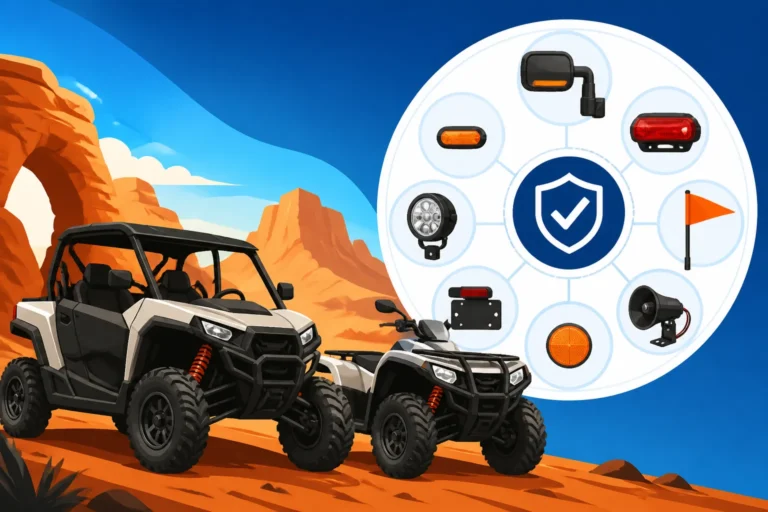
Equally important are proper tail lights and brake lights. Your tail lights must be clearly visible from the rear, and your brake lights need to activate promptly and brightly when the brakes are applied. Beyond basic illumination, you'll need amber turn signals on both the front and rear of your machine, clearly visible and operational on both sides. These are critical for communicating your intentions to other drivers. Finally, a working horn that is audible under normal conditions is required. This isn't just a courtesy; it's a vital safety feature for alerting others to your presence. Many aftermarket companies, including SuperATV, offer comprehensive lighting and signal kits designed specifically for OHV street-legal conversions, making it easier to gather all the necessary components.
Mirrors, Windshield, and Wipers: Visibility and Protection
Maintaining clear visibility for the driver, and protecting the occupants, is another cornerstone of Utah's street-legal equipment requirements. You must have at least one mirror, but it's highly recommended and generally safer to have two—one on each side—to give you a full view of traffic behind and to your sides. These mirrors need to be securely mounted and provide an unobstructed view. Trying to get by with just a small rearview mirror in a busy traffic situation is simply not safe or compliant.
A windshield or other form of eye protection is also a must. While a full windshield isn't always explicitly required if you're wearing appropriate eye protection like goggles, most riders opt for at least a half-windshield or a full windshield for comfort and safety. This protects you and your passengers from road debris, dust, and wind. If you do install a full windshield, it's a good idea to consider adding a windshield wiper system, especially for those unpredictable Utah weather changes that can turn a dusty trail into a muddy road. SuperATV offers a range of windshields and mirror kits that can help you meet these specifications and enhance your riding experience.
Tires, Brakes, and Muffler: Roadworthiness and Noise
The connection between your OHV and the road, as well as its ability to stop and its noise output, are crucial components of street-legal compliance. All tires on your machine must be Department of Transportation (DOT) approved. This means they are designed and rated for use on paved roads, not just off-road terrain. Using tires that aren't DOT-compliant can be a major reason for failing a street-legal inspection. It's about ensuring your tires can handle the different demands of pavement, from heat dissipation to traction.
Your braking system must also be fully functional and effective, capable of stopping your vehicle safely. This includes both your primary service brakes and a working parking brake. The parking brake needs to be able to hold the vehicle stationary on an incline. Finally, your exhaust system must be equipped with a muffler that effectively limits engine noise. Utah has strict noise ordinances, and an excessively loud OHV will not pass inspection and will quickly draw unwanted attention from law enforcement. While many aftermarket exhausts are designed for performance, you'll need one that keeps noise levels within legal limits for street use. Remember, respecting sound limits is a big part of being a good neighbor in the towns you pass through.
Navigating City and County Ordinances: Local Rules of the Road
While Utah state law provides the overarching framework for street-legal OHVs, it's crucial to understand that local municipalities—cities and counties—have the power to add their own specific rules and restrictions. This means that what's perfectly legal in one town might get you a ticket in another. It's one of the biggest sources of confusion and frustration for riders trying to navigate Utah's diverse OHV landscape.
General State Guidelines: What Utah Law Allows
At the state level, Utah law is generally quite accommodating for street-legal OHVs. The basic rule of thumb is that if your OHV is properly equipped and registered as street-legal, you can operate it on any public highway or road with a posted speed limit of 50 mph or less. This opens up a vast network of two-lane highways, county roads, and city streets for exploration and access. This statewide permission is what allows the dream of riding from your motel to the trailhead to become a reality in many areas.
However, the state law also includes a critical caveat: it grants local authorities the power to restrict or even prohibit OHV use on specific roads under their jurisdiction. This means that while the state sets a baseline of permissibility, individual cities and counties can, and often do, implement their own unique ordinances. This is why you can't just assume uniform rules across the board. You might be fine cruising at 45 mph on a county road, but suddenly hit a specific city limit where the speed is capped at 15 mph for OHVs, or where certain main thoroughfares are entirely off-limits. Always pay close attention to local signage as you enter new areas.
Specific Town Examples: Moab, Kanab, Hurricane, and More
Utah is dotted with incredible trail towns, and each often has its own flavor when it comes to OHV rules. Knowing these local nuances can save you a lot of grief.
- Moab: Perhaps the most famous OHV destination, Moab has specific rules you absolutely need to know. While street-legal OHVs are generally welcomed, the city has implemented a 15 mph speed limit on all city streets, particularly along the busy Main Street corridor. They also have a strict [Moab's Noise Ordinance and What It Measures]. Riders are expected to be good citizens, minimizing noise and driving courteously. Parking can also be a challenge, so be mindful of designated spots. For more details on the city's specific speed limits, check out [Moab's Speed Limit for OHVs on City Streets].
- Kanab: Often referred to as "Little Hollywood" or "Utah's Trail Town," Kanab is incredibly OHV-friendly. Many hotels even have direct trail access from their parking lots. You can generally ride your street-legal machine right from your lodging into town and then directly onto area trails like those leading to Coral Pink Sand Dunes. It's one of the easiest towns to navigate on an OHV. More on this here: [Kanab, Utah: Riding From Your Motel].
- Hurricane and St. George: These southern Utah towns serve as gateways to the popular Sand Hollow State Park. While St. George has some restrictions on major arterial roads, Hurricane is generally quite accessible. Many riders use street-legal machines to get from their lodging in Hurricane directly to the entrance of Sand Hollow, or even across town for gas and food. This direct road access is a huge perk for riding [Getting From Hurricane to Sand Mountain by Road].
- Marysvale and Paiute Trail Towns: Communities along the extensive Paiute ATV Trail, such as Marysvale, Richfield, and Beaver, are incredibly supportive of OHV use. In many of these smaller towns, you'll find OHVs are an integral part of the local transportation, and you can ride directly from your lodging to gas stations, restaurants, and then seamlessly onto the trail system. [Riding From Marysvale Onto the Paiute Trail] is a perfect example of how integrated OHV use is in these areas.
Common Restrictions and How to Avoid Them
Beyond the individual town rules, there are some common sense restrictions that apply almost universally and are important to remember to avoid trouble.
- Interstates and Freeways: Street-legal OHVs are generally prohibited from operating on interstate highways and limited-access freeways. These are designed for high-speed traffic, and OHVs simply aren't suited for them. This means you can't use your street-legal UTV to get from Salt Lake City to Provo on I-15, for example.
- Sidewalks and Bike Lanes: Never drive your OHV on sidewalks or in designated bike lanes, unless specifically marked for OHV use (which is rare). These areas are for pedestrians and cyclists, and OHVs can pose a significant safety hazard.
- Private Property: Always be respectful of private property. Do not drive on private land without explicit permission from the landowner, even if it looks like a shortcut.
- Closed Roads: If a road is marked as closed, whether due to construction, weather, or other reasons, obey the signage.
- Roads Over 50 mph: While state law allows OHVs on roads up to 50 mph, be aware that some local ordinances might have lower limits. Always check the posted speed limit, and if a road is 55 mph or higher, you generally cannot operate your street-legal OHV on it.
The key takeaway is constant vigilance. Look for signs, observe how locals are operating their machines, and when in doubt, pull over and check the local municipal website or ask a local outfitter. It's much better to be safe and informed than to risk a ticket or, worse, an accident.
The Street-Legal Conversion Process: From Trail Machine to Road Warrior
Deciding to make your ATV or UTV street legal is an exciting step toward maximizing your riding freedom in Utah. However, it's not simply a matter of wishing it so. There's a practical process involved, from gathering the right parts to passing inspection and getting registered. Think of it as giving your machine a "road-ready" makeover.
Gathering the Required Parts and Kits
The first major hurdle is equipping your OHV with all the necessary components to meet Utah's street-legal requirements. This often involves more than just a trip to your local parts store for a few items. Many riders find it easiest and most cost-effective to purchase a pre-assembled street-legal kit designed specifically for their make and model. Companies like SuperATV specialize in these kits, which typically include turn signals, a horn, a license plate bracket with a light, and sometimes mirrors or a wiring harness. These kits are invaluable because they often come with detailed instructions and ensure all components are compatible.
Beyond a comprehensive kit, you'll want to double-check that your machine has proper headlights and taillights that are functional and bright. If your existing lights aren't up to snuff, you might need to upgrade them. Additionally, consider a windshield if you don't already have one, as it greatly enhances comfort and safety on the road. Remember, DOT-compliant tires are a must, so if your current knobby tires aren't stamped for road use, you'll need to factor in a new set. Finally, ensure your muffler meets noise regulations. It's a shopping list, for sure, but getting all these pieces in place correctly is the foundation of a successful conversion. You can find more specific guidance on what these kits include in [Street-Legal Kits That Suit Utah's Rules].
The Inspection: What the DMV or Certified Station Looks For
Once you've installed all the required equipment, your OHV needs to undergo an inspection to verify its compliance. This is a critical step, as it's the state's way of ensuring your machine is safe for road use. In Utah, this inspection is typically performed by a certified inspection station, which could be a mechanic shop, a dealership, or even some DMV locations. It's not just a quick glance; the inspector will go through a checklist, meticulously examining each required component.
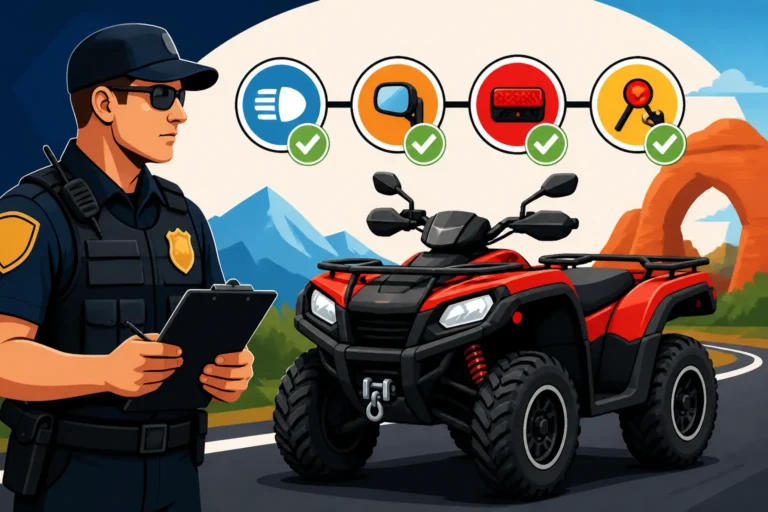
They'll check your headlights, tail lights, and brake lights to ensure they're all working properly and are visible. Your turn signals will be tested, both front and rear, for correct operation. The horn needs to be loud and clear. Inspectors will also look for securely mounted mirrors, an appropriate windshield or eye protection, and ensure your tires are DOT-approved. The braking system, including the parking brake, will be thoroughly checked for functionality. Noise levels from your exhaust might also be assessed. Common reasons for failing an inspection include non-functional lights, a missing or weak horn, non-DOT tires, or an excessively loud exhaust. It's a good idea to perform your own pre-inspection checklist before you go to avoid multiple trips. For a detailed breakdown, check out [Utah's Street-Legal ATV Inspection, Step by Step].
Registration and Plate: Making It Official
After your OHV successfully passes the street-legal inspection, you're ready for the final step: official registration and plating at the Utah DMV. This is where your machine transitions from being purely an off-highway vehicle to a legal road-going vehicle. You'll need to gather specific documents, including your certificate of inspection, proof of ownership (like a title or bill of sale), and proof of insurance. Don't forget your driver's license and payment for the registration fees.
At the DMV, you'll submit these documents, and after processing, you'll be issued a standard Utah license plate and a new registration card that specifically designates your OHV as street legal. This plate must be securely mounted on the rear of your machine, and the license plate light must illuminate it at night. This new registration is separate from your standard OHV registration decal, though you'll often keep both if you intend to continue riding off-highway trails. This official plate and registration card are your undeniable proof that you're legal to ride on designated public roads. Before you head to the DMV, make sure you have all the necessary items by reviewing [Documents to Bring to the Utah DMV for an ATV].
Best Practices for Riding Through Utah Towns
Once your ATV or UTV is street legal and you’re ready to hit the pavement, it's essential to adjust your mindset from trail riding to street driving. Operating an OHV on public roads, especially through towns, requires a different set of skills and a heightened sense of awareness. Adhering to best practices isn't just about following the law; it's about ensuring your safety, the safety of others, and maintaining positive relationships with the communities you visit.
Safety First: Driving Defensively and Staying Visible
When you're driving your OHV on public roads, you become part of the general traffic flow, which includes cars, trucks, motorcycles, pedestrians, and cyclists. Your machine might be smaller, less visible, and handle differently than a typical car, so defensive driving is paramount. Always assume other drivers might not see you, even if your lights are on and turn signals are flashing. Make eye contact with drivers at intersections, and be predictable in your movements. Use your turn signals well in advance of a turn or lane change.
Maintain a safe following distance from other vehicles, especially since OHVs can have a higher center of gravity and different braking characteristics than cars. Pay extra attention to your surroundings, scanning for potential hazards like potholes, gravel, or sudden stops from traffic ahead. Wearing bright-colored riding gear can significantly increase your visibility to other motorists, and a helmet is not just for safety; it's a requirement in many situations, even for street-legal OHVs. The goal is to drive with maximum caution, constantly anticipating potential issues, and doing everything you can to make yourself seen and understood on the road.
Respecting Local Residents and Businesses
Riding through towns on an OHV is a privilege, and maintaining that privilege depends heavily on how riders behave. Being respectful of local residents and businesses is non-negotiable. This means adhering to speed limits, especially in residential areas and bustling downtowns. Remember, the noise of an OHV, even with a compliant muffler, can be more noticeable than a typical car. Be mindful of your engine's sound, especially early in the morning or late at night.
When parking, always use designated parking spots and avoid blocking storefronts, driveways, or pedestrian walkways. Don't leave trash behind, and generally, treat the town as if it were your own neighborhood. Many communities in Utah rely on OHV tourism, but that support can quickly erode if riders are perceived as disrespectful or noisy. A friendly wave, a courteous attitude, and a commitment to being a good visitor go a long way in fostering positive relationships between the riding community and the towns that welcome us.
Carrying the Right Documentation
Just as you would with any other vehicle on public roads, you must carry the correct documentation when operating your street-legal OHV. This is crucial for any interaction with law enforcement and demonstrates that you are a responsible and compliant rider. The essential documents include your valid driver's license, proof of vehicle registration (specifically the street-legal registration card with your license plate number), and current proof of liability insurance that meets Utah's minimum requirements.
It's also a good idea to carry your standard OHV registration decal documentation if you plan on transitioning from road to trail. While some digital proofs of insurance are accepted, having physical copies of your registration and insurance card in a waterproof pouch on your machine is highly recommended, especially in areas with spotty cell service. Being able to quickly and politely present these documents to an officer can make any traffic stop a smooth and brief encounter. Make sure you know [What Paperwork Utah Riders Must Carry] before you head out.
Common Questions and Troubleshooting for Town Riding
Even with a street-legal machine and a good understanding of the rules, specific situations can arise that leave riders scratching their heads. Navigating these common scenarios effectively ensures your town riding experience is smooth and enjoyable, rather than stressful.
Speed Limits and Traffic Flow
One of the most frequent adjustments riders face is adapting to street speed limits after being used to varying speeds on trails. It can feel slow, even frustrating, to stick to 15 mph in a town like Moab when your machine is capable of much more. However, these limits are in place for safety, especially in areas with pedestrians, parked cars, and cross-traffic. Trying to rush through town not only increases your risk of an accident but also draws negative attention from law enforcement and residents.
The key is to embrace the change of pace. View town riding as part of the overall experience, not just a means to an end. It's a chance to see the local sights, grab a bite, or simply enjoy the ambiance. If you're consistently feeling impatient, consider staging your trailer closer to the trailheads outside of town, or plan your town trips during off-peak hours when traffic is lighter. Always remember that your OHV might accelerate and brake differently than a car, so be extra cautious in stop-and-go traffic.
Parking Your OHV in Town
Finding suitable parking for your OHV in a busy Utah trail town can sometimes be a challenge, just like finding a spot for a car. The general rule is that you should park your street-legal OHV in any legal parking spot where a regular car would park. This means parallel parking on the street or using marked spaces in public parking lots. Avoid parking on sidewalks, in bike lanes, or blocking fire hydrants, crosswalks, or business entrances.
In some very OHV-friendly towns, you might find designated "OHV parking" areas, which are fantastic to use when available. However, don't rely solely on these. Always carry quarters or be prepared to use parking apps if you're in a metered area. When parking, be mindful of your machine's size and footprint. Try to park in a way that doesn't take up excessive space or inconvenience other vehicles. If you have a larger UTV, consider parking slightly further out from the busiest areas where spaces might be more plentiful. [Fuel Stops and Parking in Utah Trail Towns] provides more insights into stopping in town.
Dealing with Law Enforcement
Encountering law enforcement while riding your street-legal OHV is a possibility, whether for a routine check, a question, or a perceived infraction. The best approach is always to be polite, cooperative, and respectful. If an officer signals you to pull over, do so safely and promptly, finding a secure place off to the side of the road. Turn off your engine, keep your hands visible, and wait for the officer's instructions.
When asked for documentation, present your valid driver's license, street-legal registration, and proof of insurance without delay. An officer will typically check these items to confirm your compliance. If you believe you've followed all rules and are unjustly stopped, remain calm and explain your understanding of the situation, but avoid arguing. Your goal is to make the interaction as smooth as possible. Remember, officers are primarily concerned with safety and ensuring all vehicles on the road are operating legally. Knowing [What a Utah Officer Looks for on a Street-Legal ATV] can help you be prepared.
Beyond the Trailhead: Other Road Access Opportunities
While the primary goal of making your OHV street legal is often to connect directly to trailheads, this newfound road capability unlocks a host of other practical and enjoyable opportunities that can enhance your entire Utah adventure. It transforms your OHV from a mere recreation vehicle into a versatile mode of transport.
Fuel Stops, Restaurants, and Supplies
One of the most immediate and appreciated benefits of a street-legal OHV is the ability to run errands in town. No more having to unhook your trailer, load your truck, and drive into town just for a gallon of milk, a tank of gas, or a quick bite to eat. You can simply hop on your side-by-side and cruise to the nearest gas station. This is particularly convenient in smaller trail towns where everything is within a short OHV drive. Imagine finishing a long day on the trails, then easily driving your UTV to a local restaurant for dinner, or swinging by a grocery store to pick up supplies for tomorrow's lunch.
This convenience saves time and effort, making your trip feel more seamless and less about logistics. It also means you can more easily support local businesses, grabbing souvenirs, outdoor gear, or just enjoying the local flavor without the fuss of moving your primary tow vehicle. Many of the gas stations, restaurants, and convenience stores in Utah's OHV-friendly towns are well-accustomed to side-by-sides pulling up to their pumps or parking lots, making the experience smooth and welcoming.
Exploring Scenic Byways and Connector Roads
Utah boasts some of the most breathtaking landscapes in the world, and many of these are accessible via a network of scenic byways and connector roads. With a street-legal OHV, you gain the freedom to explore these routes directly. You're no longer confined to just the dirt trails; you can cruise along paved county roads that weave through stunning canyons, climb mountain passes, or connect one fantastic trail system to another. This ability to mix pavement and dirt riding allows for incredibly diverse and expansive day trips.
Imagine driving your UTV from a town like Panguitch, directly onto a scenic county road that climbs into the mountains, offering incredible views, before eventually veering off onto a dirt forest road to access an alpine trail. This integration of road and trail riding allows you to see more, experience different terrains, and truly immerse yourself in the vastness of Utah's outdoors. Many of these [Scenic Byways Open to Street-Legal UTVs] are less traveled by traditional cars, offering a unique perspective from your OHV. It opens up an entirely new dimension of exploration that's simply not possible if your machine is restricted solely to off-highway use.
Utah OHV Street-Legal Town Riding Overview
| Town/Area | General OHV Friendliness | Key Restrictions & Considerations | Access Benefits |
|---|---|---|---|
| Moab | High | 15 mph speed limit on city streets, noise ordinances. | Direct access to trailheads, gas, food, lodging. |
| Kanab | Very High | Minimal specific restrictions; highly welcoming. | Ride directly from lodging to town and trails (Coral Pink). |
| Hurricane / St. George | High / Moderate | St. George has more arterial road restrictions. | Excellent access to Sand Hollow and Sand Mountain. |
| Marysvale / Paiute Trail | Very High | Integrated into town culture; minimal local limits. | Seamless access to Paiute Trail, gas, food, lodging. |
| Richfield / Beaver | Very High | Few specific restrictions beyond state law. | Central hubs for Paiute Trail, easy town navigation. |
| Cedar City / Brian Head | Moderate | Growing acceptance; check local signs near main roads. | Access to Three Peaks, Dixie National Forest trails. |
| Vernal | Moderate | Check specific city street rules for main roads. | Access to Ashley National Forest, Book Cliffs. |
Disclaimer
This article is for general informational purposes only and does not constitute professional advice. Laws, prices and regulations vary by location and change over time. Consult a qualified professional for guidance on your specific situation.