Accidents Between a Car and a UTV
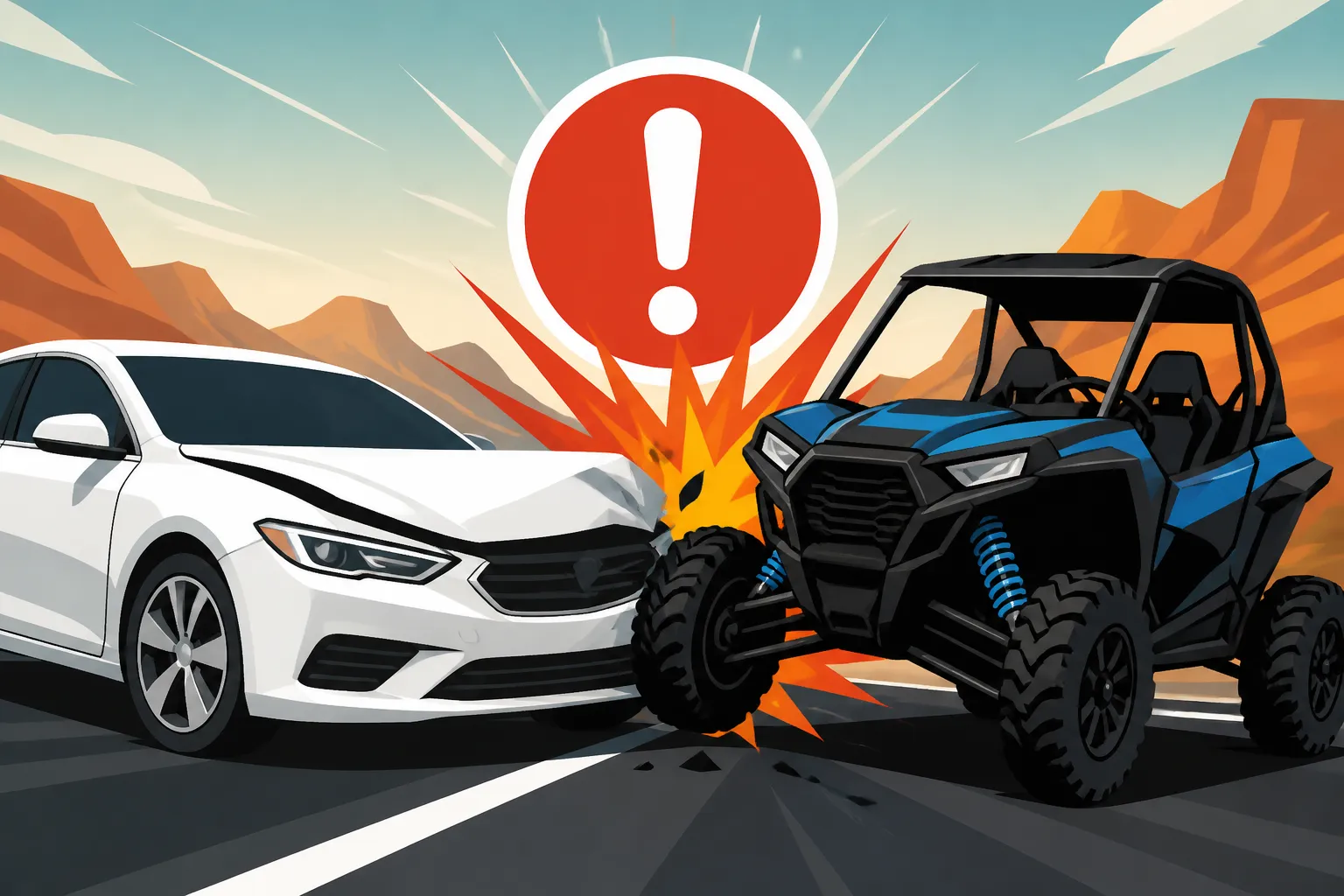
The open roads of Utah offer unparalleled access to some of the most stunning landscapes for ATV and UTV enthusiasts. But as more side-by-sides become street-legal, their presence on public roads, mixing with traditional vehicles, inevitably leads to a concerning increase in accidents. When your UTV collides with a car, it can be a terrifying, confusing, and financially devastating experience. This guide aims to clear up some of that confusion, walking you through the critical steps and considerations you'll face if your off-highway vehicle is involved in a collision with a car on Utah's public roadways.
Immediate Steps After a UTV-Car Collision in Utah
When the unthinkable happens and your UTV has been in a collision with a passenger vehicle, the moments immediately following the impact can be chaotic and overwhelming. It's crucial to try and remain as calm as possible to ensure everyone's safety and to protect your interests. Unlike being in the protected cabin of a car, UTV occupants are often much more exposed, making injuries a much higher concern.
Prioritizing Safety and Calling for Help
Your very first priority must be the safety of everyone involved. Assess yourself and your passengers for injuries immediately. Even if you feel fine in the heat of the moment, adrenaline can mask pain, so a thorough check is essential. If anyone is injured, or if the UTV or car is significantly damaged and blocking traffic, you need to call 911 right away. Don't hesitate. Law enforcement and paramedics are there to help, and their presence is critical for both medical assistance and documenting the scene.
If it's safe to do so and no one is seriously injured, try to move your UTV and the other vehicle out of the flow of traffic to prevent further accidents. This might mean pulling over to the shoulder of a state highway or moving to a nearby parking lot if you're in a town like Kanab or Moab. However, if moving the vehicles could worsen injuries or destroy evidence, leave them exactly where they are until emergency services arrive. Remember, a UTV often offers less structural protection than a traditional car, making even what might seem like a minor fender bender in a car a potentially serious incident for a side-by-side.
Documenting the Scene and Gathering Information
Once the immediate safety and emergency needs are addressed, the next vital step is to meticulously document everything you can about the accident scene. Modern smartphones are incredibly useful here. Take a multitude of photos and videos from different angles. Capture the positions of both vehicles, the extent of the damage to your UTV and the car, and any visible road conditions like potholes, debris, or skid marks. Don't forget to photograph the surrounding area, including road signs, intersections, and landmarks, to help establish the exact location of the crash.
Equally important is gathering information from all parties involved. Get the other driver's name, contact information, driver's license number, vehicle license plate number, and insurance details. If there are any passengers in their car, or if you have passengers in your UTV, get their names too. Don't forget to look for witnesses. Independent witnesses can be invaluable in corroborating your account of the accident, so ask for their names and contact information as well. Write down the name and badge number of any police officer who responds to the scene. This information will be crucial later for insurance claims and any potential legal proceedings.
Notifying Law Enforcement and Your Insurer
While you might think a minor bump doesn't warrant police, it's almost always a good idea to notify law enforcement of a UTV-car collision on Utah roads. A police report provides an official, unbiased record of the incident, which is incredibly valuable for your insurance company. The responding officer can assess the scene, speak with witnesses, and often determine initial fault. Be prepared to explain why your UTV was on the public road, especially if it's street-legal. They'll be checking things like your registration, decals, and if your UTV meets [What a Utah Officer Looks for on a Street-Legal ATV].
As soon as reasonably possible after the accident, you must notify your insurance company. Delays in reporting can sometimes complicate your claim. Provide them with all the details you've collected: photos, witness contacts, the other driver's information, and the police report number. Your insurer will guide you through the claims process, whether you're filing against your own collision coverage or against the other driver's liability policy. They can help clarify questions about [Insurance for a Street-Legal Machine in Utah] and what your specific policy covers in this type of scenario.
Understanding Liability and Fault in Utah UTV Accidents
The question of who is at fault is often the most contentious part of any accident, and it becomes even more nuanced when a UTV is involved. Utah's laws regarding off-highway vehicle use on public roads are specific, and understanding them is key to navigating the aftermath of a collision.
How Utah Law Views UTVs on Public Roads
In Utah, a UTV isn't just a toy; when operated on public roads, it's considered a motor vehicle and is subject to many of the same traffic laws as cars. However, for a UTV to legally operate on most public roads (excluding specific designated routes or crossings), it must be "street-legal." This involves meeting strict equipment requirements, such as having proper headlights, taillights, turn signals, mirrors, a horn, and often a windshield. You can find more details in articles like [Utah Street-Legal ATV Equipment Requirements]. If your UTV was on a public road and wasn't properly street-legal, or if you didn't have the necessary permits or registration, it can significantly complicate liability, even if the other driver was primarily at fault.
For instance, imagine you're riding your UTV from a campground to a trailhead near Sand Hollow, a common scenario for [Riding Through Town to the Trailhead in Utah]. If your UTV lacks functional turn signals and you make a sudden turn, leading to a collision, your lack of compliance could be a major factor in determining fault. Conversely, if your machine is fully compliant and equipped with all the necessary items from a company like SuperATV, which offers a wide range of street-legal kits and components, then you're on much firmer ground. Always ensure your UTV meets all the criteria, including having the correct [Driver License Rules on Utah Roads] for the operator, before venturing onto a public roadway.
Determining Fault and Its Impact on Claims
Determining fault in a UTV-car accident in Utah typically involves a thorough investigation by law enforcement and insurance companies. They will review the police report, witness statements, photographs, and any physical evidence from the scene. Utah operates under a modified comparative negligence rule. This means that if you are found to be partly at fault for the accident, your compensation for damages could be reduced by your percentage of fault. If you are found to be 50% or more at fault, you may not be able to recover any damages from the other party.
For example, if a car driver was speeding on a rural Utah highway, but your UTV failed to come to a complete stop at a stop sign before entering the intersection, both parties might share some degree of fault. The police report will often include the officer's initial assessment of fault, but insurance adjusters conduct their own investigation. This is where having clear documentation and witness accounts is absolutely crucial. A strong understanding of [Utah Traffic Rules for Street-Legal Side-by-Sides] will empower you to articulate your actions and demonstrate compliance.
The Role of Insurance and Damage Coverage
Insurance is your primary financial protection after an accident. For street-legal UTVs, you're required to carry liability insurance, similar to a car. This covers damages and injuries you might cause to others. Collision coverage, which is optional but highly recommended, pays for damage to your own UTV, regardless of fault. Understanding [Liability Limits Utah Requires on the Road] is important, as minimum coverage might not be enough to cover serious damage to both vehicles.
If the other driver is at fault, their liability insurance should cover the damages to your UTV and your medical expenses. However, if they are uninsured or underinsured, your own policy's uninsured/underinsured motorist coverage would kick in, if you have it. It's a good idea to review your UTV insurance policy before you ever hit the road, so you know exactly what is covered in the event of a collision. Also, be aware that a UTV can be quite expensive to repair or replace, and a total loss scenario is not uncommon for heavily damaged machines.
Here's a simplified look at how UTV and car insurance coverage typically compares:
| Feature | Typical Car Insurance Coverage | Typical Street-Legal UTV Insurance Coverage |
|---|---|---|
| Liability | Mandatory, covers damages/injuries to others | Mandatory for street-legal use, covers damages/injuries to others |
| Collision | Optional, covers damage to your car regardless of fault | Optional, covers damage to your UTV regardless of fault |
| Comprehensive | Optional, covers non-collision damage (theft, fire, vandalism) | Optional, covers non-collision damage (theft, fire, vandalism) |
| Uninsured/Underinsured | Optional, covers your damages if other driver has no/low insurance | Optional, covers your damages if other driver has no/low insurance |
| Medical Payments/PIP | Optional, covers medical expenses regardless of fault | Less common, often covered by personal health insurance |
| Roadside Assistance | Often available as an add-on | Less common for UTVs, sometimes through specific providers |
Navigating the Aftermath: Legal and Practical Considerations
Beyond the initial shock and the immediate steps, a UTV-car accident can lead to a long and complicated recovery process. It's important to be prepared for the practical and legal challenges that lie ahead.
Seeking Medical Attention and Documenting Injuries
Even if you walked away from the accident feeling okay, it's crucial to seek medical attention as soon as possible. Some injuries, particularly soft tissue injuries like whiplash or back pain, may not manifest until hours or even days later. A doctor can properly assess your condition, diagnose any hidden injuries, and start a medical record. This record is vital, not just for your health, but also for any insurance claim or legal action. Without prompt medical documentation, it can be much harder to prove that your injuries were a direct result of the accident.
Keep detailed records of all your medical appointments, treatments, medications, and any associated costs. This includes co-pays, prescription receipts, and travel expenses to and from appointments. If you experience pain, limited mobility, or emotional distress, document that as well. The more comprehensive your records, the stronger your case will be when dealing with insurance adjusters or, if necessary, an attorney. This isn't about being litigious; it's about ensuring you receive the care you need and are fairly compensated for your suffering.
Dealing with Vehicle Damage and Repairs
The damage to your UTV can range from minor cosmetic issues to a complete write-off. Get multiple repair estimates from reputable shops that specialize in UTVs, or that you trust with your customizations. If your UTV has aftermarket components, especially robust upgrades from brands like SuperATV, make sure the shop understands these additions and can properly account for them in the repair estimate. These specialized parts can sometimes be more challenging to source or repair than stock components, which can affect the repair timeline and cost.
If your UTV is deemed a total loss by the insurance company, they will offer you a settlement based on its fair market value. This can be a particularly frustrating situation for UTV owners, as the emotional value and the investment in aftermarket parts often exceed what an insurer might initially offer. Be prepared to negotiate, providing evidence of your UTV's condition, modifications, and comparable sales in your area. This is where your meticulous documentation of your machine's value before the accident comes in handy.
When to Consult Legal Counsel
While not every UTV-car accident requires a lawyer, there are several situations where professional legal advice becomes highly beneficial, if not essential. If you've suffered serious injuries, if liability is disputed, if there's significant damage to your UTV, or if you're having trouble getting a fair settlement from the insurance company, it's definitely time to consult with an attorney specializing in personal injury and vehicle accidents. They can help you understand your rights, navigate complex legal paperwork, negotiate with insurance companies, and represent you in court if necessary.
An attorney can be particularly helpful in cases where the street-legal status of your UTV is questioned, or if there are complications regarding [Age to Drive a Street-Legal ATV in Utah] or other compliance issues. They understand how factors like [DUI Rules on an ATV in Utah] can alter the legal landscape of a collision and can ensure all evidence is properly presented. Don't sign anything from an insurance company without understanding its implications, and if you feel overwhelmed, remember that legal professionals are there to protect your interests.
Disclaimer
This article is for general informational purposes only and does not constitute professional advice. Laws, prices and regulations vary by location and change over time. Consult a qualified professional for guidance on your specific situation.