Keeping the OHV Decal After Going Street Legal
It’s a common moment of confusion for many Utah ATV and UTV owners: you’ve gone through all the effort to make your beloved machine street legal, passing inspections and getting your license plate, and now you’re looking at that familiar OHV decal on the side. Do you rip it off? Is it still valid? This guide is here to clear up that very real frustration and explain exactly how Utah handles your OHV decal once your machine is ready for the pavement.
Understanding Utah's Dual Registration System
When you own an ATV or UTV in Utah, you're essentially dealing with two distinct worlds: the dusty trails and the paved roads. Utah’s legal framework is designed to accommodate both, but it means understanding two separate, though sometimes overlapping, registration processes. This can feel like navigating a maze, but once you get the hang of it, it makes perfect sense.
The "Off-Highway Vehicle" Definition in Utah
First off, let's talk about what makes your machine an "Off-Highway Vehicle" (OHV) in the eyes of the Utah Division of Motor Vehicles (DMV). Essentially, any motorized vehicle designed for off-highway use, weighing 2,500 pounds or less, and not wider than 50 inches (for ATVs), or any UTV (side-by-side) regardless of width, falls into this category. This includes everything from your trusty quad to your powerful side-by-side. The state mandates that these machines be registered for off-highway use if they're going to be ridden on public lands, trails, or even cross public roads.
The purpose of the OHV decal is simple: it’s your visual proof that your machine is legally registered for off-highway use in Utah. This decal, which typically goes on the rear fender or a visible part of the machine, shows law enforcement and land managers that you’ve paid your dues and are permitted to enjoy Utah’s incredible trail systems. It contributes to trail maintenance and access, so it's a vital part of the system for maintaining the places we all love to ride. If you're a first-time buyer, you'll want to review [A First-Time Buyer's OHV Paperwork Checklist in Utah] to ensure you've got all your ducks in a row.
What "Street Legal" Really Means in Utah
Now, taking your OHV and making it "street legal" is an entirely different ball game, governed by different rules and regulations. It means equipping your ATV or UTV with specific safety and street-use components – things like turn signals, mirrors, a horn, a lighted license plate bracket, and often a windshield. Once these modifications are made, your machine must pass a safety inspection, much like a regular car would. After passing inspection, you then register your OHV with the DMV as a street-legal vehicle, which results in a standard license plate and title, effectively allowing it to operate on most public roads in Utah where OHVs are permitted.
This conversion process is really about adding a second, distinct legal status to your machine, allowing it versatility that goes beyond the dirt. It's not about replacing its OHV status, but augmenting it. You're giving your side-by-side a whole new set of permissions. Companies like SuperATV offer a range of products, including full street-legal kits and individual components, that can help streamline this conversion process, ensuring your machine meets Utah’s specific requirements. To understand more about what this entails, you might find [Utah Street-Legal ATV Equipment Requirements] helpful.
Can You Keep Your OHV Decal? The Answer is Yes (and Why)
This is where the confusion often arises, but let me put your mind at ease: absolutely, you can (and should) keep your OHV decal after making your machine street legal in Utah. It's not one or the other; it's both!
Why Utah Allows Dual Registration
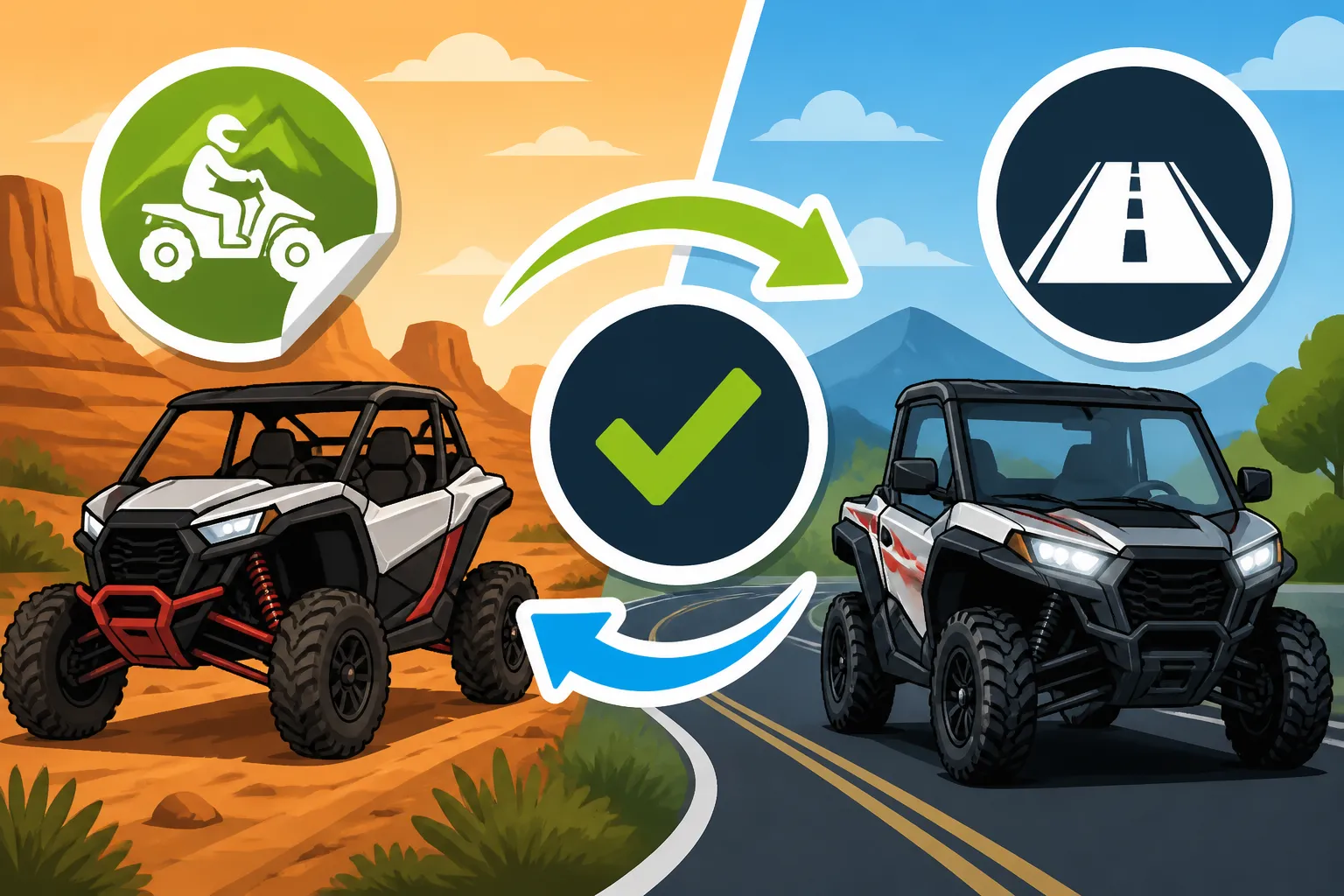
Utah’s stunning and diverse landscape demands that riders have flexibility. Our trails often connect via short stretches of public road, or sometimes you need to ride through a town to get to the next section of trail. Imagine being at a trailhead and realizing you need to run into town for gas or supplies. With a street-legal machine, you can simply drive there. But once you're on the trail, you're still operating as an OHV. Utah's system recognizes this practical reality by allowing your machine to carry both registrations simultaneously.
Think of it this way: your OHV decal signifies your permission to ride on the vast network of off-highway trails and public lands. Your license plate signifies your permission to operate on designated public roads. These two statuses aren't mutually exclusive; they're complementary. This dual registration system maximizes your riding opportunities and convenience. It means you can ride from your camp at Sand Hollow directly onto the dunes, or drive your UTV through Marysvale to reach a different section of the Paiute Trail without loading it onto a trailer. This flexibility is a huge part of what makes Utah such an incredible place to ride.
The Physical Decal: Where It Goes, What It Signifies
So, where does that little OHV decal actually go? Typically, the OHV decal is affixed to the rear fender, the frame, or another easily visible, non-removable part of your ATV or UTV. The specific location can vary slightly depending on the machine type and available space, but the key is that it's visible. This decal remains your proof of off-highway registration. When you pass a ranger on a dirt trail, they're looking for that decal.
When you go through the street-legal conversion, you'll be issued a standard vehicle license plate, which mounts on the rear of your machine, just like on a car or truck. You'll also likely get a new registration card that specifically states your machine is now street legal. The crucial point is that installing the license plate does not mean you should remove your existing OHV decal. The decal continues to serve its purpose for when you leave the pavement behind and venture onto designated OHV trails. Both are required for their respective uses, and having both signals to authorities that your machine is compliant whether you're on two tracks or two lanes. For specific decal placement, you might check [Utah OHV Decals and Where They Go] or [Where to Put the Decal on a Side-by-Side].
Navigating the Paperwork: Keeping Both Registrations Current
Managing both an OHV registration and a street-legal vehicle registration might sound like double the work, but it's really quite manageable once you understand the process. The key is to remember they are separate, and thus, often require separate attention.
The Renewal Process for Both Registrations
When it comes time to renew, you'll essentially be renewing two different registrations for the same machine. Your off-highway vehicle registration typically lasts for one year and has its own renewal cycle. You'll receive a renewal notice, and you can usually renew it online or at a DMV office. This process ensures your OHV decal remains valid. Then, your street-legal registration follows the same annual or biennial renewal schedule as other street-legal vehicles in Utah, which also requires its own fee and process. This means that, yes, you will be [Paying Two Registration Fees on One Machine], but it's the price of ultimate versatility.
It's absolutely vital to keep both current. An expired OHV registration can lead to fines if you're caught riding on public lands, even if your machine is street legal and you have a valid license plate. Likewise, an expired street-legal registration means you cannot legally operate your machine on public roads. So, mark your calendars or set reminders for both! The state may send separate notices for each, or you might find them consolidated, but confirm both statuses are active. Renewing a street-legal ATV registration follows much the same process as renewing a car's registration, but specifically for your converted OHV.
What to Carry on the Trail and the Road
This is another point of common misunderstanding. Because your machine has dual status, you essentially need to be prepared for both scenarios when carrying documentation. When you're out on the trails, especially in more remote areas or state parks, a ranger might ask to see your current OHV registration card. Even if you have a license plate, they want to verify your OHV compliance.
When you're on public roads, a law enforcement officer will expect to see your street-legal registration card, proof of insurance (which is required for street-legal vehicles), and your driver's license, just as they would for any other vehicle. So, the safest and most compliant approach is to carry both your OHV registration card and your street-legal vehicle registration card, along with your driver's license and proof of insurance, at all times. Many riders keep these documents in a waterproof bag or small compartment on their machine. For more details on what to have on hand, refer to [What Paperwork Utah Riders Must Carry]. While [Carrying Digital Proof of Registration on the Trail] is often accepted, having physical copies can provide extra peace of mind, especially in areas with spotty cell service.
| Registration Type | Purpose | Required for | Annual Renewal | Visible Proof | Key Documents to Carry |
|---|---|---|---|---|---|
| OHV Registration | Legal access to designated OHV trails | Riding on public lands, OHV trails, crossing roads | Yes | OHV Decal | OHV Registration Card |
| Street-Legal Reg. | Legal access to designated public roads | Driving on public roads (where permitted) | Yes | License Plate | Street-Legal Reg. Card, Proof of Ins., Driver's License |
Common Misconceptions and Practical Advice
It’s easy to get tangled up in the specifics, especially when you’re dealing with something as unique as a street-legal OHV. Let’s clear up some lingering doubts and offer a few practical tips to make your riding experience as smooth as possible.
The Decal Isn't Just for Unregistered Machines
One of the biggest misconceptions I hear is that once a machine gets a license plate, the OHV decal becomes irrelevant or even suggests the machine isn't street legal. This couldn't be further from the truth! The OHV decal simply indicates that your machine is also registered for off-highway use. It doesn't mean it's only for off-highway use, nor does it imply that it's unregistered for street use. Think of it as a badge of honor for its dual capabilities.
Law enforcement officers, especially those who work primarily with OHVs in trail areas, are well aware of Utah's dual registration system. They understand that a machine with both a license plate and an OHV decal is fully compliant for both environments. The challenge sometimes comes from those unfamiliar with OHV laws, but having all your current documentation on hand will quickly resolve any questions. This combination actually proves you've gone the extra mile to be fully legal in both worlds.
Maximizing Your Machine's Versatility
Embracing the dual registration system truly unlocks the full potential of your ATV or UTV in Utah. It means less time loading and unloading onto trailers, and more time riding. Imagine driving your side-by-side directly from your hotel in Kanab to the entrance of Coral Pink Sand Dunes, or traversing the small towns along the Paiute Trail system to access different sections of the trail. This convenience is priceless.
To make the most of this versatility, ensure your machine is properly equipped for both demanding trail conditions and road use. Many riders invest in durable accessories that serve both functions. For example, robust skid plates and suspension upgrades from companies like SuperATV can protect your vehicle on aggressive trails, while also standing up to the demands of road travel. This dual-purpose capability is what makes the street-legal conversion so appealing for Utah riders. The street-legal status doesn't change your trail access; in fact, it enhances it by allowing easier travel between trailheads, as explored in [Does Street-Legal Status Change Trail Access?]. For trips that might take you across different types of terrain, consider what [Street Plates on Federal Land Trails] means for your journey.
Legal Requirements and Avoiding Fines
The bottom line is that both your OHV registration and your street-legal registration need to be current and valid if you intend to use your machine in both capacities. Forgetting to renew one or the other can lead to inconvenient stops and potentially costly fines. For example, if you're stopped on a designated OHV trail with an expired OHV decal, you could face penalties, regardless of your street-legal status. Similarly, if you’re pulled over on a public road with an expired license plate registration, you’re in violation of road rules.
A Utah trooper or a state park ranger will always check for current registration appropriate to the environment you're in. Knowing [What a Utah Trooper Checks at a Trailhead] can help you prepare. The fine for an expired OHV registration in Utah can be a real buzzkill for your day, so staying on top of both renewals is crucial. Keep clear, legible copies of all your documentation, and make it easily accessible. This simple habit can save you a lot of hassle and ensure your adventures are always within the bounds of the law.
Disclaimer
This article is for general informational purposes only and does not constitute professional advice. Laws, prices and regulations vary by location and change over time. Consult a qualified professional for guidance on your specific situation.