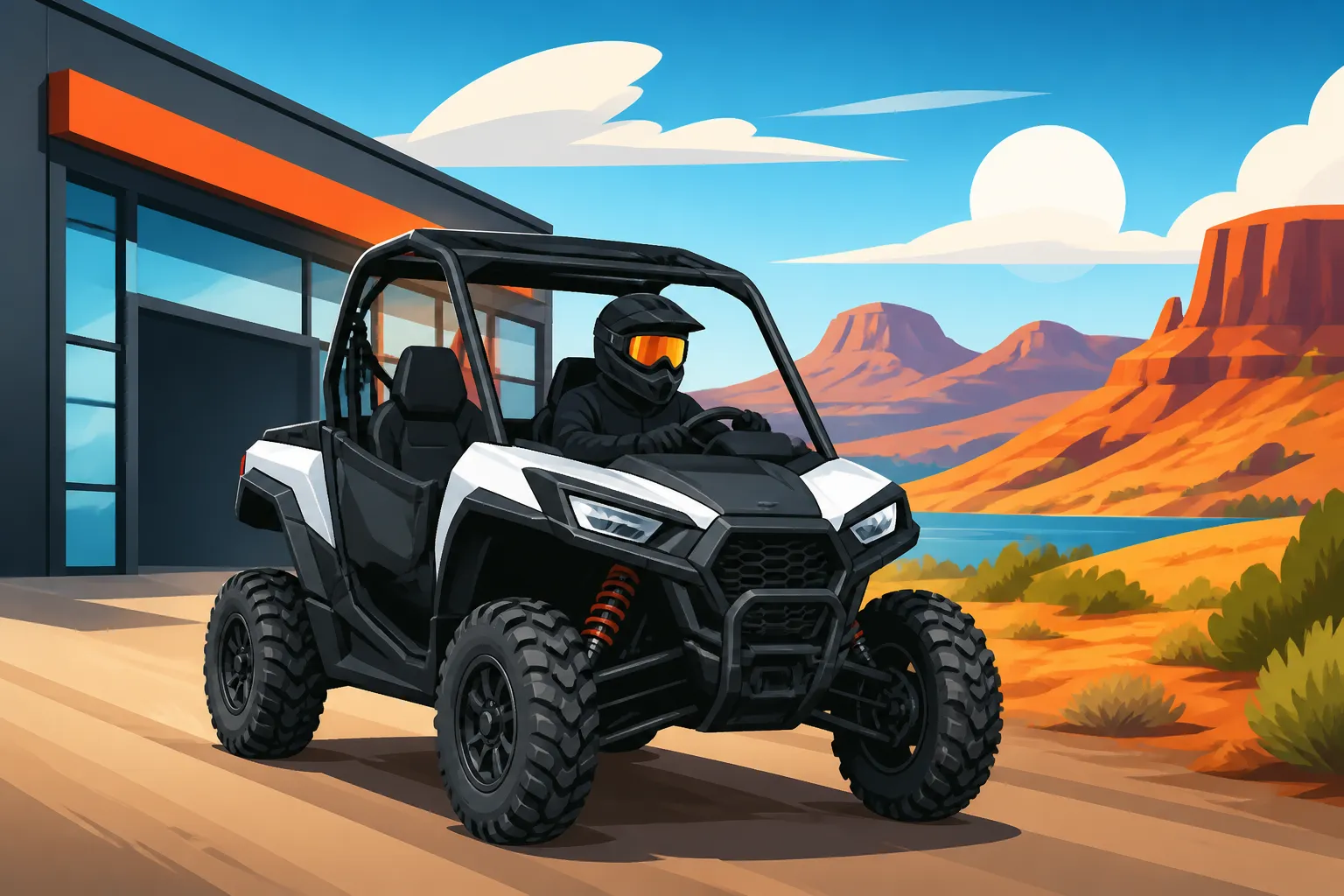
Riding Home From the Dealer Before Registering
You've just bought that shiny new (or new-to-you!) ATV or UTV, and the keys are in your hand. The excitement is palpable – you want to rip it home, maybe even take a quick spin around the block, or head straight for the nearest trail. But hold on a minute, because in Utah, there are some very real legal hurdles between that dealer's lot and your first ride on an unregistered machine. This guide will walk you through exactly what paperwork you should expect, what you absolutely cannot do, and the safest, legal way to get your new off-highway vehicle where it needs to go.
The Excitement vs. The Rules: Why You Can't Just Ride Home
That feeling of driving away from the dealership with a brand-new ATV or UTV in tow is truly something special. The anticipation of hitting the trails, exploring Utah's incredible landscapes, and making memories is almost overwhelming. It's natural to want to jump straight on and ride, especially if the dealership is just a stone's throw from your home or a favorite staging area. However, this immediate gratification often bumps right up against Utah's OHV registration laws.
The core issue here is that an off-highway vehicle (OHV) is generally not considered street-legal unless it has undergone a specific conversion and obtained regular street registration, in addition to its OHV registration. Without both, or at the very least, a current OHV registration and decal, you simply cannot operate that machine on public roads, highways, or designated OHV trails. This means no riding it home from the dealer, no quick trip to the gas station, and no "just to the trailhead" jaunts.
Many new owners are genuinely surprised by this, especially if they've bought cars or trucks before where a temporary plate allows you to drive off the lot immediately. It feels counter-intuitive to have a vehicle you just paid for but can't legally operate. But the distinction between an OHV and a street-legal vehicle is critical in Utah law. Even if you're only planning to ride on private land, any movement on public roads to get to that private land still falls under the same rules. It's a common trap for new riders, and the penalties for riding an unregistered machine can be a real buzzkill. [Penalties for Riding Unregistered in Utah] are something you definitely want to avoid.
The Myth of the Dealer Grace Period
There's a persistent myth that once you buy a new vehicle from a dealership, you automatically have a few days or weeks of "grace period" to drive it home or use it while waiting for the registration paperwork to finalize. While this can sometimes be true for street-legal cars and trucks in Utah, where a temporary permit is issued for road use, it generally does not apply to off-highway vehicles in the same way.
Dealers typically do not issue a temporary "ride-home" permit for OHVs that allows you to operate them on public roads or trails before they are fully registered. The dealer's job is to sell you the machine and provide the necessary paperwork for you to register it with the state. They aren't usually equipped to give you a temporary solution for immediate trail or road use for an OHV. This means you need to have a plan for transport that doesn't involve riding it.
The intent of temporary permits is usually for vehicles that are designed and legal for immediate road use, allowing you to get from the dealership to your home and then to the DMV for permanent registration. OHVs, by their nature, are not designed for general road use, and thus the same "drive-it-home" temporary provisions don't typically extend to them. For information on potential temporary permits, you can look into [Temporary Permits for a Newly Bought UTV], but be aware these are often for specific situations like moving an unregistered machine, not general recreational riding.
What Your Utah Dealer Hands You at Delivery
When you complete the purchase of an ATV or UTV from a reputable Utah dealer, you'll receive a packet of critical documents. This paperwork is your key to getting your new machine legally registered and titled in your name. It's absolutely essential to understand what these documents are and why each one matters. Don't just stuff them in a glove box; review them carefully before you even leave the dealership.
Your dealer should provide you with a Manufacturer's Statement of Origin (MSO) or a Manufacturer's Certificate of Origin (MCO). This document is essentially the "birth certificate" for your new OHV. It proves that the machine is new and that you are its first retail owner. The MSO is what the DMV will use to issue the first title in your name. Make sure all the information on it, including your name, the vehicle identification number (VIN), and the make and model, is accurate before you leave. If you're buying a used machine from a dealer, you'll receive the existing title, signed over to you by the dealership.
In addition to the MSO or title, you'll get a bill of sale. This document outlines the terms of the sale, including the purchase price, taxes paid, and any trade-in details. It serves as proof of purchase and is necessary for calculating sales tax and the uniform fee during registration. Ensure the VIN on the bill of sale matches the MSO/title and the actual machine. Sometimes dealers use their own forms, but it's wise to understand [Utah Bill of Sale: What It Must Say] to ensure all necessary details are included. The dealer will also collect any applicable sales tax and uniform fees, which they will then remit to the state. This is crucial because you'll need proof these taxes and fees were paid when you register. [What a Utah Dealer Hands You at Delivery] will detail this even further.
Required Documentation for Registration
To register your new ATV or UTV in Utah, you'll need to present several key documents at the DMV. Having these in order before your visit will save you a lot of time and frustration. The MSO (or signed-over title for a used machine) is paramount, as it establishes the chain of ownership. You'll also need the bill of sale, which verifies the purchase price for tax and fee calculations.
Beyond those, be prepared with a valid form of identification, like your driver's license. If multiple owners are listed, all owners may need to be present or provide notarized authorization. You will also need proof of Utah residency. The DMV will provide you with the application for registration and title, which you'll fill out on-site. It's a good idea to review [Documents to Bring to the Utah DMV for an ATV] before you head out. Sometimes, if there are complexities in the sale, or if you need to generate specific legal documents for other purposes, services like LawDepot can provide templates to ensure you have all your ducks in a row for future transactions or to understand the components of what the dealer provides.
Here's a quick checklist of common documents from a dealer for registration:
| Document Type | Purpose | Notes |
|---|---|---|
| Manufacturer's Statement of Origin (MSO)/MCO | Proves new vehicle ownership, required for first title. | Verify VIN, make, model, and your name are correct. |
| Signed-Over Title (for used) | Transfers ownership from seller to buyer. | Ensure all seller's sections are properly filled and signed. |
| Bill of Sale | Proof of purchase, details sale price, taxes paid. | Keep for your records; required by DMV for sales tax confirmation. |
| Odometer Disclosure Statement | Required for most vehicles to attest to mileage. | Often part of the MSO or dealer's sales paperwork. |
| Lien Release (if applicable) | Proves previous loan was satisfied (for used machines). | Critical if the dealer bought it with a lien. |
Having all of this paperwork organized and correct is the first step in getting your new machine legally ready for the trails. Any discrepancies or missing information could delay your registration significantly.
The Smart (and Legal) Way to Get Your New Machine Home
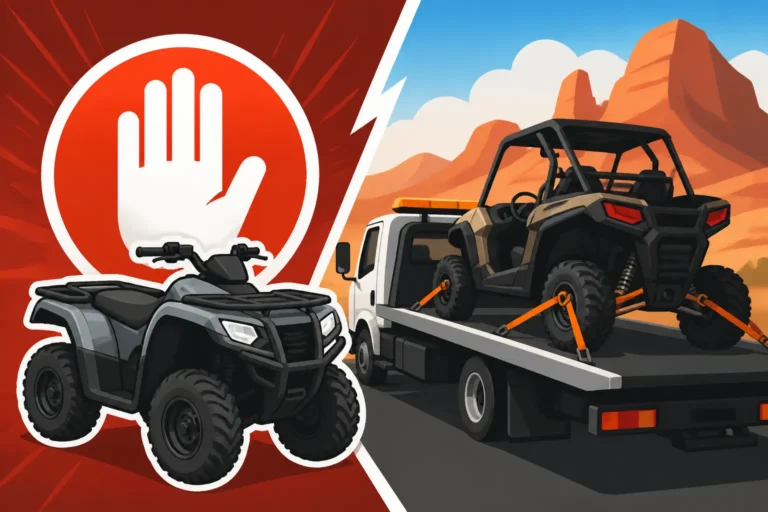
So, you've just bought your ATV or UTV from the dealer, and you can't ride it home. Now what? The most important thing is to have a plan for transportation. Since operating an unregistered OHV on public roads or trails is a definite no-go, trailering your machine is almost always the only legal and sensible option. This prevents any potential fines, impoundment, or other headaches that come with breaking registration laws.
If you already own a trailer, great! Make sure it's in good working order and that you have appropriate tie-downs to secure your new machine safely. You'd be surprised how often people overlook proper strapping, only to have their new pride and joy shift or even fall off during transport. For larger UTVs, ensure your trailer has the capacity and your tow vehicle has the towing capability. If you don't own a trailer, you have a few options: borrow one from a friend, rent one from a local rental company, or ask the dealership if they offer delivery services. Many dealerships are accustomed to this and can often arrange delivery for a fee, especially for customers who live within a reasonable distance.
Another option, if feasible, is to transport the OHV in the bed of a pickup truck. This works well for many ATVs and smaller UTVs, provided your truck's payload capacity can handle the weight and you have a ramp for loading. Again, secure the machine very tightly to prevent shifting. This method keeps your OHV completely off public roads, which is the goal. Remember, even a short hop on a public road, or crossing one without appropriate street-legal conversion and registration, could land you in trouble. Planning this transport ahead of time is a crucial part of your new OHV purchase.
Safety During Transport
Transporting an ATV or UTV requires attention to safety to protect both your new machine and other drivers on the road. First and foremost, always use strong, reliable tie-down straps. Ratchet straps are generally preferred over cam buckles for their superior holding power. Secure the machine from at least four points, pulling down and slightly outward to prevent any lateral movement. Check the tension of your straps after driving a short distance, as they can sometimes loosen.
Ensure that your trailer lights are working correctly and that your license plate is visible. If the OHV or trailer obscures your vehicle's taillights or license plate, you might need supplemental lighting or a temporary plate holder. Pay attention to the weight distribution on your trailer. Too much weight forward or backward can lead to unstable towing, known as "sway," which can be extremely dangerous. Generally, about 10-15% of the total trailer weight should be on the tongue. If you're new to towing, practice in a safe, open area before hitting the main roads. Remember, a secured OHV is a safe OHV.
Navigating the Registration Process After the Purchase
Once you've safely transported your new ATV or UTV home, the next immediate step is to get it properly registered and titled with the Utah Division of Motor Vehicles (DMV). This isn't just a formality; it's a legal requirement to operate your machine on public lands and designated trails in Utah. Don't procrastinate on this, as the sooner you get it done, the sooner you can enjoy legal, worry-free riding.
The first step is gathering all the documentation you received from the dealer, including the MSO or title, the bill of sale, and any other relevant papers. You'll also need your personal identification. Next, you'll need to visit a Utah DMV office that handles OHV registration. Not all DMV locations offer this service, so it's a good idea to check ahead. For example, [Which Utah DMV Offices Handle OHV Paperwork] can help you find the closest and most appropriate location.
At the DMV, you'll fill out the necessary application forms. The staff will review your documents, calculate any remaining fees (like the uniform fee if not already paid, or sales tax if you purchased privately), and process your registration. Once complete, you'll receive your registration card and the all-important OHV decal, which must be affixed to your machine in a specific location. [Utah OHV Decals and Where They Go] provides guidance on correct decal placement. Remember, having your registration card and decal visible is part of [What Paperwork Utah Riders Must Carry] when on the trails.
Understanding Utah's OHV Fees and Timelines
When you register your ATV or UTV in Utah, you'll encounter a few different fees. The primary fee is the OHV registration fee, which supports trail maintenance, enforcement, and education programs. There's also a uniform fee, which is essentially a property tax on the vehicle, calculated based on its age and value. Sometimes sales tax is also collected at the DMV if it wasn't paid directly to the dealer or private seller. [What the Utah OHV Registration Fee Pays For] breaks down where your money goes.
The registration is typically valid for one year, expiring on the last day of the month one year from issuance. You'll receive a renewal notice in the mail when it's time to re-register. [How Long a Utah OHV Registration Lasts] can provide more details. It's crucial to renew on time to avoid penalties for riding with an expired registration. While the processing time at the DMV can vary depending on how busy they are, if all your paperwork is in order, you can usually walk out with your registration card and decal the same day. For a complete guide, consider reviewing [How to Register an ATV or UTV in Utah] and using [A First-Time Buyer's OHV Paperwork Checklist in Utah] to ensure you haven't missed anything.
| Item | Action | Why It Matters |
|---|---|---|
| Dealer Paperwork | Secure and organize all documents received from the dealer (MSO/Title, Bill of Sale). | These are mandatory for proving ownership and calculating fees. |
| Transport Plan | Arrange for safe trailering or truck bed transport. | Avoids illegal operation on public roads and potential fines/impoundment. |
| DMV Visit | Gather ID, dealer paperwork, and visit a qualified Utah DMV office. | This is where your machine officially becomes registered and legal for use. |
| Fees Paid | Be prepared to pay registration, uniform, and potentially sales tax. | These fees fund critical OHV programs and are a legal requirement. |
| Decal Placement | Affix the OHV decal in the specified location on your machine. | This visible proof of registration is checked by enforcement officers on trails. |
Always remember that owning an OHV comes with responsibilities. Knowing the rules and following the proper steps for registration and transport ensures that your riding experience in Utah is safe, legal, and truly enjoyable.
Disclaimer
This article is for general informational purposes only and does not constitute professional advice. Laws, prices and regulations vary by location and change over time. Consult a qualified professional for guidance on your specific situation.