The Montana LLC Question Utah Owners Keep Asking
For many Utah ATV and UTV owners, the cost of getting their machines on the trail can feel like a mountain of paperwork and fees. It's completely understandable to look for ways to streamline the process or lessen the financial burden, and this often leads to hushed conversations about the "Montana LLC" strategy. This guide will cut through the rumors and provide a realistic, in-depth look at what the Montana LLC entails, why it's appealing, and crucially, what the actual legal and financial implications are for residents of Utah.
Understanding the Montana LLC Strategy for OHVs
It's no secret that owning an off-highway vehicle (OHV) in Utah involves a certain amount of investment, not just in the machine itself but in the various fees and taxes required to legally hit the trails. Because of this, many riders hear whispers of ways to circumvent some of those costs, and one of the most persistent rumors revolves around registering their OHV through a Montana Limited Liability Company (LLC). Let's unpack what this strategy is all about and why it catches so many riders' attention.
What is the Montana LLC "Loophole" Anyway?
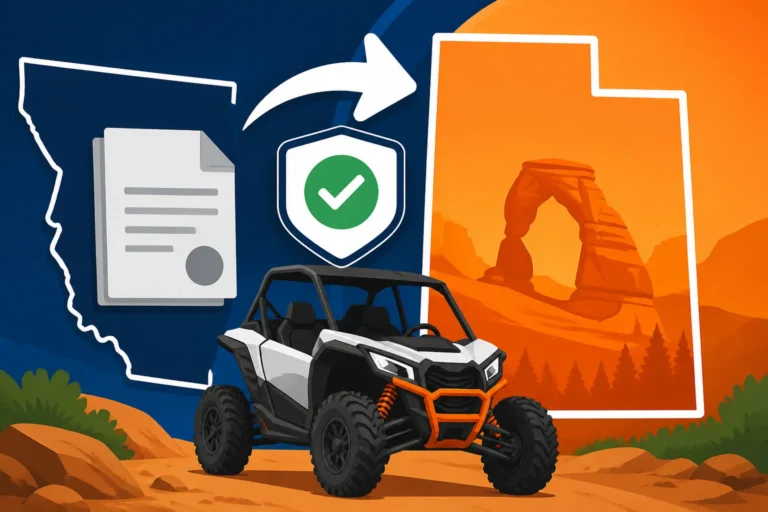
At its core, the Montana LLC strategy exploits a few key differences in Montana law compared to many other states, including Utah. The biggest draw is that Montana does not levy a state sales tax. When you combine this with the fact that an LLC is a separate legal entity that can own assets, it creates an intriguing proposition. The idea is that a Utah resident would form an LLC in Montana, and then that Montana LLC would legally purchase and own their ATV or UTV. Because the LLC is "based" in Montana and Montana doesn't have sales tax, the vehicle would theoretically avoid sales tax upon purchase and then be registered in Montana. This registration often comes with lower fees compared to some states, further sweetening the deal. It sounds pretty straightforward on the surface, almost too good to be true for those hoping to save a few bucks, but as we'll see, the devil is in the details when you're not actually living in Montana.
Why Utah Riders Are Tempted by This Idea
The temptation for Utah riders to explore the Montana LLC route is perfectly natural. Who doesn't want to save money, especially when you're investing in a passion like OHV riding? The primary motivators are usually two-fold: avoiding Utah sales tax on the initial purchase of a new or used machine, and potentially securing lower annual registration fees. Utah has both a state sales tax and an age-based uniform fee that applies to OHVs, which can add up, particularly on newer, higher-value side-by-sides. If you're dropping tens of thousands on a new rig, saving thousands on sales tax alone sounds incredibly appealing. Additionally, some see it as a way to simplify the registration process or gain a perceived layer of privacy, as the LLC would be the registered owner, not the individual. The promise of bypassing what feels like a bureaucratic and expensive hurdle is a strong pull for anyone looking to maximize their trail time and minimize their wallet drain.
How the Strategy Generally Works
If you were to pursue this strategy, the typical steps would look something like this. First, you'd establish a Limited Liability Company in Montana. This usually involves filing articles of organization with the Montana Secretary of State and appointing a registered agent within Montana, which can be done through online services. Companies like LawDepot offer templates and services to help you set up an LLC, guiding you through the initial paperwork. Once the LLC is officially formed, you, as the manager or owner of this Montana LLC, would then purchase your ATV or UTV in the name of the LLC. This is a critical step, as the vehicle legally belongs to the company, not you personally. With the vehicle owned by the Montana LLC, you would then register it in Montana, typically through a local county DMV or vehicle services office there. The registration would be issued to the LLC, and Montana license plates or OHV decals would be affixed to the machine. This entire process is designed to legally establish the vehicle's "home" in Montana, theoretically exempting it from Utah's sales tax and registration requirements.
The Legal Realities for Utah Residents
While the Montana LLC strategy might seem like a clever workaround, it hits a significant roadblock when it comes to the legal realities of Utah residency. Utah, like most states, has very clear rules about where vehicles owned by its residents must be registered and taxed. Attempting to circumvent these laws can lead to severe consequences that far outweigh any perceived savings. It's vital to understand that simply registering an OHV in another state does not automatically exempt you from your home state's requirements if that's where the machine is primarily used.
Utah's Residency and Registration Laws
The crux of the issue lies in Utah's definition of residency and where a vehicle is "principally garaged" or "primarily operated." If you are a legal resident of Utah, and your ATV or UTV is kept, stored, or predominantly used within the state's borders, Utah law generally requires that machine to be registered and titled in Utah. This holds true regardless of where the LLC that technically owns the vehicle is domiciled. The intent of the law is to ensure that vehicles deriving benefit from Utah's infrastructure, trails, and emergency services contribute to the state's tax base. [How to Register an ATV or UTV in Utah] explains the standard process, which applies to Utah residents and their machines. Utah authorities are well aware of the Montana LLC phenomenon and actively enforce their registration laws. They understand that a Montana LLC might be a legitimate business entity for a Montana resident, but if a Utah resident is using it solely to avoid Utah taxes, that's where the legal issues begin.
Sales Tax and Uniform Fees on Utah OHVs
For Utah residents, sales tax and the annual uniform fee are mandatory components of OHV ownership. When you purchase an ATV or UTV, whether new or used, Utah sales tax is generally applied to the purchase price. Beyond that, OHVs in Utah are subject to an annual uniform fee, which is based on the machine's age and value, in lieu of property tax. This fee contributes significantly to the state's OHV program, funding trail maintenance, signage, education, and enforcement efforts. [Utah ATV Sales Tax and Uniform Fees] details how these costs are calculated. Attempting to bypass these through a Montana LLC for a machine primarily used in Utah is essentially tax evasion. If caught, you could be liable for all unpaid sales tax, uniform fees, interest, and substantial penalties, erasing any "savings" you thought you achieved and then some. The system is designed to fund the trails we all enjoy, and those who use them are expected to contribute.
Potential Legal Ramifications
The risks associated with using a Montana LLC to avoid Utah registration and taxes are significant and can be quite severe. First and foremost, you could face hefty fines for operating an unregistered OHV in Utah. A Utah Trooper conducting a trailside check, as described in [What a Utah Trooper Checks at a Trailhead], can easily determine if your machine is properly registered for Utah use. If the registration doesn't align with your residency or the machine's primary location of use, you could be ticketed. Even worse, the machine could be impounded, leading to additional towing and storage fees. Beyond immediate enforcement actions, the state of Utah could pursue back taxes, including sales tax and uniform fees, along with penalties and interest, which can accumulate to thousands of dollars. The penalties for riding unregistered in Utah, as detailed in [Penalties for Riding Unregistered in Utah], are not trivial. In some cases, repeated or deliberate attempts to evade taxes could even lead to more serious legal action. It’s critical to remember that while forming an LLC with a company like LawDepot is legal, using it to unlawfully avoid taxes in your home state is not.
Practical Considerations and the True Costs
Beyond the legal risks, there are a number of practical and financial considerations that often get overlooked when contemplating the Montana LLC strategy. What seems like a cost-saving measure on paper can quickly turn into a complex, expensive, and time-consuming endeavor once you factor in all the necessary overhead and potential hidden fees.
The Costs of Setting Up and Maintaining an LLC
Establishing an LLC in Montana, while relatively straightforward, is not a one-time, set-it-and-forget-it deal. You'll incur initial filing fees with the Montana Secretary of State. Then, there are ongoing annual fees that Montana requires for maintaining your LLC's active status. Additionally, because you likely don't reside in Montana, you'll need to hire a registered agent service within the state to act as the official contact point for your LLC. These services come with their own annual fees, adding another recurring expense. While LawDepot can assist with the initial setup paperwork, these ongoing costs are your responsibility. Over time, these cumulative fees can chip away at, or even exceed, any sales tax savings, especially if you plan to own the OHV for many years. You also need to consider the time and effort involved in managing the LLC, maintaining records, and ensuring compliance with Montana's business regulations.
| Cost Type | Description | Frequency | Typical Range (Estimate, check current rates) |
|---|---|---|---|
| LLC Filing Fee | Initial fee to register your LLC with the Montana Secretary of State | One-time | Several hundred dollars |
| Registered Agent Fee | Annual fee for a Montana-based service to receive legal and tax documents | Annual | $100 – $300+ |
| Annual Report Fee | Fee to file your LLC's annual report with the state | Annual | $0 – $50 (some states charge, MT may not) |
| Vehicle Registration | Montana OHV registration fees for the LLC-owned machine | Annual | Varies by machine type and age |
| Time/Effort | Managing paperwork, renewals, understanding regulations | Ongoing | Unquantifiable, but significant |
Insurance Implications
Insurance is another critical area where the Montana LLC strategy can create complications. Your standard personal OHV insurance policy might not cover a vehicle that is legally owned by an LLC, especially one based in a different state. Many insurance providers have specific requirements for how vehicles are titled and registered. You may need to secure a commercial or business insurance policy for your LLC-owned OHV, which can be significantly more expensive than a personal policy. Furthermore, if you're involved in an accident in Utah while operating an OHV registered to a Montana LLC, and your insurance is deemed invalid because of the titling structure, you could be personally liable for damages, medical expenses, and legal fees. It's crucial to have explicit conversations with your insurance provider before pursuing this route to understand coverage limitations and potential increased premiums. [Insuring a Utah UTV That Never Leaves the Trail] touches on general OHV insurance, but an LLC-owned machine introduces different complexities.
When This Strategy Might Make Sense
It's important to clarify that the Montana LLC strategy isn't inherently illegal; it's the misuse of it by residents of other states for tax evasion that causes problems. For a legitimate Montana resident who forms an LLC in Montana and purchases an OHV through it for use primarily in Montana, this is a perfectly legal and logical approach. Similarly, for businesses with actual operations and assets located in Montana, owning and registering vehicles through a Montana LLC is standard practice. For a Utah resident, however, the instances where this strategy makes legitimate sense are extremely rare. Perhaps if you own a legitimate business with a physical presence and operations in Montana that specifically requires OHVs for its work, then registering those machines to that Montana-based LLC would be appropriate. But for the average Utah resident simply looking to save on sales tax for their personal weekend warrior, it generally amounts to skirting the law and opens the door to considerable risk and expense.
The Simpler, Legal Path to Utah OHV Ownership
Instead of navigating the complex and risky waters of a Montana LLC for your Utah-based OHV, embracing Utah's straightforward registration and titling process is by far the safest, most transparent, and ultimately less stressful path. It ensures you're compliant with state laws, contributes to the very trails you ride, and avoids the significant penalties associated with non-compliance.
Embracing Utah's Registration and Titling Process
The good news is that Utah has a clear, well-defined process for registering and titling ATVs and UTVs. While it might involve a trip to the DMV and some paperwork, it's designed to be manageable. You'll typically need your proof of ownership (like a title or bill of sale), proof of identity, and payment for the necessary fees. Depending on whether you're buying a new or used machine, or if it's from out-of-state, there might be specific steps. For example, [Buying an ATV Out of State and Registering It in Utah] details the process for machines brought in from elsewhere. The state provides comprehensive information, and completing the process correctly means you can ride with peace of mind, knowing you're fully legal. It also opens up the opportunity for street-legal conversion if you ever decide to pursue that, which has its own set of rules and benefits, as discussed in [The Utah Law Behind Street-Legal ATVs].
Understanding Utah's Fees
It’s easy to feel frustrated by fees, but it helps to understand where that money goes. Utah's OHV registration fees and uniform fees are not arbitrary. A significant portion of these funds is dedicated directly back into the state's extensive OHV program. This includes the maintenance and improvement of thousands of miles of trails across Utah, signage, safety education initiatives, law enforcement patrols on public lands, and search and rescue efforts. When you pay your registration fees, you are directly contributing to the preservation and enhancement of the riding experience for everyone, including yourself. [What the Utah OHV Registration Fee Pays For] provides a more detailed breakdown of how these funds are allocated. It's an investment in the very recreational opportunities that draw so many to Utah's incredible backcountry.
Resources for Utah Owners
Utah offers numerous resources to help OHV owners navigate the registration, titling, and safe riding requirements. The Utah Division of Parks and Recreation, in conjunction with the Department of Motor Vehicles, provides clear guidelines and forms. Their websites are invaluable sources of up-to-date information. When you head to the DMV, going prepared with all necessary documents, as outlined in guides like [Documents to Bring to the Utah DMV for an ATV], can make the process much smoother and often completed in a single visit. If you have specific questions about registering a UTV in your company's name—a legitimate Utah company—that is a separate, legal process from the Montana LLC scheme, and the DMV can guide you. Ultimately, taking the time to understand and follow Utah's regulations ensures a hassle-free experience, allowing you to focus on what truly matters: enjoying the unparalleled riding opportunities our state offers.
Disclaimer
This article is for general informational purposes only and does not constitute professional advice. Laws, prices and regulations vary by location and change over time. Consult a qualified professional for guidance on your specific situation.