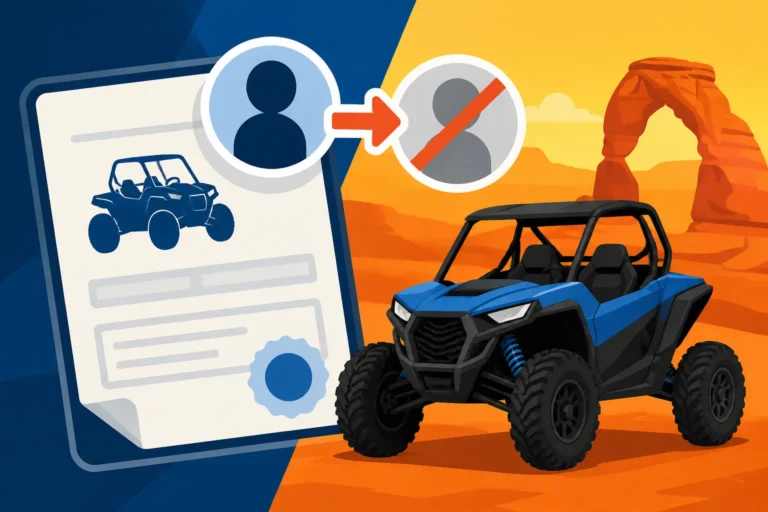
Temporary Permits for a Newly Bought UTV
There's nothing quite like the thrill of bringing home a brand-new UTV or a "new-to-you" used one. You've dreamt of hitting the trails, feeling the desert wind, or conquering those mountain paths. But then reality sets in: your machine isn't registered, and you can't legally ride it yet. This guide will walk you through the ins and outs of obtaining a temporary permit in Utah for your newly acquired off-highway vehicle, helping you bridge that frustrating gap between purchase and full registration.
Why Temporary Permits Exist in Utah
When you've just shelled out your hard-earned cash for a new side-by-side, the last thing you want is for it to sit in your garage while you wait for the official registration to come through. Utah understands this eagerness, and that's precisely why temporary permits are a thing. They're designed to give you a legal window to operate your OHV while the permanent registration process runs its course. It's a pragmatic solution to a common problem, especially for folks who buy their machines just before a big weekend trip or a long-awaited ride.
Bridging the Gap Between Purchase and Permanent Plates
The administrative process of titling and registering an OHV in Utah, while generally straightforward, isn't always instant. After a purchase, especially from a private seller, you might need a few days or even a couple of weeks to gather all your paperwork, visit the Department of Motor Vehicles (DMV), and then wait for your official decals and registration card to arrive in the mail. During this interim period, you're technically in possession of a machine that, from a legal standpoint, shouldn't be on public land or designated OHV trails. A temporary permit acts as your golden ticket, allowing you to enjoy your UTV without fear of being cited for unregistered operation. It’s peace of mind wrapped in a temporary piece of paper. You might find yourself needing a temporary permit if you're buying a used machine and the previous owner didn't have a title for it, necessitating extra steps at the DMV, as explored in [Registering a UTV in Utah Without a Title].
The Legal Necessity of Proof of Ownership
Even if you're just driving your new machine from the dealer's lot to your home, or from a private seller's driveway to your own, having some form of temporary authorization is crucial. Law enforcement officers, whether a local sheriff's deputy or a Utah State Parks ranger, will want to see proof that your OHV is legally allowed to be on the move. A bill of sale is a good start, but it doesn't grant you permission to ride on public lands. The temporary permit specifically addresses the registration requirement, showing that you've initiated the process and are compliant with state law. Without it, you could face penalties for riding an unregistered machine, which can quickly dampen the excitement of a new purchase. The state takes OHV registration seriously, as detailed in [What Paperwork Utah Riders Must Carry].
How to Get a Temporary Permit for Your UTV
Getting a temporary permit is usually a fairly quick and painless process, designed to get you on the trails faster. The key is to have the right documents ready, which mostly revolve around proving you just bought the machine. Think of it as a starter kit for your OHV's legal life.
Required Documents for a Temporary Permit
To obtain a temporary permit, you'll typically need to present proof of ownership. This usually means your bill of sale, which should clearly state the date of sale, the purchase price, the buyer's and seller's names, and a detailed description of the UTV, including its Vehicle Identification Number (VIN). If you purchased from a dealer, they'll usually provide you with a Manufacturer's Certificate of Origin (MCO) if it's new, or a title if it's a used machine from their inventory, along with a dealer's bill of sale. For private sales, a properly filled-out bill of sale is paramount. It’s a good idea to ensure your bill of sale includes all the necessary information, and for a template, services like LawDepot can be helpful in creating legally sound documents for private transactions. Make sure to understand [Bill of Sale Requirements for a Utah ATV Sale] before heading to the DMV.
You'll also need your valid photo identification. Sometimes, they might ask for proof of Utah residency, like a utility bill or a Utah driver's license. The DMV or a State Parks office will verify your identity and the details of the purchase to issue the permit. It's always a smart move to call ahead to the specific office you plan to visit to confirm their exact requirements, as sometimes local interpretations can vary slightly, though the core documents remain the same.
Where to Obtain Your Temporary Permit
The most common places to get a temporary permit are:
- Utah Division of Motor Vehicles (DMV) Offices: Many DMV locations can issue temporary permits, especially if you're already there to start the full registration process. This is often the most comprehensive option, as you can take care of multiple steps at once. Before you go, check [Which Utah DMV Offices Handle OHV Paperwork] to ensure you're visiting the right branch.
- Utah State Parks Offices: Some larger State Parks, especially those popular with OHV users like Sand Hollow State Park, might have the authority to issue temporary permits directly. This can be incredibly convenient if you're already near a riding area and realize you need the permit on the spot.
- Authorized OHV Dealers: In some cases, if you purchase a new UTV from an authorized dealer, they might be able to issue a temporary permit on your behalf right at the point of sale. This is a huge convenience, allowing you to ride directly from the dealership. Always ask your dealer if this is a service they provide.
It’s worth noting that not every single office will offer this service, so a quick phone call can save you a wasted trip. For example, not all smaller county offices handle full OHV registration, let alone temporary permits. Once you have the permit, you're allowed to begin enjoying your machine, but remember to think about the next steps, like how to properly display [Utah OHV Decals and Where They Go] when your permanent ones arrive.
Limitations and Important Considerations for Temporary Permits
While a temporary permit is a fantastic solution for getting your new UTV on the trail quickly, it's not a permanent fix, and it comes with specific rules and limitations. Understanding these will help you avoid any misunderstandings or potential issues while you're out riding.
Duration and Expiration of Temporary Permits
A temporary permit is exactly that: temporary. In Utah, these permits are typically valid for a limited period, often 15 to 30 days from the date of issue. This timeframe is intended to give you ample opportunity to complete your full registration. It is absolutely crucial to note the expiration date on your permit. Riding on an expired temporary permit is no different than riding with no registration at all, and it can lead to fines.
You should use this temporary period wisely to gather all necessary documentation, such as the title or Manufacturer's Certificate of Origin (MCO), proof of sales tax payment, and your bill of sale. If you're buying a used ATV, especially from a private party, ensure you get a proper bill of sale; services like LawDepot can help create one if you're unsure how to draft it yourself. The goal is to submit your complete application for permanent registration well before your temporary permit runs out. Don't procrastinate, or you might find yourself grounded when you least expect it! You can learn more about the timelines in [How Long Utah OHV Registration Takes to Process].
Cost and What the Permit Doesn't Cover
Generally, the fee for a temporary permit in Utah is quite minimal, often just a few dollars, if there's any charge at all beyond a processing fee. This small cost is a worthwhile investment for the legal right to ride. However, it's important to understand what a temporary permit does not cover. It's a temporary registration document, meaning it allows you to legally operate on designated OHV routes and public lands.
What it usually doesn't include is the payment of your full registration fees, sales tax, or the Uniform Fee (which is based on the age and value of your machine). These will all be part of your final, permanent registration transaction. So, while you get to ride, don't think you've settled all your financial obligations to the state just yet. It also doesn't cover things like [Utah ATV Title Requirements Explained] or [Utah ATV Sales Tax and Uniform Fees], which are separate, but equally important, steps in owning an OHV.
Penalties for Misuse or Lapsed Permits
Using a temporary permit improperly, or letting it expire before securing your permanent registration, can lead to unwelcome consequences. If you're stopped by a ranger or law enforcement officer and your temporary permit is expired, you could be issued a citation for operating an unregistered OHV. The fines can vary, but they're certainly more expensive than the temporary permit itself, and much more frustrating than simply taking the time to complete your full registration.
Even if you have the temporary permit, ensure it is clearly displayed or readily available for inspection. Officers are looking for compliance, and an obscure permit can cause unnecessary delays. The state's system relies on riders being responsible and proactive in completing their registration. Avoiding these penalties means staying on top of your paperwork and deadlines. For a detailed look at what can happen, check out [The Fine for an Expired OHV Registration in Utah].
Here’s a quick overview of what to expect:
| Feature | Temporary Permit (Example) | Permanent Registration (Goal) |
|---|---|---|
| Purpose | Short-term riding access | Long-term legal operation |
| Duration | 15-30 days | One or two years |
| Cost | Minimal, if any | Full registration fees, uniform fee, sales tax |
| Proof | Paper document | Decals, registration card, title |
| Required Before Riding | Yes, if new purchase | Yes |
| Covers Title Transfer | No | Yes |
| Issued By | DMV, State Parks, Dealers | DMV |
Riding Smart with Your Temporary Permit
Once you have that temporary permit in hand, you’re ready to hit the trails! But like any good trail boss, you want to be smart about it. Having a temporary permit means you've done your due diligence, but there are still a few best practices to keep in mind to ensure your rides are hassle-free.
Displaying Your Temporary Permit Correctly
While it's a piece of paper, your temporary permit is your official permission slip to ride. Typically, you'll want to display it in a visible location on your UTV. Some permits are designed to be affixed to a window or a visible plastic surface. Others might be just a sheet of paper you carry with your other essential documents. If it's a paper permit you carry, make sure it's protected from the elements – a clear plastic sleeve or a Ziploc bag tucked into a secure, easily accessible compartment is a good idea. You don't want it getting wet, torn, or covered in mud to the point where it's unreadable. The goal is for any ranger or officer to quickly see that you're legal without having to ask for clarification. When your permanent decals arrive, you'll want to know [Where to Put the Decal on a Side-by-Side].
What to Tell a Ranger if Stopped
It's unlikely to happen, but if you're stopped by a Utah State Parks ranger or another law enforcement officer, simply present your temporary permit along with your other required documents, such as your driver's license and any safety certificates. Be polite and explain that you've just purchased the UTV and are in the process of completing the full registration. The temporary permit is your legal proof that you're compliant and working through the necessary steps. Most officers are familiar with these permits and will appreciate your proactive approach to getting legal. It shows responsibility, which goes a long way. For more on what officers look for, you might want to read [What a Utah Trooper Checks at a Trailhead].
The Next Steps: Full Registration and Titling
Your temporary permit is just that – temporary. The clock starts ticking the moment you get it. Your absolute next step should be to complete the full, permanent registration and titling process for your UTV. This involves submitting all your documents, paying the necessary fees (registration, uniform fee, sales tax), and getting your official OHV decals and registration card.
Don't wait until the last minute of your temporary permit's validity. Start the process as soon as possible. You'll need the title (or MCO for new machines), the bill of sale, and possibly a VIN inspection for out-of-state purchases or unique situations. Once registered, you'll receive your long-term registration card and the all-important OHV decals that show your machine is officially legal to ride in Utah. For a complete guide on how to get your machine fully registered, check out [How to Register an ATV or UTV in Utah] and [Utah OHV Registration Fees, Start to Finish].
Disclaimer
This article is for general informational purposes only and does not constitute professional advice. Laws, prices and regulations vary by location and change over time. Consult a qualified professional for guidance on your specific situation.