Impound Risk for Unregistered Machines in Utah
Few things can ruin a fantastic day out on Utah's incredible trails faster than seeing flashing lights in your rearview mirror, only to find out your beloved side-by-side or ATV is about to be hauled away on a flatbed. The frustration, the stress, and the sheer expense of an impounded off-highway vehicle (OHV) can be absolutely overwhelming. This guide is here to walk you through exactly why unregistered machines face the risk of impoundment in Utah, what those impound costs really look like, and most importantly, how to keep your ride out of the impound lot and safely on the trail where it belongs.
The Harsh Reality: Why Unregistered OHVs Get Impounded
It’s easy to think, "Oh, I'll get to it eventually," or "No one really checks for that," but when it comes to OHV registration in Utah, law enforcement takes it seriously. An unregistered machine isn't just a minor infraction; it can quickly escalate to your vehicle being seized and stored, racking up fees you'd much rather spend on trail permits or new gear.
What "Unregistered" Actually Means in Utah
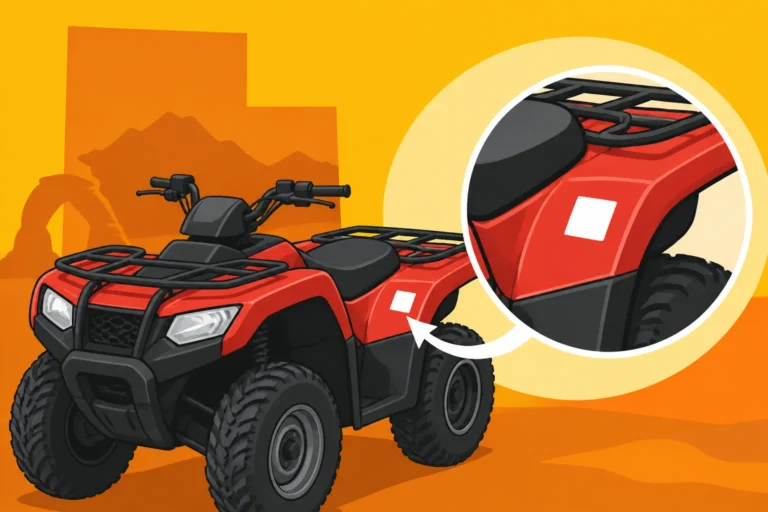
In Utah, "unregistered" doesn't just refer to a brand-new machine that's never been tagged. It encompasses any OHV that is required to be registered for public land use but isn't, or has an expired registration. When you register an OHV in Utah, you're not just getting a piece of paper; you're getting a registration card and a distinctive decal that must be prominently displayed on your machine. This decal, usually renewed every year or two, is your visual proof that you're compliant.
If that decal is missing, peeling, or clearly out of date, or if you simply don't have your current registration card with you, you're essentially operating an unregistered vehicle in the eyes of the law. Utah has specific rules about [Which Machines Utah Registers as Off-Highway Vehicles], so it's vital to know if your particular ride falls under these requirements before you even think about hitting a public trail or road.
Law Enforcement's Role and Authority
So, who can actually make the call to impound your OHV? It's not just the Utah Highway Patrol. Local police departments, county sheriffs, and especially Utah Division of Wildlife Resources (DWR) officers are all authorized to enforce OHV registration laws. They're regularly patrolling popular riding areas like Sand Hollow, Moab, the Paiute Trail, and even smaller county roads that lead to trailheads.
An impoundment can happen in a few different scenarios:
- Routine Trail Checks: Officers frequently set up checkpoints at trailheads or along popular routes, specifically looking for current registration, proper safety gear, and compliant operation. This is where [What a Utah Trooper Checks at a Trailhead] becomes critical.
- Traffic Stops: If you're riding your OHV, even if it's street-legal, on a paved road and get pulled over for any traffic infraction, an officer will check your OHV's registration just as they would for a car.
- Accidents or Incidents: If you're involved in an accident, even a minor one, or if an officer responds to a call involving your OHV, the registration will definitely be checked. An unregistered machine can complicate things significantly, especially with insurance claims.
- Reported Violations: Sometimes, concerned citizens or other riders might report an OHV they believe is operating illegally, leading officers to investigate.
In any of these situations, if your OHV is found to be unregistered, an officer has the discretion to issue a citation, but they also have the authority to call for a tow and impound the machine. It's a discretionary power, but one they often exercise, especially if there are other violations or if the owner seems uncooperative.
The Steep Price of an Impound: Beyond Just a Fine
When your OHV is impounded, the initial sinking feeling is just the beginning. The financial and logistical headaches that follow can quickly become a significant burden, far outweighing the cost of simply keeping your registration current.
Fines, Court Costs, and Administrative Fees
First off, there's the citation itself. Riding an unregistered OHV in Utah typically results in a fine. This isn't just a slap on the wrist; it's a legitimate penalty that can vary depending on the specific circumstances and the jurisdiction. While I can't give you exact figures, know that these fines are designed to be a deterrent, and they're certainly not cheap. On top of the fine, you might incur court costs if you have to appear before a judge, and various administrative fees associated with the citation process itself. It all adds up. For more specific information on what to expect, you can look into resources about [The Fine for an Expired OHV Registration in Utah].
Let's imagine you're out near the Sand Hollow area, enjoying the red rock trails, and you're stopped by a DWR officer who notices your registration decal expired three months ago. You'll likely be issued a citation on the spot. This initial fine is typically the smallest part of the total cost you'll face. You'll then need to decide whether to pay the fine directly or contest it in court, which can add legal fees or time off work if you choose the latter.
Towing, Storage, and Recovery Fees
This is where the real costs start to pile up. Once your OHV is impounded, it needs to be towed from wherever you were stopped to a designated impound lot. Towing fees for an OHV can be substantial, often calculated based on distance and the type of tow truck required. But that's just the start. Every single day your machine sits in that impound lot, it's incurring storage fees. These aren't usually prorated by the hour; they're daily charges, and they accumulate quickly. A machine impounded on a Friday afternoon might not be recoverable until the following Monday or Tuesday due to DMV office hours, meaning you're paying for the entire weekend, even if you couldn't do anything about it.
Consider this hypothetical: your UTV is impounded on a Friday evening after a fun (but unregistered) ride in the Manti-La Sal National Forest. The impound lot is closed for the weekend. You can't even start the process of getting it back until Monday morning. By the time you navigate the registration process, pay the fines, and arrange for pickup, it could easily be Tuesday or Wednesday. That's four to five days of daily storage fees, plus the initial tow. These costs can easily exceed hundreds of dollars, sometimes even thousands, depending on how long it takes and the specific rates of the towing company and impound lot. It’s a bitter pill to swallow when you realize you could have renewed your registration online for a fraction of that cost.
The Hassle of Getting Your Machine Back
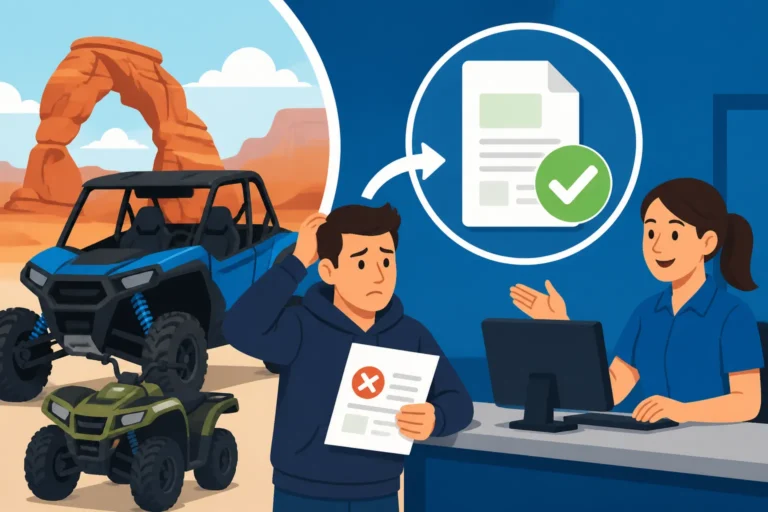
Beyond the financial hit, the process of recovering an impounded OHV is a bureaucratic maze that can be incredibly frustrating. First and foremost, you typically cannot get your OHV released from impound until you prove that it is now properly registered. This means going to the DMV, getting your registration current, and then taking that proof to the impound lot.
Here's a general outline of the steps, which often feel like a treasure hunt:
- Pay the Citation: You'll likely need to pay the initial citation fine or at least show proof that you're addressing it.
- Get Registered: Head to the Utah DMV or use their online system to get your OHV registered. This might mean having all your ownership paperwork in order, like a title and bill of sale. If you've lost your title, you'll need to go through the process of [Replacing a Lost ATV Title in Utah] first, which adds another layer of time and complexity. Having a properly filled out bill of sale is important, and resources like LawDepot can help you generate professional legal documents quickly if you're missing something crucial.
- Gather Proof: You'll need your current registration card, proof of insurance (if applicable, like for a street-legal conversion), and your photo ID. Ensure you have all the necessary [Documents to Bring to the Utah DMV for an ATV].
- Visit the Impound Lot: With all your documents and a method of payment for the towing and storage fees, you can finally go to the impound lot to retrieve your machine. Be prepared for potentially long waits and strict rules.
- Arrange Transport: Remember, you might not be able to simply drive your newly registered OHV out of the lot if you were originally stopped for riding it illegally. You may need to trailer it home, adding another logistical hurdle.
This entire process can take days, requiring multiple trips and phone calls, all while those storage fees tick upward. It’s a testament to how much easier it is to simply keep your registration current.
Proactive Steps to Avoid Impoundment
Nobody wants to deal with the nightmare of an impounded OHV. The good news is, avoiding it is relatively straightforward and mostly involves being prepared and staying compliant with Utah's regulations. A little proactive effort goes a long way.
Registering Your OHV Correctly From the Start
The best defense is a good offense, and that means getting your OHV registered properly the moment you acquire it. Whether you're buying new from a dealer or picking up a used machine from a private seller, understanding the process is key. For a comprehensive guide, check out [How to Register an ATV or UTV in Utah].
Here’s what you need to focus on:
- Gather Your Paperwork: Ensure you have the original title, a signed bill of sale (even if you create a simple one with a service like LawDepot for private sales), and any required identification. A [A First-Time Buyer's OHV Paperwork Checklist in Utah] can be incredibly helpful here.
- Understand Fees: Be prepared for the various fees involved, including registration fees, uniform fees, and potentially sales tax. While I can't state specific amounts, these are statutory fees that contribute to trail maintenance and other OHV programs.
- Display Decals: Once registered, immediately apply your new registration decal to your machine in the designated spot. Don't leave it in the glove box or forget about it. It’s your visible proof of compliance.
Taking the time to understand and complete the initial registration process correctly will save you a world of trouble down the line.
Staying on Top of Renewals
Registration isn't a one-and-done deal; it expires. In Utah, OHV registrations typically last for one year, although a two-year option is available. It’s incredibly easy to forget the renewal date, especially if you don't ride year-round.
Here are some tips to stay on top of it:
- Mark Your Calendar: Set a reminder in your phone or on a physical calendar a month or two before your registration expires.
- Check Your Mail/Email: The Utah DMV usually sends out renewal notices, but sometimes they get lost in the mail or filtered into spam. Don't rely solely on these notices.
- Renew Online: Utah offers convenient online renewal options. This is often the quickest and easiest way to keep your registration current without a trip to the DMV. You can learn more about [Renewing Your Utah OHV Registration] and explore options like [Renewing a Utah OHV Registration Online].
- Don't Delay: If you miss the deadline, be aware of the consequences of [Late Renewal on a Utah OHV Registration]. It's always better to renew early than to risk riding with an expired tag.
What to Do If You've Lost Your Paperwork
Life happens, and sometimes important documents go missing. Whether it's your OHV title, registration card, or bill of sale, losing key paperwork can feel like a major setback, especially if you need to register or renew quickly.
Here’s how to handle common scenarios:
- Lost Title: If your title is missing, you'll need to apply for a duplicate title through the Utah DMV. This process involves submitting an application and a fee. Getting a replacement can take some time, so don't wait until the last minute. This is why resources like [Replacing a Lost ATV Title in Utah] are so helpful.
- Lost Registration Card: If you have your current decal but have misplaced your registration card, you can often get a replacement from the DMV. If you renewed online, you might be able to print another copy from your account.
- Missing Bill of Sale: For private sales, if you don't have a formal bill of sale, you can create one. Even a simple, clear agreement detailing the sale, signed by both parties, can suffice. Using a template from a service like LawDepot can ensure it covers all necessary legal points. This is particularly important for proving ownership when registering a machine without a clear paper trail from a previous owner.
Being proactive about replacing lost documents ensures you're always ready to prove ownership and compliance, preventing potential impoundment hassles.
Common Misconceptions That Lead to Impoundment
Many riders mistakenly believe certain situations exempt them from registration requirements, only to find themselves in trouble. Understanding these common pitfalls is crucial for staying out of the impound lot.
"I Only Ride on Private Land" Exemption Myths
This is one of the most frequently misunderstood aspects of OHV registration. While it's true that machines operated exclusively on private property, never venturing onto public land or crossing public roads, generally don't require registration, the reality for most riders is far more nuanced.
Here's why this myth often leads to problems:
- Accessing Private Land: Even if your destination is private property, you often have to cross or briefly use public roads, shoulders, or easements to get there. The moment your tires touch public land, even momentarily, your OHV needs to be registered.
- Road Crossings: Many riders assume they can quickly "hop" across a public road to get from one private parcel to another, or to access a trail system. Unless your machine is street-legal and registered for road use, this is a violation. [Registering a UTV You Only Use on Your Own Land] might sound like an exemption, but it has very strict boundaries.
- Farm and Ranch Exemptions: While Utah law does provide [Farm and Ranch Exemptions in Utah OHV Law], these are very specific and narrow. They generally apply to machines used for agricultural purposes on legitimate farms or ranches, and often only for limited road use directly related to farming operations. They don't magically extend to recreational riding without registration.
The safe bet? If there's any chance your wheels will touch public ground, get it registered. It’s far cheaper than facing an impoundment.
New Purchase: "I Just Bought It, I Have 30 Days"
This is another common misconception that can lead to immediate problems. Many people assume there's a grace period after buying an OHV, similar to how it works with car titles or temporary plates. While you do have time to transfer a title, riding an unregistered machine is generally not allowed, even if you just drove it off the dealer's lot.
- Dealer Responsibilities: When you buy a new OHV from a reputable dealer, they often handle the initial registration paperwork for you, sometimes even issuing a temporary permit allowing you to ride immediately. However, you need to verify this. Don't assume.
- Private Sales: If you buy from a private seller, you are solely responsible for getting the machine registered before riding it on public land. There's typically no grace period for this. You cannot just ride it home from the seller hoping you won't get caught. For more on this, check out [Riding Home From the Dealer Before Registering].
- Temporary Permits: In certain situations, Utah does offer [Temporary Permits for a Newly Bought UTV], but these are specific and require proper application. They aren't an automatic right just because you have a bill of sale. Always ensure you have legitimate, current proof of registration or a valid temporary permit before heading out.
"My Out-of-State Registration is Fine Here"
For a long time, Utah had reciprocity with many other states, meaning if your OHV was registered in your home state, it was generally considered legal for use on Utah's trails. This changed. A few years ago, Utah ended its OHV reciprocity agreements.
- Non-Resident Permit Required: Now, if you are visiting Utah from another state and plan to ride your OHV on public lands, you must purchase a Utah Non-Resident OHV Permit. Your home state's registration is no longer sufficient. This applies even if your machine is street-legal in your home state.
- Education Certificates: In addition to the permit, riders under 18 often need a Utah OHV Education Certificate or an equivalent from their home state.
- Consequences for Visitors: This is a big one for tourists who might not be aware of the rule change. Ignorance of the law is not an excuse. Officers frequently check for these permits at popular destinations like Moab and Sand Hollow. You can find more details about this change in articles like [Utah Ended OHV Reciprocity: What Visitors Do Now] and [The Utah OHV Education Certificate].
To help clarify, here's a quick summary of typical scenarios:
| Scenario | Registration/Permit Status | Risk of Impoundment |
|---|---|---|
| Utah resident, OHV with current Utah reg | Compliant | Low |
| Utah resident, OHV with expired Utah reg | Not compliant (expired) | High |
| Utah resident, new OHV, no registration | Not compliant (unregistered) | High |
| Out-of-state visitor, home state reg, NO Utah non-resident permit | Not compliant (Utah non-resident permit required) | High |
| Out-of-state visitor, home state reg, WITH Utah non-resident permit | Compliant | Low |
| OHV used ONLY on private, fenced land | Exempt (but very strict interpretation) | Low (if truly private) |
| OHV used for agricultural purposes (verified) | May be exempt for limited road use (check specifics) | Low (if compliant) |
Staying informed about these rules, especially if you're a new rider, a visitor, or relying on an exemption, is your best bet to keep your OHV from being hauled away.
Disclaimer
This article is for general informational purposes only and does not constitute professional advice. Laws, prices and regulations vary by location and change over time. Consult a qualified professional for guidance on your specific situation.