Trailer Registration Utah ATV Owners Forget
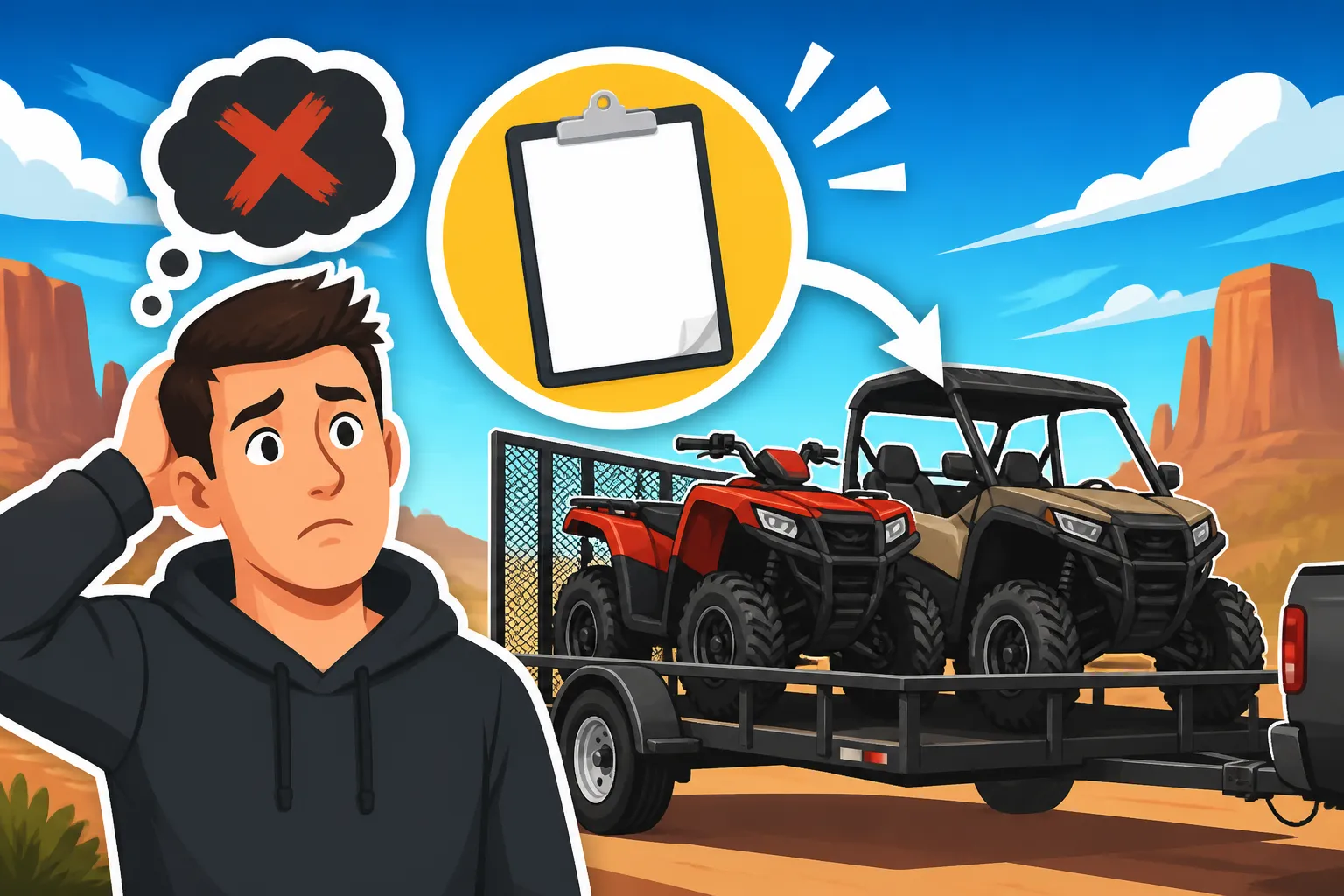
It's incredibly exciting to get a new ATV or UTV, or even a "new-to-you" used one, and we often get so caught up in the thrill of planning our first ride that we completely forget about the vehicle that's going to get our machines to the trailhead: the trailer. Many Utah riders overlook the crucial step of properly registering their off-highway vehicle (OHV) trailer, thinking it's just a piece of metal, but an unregistered trailer can lead to big headaches, fines, and even jeopardize your OHV adventure. This comprehensive guide will walk you through everything you need to know about legally registering your ATV or UTV trailer in Utah, ensuring your entire setup is road-ready and compliant.
Why Trailer Registration Isn't Optional in Utah
When you're meticulously checking off all the boxes for your ATV or UTV's registration, title, and decals, it's easy for the trailer to become an afterthought. But trust me, as someone who’s seen the frustrated faces at trailheads, ignoring trailer registration is a mistake you don't want to make. In Utah, like most places, any trailer that operates on public roads needs to be properly registered and display a valid license plate. This isn't just about collecting fees; it's about ensuring all vehicles on the road, including those hauling our beloved OHVs, meet basic safety and legal requirements.
Think about it this way: you’re driving down a busy highway, loaded up with your side-by-side, eager for a weekend adventure in Moab or Sand Hollow. A state trooper spots your trailer, and for whatever reason – maybe a tail light is out, or you're just driving past – they run the plate. If there's no plate, or it's expired, that's an immediate red flag. What started as a fun trip can quickly turn into a roadside stop, a ticket, and potentially even having your trailer impounded until you sort out the paperwork. Nobody wants that kind of interruption to their precious trail time.
Moreover, proper registration helps with accountability. In the unfortunate event of an accident involving your trailer, having it registered ensures that you, and potentially your insurance company, are properly identified. An unregistered trailer can complicate insurance claims and legal proceedings significantly, leaving you exposed to greater liability. It’s a small, recurring expense that offers a huge peace of mind for those of us who regularly haul our machines.
Understanding Utah's Trailer Weight Classes and Exemptions
Utah, like many states, categorizes trailers based on their gross vehicle weight rating (GVWR), which is the maximum loaded weight of the trailer itself, plus its cargo. This weight classification often dictates certain requirements, especially when it comes to things like braking systems and, in some cases, the type of registration. For most of us hauling a single ATV or UTV, we’re likely dealing with utility trailers or small equipment trailers that fall into lighter weight classes.
Generally speaking, any trailer operating on Utah roads, regardless of how light it is, needs to be registered. There's a common misconception that if a trailer is "small enough," it's exempt. While some states have specific weight cutoffs for registration, Utah's rules are quite clear: if it's on the road, it needs a plate. This includes those small, single-axle trailers you might use for one quad or even for yard work. The only exceptions are very specific, limited-use trailers like those used exclusively on private property or specialized agricultural equipment not primarily designed for highway travel. If you're using it to haul your OHV to the trailhead, it's a road trailer.
It's also worth noting that while you might think of a trailer as purely for personal use, if you ever lend it out, or if your business uses it, the registration is still vital. Even if it's primarily used for farm or ranch work, once that trailer hits a public road, the rules apply. So, before you assume your pint-sized pull-behind is invisible to the law, assume it needs a plate and registration. It's always better to be safe than sorry, and avoiding a citation for an unregistered trailer is a whole lot easier than trying to fight one.
The Nitty-Gritty: How to Register Your ATV/UTV Trailer in Utah
Alright, let's get down to brass tacks. Registering your ATV or UTV trailer in Utah is a pretty straightforward process, but like all things DMV, it requires the right paperwork and a bit of patience. Whether you've just bought a brand-new trailer or a trusty used one, the steps are similar but with a few key differences regarding documentation.
New Trailer Registration: Fresh Off the Lot
If you’ve just purchased a shiny new trailer from a dealership, congratulations! This is usually the easiest path to registration because the dealer often handles a good chunk of the initial paperwork for you, much like they do for a new car or, in some cases, a new OHV. They should provide you with a Manufacturer's Certificate of Origin (MCO) or Statement of Origin (MSO). This document is essentially the "birth certificate" for your trailer, proving it's new and has never been titled before.
Here's what you'll typically need to bring to the Utah Division of Motor Vehicles (DMV) office:
- Manufacturer's Certificate of Origin (MCO/MSO): This is paramount. Make sure the dealer fills it out correctly with your name and the trailer's VIN.
- Bill of Sale: Even though you have an MCO, a bill of sale from the dealer showing the purchase price and sales tax paid is essential. This will be used to calculate any remaining sales tax or uniform fees due.
- Proof of Identity: Your valid Utah driver's license or state ID.
- Proof of Residency: If your ID doesn't reflect your current Utah address, you might need an additional document like a utility bill.
When you go to the DMV, you'll present these documents, pay the applicable registration fees, and any remaining sales tax or uniform fees. The DMV will then issue you a metal license plate for your trailer and a registration certificate. Remember to ask about the current year's fees; while I can't give you exact numbers, they typically involve a registration fee, a uniform fee (based on age and value of the trailer), and potentially a small online transaction fee if you process any part of it online later. Don't forget that if you used a service like LawDepot to draft a separate general purchase agreement, it might be good to have that on hand too, though the dealer's bill of sale is usually sufficient for registration.
Used Trailer Registration: Navigating the Pre-Owned Market
Buying a used trailer can save you some cash, but it often involves a bit more legwork on the paperwork side to ensure a smooth transfer of ownership and registration. The biggest difference here is the need for a title.
Here's what you'll typically need for a used trailer:
- Properly Assigned Title: This is the most critical document. The seller must sign over the existing title to you. Make sure the seller's signature, your signature, the date of sale, and the purchase price are all clearly filled out on the title document. A common mistake that causes delays is an improperly filled-out title. If the trailer was manufactured before a certain year, it might not have a title, similar to some older [Utah ATV Title Requirements Explained]. In such cases, you might need a certified bill of sale and possibly a VIN inspection.
- Bill of Sale: Even with a signed title, a separate bill of sale is a smart move. It clearly documents the transaction, including the date, purchase price, VIN, and names of both buyer and seller. You can easily find templates online, perhaps even through a resource like LawDepot, to ensure all the necessary details are included and legally sound. [Utah Bill of Sale: What It Must Say] and [Do You Need a Notarized Bill of Sale in Utah?] are good articles to review for this.
- VIN Inspection (if applicable): If the trailer is coming from out of state, or if there are any discrepancies with the VIN on the title, you might need a VIN inspection from a certified inspector or the DMV itself. This verifies the trailer's identity. Running a VIN check beforehand, similar to how you would for an OHV, can also help identify any theft records or past liens on the trailer. [Running a VIN on a Used UTV Before You Pay] is a helpful resource here.
- Proof of Identity and Residency: Just like with a new trailer, your valid ID and proof of Utah residency are required.
Once you have all your documents in order, head to your local [Which Utah DMV Offices Handle OHV Paperwork]. You'll pay the title transfer fee, registration fees, and any sales tax or uniform fees based on the purchase price or appraised value of the trailer. They'll issue you a new title in your name and a license plate.
The Paperwork Checklist for Trailer Registration
To make it even easier, here’s a quick table summarizing the typical documents needed:
| Document Type | New Trailer Purchase | Used Trailer Purchase | Notes |
|---|---|---|---|
| Title/MCO | Manufacturer's Certificate of Origin (MCO/MSO) | Properly signed-over Title (from seller) | MCO for new trailers. For used, ensure seller has properly completed the transfer section. If no title for older trailers, a certified bill of sale may be accepted, possibly with VIN inspection. |
| Bill of Sale | Dealer-issued Bill of Sale | Bill of Sale (from seller to you) | Essential for both. For private sales, use a comprehensive template (e.g., from LawDepot) to include all details: buyer/seller info, date, price, VIN. |
| Identification | Valid Driver's License/ID | Valid Driver's License/ID | Must match the name(s) on the title/MCO. |
| Proof of Residency | Utility bill, lease, etc. | Utility bill, lease, etc. | Required if your ID doesn't show your current Utah address. |
| VIN Inspection | Rarely needed | Possibly (if out-of-state or VIN discrepancies) | May be required if the trailer is from out-of-state or if the VIN on documents doesn't match the trailer. |
| Power of Attorney | N/A | Potentially (if someone else registers for you) | If you're having someone else handle the registration process, you'll need a properly executed power of attorney. Services like LawDepot can help you generate this legal document. |
Remember, always double-check the Utah DMV website or call them directly for the most up-to-date and specific requirements. It can save you a frustrating second trip! When gathering your [Documents to Bring to the Utah DMV for an ATV], consider adding your trailer documents to the list.
Maintaining Your Trailer Registration and Avoiding Pitfalls
Once your trailer is officially registered and sporting its new Utah license plate, your responsibilities don't end there. Just like your OHV, your trailer registration needs to be kept current. Forgetting to renew can lead to the same kind of penalties as forgetting to renew your quad's registration.
Renewing Your Trailer Registration
Trailer registrations in Utah are typically renewed annually. The DMV will usually send you a renewal notice in the mail well before the expiration date, often with details on how to renew online or by mail. However, don't rely solely on receiving that notice; it's ultimately your responsibility to know when your registration expires.
You can often renew your trailer registration online, which is usually the most convenient method. Be aware that the state may add a small [The Online Transaction Fee Utah Adds] for this convenience. You can also renew by mail or in person at a DMV office. When renewing, you’ll pay the annual registration fee and the uniform fee.
If you let your registration lapse, you could face late fees and penalties. Imagine getting pulled over on your way to a great riding spot in Southern Utah, only to find out your trailer's plate is expired. That ticket could put a serious damper on your day. Just like with [Renewing Your Utah OHV Registration], setting a reminder on your phone or marking it on your calendar is a great way to stay on top of things.
Selling Your Trailer in Utah
If you decide to sell your ATV/UTV trailer, the process largely mirrors selling any other titled vehicle. You'll need to properly assign the title to the new owner, completing all sections including the sale price, date, and odometer reading (though many trailers don't have odometers, so this section might be marked "exempt" or "not applicable"). It's highly recommended to provide the buyer with a bill of sale, even if it's just a simple one you've printed off from a site like LawDepot. This protects both you and the buyer by clearly documenting the transaction.
Make sure to remove your license plate from the trailer before the new owner drives off. That plate belongs to you, and you might be able to transfer it to a new trailer or surrender it to the DMV. The new owner will then be responsible for registering the trailer in their name.
Moving to Utah with an Out-of-State Trailer
Welcome to Utah! If you're a new resident bringing your OHV trailer with you, you'll need to register it in Utah. The process is very similar to registering a used trailer bought privately within the state, but with the added step of potentially needing a VIN inspection. The DMV will want to ensure the trailer matches its out-of-state title. You'll need your out-of-state title, a bill of sale (if you recently bought it), proof of identity and residency, and likely a VIN inspection. This is much like [Moving to Utah With an ATV You Already Own] – the principles for transferring residency apply across different types of vehicles.
Lost or Damaged Plates/Registration
Things happen! If your trailer's license plate gets lost, stolen, or damaged on the trail (it happens more often than you'd think!), you'll need to apply for a replacement at the DMV. There's usually a small fee for this. Similarly, if your registration certificate gets lost or ruined, you can request a duplicate. Keep a copy of your registration certificate, perhaps digitally on your phone, though carrying the physical document is always the safest bet.
By staying on top of these details, you ensure that your adventures on the trail are backed up by solid, legal transportation on the road. Don't let a forgotten trailer registration become the unexpected hiccup in your perfectly planned Utah OHV trip!
Disclaimer
This article is for general informational purposes only and does not constitute professional advice. Laws, prices and regulations vary by location and change over time. Consult a qualified professional for guidance on your specific situation.