Overnight Parking at a Utah Trailhead
There's nothing quite like planning an epic multi-day OHV adventure across Utah's breathtaking landscapes, envisioning days filled with thrilling trails and stunning vistas. But as the excitement builds, a practical worry often creeps in: where on earth are you supposed to leave your valuable ATV or UTV and its trailer overnight, safe and sound, especially when you're far from home base? This guide is dedicated to demystifying the ins and outs of overnight parking at Utah trailheads, helping you navigate the rules so you can focus on the ride.
Understanding the Lay of the Land: What Constitutes a "Trailhead" in Utah?
When we talk about "trailheads" in Utah, it's not always a single, clearly defined type of place. The truth is, the term can encompass everything from a gravel pull-off on a remote dirt road to a fully developed recreational area complete with restrooms, paved parking, and a visitor center. Knowing the difference is your first step to a stress-free overnight stay. It's easy to assume all parking is the same, but the rules for leaving your rig can vary wildly depending on who manages the land.
Designated Trailheads vs. Dispersed Parking Areas
Designated trailheads are often marked with official signs, sometimes boasting facilities like restrooms, picnic tables, or even informational kiosks about the area. These are frequently found within Utah's State Parks, National Forests, or Bureau of Land Management (BLM) recreational areas. At these spots, you'll often find clearer rules posted regarding day-use hours, camping, and vehicle regulations. Some might even have dedicated overflow parking or specific zones where overnight parking is permitted, perhaps with a fee.
On the flip side, you have dispersed parking areas. These are typically less formal, often just wide spots in the road or open clearings along lesser-traveled routes on Forest Service or BLM land. They usually lack any amenities or explicit signage. While they offer more flexibility, they also come with a greater need for self-reliance and a thorough understanding of the general rules for public land use. The beauty of these spots is their accessibility to remote trails, but the lack of structure means you, the rider, bear more responsibility for knowing what's allowed.
Common Restrictions and Why They Exist
Regardless of the type, nearly every location will have some form of restriction, even if it's just implied. Common parking limits can include restrictions on the size of your rig (especially in smaller, paved lots) or time limits for how long a vehicle can be left unattended. Many designated trailheads are strictly "day-use only," meaning no overnight camping or parking is allowed. This isn't just to be inconvenient; these rules are often in place for several good reasons.
Environmental concerns play a huge role. Unregulated overnight stays can lead to litter, sanitation issues, and damage to fragile ecosystems. Wildlife management is another factor; parking too close to certain habitats can disturb animals, especially during sensitive times like breeding seasons. Unfortunately, security and theft concerns are also a reality. Land managers sometimes restrict overnight parking in isolated areas to discourage vandalism or theft of unattended vehicles. And don't forget local ordinances; a county or town might have specific rules for parking on public access roads that could impact your plans, so it's always smart to double-check.
Navigating Overnight Stays: Rules, Regulations, and Best Practices
So, you've got your machine ready, your gear packed, and a multi-day ride on the horizon. Now, let's talk about the nitty-gritty of where you can actually park that truck and trailer for a night or two while you're out exploring. Utah's diverse landscape means a diverse set of rules, and a little knowledge goes a long way in avoiding a headache.
State Parks and Recreation Areas
Utah's State Parks, like the incredibly popular Sand Hollow State Park or the picturesque Coral Pink Sand Dunes State Park, are fantastic riding destinations. However, when it comes to overnight parking, they operate under a pretty clear set of guidelines: if you're staying overnight, you're usually expected to camp in a designated campground. These campgrounds typically have established sites, amenities, and require a fee. You'll need to reserve a spot, especially during peak seasons. [Camping Inside Sand Hollow State Park] covers this in detail.
Day-use areas within these parks almost always have specific closing times for vehicles, and leaving your truck and trailer unattended past those hours is generally not permitted. Attempting to "stealth camp" or just leave your vehicle where it's not allowed can lead to fines or even impoundment. Always check the park's official website or call the ranger station ahead of time to confirm their policies, especially if your multi-day ride means you'll be gone for more than 24 hours.
National Forests and BLM Lands (Bureau of Land Management)
This is where the concept of dispersed camping really shines, offering more flexibility for overnight stays with your rig. Both the U.S. Forest Service and the BLM manage vast tracts of land in Utah where dispersed camping – and by extension, parking your truck and trailer overnight – is often permissible. The key here is "dispersed" meaning outside of developed campgrounds. These are often the areas that feel more wild and remote, allowing you to truly get away from it all.
The general rule of thumb for dispersed camping on these lands is a 14-day stay limit within any 28-day period in a specific area. This is to prevent long-term residency and impacts on the land. When parking overnight, it's crucial to practice "Leave No Trace" principles. This means packing out everything you pack in, minimizing your impact on the environment, and properly disposing of waste. Always check for current fire restrictions, especially during dry seasons, as these can change rapidly and lead to severe penalties if violated. It's a good idea to research the specific National Forest or BLM field office that manages your chosen trailhead; their websites often have current rules and conditions. For more on this, check out [Dispersed Camping Rules Near Utah Trails].
Private Land and Trail Towns
Sometimes, the best access point for a multi-day ride might be near private property, or directly within a small trail town that caters to OHV enthusiasts. In these scenarios, the rules completely shift. On private land, you absolutely, unequivocally need explicit permission from the landowner to leave your vehicle overnight. Parking without permission is trespassing and can lead to serious consequences. Never assume; always ask.
Many of Utah's charming trail towns, like Marysvale or Kanab, have embraced the OHV culture. In these places, you might find private businesses – motels, RV parks, or even dedicated OHV service centers – that offer secure, paid overnight parking for your truck and trailer. Even if you're not staying at their motel, some will rent you a spot. This can be a fantastic option for peace of mind, as these locations often have surveillance or staff present. It's worth calling ahead to inquire about such services in towns that serve as hubs for trails you plan to ride. [Lodging in Marysvale for Trail Riders] can give you an idea of what to expect in such communities.
| Land Management Type | Overnight Parking/Camping Policy | Fees Usually Required? | Reservations Needed? | Common Stay Limits |
|---|---|---|---|---|
| Utah State Parks | Generally restricted to designated campgrounds only; day-use areas have closing times. | Yes, for camping. | Often, especially for campgrounds. | Varies by park/campground. |
| National Forests | Dispersed camping (and parking) often permitted in undeveloped areas. | No, for dispersed camping. | No, for dispersed camping. | 14-day limit in 28 days. |
| BLM Lands | Dispersed camping (and parking) often permitted in undeveloped areas. | No, for dispersed camping. | No, for dispersed camping. | 14-day limit in 28 days. |
| Private Land | Requires explicit landowner permission. | Varies, at owner's discretion. | Yes, by agreement. | As agreed with owner. |
| Trail Town Business | May offer paid, secure parking at motels, RV parks, etc. | Yes, for service. | Recommended, especially for peak season. | Varies by business. |
Preparing for a Secure Overnight Stay
Leaving your pride and joy – your ATV or UTV – along with your truck and trailer, for a multi-day adventure can be a little nerve-wracking. The last thing you want to worry about when you're miles deep on a trail is the security of your vehicles back at the trailhead. A little preparation and some smart choices can go a long way in ensuring your peace of mind.
Security Measures for Your OHV and Trailer
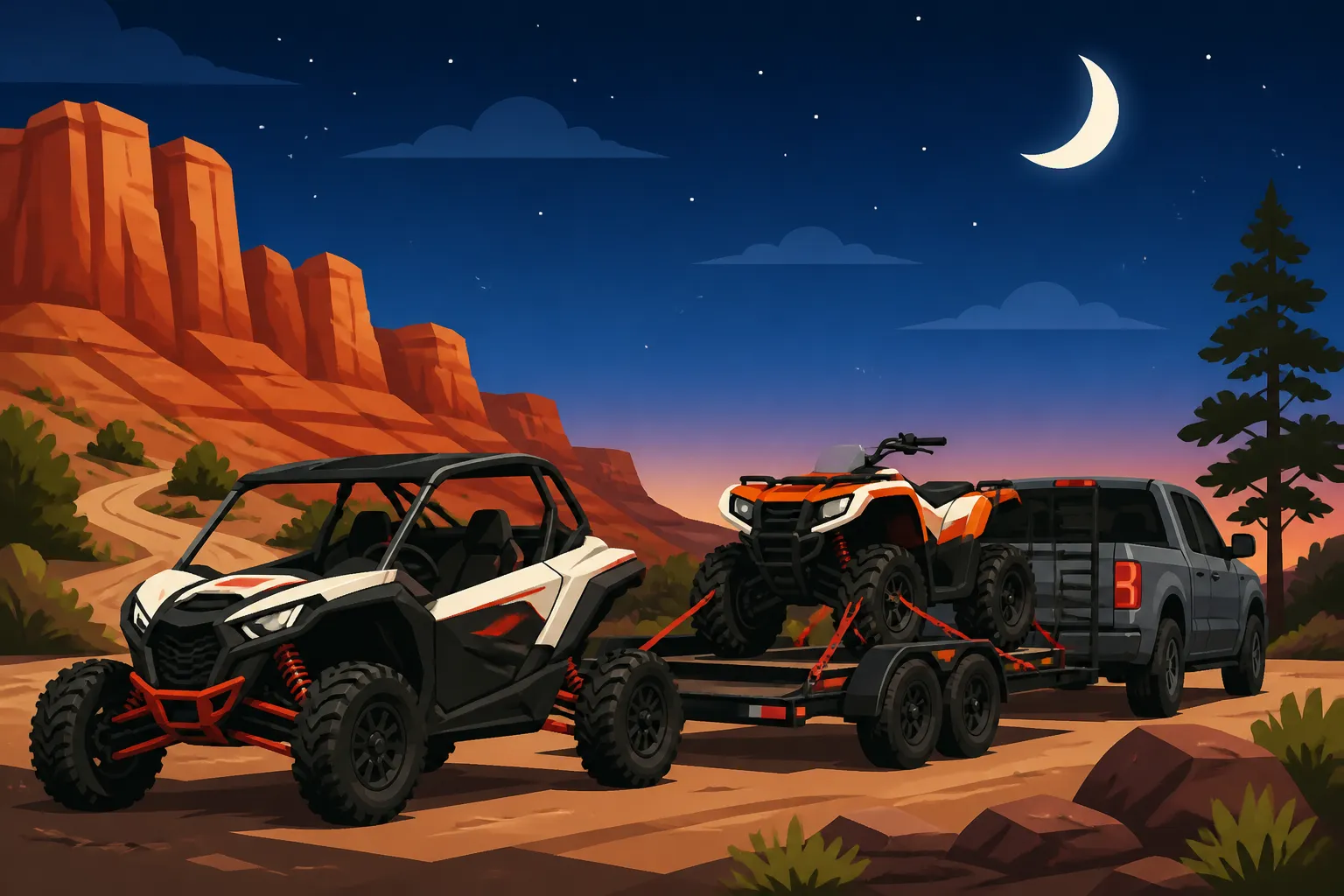
When you're parking for an extended period, treat your rig like you would at home, but with even more diligence. Start with the basics: make sure your trailer is securely locked to your truck or, if unhitched, has a robust coupler lock. Wheel chocks can help prevent easy rolling, and specialized wheel locks can make it much harder for thieves to simply hitch up and drive away. For your ATV or UTV, use a sturdy chain lock to secure it to the trailer frame, or if parking on the ground, to a fixed object if possible. Even a heavy-duty cable lock through the wheels can deter opportunistic theft.
Don't forget to remove all valuables from both your truck and your OHV. Anything visible in the cab or within easy reach on your side-by-side (like GPS units, expensive cameras, or even an unmounted SuperATV cargo box) is an invitation to trouble. Stow them in your truck's locked cab or take them with you if possible. If you're parking in a very remote area without much light, consider adding a solar-powered motion sensor light to your trailer or truck bed; it’s a simple deterrent. It's also wise to understand the risks; resources like [Checking a Used Utah ATV for Theft Records] highlight the reality of OHV theft and why these precautions are so necessary.
Essential Gear for Remote Overnight Parking
If you're choosing a dispersed parking spot in a remote area, you're essentially going to be self-sufficient. Beyond security, you need to think about basic survival and preparedness. Always carry a basic recovery kit: a shovel, tow straps, and perhaps even traction boards, because you never know when you might get stuck trying to access or leave a remote parking spot. If you've invested in a SuperATV winch for your UTV, that's fantastic, but make sure your tow rig itself also has some self-recovery capability or assistance options.
Emergency supplies are non-negotiable. This means plenty of water, some non-perishable food, a well-stocked first-aid kit, and extra layers of clothing, even if the forecast looks clear. Weather in Utah's mountains and deserts can change in an instant. Crucially, have reliable communication. Cell service is spotty to non-existent in many remote Utah riding areas, so a satellite messenger is a smart investment. For more on staying connected in the backcountry, look at [Satellite Messengers for Remote Utah Rides]. Lastly, and this is absolutely vital for public lands, bring ample trash bags. Everything you bring in, including food scraps and human waste, must be packed out. Leave nothing behind but tire tracks.
Planning Your Route and Exit Strategy
A good plan prevents poor performance, especially when you're leaving a significant investment unattended. Before you even head out, have a clear map of your OHV route and your intended parking spot. While GPS is invaluable, always carry a physical map (like those found in [Utah OHV Trail Maps and How to Read Them]) and a compass as a backup. Paper doesn't run out of battery. [Downloading Utah Trail Maps for Offline Use] for your devices is also a smart move.
Always check the weather forecast for the entire duration of your trip, both for your riding days and for the days your vehicle will be parked. Heavy rains can turn dirt access roads into impassable mud pits, trapping your truck and trailer. Inform someone responsible (a friend or family member who isn't with you) of your exact parking location, your planned route, and your estimated return time. Give them a clear "if you don't hear from me by X time, call for help" instruction. Finally, always have an alternative parking spot in mind, especially if your primary choice is remote or might be subject to unexpected closures or conditions. Flexibility is key to a smooth adventure.
Avoiding Pitfalls and Penalties
No one wants to come back from an exhilarating ride only to find a ticket under their windshield wiper, or worse, their truck and trailer gone. Understanding the potential downsides of improper overnight parking is just as important as knowing where you can park. A little forethought can save you a lot of grief and money.
Fines and Impoundment Risks
Ignoring posted signs or land agency rules regarding overnight parking can lead to hefty fines. These aren't just minor inconveniences; they can range from a few dozen dollars to several hundred, depending on the severity of the violation and the specific jurisdiction. Law enforcement officers, whether local sheriff deputies, Forest Service rangers, or BLM enforcement, do patrol these areas, especially during peak riding seasons. They are there to enforce regulations designed to protect the land and ensure public safety.
The ultimate nightmare, of course, is impoundment. If your vehicle is parked illegally or deemed abandoned, it could be towed. The cost of retrieving an impounded vehicle is significant, involving towing fees, storage fees that accrue daily, and the initial fine. This could easily turn your multi-day adventure into a multi-thousand-dollar headache, not to mention the immense hassle of trying to arrange transport and paperwork from a remote location. For a deeper dive into the consequences of such violations, read about [Impound Risk for Unregistered Machines in Utah], which, while focused on registration, illustrates the serious nature of vehicle impoundment.
"No Overnight Parking" Signs and How to Interpret Them
One of the most straightforward ways to avoid trouble is to simply read and obey the signs. A "No Overnight Parking" sign usually means exactly that: your vehicle cannot be left there between sundown and sunrise, or during specified hours. Don't try to interpret it as "no camping, but parking is okay." When in doubt, err on the side of caution.
Sometimes, signs might be less explicit, perhaps just indicating "Day Use Only" or listing park hours. These usually imply that vehicles must be removed outside of those times. If you encounter such a sign at your planned parking spot, it's a clear signal to find an alternative. It's frustrating when your perfect spot is off-limits, but it's far less frustrating than dealing with a ticket or a towed vehicle. Always have a backup plan.
Getting Local Information and Permits
The best defense against penalties is accurate, current information. Don't rely solely on outdated maps or forum posts from years ago. The rules can change. Before embarking on your multi-day trip, make it a point to contact the relevant land management agency. Call the local ranger station for National Forest lands, the BLM field office for BLM-managed areas, or the specific Utah State Park you'll be near. These experts can provide the most up-to-date information on parking regulations, fire restrictions, and any required permits.
Some areas, especially for extended stays, large groups, or specific activities, might require special use permits. While this isn't typically for just parking a single truck and trailer for a few days, it's good to be aware. Large groups, for example, might need a permit if they plan on staging multiple vehicles. Check out [Special Use Permits for Utah Group Rides] for context on when these might apply. Don't be shy about asking questions; the staff are usually happy to help you enjoy the outdoors responsibly. It's always better to ask beforehand than to face a penalty later. Knowing [What Utah Riders Must Carry on Public Land] is another piece of the puzzle for staying compliant.
Disclaimer
This article is for general informational purposes only and does not constitute professional advice. Laws, prices and regulations vary by location and change over time. Consult a qualified professional for guidance on your specific situation.