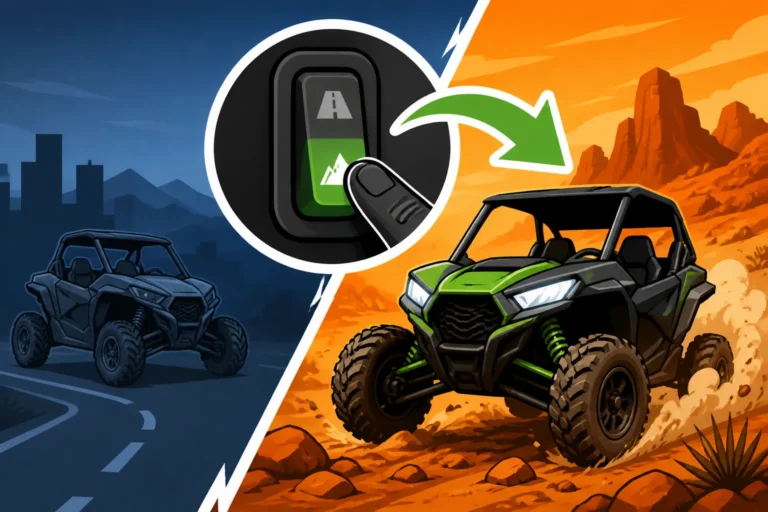
Forest Roads Versus Public Roads in Utah
It's easy to get turned around, both figuratively and literally, when you're out exploring Utah's incredible landscapes on your ATV or UTV. One of the biggest head-scratchers for riders often revolves around what exactly constitutes a "road" and, more importantly, which roads you're actually allowed to ride on. This guide will help clear up the distinctions between dedicated forest roads and other public roads in Utah, ensuring you can enjoy your ride without worrying about accidentally breaking the rules.
Understanding "Public Road" in Utah OHV Law
When we talk about "public roads" in Utah, it's a broad category that encompasses a lot more than just the paved highways we drive our cars on every day. For OHV purposes, a public road is any road, street, or highway maintained for public travel and open to the public. The tricky part is that these roads are managed by different entities, and each might have slightly different rules, even if they're all "public."
The Legal Definition of a Public Highway
In Utah, the legal definition of a highway, or public road, is quite encompassing. It generally refers to the entire width between the boundary lines of every way publicly maintained when any part thereof is open to the use of the public for purposes of vehicular travel. This means everything from the bustling main streets of Moab to the quiet, dusty county roads crisscrossing rural Utah. The key element here is "publicly maintained and open to vehicular travel." It doesn't necessarily mean paved or even gravelled; it just means it's recognized and kept up by a governmental entity for the public to use for driving. Many riders forget that this broad definition includes countless miles of dirt and gravel roads, making it crucial to understand the rules for each. You can't just assume that if it's dirt, it's automatically an OHV trail.
Who Manages Different Public Roads
The management of public roads in Utah falls primarily into three categories: state, county, and municipal (city). State highways are those numbered routes you see on maps, managed by the Utah Department of Transportation (UDOT). County roads are maintained by individual counties, and they often form the backbone of access to many rural and recreational areas. These are the roads you'll often encounter between small towns or leading to trailheads. Finally, municipal roads are those within city or town limits, managed by the local government. While the state provides a general framework for OHV use on public roads, individual counties and cities have the authority to create their own ordinances, which can either restrict or permit OHV use on roads within their jurisdiction. This local control means that a rule that applies in one town, like Marysvale, might be different just a few miles down the road in Beaver. Riders need to be aware of these local variations, especially when planning a trip that crosses different municipal or county boundaries. [City and County OHV Rules Across Utah] is a great resource for understanding these local nuances.
Forest Roads: A Special Category
Forest roads, along with those on Bureau of Land Management (BLM) lands, represent a distinct category within the "public road" umbrella. While they are indeed public, their specific management, access rules, and designations often differ significantly from state, county, or city roads. This is where a lot of the confusion for OHV riders originates, as a "road" on federal land isn't always treated the same as a "road" that's part of the county system.
Forest Service Roads and Their Designations
When you're riding through the Manti-La Sal National Forest or the Uinta-Wasatch-Cache National Forest, you'll encounter a vast network of roads maintained by the U.S. Forest Service. These are often unpaved, winding through picturesque landscapes, and might look exactly like a "trail" to the untrained eye. However, many of them are indeed designated roads. The Forest Service uses a system called Motor Vehicle Use Maps (MVUMs) to clearly delineate which roads, trails, and areas are open to motorized vehicles, and what types of vehicles are permitted. [Reading a Motor Vehicle Use Map] is essential for any rider venturing into these areas. Some forest roads might be open to all vehicles, including street-legal OHVs, while others might be limited to licensed vehicles only, or even just OHVs with a valid [Utah Non-Resident OHV Permit Explained] and state registration. It's not uncommon to find signs indicating "Highway Legal Vehicles Only" on certain forest roads, which means your non-street-legal OHV is not permitted, even if it's dirt. Conversely, some roads might be specifically designated "OHV routes" where non-street-legal machines are welcome, but these are often distinct from general public roads.
BLM Roads and Backcountry Byways
Similar to Forest Service lands, the Bureau of Land Management (BLM) manages an immense amount of public land in Utah, particularly in the vast, open deserts and canyons of the southern and western parts of the state. BLM roads are often less formally maintained than Forest Service roads, sometimes being little more than two-track paths through the sagebrush. Like the Forest Service, the BLM also designates routes for motorized use. They too use maps to show which areas are open, limited, or closed to vehicles. Many iconic routes, such as those found in the San Rafael Swell, are designated BLM roads or backcountry byways. The rules for OHV use on BLM roads can vary, but generally, if a BLM road is designated for "highway-legal" vehicles, your standard, non-street-legal ATV or UTV is not permitted. However, many other BLM routes are explicitly designated as OHV trails or roads where registered OHVs are allowed. Understanding the specific designations on BLM maps is crucial, as going off-route can lead to fines and environmental damage. The challenge often lies in the sheer remoteness and lack of signage in some BLM areas, making robust navigation skills and up-to-date maps incredibly important.
Key Differences for OHV Riders: Access and Requirements
The distinction between different types of roads isn't just bureaucratic jargon; it has very real implications for where and how you can ride your ATV or UTV in Utah. Ignoring these differences can lead to fines, impoundment, or even accidents. Understanding your machine's legal status and the specific rules of the road you're on is paramount for a safe and lawful adventure.
Street-Legal vs. Non-Street-Legal Machine Access
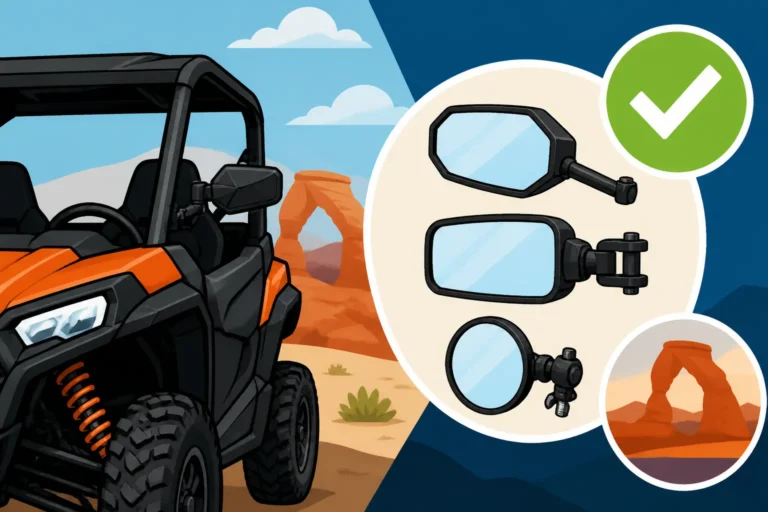
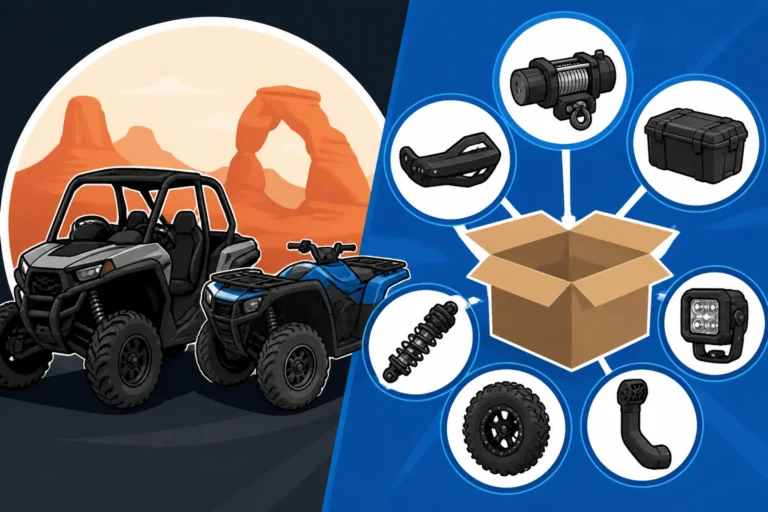
This is perhaps the most significant difference. On "public roads" that are not explicitly designated OHV trails (i.e., most state highways, county roads, and city streets), you must have a street-legal ATV or UTV to operate it. This means your machine needs to meet all the requirements of a street-legal vehicle, including headlights, tail lights, turn signals, mirrors, a horn, a license plate, and proper insurance. Brands like SuperATV offer fantastic kits and components to help you make your machine compliant with Utah's street-legal requirements, from wiring harnesses to specialized mirrors. Without these modifications, your traditionally registered OHV (the one with the green sticker) is confined to designated OHV trails and forest/BLM roads that are explicitly marked for OHV use. [Where Street-Legal ATVs Can Drive in Utah] explains this in much more detail. Driving a non-street-legal machine on a public highway or road where only street-legal vehicles are permitted is a violation and can result in significant penalties, including a ticket for [Penalties for Riding Unregistered in Utah] or even more severe infractions if you're deemed to be operating an unsafe vehicle on the road.
On the other hand, forest roads and BLM roads that are specifically designated as OHV routes do allow non-street-legal machines, provided your OHV is properly registered and you have the required [Utah OHV Education Certificate] if applicable. The trick is knowing which is which, and that's where accurate maps come in.
Equipment Requirements and Enforcement on Different Road Types
Beyond the machine's legal status, the equipment you need (or are expected to have) can also differ depending on the type of road.
For Street-Legal OHVs on Public Roads (State, County, City):
- Mandatory: Headlights, tail lights, brake lights, turn signals (front and rear), at least one mirror (rearview, but usually two side mirrors are preferred for safety and compliance), a horn, a license plate with light, and a windshield or eye protection.
- Safety: Seatbelts (if equipped), helmets (required for riders under 18, recommended for all), and proof of insurance.
- Enforcement: Law enforcement, including Utah Highway Patrol, county sheriffs, and city police, can pull you over and check for compliance just as they would any other motor vehicle. They'll be looking for [Utah Street-Legal ATV Equipment Requirements] and valid registration.
For Non-Street-Legal OHVs on Designated Trails, Forest Roads, and BLM OHV Routes:
- Mandatory: Current Utah OHV registration (green sticker), muffler with spark arrestor, working brakes. Headlights and taillights are required for night riding.
- Safety: Helmets (required for riders under 18, recommended for all), eye protection.
- Enforcement: Forest Service Rangers, BLM law enforcement, and county deputies often patrol these areas, checking for proper OHV registration and safe operation. They may also check for the required [What Paperwork Utah Riders Must Carry]. If you're on a forest road that's not designated for OHV use and you don't have a street-legal machine, they will treat it as an illegal operation.
| Feature | Public Roads (State, County, City) | Forest/BLM Roads (Designated OHV Routes) | Forest/BLM Roads (Highway Legal Only) |
|---|---|---|---|
| Machine Type | Must be Street-Legal OHV | Registered Off-Highway Vehicle (OHV) | Must be Street-Legal OHV |
| Registration | Street-legal plate & OHV sticker | Current OHV sticker | Street-legal plate & OHV sticker |
| Insurance | Mandatory liability insurance | Not always mandatory (check local rules) | Mandatory liability insurance |
| Equipment | Head/tail/brake lights, turn signals, mirrors, horn, windshield/eye protection, etc. | Spark arrestor, brakes, lights for night | Head/tail/brake lights, turn signals, mirrors, horn, windshield/eye protection, etc. |
| Speed Limits | Posted limits apply, or default rural/urban limits | Often 15-25 mph on trails, sometimes higher on designated roads | Posted limits apply, or default rural/urban limits |
| Authority | UDOT, County Sheriff, City Police, UHP | Forest Service, BLM, County Sheriff | Forest Service, BLM, County Sheriff, UHP |
| Typical Surface | Paved, Gravel, Dirt | Dirt, Gravel, Primitive Two-Track | Dirt, Gravel, Primitive Two-Track |
Navigating Utah's Diverse Road Network Safely
Understanding the nuances of Utah's road classifications is key to responsible and enjoyable OHV riding. It's not always straightforward, but with the right tools and mindset, you can confidently explore the vast network of routes available to you.
Using Maps and MVUMs Effectively
The absolute best tool for navigating Utah's complex system of roads and trails is an up-to-date map. For federal lands, that means Motor Vehicle Use Maps (MVUMs) from the Forest Service and similar maps from the BLM. These maps are designed specifically to show you where you can ride. They use color codes and symbols to indicate which routes are open to what types of vehicles (highway legal, OHV, motorcycle only, etc.) and during which seasons. Don't just rely on general navigation apps; get the official maps. Many of these are available for free online or at local Forest Service and BLM offices. Learning [Telling Open Routes From Closed on a Forest Map] is a skill every Utah rider should master. I've seen countless riders get into trouble because they assumed a dirt road on a Google map was fair game for their non-street-legal machine, only to find out it was a highway-legal only route, or even worse, a completely closed route. Modern GPS apps can also overlay these MVUMs, providing real-time guidance on the trail, which is a fantastic way to stay compliant and safe.
When in Doubt: Assume Restrictions and Ask
It's a simple rule, but one that can save you a lot of grief: if you're not absolutely sure if you can ride your OHV on a particular road, assume you cannot. Erring on the side of caution is always the best approach. Don't rely on outdated information or what "someone told you once." Laws and designations change, so always check the most current resources.
Here's how to proceed when uncertainty strikes:
- Check the Map: Your MVUM or BLM travel plan map should be your first point of reference.
- Look for Signage: While not always comprehensive, road signs indicating "Highway Legal Vehicles Only" or "OHV Route" are there for a reason. Pay attention to them.
- Contact Local Authorities: If you're still unsure, call the local Forest Service district office, BLM field office, county sheriff's department, or city hall in the area you plan to ride. They are the ultimate authority and can provide definitive guidance.
- Observe Other Riders (with caution): While it can be tempting to follow other riders, remember that not everyone knows or follows the rules. Use others as a guide only if they appear to be operating within obvious legal boundaries.
Remember, the goal is to enjoy Utah's incredible outdoors responsibly. Knowing the difference between a forest road and a public road, and what each means for your OHV, is a huge part of being a responsible rider. Equipping your machine correctly for street-legal status, with quality parts often found from providers like SuperATV, also gives you more options and freedom on Utah's varied terrain. Always prepare your machine, carry the right paperwork, and ride within the legal boundaries.
Disclaimer
This article is for general informational purposes only and does not constitute professional advice. Laws, prices and regulations vary by location and change over time. Consult a qualified professional for guidance on your specific situation.