Winter Road Use in Northern Utah
Winter in Northern Utah brings a whole new set of considerations for off-highway vehicle (OHV) enthusiasts who want to take their ATVs or UTVs on the roads. While the idea of cruising down a snow-dusted street in your side-by-side sounds appealing, the reality involves navigating specific laws, challenging conditions, and local restrictions that can easily catch you off guard. This guide is here to walk you through everything you need to know about legally and safely using your street-legal OHV on Northern Utah's roads during the colder months.
Understanding Utah's Street-Legal OHV Law for Winter
Getting your ATV or UTV street legal in Utah opens up a world of possibilities, allowing you to connect trails, run errands, and explore areas previously inaccessible without trailering. However, winter doesn't change the foundational rules; it simply adds a layer of complexity to their practical application. It's not enough to just have the equipment; it needs to perform reliably in freezing temperatures and potentially heavy snowfall.
The Core Requirements for Street Legal Status
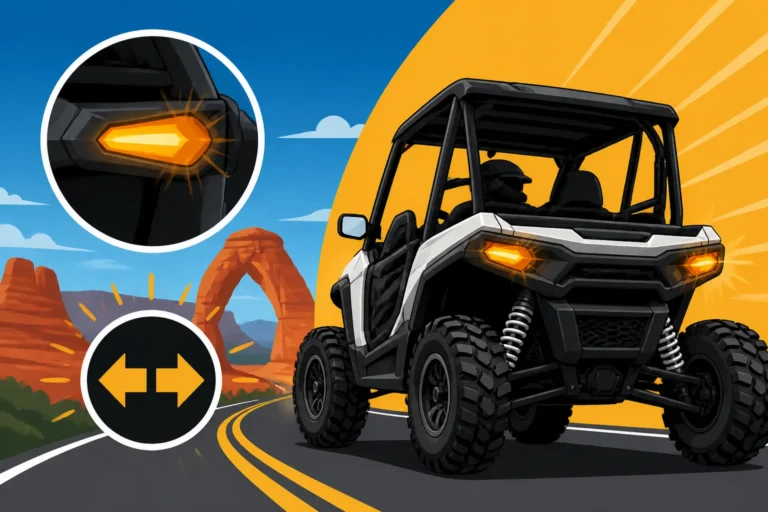
First and foremost, your OHV must meet Utah's standard requirements to be considered street legal, regardless of the season. This means you need functional headlights, taillights, turn signals, mirrors on both sides, a horn, a muffler that meets noise standards, a license plate light, and a speedometer. You also need either a windshield or appropriate eye protection like goggles. These aren't just suggestions; they're legal mandates for operating on public roads. [Utah Street-Legal ATV Equipment Requirements] dives deeper into the specifics.
In winter, the reliability of these components becomes even more critical. Think about the shorter daylight hours; your headlights are going to be working overtime, and their brightness and aiming are crucial for seeing hazards like black ice or snowdrifts. Your taillights and brake lights need to cut through fog, falling snow, and road spray to ensure other drivers can see you. A properly functioning horn isn't just for courtesy; it could be a life-saver if another driver doesn't see you in reduced visibility.
Even the smallest details matter. For instance, your license plate light isn't just a formality. An officer checking your street-legal status during a routine stop will confirm that your plate is clearly illuminated, even if it's covered in a bit of slush. All these elements work together to ensure you're not just street legal on paper, but genuinely safe and visible to other traffic when conditions are at their worst.
Enhancing Your OHV for Northern Utah's Cold Season
While the basic street-legal requirements don't change, adapting your OHV for Northern Utah's harsh winters means going beyond the bare minimum. The comfort and safety of your machine in freezing temperatures, snow, and ice will largely depend on smart upgrades. This is where many riders start looking at aftermarket accessories designed to tackle the cold.
Consider a full cab enclosure for your UTV. While not strictly required for street-legal status, facing a brisk canyon wind at 30 mph in January without one can quickly turn an enjoyable ride into a miserable one. These enclosures, often available from reputable brands like SuperATV, can dramatically improve your comfort. Pair that with a heater kit, and you might actually enjoy those cold-weather cruises. For ATVs, heated grips and thumb warmers are game-changers, preventing numb fingers and allowing you to maintain better control.
Beyond comfort, functionality in snow is key. If you plan on using your street-legal UTV for light snow removal on your property or even just to clear a path to a trailhead, a snowplow attachment is invaluable. Again, companies like SuperATV offer robust plows designed for various UTV models, transforming your machine into a versatile winter workhorse. Remember, these additions aren't just about luxury; they contribute to your endurance and focus, which are critical when driving in challenging winter conditions.
Navigating Northern Utah's Winter Road Conditions
Driving any vehicle on Northern Utah's winter roads requires caution, but piloting an ATV or UTV adds unique challenges. These machines often have a shorter wheelbase, lighter weight, and different tire characteristics compared to a typical car or truck, making them behave differently on slick surfaces. Understanding these nuances and adjusting your driving habits accordingly is vital for safety.
Mastering Traction and Stability on Icy Pavements
One of the biggest concerns for OHVs on winter roads is traction. Snow and ice drastically reduce the grip your tires have on the pavement, and this effect can be magnified in lighter, more nimble OHVs. Your standard trail tires might perform adequately in dry conditions, but on black ice or compacted snow, they can quickly lose their effectiveness.
Many riders in snowy regions opt for specialized winter tires, such as studded tires, which provide superior grip on icy surfaces. [Studded Tires on a Street-Legal Machine] goes into more detail about these options. Even without studs, tires with a softer rubber compound and more sipes (small cuts in the tread blocks) can offer better cold-weather performance. When driving, smooth inputs are paramount. Avoid sudden acceleration, hard braking, or sharp turns, as these can easily break traction and send your OHV into a slide. Utilizing your four-wheel drive (if equipped) on slippery sections can offer a significant advantage, but remember it helps with go more than stop or turn.
Consider the weight of your machine and any cargo. A heavy load in the bed of a UTV might improve rear-wheel traction, but an unevenly distributed load could negatively impact stability. The same goes for adding accessories; a heavy front bumper or a winch can subtly shift your center of gravity. Being acutely aware of how your machine feels and responds to varying road surfaces is a skill developed over time, and winter conditions demand your absolute best attention.
Maximizing Visibility and Safety in Low Light and Snow
Winter weather often means reduced visibility – think fog, heavy snowfall, blowing snow, and the general gloom of shorter days. As an OHV rider, you're already smaller than most other vehicles on the road, making it even more crucial to ensure you are seen. This isn't just about your machine's lights; it's about your entire presence.
Make sure your headlights are clean and unobstructed by snow or mud. Consider adding auxiliary lighting, especially forward-facing light bars or fog lights, which can help cut through the dimness. Some riders even add amber or white strobe lights (where legal) to enhance their visibility, particularly when driving in work zones or areas with heavy equipment. Brands like SuperATV offer a variety of lighting solutions that can make a real difference in dark, snowy conditions.
For the rider, wearing brightly colored outerwear and a reflective vest can significantly increase your profile to other drivers. A helmet with a clear, anti-fog visor is essential, and keeping it clean and free of ice buildup should be a constant priority. Remember that other drivers might be looking for cars and trucks, not an OHV, especially in adverse weather. Drive defensively, anticipate potential hazards, and always assume that you haven't been seen. This proactive approach is your best defense against accidents on wintry roads.
Local Road Rules and Seasonal Access in Northern Utah
While Utah's state law provides a framework for street-legal OHV use, the real complexities often arise at the local level. Northern Utah's diverse landscape includes bustling cities, quaint mountain towns, and sprawling rural areas, each potentially having its own set of rules, particularly when winter weather arrives. What's allowed in one county might be restricted just across the border, and what's open in summer might be closed under a blanket of snow.
City and County Ordinances: What Changes in Winter
The state allows street-legal OHVs on most roads with speed limits 50 mph or less, but city and county governments retain the authority to create their own ordinances. In Northern Utah, this can mean significant variations. For example, a small mountain town like Huntsville or Eden in Weber County might have different regulations than a larger municipality like Logan or Park City. [City and County OHV Rules Across Utah] details these local variations.
During winter, many communities in Northern Utah have specific snow removal operations that can impact OHV access. Some towns might temporarily restrict OHV use on certain roads if snowplows are actively working, or if the road conditions are deemed unsafe for smaller vehicles. Parking restrictions can also become more prevalent in winter, especially if street parking interferes with plowing. It's not uncommon for cities to enforce "no parking during snow removal" rules that could affect where you can leave your OHV.
Before you head out, especially if you're venturing into a new area, it’s always a good idea to check the official websites or call the city and county offices for the specific areas you plan to visit. A quick search for "OHV ordinances [City Name] Utah" can save you a lot of headache, and potentially a citation, if you accidentally violate a local rule you weren't aware of.
Differentiating Road vs. Trail Access in Snowy Months
Being street legal allows you to drive on the roads, but it doesn't automatically grant you access to all trails in winter. This distinction is crucial in Northern Utah, where many popular OHV trails and forest service roads are subject to seasonal closures due to snow or for wildlife protection. For instance, many higher-elevation trails in the Uinta-Wasatch-Cache National Forest close for the winter, often converting to snowmobile-only routes.
Even if you can legally drive your street-legal UTV to the trailhead on a paved or plowed county road, the trail itself might be gated, closed, or designated for a different type of winter recreation. It's incredibly frustrating to drive all the way to a trailhead only to find it inaccessible, but it's a common scenario for OHV riders unprepared for winter conditions.
Always consult the relevant land management agency (e.g., U.S. Forest Service, Bureau of Land Management, Utah State Parks) for the specific area you intend to ride. Check their websites for current conditions, seasonal closures, and any special permits required. A trail map, especially a Motor Vehicle Use Map (MVUM), will clearly delineate what routes are open to wheeled vehicles and during what season. Your street-legal status makes the journey to the trail easier, but it doesn't bypass the rules governing the trail itself.
Here's a quick overview of key winter considerations for your street-legal OHV:
| Feature/Aspect | Summer/General Use | Northern Utah Winter Road Use |
|---|---|---|
| Tires | All-terrain or mud tires, suitable for dry/dirt trails | Studded tires, siped all-terrains, or dedicated winter tires crucial for ice/snow. |
| Visibility | Standard lighting sufficient for clear conditions | Auxiliary lighting, clean headlights/taillights, bright clothing, reflective accents are vital. |
| Rider Comfort | Open-air riding, minimal gear | Full cab enclosure, heater, heated grips/thumb warmers, heavy winter gear, anti-fog helmet visor. |
| Local Rules | Generally consistent state laws apply | Varies significantly by city/county; check for snow removal restrictions, temporary closures. |
| Trail Access | Most designated trails open | Many trails and forest roads closed due to snow or winter recreation (snowmobiling). |
| Driving Style | Confident, responsive | Smooth inputs, defensive driving, reduced speeds, increased following distances. |
Disclaimer
This article is for general informational purposes only and does not constitute professional advice. Laws, prices and regulations vary by location and change over time. Consult a qualified professional for guidance on your specific situation.