Switching a Machine Back to Off-Highway Only
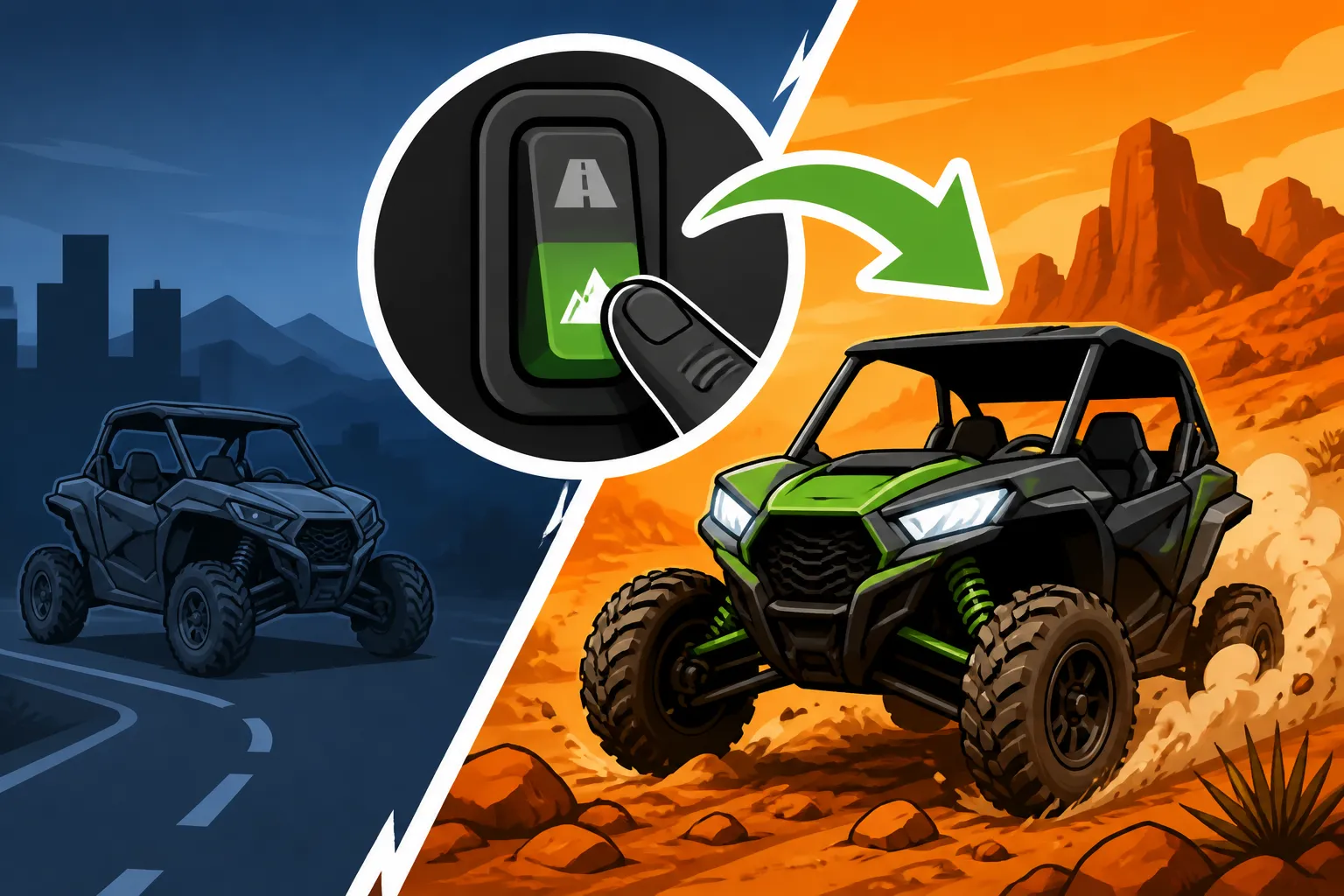
Sometimes, after going through all the effort to make your ATV or UTV street legal in Utah, you might find yourself wondering if it was really the right choice. Maybe the street-legal lifestyle isn't quite what you expected, or perhaps your riding habits have changed. This guide is all about how to undo that process, explaining what's involved in switching your machine back to off-highway only status in Utah, so you can focus purely on the trails without the added complexities of road use.
Why Riders Revert Their OHV Status in Utah
It's a common scenario: you bought your dream side-by-side, eager to cruise down Main Street in Moab or connect trails from your campsite in Marysvale. So you invested in a street-legal conversion, got it inspected, and proudly displayed your license plate. But after a while, you might start to realize that the benefits of street legality don't quite outweigh the ongoing commitment. Life changes, and so do our riding preferences, leading many to consider reverting their machines.
Cost Savings on Registration and Insurance
One of the biggest motivators for switching back to off-highway only is the cost. When your ATV or UTV is street legal, it's often subjected to different, and typically higher, registration fees and uniform fees compared to an off-highway only machine. This is because it’s now treated more like a regular vehicle for road use, incurring additional state and local road taxes. On top of that, you're almost certainly paying for more comprehensive insurance. While [When Utah Requires Insurance on an OHV] gives you the basics, street-legal insurance usually requires higher liability limits, collision coverage, and sometimes even uninsured motorist protection, similar to what you'd carry on your car. If you're only hitting the dirt and rocks, those extra costs can feel like money draining out of your wallet for something you're not fully utilizing.
Think about the annual renewal notices. You're not just paying the standard OHV registration anymore; you've got the road vehicle portion, too. Over several years, these extra costs can really add up, especially if your machine spends 90% of its time on the dirt. For many, cutting these recurring expenses by removing the street-legal designation becomes an attractive option, freeing up funds for other gear, trail rides, or even just more gas for the weekend adventures. You'll still pay the base OHV fees, of course, but you can ditch the added burden that comes with road status.
Maintenance and Wear Concerns on Pavement
Off-highway vehicles are engineered for the rough and tumble world of trails, not asphalt. Running your aggressive mud tires on paved roads, even for short distances, can lead to accelerated wear and tear. Those knobby treads, designed to dig into loose terrain, get chewed up quickly on hard surfaces, forcing you to replace tires more frequently. Beyond tires, consider the strain on your drivetrain and suspension. Cruising at 45 mph on pavement, while thrilling at first, can put different kinds of stress on components compared to slow, technical crawling or high-speed dirt runs.
Additionally, some riders find that the added vibration and jarring from road travel can loosen bolts, accelerate bushing wear, and generally degrade the overall tightness of their machine faster than pure off-road use. You might have to inspect and tighten things more often, adding to your maintenance schedule. If your primary joy comes from conquering trails and dunes, the compromises of street driving—like dealing with traffic, watching for potholes, and the sheer discomfort of a trail machine on asphalt—might make you yearn for the simpler days of an off-highway-only setup. Removing these stressors can extend the life of your components and keep your machine feeling tighter for longer on its intended terrain.
Simplifying Your Machine for Trail Use
When you make your OHV street legal, you add a whole host of new components: turn signals, a horn, a license plate bracket with a light, mirrors, maybe a windshield, and often a more subdued exhaust system. These additions, while necessary for road use, can sometimes be liabilities on rugged trails. A low-hanging license plate can get torn off by rocks, mirrors can be snagged by branches, and delicate wiring for turn signals can be vulnerable to mud and water. Some riders also find the added weight of these components, though minor, can affect performance or handling in extreme off-road scenarios.
For the purist, less is more. Reverting to off-highway only allows you to strip away these road-specific parts, making your machine lighter, more streamlined, and less prone to trail damage. You can go back to simpler, more robust setups, like a rugged [Whip Flags on the Road and on the Dunes] for visibility on dusty trails rather than worrying about turn signal visibility. This simplification can also make cleaning easier, as there are fewer nooks and crannies for mud and debris to accumulate around electrical components. Ultimately, it’s about tailoring your machine precisely for its primary purpose: conquering the backcountry.
The Step-by-Step Process to Revert Your OHV
Deciding to go back to off-highway only status isn't just about pulling off a license plate; there's a specific process to follow with the Utah Division of Motor Vehicles (DMV) to ensure your records are updated correctly and you're not inadvertently running into legal trouble. It's not overly complicated, but it does require attention to detail, just like when you originally went through the steps for [Making a UTV Street Legal in Utah].
Removing Street-Legal Equipment
The first, and most satisfying, step is to physically remove all the equipment you added for street-legal compliance. This means taking off your license plate, removing the license plate bracket and its illumination light, and disconnecting any turn signals. If you added a horn, that can go too. Check your mirrors; if they're particularly fragile or bulky, you might swap them out for more trail-friendly options or remove them entirely, as mirrors aren't universally required for off-highway use in Utah (though often a good idea for safety). For many riders, this is where specialized parts from companies like SuperATV come into play, offering robust aftermarket accessories designed for extreme off-road conditions rather than pavement pounding.
Don't forget about other items like windshields that might have been added for road comfort or compliance with [Windshield or Eye Protection in Utah]. If it's a full windshield, consider swapping it for a half windshield or even just a roof, depending on your preferred riding style and protection needs. While it might feel like a deconstruction project, think of it as optimizing your machine for pure trail performance. Make sure to safely store or dispose of any removed electrical components or wiring harnesses to prevent them from becoming a hazard later on. This physical transformation sets the stage for the administrative changes.
Notifying the Utah DMV
This is the most critical part of the reversion process. You need to officially notify the Utah DMV that your vehicle is no longer operating as a street-legal OHV. This isn't something you can just do online; you'll likely need to visit a DMV office in person to ensure the change is processed correctly. Bring your current registration, your OHV's title, and proof of identification. Explain to the clerk that you wish to remove the street-legal designation from your ATV or UTV and revert its registration to off-highway only status.
The DMV will update their records, removing the street-legal classification. This is important because it stops the collection of road-specific fees and adjusts your vehicle's status in their system. They may have you fill out a specific form to attest that the modifications have been removed. This official change is what will ultimately impact your registration costs and the type of insurance you're required to carry. Don't skip this step; simply taking off your plate doesn't change your legal status, and you could still be on the hook for those higher fees or face issues if stopped by law enforcement. Asking about [What Paperwork Utah Riders Must Carry] will ensure you leave the DMV with everything you need.
Getting Your Standard OHV Decal
Once the DMV has processed the change, your machine's registration will reflect its new (or old) status as an off-highway only vehicle. You will then be issued the standard Utah OHV decal, which needs to be prominently displayed on your machine. If you previously had a combined registration or a different decal type for street-legal use, this will be replaced. The OHV decal signifies that your machine is properly registered for off-road use on Utah's extensive trail system.
Ensure you understand [Utah OHV Decals and Where They Go] for proper placement. Typically, it's affixed to the left rear of an ATV or UTV, but specific guidance will be provided with the decal. This decal is your proof of registration for off-highway use. If you're due for a renewal soon after reverting, the renewal notice should reflect the adjusted, lower fees for an off-highway only machine. This marks the complete administrative shift back to focusing solely on the dirt.
Practical Considerations and Potential Pitfalls
While the process of reverting your OHV to off-highway only seems straightforward, there are a few practical considerations and potential pitfalls that Utah riders should be aware of. Understanding these can save you headaches and ensure a smooth transition, preventing any surprises down the trail.
Re-selling After Reversion
If you ever plan to sell your ATV or UTV after reverting its status, it’s crucial to have all your paperwork in order. The buyer will want to know the machine's history, and being able to show the clear transition from street-legal back to off-highway only will be beneficial. Ensure your title reflects the current status, and keep any documentation from the DMV about the change. This transparency can help avoid questions about why the machine once had street-legal modifications but no longer does, especially if the buyer ever considers [Buying a Used ATV in Utah: The Paperwork].
Be prepared to explain the reversion process to potential buyers. Some might appreciate that the machine is now optimized purely for trail use, while others might view it as a previous owner trying to cut corners. It’s all about clear communication. If you used high-quality, durable components like those found at SuperATV for your original street-legal conversion, you might even find that those parts, if kept and re-installed, add value if a future buyer wants to go street-legal again. Conversely, if you removed and discarded all the street-legal components, the machine will sell purely as an off-highway unit, and its value will reflect that.
Insurance Implications
As mentioned earlier, insurance is one of the biggest factors in reverting. Once your OHV is no longer street legal, you can typically switch to an off-highway only insurance policy. These policies often have lower premiums because the risks associated with street driving (e.g., collisions with cars, higher speeds, more strict liability laws) are removed. Contact your insurance provider as soon as you've officially changed the status with the DMV. Provide them with the updated registration information so they can adjust your policy accordingly.
Make sure your new policy still covers your riding habits. If you ride frequently or in remote areas, you might still want comprehensive coverage for theft, fire, or damage incurred on the trail. Just because it's off-highway doesn't mean it's risk-free. Discuss your options with your agent to ensure you have adequate protection for your adventures, without paying for coverage you no longer need. Remember, even off-highway machines can be involved in accidents, and proper insurance is always a smart investment.
Inspections and Future Changes
Once you've reverted, your machine will no longer be subject to the annual safety inspections required for street-legal vehicles in Utah. This can be a relief for some riders, eliminating another appointment and potential expense from their calendar. However, it's still crucial to perform regular maintenance and safety checks on your own. Just because the state isn't inspecting it doesn't mean it should be neglected. A safe machine is a fun machine, whether on the road or the trail.
Should you ever change your mind again and want to make your OHV street legal in Utah, you'll need to go through the entire [Utah's Street-Legal ATV Inspection, Step by Step] process from scratch. This includes re-installing all the necessary equipment, getting it inspected, and updating your registration with the DMV. So, if you're on the fence, consider keeping the removed street-legal components in good condition. That way, you won't have to repurchase everything if you decide to go back to street-legal status in the future.
Life After Reversion: Embracing the Trails
Once your ATV or UTV is officially back to off-highway only status, a new world of simplified, pure trail riding opens up. You've shed the worries of road regulations and pavement wear, allowing you to focus entirely on what these machines do best: conquering the diverse and challenging terrain Utah has to offer. This shift can truly transform your riding experience.
Customizing for Off-Road Performance
With the street-legal constraints lifted, you're free to customize your machine purely for off-road performance and durability. This might mean installing more aggressive tires without worrying about road legality, upgrading your suspension for more travel and smoother rides over rough terrain, or even modifying your exhaust for better performance (within reasonable noise limits, of course, for trail etiquette). Many riders turn to aftermarket leaders like SuperATV for heavy-duty axles, lift kits, portals, or skid plates that are specifically designed to enhance off-road capability and protection, often without consideration for on-road compliance.
You can also focus on trail-specific accessories that might have been less practical with street-legal gear on board. Think about robust winches for self-recovery, durable storage solutions for tools and emergency supplies, or specialized lighting for night rides on the trails (which don't need to meet street-legal beam patterns). Your machine can now become a dedicated dirt warrior, optimized for the challenges of Moab's slickrock, Sand Hollow's dunes, or the technical routes of the Paiute Trail. This freedom to modify without dual-purpose compromise is a major benefit for many enthusiasts.
What You Can and Cannot Do
While your machine is now off-highway only, it's crucial to understand the limitations that come with this status. You cannot legally operate your unregistered or off-highway-only OHV on paved public roads, highways, or interstates in Utah. This includes connecting trails via short stretches of pavement, unless those specific roads are designated as OHV-friendly or you are explicitly crossing a highway [Rules for Crossing a State Highway] at an approved intersection. Most of your travel must be on designated OHV trails, dirt roads, and unimproved routes.
Always check local ordinances, especially in popular riding areas, as cities and counties might have specific rules for OHV access on certain roads, even dirt ones. For example, some small towns might allow OHV travel on specific streets, but this is usually an exception, not the rule, for off-highway-only machines. Make sure you know [Utah OHV Trail Maps and How to Read Them] to stay on legal routes. Violating these rules can lead to fines and potentially even impoundment, so it's vital to respect the boundaries. Stick to the trails, and your off-highway machine will provide endless hours of adventure without legal headaches.
| Feature/Requirement | Street-Legal OHV | Off-Highway Only OHV |
|---|---|---|
| License Plate | Required, displayed on rear | Not required |
| OHV Decal | Typically required (dual registration) | Required, displayed on left rear |
| Insurance | Higher liability (car-like) often required | Off-road specific; liability may be optional |
| Registration Fees | OHV fees + additional road/uniform fees | Standard OHV fees only |
| Safety Inspection | Annual safety inspection required | Not required |
| Required Equipment | Horn, mirrors, turn signals, plate light, etc. | Spark arrestor, working brakes, quiet muffler |
| Road Access | Legal on most public roads (with limits) | Limited to designated OHV trails/routes |
| Tire Wear | Faster wear on pavement | Optimized for off-road lifespan |
| Customization Focus | Balance road compliance & off-road performance | Pure off-road performance & durability |
| Driving License | Valid driver's license required | OHV Education Certificate may be required for youth |
Disclaimer
This article is for general informational purposes only and does not constitute professional advice. Laws, prices and regulations vary by location and change over time. Consult a qualified professional for guidance on your specific situation.