Renewing a Street-Legal ATV Registration
Renewing your street-legal ATV or UTV registration in Utah can feel like navigating a maze. It’s not just about paying a fee; you’ve got two different systems running side-by-side, plus an annual inspection to contend with, and forgetting any piece can quickly turn a simple renewal into a headache. This guide is here to walk you through the entire process, demystifying the steps so you can keep your machine road-ready and trail-capable without the stress.
Why Street-Legal Renewal is a Bit More Complex
When you've gone through the effort of making your ATV or UTV street-legal in Utah, you've essentially given it a dual identity. It's still an off-highway vehicle (OHV) that needs its regular registration, but it's also considered a street-legal vehicle, which brings with it an entirely separate set of rules and renewal processes. This isn't just double the paperwork; it's a completely different mindset you need to adopt when it's time to renew. Many riders get tripped up because they only think about the OHV side, forgetting the street-legal requirements until it's too late.
The Dual Nature of Street-Legal Machines
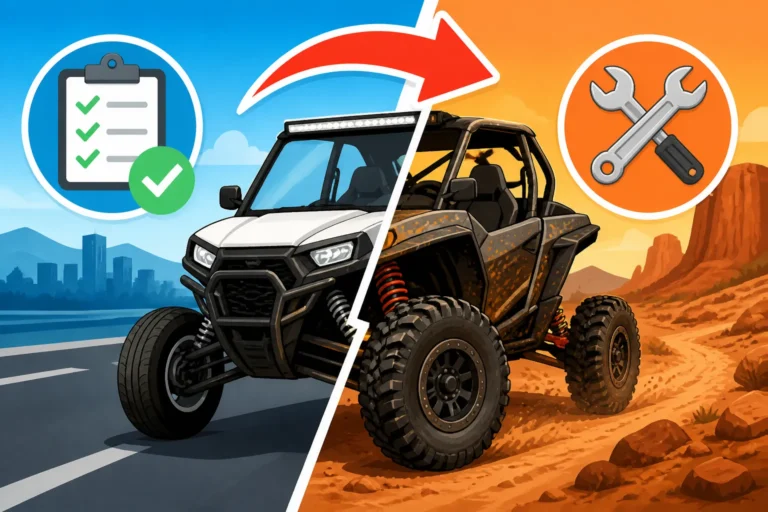
Think of your street-legal UTV as a superhero with two costumes. One costume is for tearing up the trails, enjoying the backcountry, and getting dusty. For this, it needs a valid OHV registration with its yearly decal. The other costume is for cruising down Main Street in Moab, grabbing groceries in Hurricane, or connecting trails legally. This street-legal status requires a traditional license plate, a separate registration with the DMV, and the associated fees. Both of these "costumes" need to be current for your machine to be fully legal for its intended use. You might even find yourself paying what feels like two registration fees on one machine, which can be a bit frustrating, but it’s simply how the system is set up to categorize and manage these versatile vehicles. The state sees it as two different use cases, each with its own set of administrative requirements. This dual nature is what allows you the incredible freedom to ride from your campsite directly to the trailhead, but it also means understanding two distinct renewal paths.
Annual Inspection Requirements
One of the biggest differences for street-legal machines, and often the most overlooked part of renewal, is the mandatory annual safety inspection. Unlike a standard OHV, which doesn't require an inspection to renew its off-highway registration, your street-legal ATV or UTV must pass a yearly check-up. This inspection ensures that all the specific equipment requirements Utah demands for street legality are still in place and functioning correctly. We're talking about everything from your headlights and tail lamps to your turn signals, mirrors, horn, and even your tires. If your machine fails any part of this inspection, you won't be able to complete your street-legal registration renewal until those issues are addressed and it passes. It can be a real pain if you roll up to the inspection station only to find out your aftermarket turn signals aren't bright enough or your horn decided to quit on you. Many riders find that using high-quality, durable components, perhaps from a reputable brand like SuperATV, can save them headaches during these annual checks by ensuring reliability and compliance. You definitely want to make sure your machine is in top shape before you head over, or you'll be making a second trip. [How Often Utah Re-Inspects a Street-Legal ATV] has more details on the schedule.
Step-by-Step Guide to Renewing Your Street-Legal Registration
Renewing your street-legal registration doesn't have to be a bewildering experience. Breaking it down into manageable steps can make it feel much more straightforward. The key is understanding that there are essentially two distinct processes happening, often intertwined, but each with its own requirements. You're renewing the OHV aspect and the street-legal aspect.
Gathering Your Documents
Before you even think about heading to the DMV or logging online, it's crucial to gather all your necessary paperwork. Being prepared will save you immense frustration and potential extra trips. Here’s a checklist of what you’ll likely need:
- Current OHV Registration: This proves your machine is already recognized as an off-highway vehicle in Utah.
- Current Street-Legal Registration Card: This is the document from your last street-legal renewal, which includes your license plate information.
- Proof of Insurance: Utah requires liability insurance for any street-legal vehicle operating on public roads. Make sure your policy is current.
- Driver's License: You'll need valid identification for the renewal process.
- Proof of Inspection: This is the crucial document you'll get after your machine passes its annual safety inspection, which we'll discuss next.
- Renewal Notice (if you received one): While not strictly mandatory, it can speed up the process by providing easy access to your vehicle information. Sometimes, these notices get lost in the mail or overlooked, especially if your address has changed. Even without it, you can still renew. [Renewing Without the Renewal Notice] is a good read if you're in that situation.
Having all these documents organized in a folder before you start will make the process much smoother, whether you're dealing with the DMV in person or navigating online forms.
Passing Your Annual Inspection
This is often the first real hurdle for street-legal renewals, and it's something you simply can't skip. Your machine needs to pass an annual safety inspection at a certified inspection station in Utah. This isn't just a quick glance; the inspector will go through a detailed checklist to ensure your UTV or ATV meets all of Utah's specific street-legal equipment requirements.
- What They Check: Inspectors will meticulously check your headlights (high and low beam), tail lamps, brake lights, turn signals (front and rear), horn, mirrors (both sides), windshield or eye protection, tires (tread depth and condition), and often your speedometer and license plate mounting and illumination. Don't forget the proper functioning of your brakes! This is why it's so important to maintain your machine properly throughout the year. If you've added any aftermarket accessories, like a new set of mirrors or a light bar from a company like SuperATV, make sure they are compliant with Utah's laws.
- Finding an Inspection Station: Many automotive service centers are certified to perform these inspections. You can typically find a list of certified stations on the Utah DMV or Department of Public Safety website. It’s a good idea to call ahead and confirm they inspect OHVs, as not all stations do.
- What Happens if You Fail: If your machine fails, the inspector will provide a rejection form detailing what needs to be fixed. You'll then need to make the repairs and bring it back for a re-inspection, usually within a specified timeframe. This is where keeping your machine in excellent working order throughout the year really pays off. [Utah Street-Legal ATV Inspection, Step by Step] provides a more granular look at what to expect.
Only once you have that passing inspection certificate in hand can you proceed with the actual registration renewal.
Completing the Renewal Process
With your inspection passed and documents in order, you can finally complete the renewal. This involves two main components: renewing the OHV registration (which contributes to trail maintenance) and renewing the street-legal designation (which gets you a new plate sticker).
- Renewing Your OHV Registration: This can often be done online through the Utah State Parks OHV registration portal. You'll enter your OHV number, pay the fees, and they'll send you a new decal. This process is usually quite straightforward, similar to renewing a non-street-legal OHV. It's a key part of ensuring you're good to go on the trails, and the fees contribute directly to trail maintenance and access, so it's money well spent for the riding community. [Renewing Your Utah OHV Registration] goes into more detail.
- Renewing Your Street-Legal Vehicle Registration: This part is handled by the Utah Division of Motor Vehicles (DMV). You can renew:
- Online: If eligible, this is often the fastest and most convenient method. You’ll need your inspection certificate information, your plate number, and payment.
- In Person: Visit a Utah DMV office. Bring all your gathered documents, including the passing inspection certificate. This is often the best option if you have any questions or if your online renewal isn't going smoothly for some reason. [Which Utah DMV Offices Handle OHV Paperwork] can help you find a location.
- By Mail: Some renewals can be done by mail, but check the DMV website for current instructions. This is generally the slowest option.
Once both renewals are complete, you'll receive your new OHV decal (which goes on the machine in its designated spot, often the rear-left fender) and a new license plate sticker for your street-legal plate. Make sure to affix both promptly. It's truly a moment of relief when you have both the fresh decal and the current plate sticker, knowing you're fully legal for both realms of riding.
Common Pitfalls and Troubleshooting
Even with the best intentions and preparation, sometimes things go wrong. Life happens, and bureaucratic processes can be, well, bureaucratic. Understanding the most common snags can help you avoid them or at least know what to do if you encounter them.
Missed Inspection Deadlines
This is a big one. Your street-legal inspection is typically due around the same time each year, usually corresponding with your vehicle registration renewal date. Forgetting this deadline can throw a wrench into your plans.
- The Consequence: If you ride your street-legal UTV or ATV on public roads with an expired inspection, you could face a ticket from law enforcement. Utah officers are pretty good at checking for these things, especially in popular riding areas like Moab or Sand Hollow. Beyond that, the DMV simply won't let you renew your street-legal registration until you've passed the current inspection.
- What to Do: If you've missed the deadline, don't panic. Get your machine inspected as soon as possible. There typically isn't a "late fee" for the inspection itself, but you'll be riding illegally on public roads until it's done and your registration is renewed. Schedule the inspection, get it passed, and then proceed with your registration renewal, being mindful of any late renewal penalties the DMV might assess for the registration itself. Sometimes, life gets in the way, and you might need to renew [Late Renewal on a Utah OHV Registration].
Issues with Paperwork or Vehicle Condition
Sometimes, the problem isn't forgetting a deadline but rather a hiccup with the details.
- Incomplete or Incorrect Paperwork: This can be anything from a misspelled name on a prior title to missing proof of insurance or an illegible inspection form. The DMV is very particular about accuracy.
- Solution: Double-check everything before you go. If you find a mistake, you might need to contact the issuing authority (e.g., your insurance company for proof of insurance, the inspection station for a corrected form). For issues like a misspelled name on a title, that's a bigger fix, and you'd likely need to speak directly with a DMV agent. [Fixing a Registration Mistake at the Utah DMV] offers more advice.
- Vehicle Fails Inspection Repeatedly: Perhaps you've tried to fix an issue, but your machine still isn't passing. This can be incredibly frustrating, especially if you're not mechanically inclined.
- Solution: Get a professional opinion. Take your UTV or ATV to a reputable mechanic who specializes in OHVs or vehicle customization. They can diagnose why a specific component (like a turn signal or horn) isn't working or isn't meeting compliance standards. Sometimes it's a simple wiring issue, other times it might mean upgrading a part. If you're using aftermarket parts, ensure they are designed for street-legal compliance. SuperATV, for instance, offers many accessories that are built with durability and compliance in mind, which can reduce these kinds of inspection headaches. [What Fails a Utah Street-Legal Inspection] can help you pre-empt issues.
What if My Street-Legal Status Lapses?
Life sometimes takes unexpected turns. Maybe you're deployed with the military, or you moved out of state for a year and let things lapse, or simply didn't ride it on the road. What happens if you don't renew your street-legal registration for a while?
- Reinstatement vs. Starting Over: In most cases, if your street-legal registration lapses, you'll simply need to go through the full renewal process, including the annual inspection, when you're ready to get back on the road. You won't necessarily have to "re-convert" it from scratch, as long as the machine still meets all the [Street-Legal ATV Equipment Requirements]. The main hurdle will be the overdue inspection and any late fees on the registration itself.
- Consequences of Riding Lapsed: Just like riding with an expired regular vehicle registration, riding a lapsed street-legal OHV on public roads can lead to tickets and fines. If you only plan to ride off-highway, you can let the street-legal portion lapse and just keep your OHV registration current. However, that means you lose the privilege of riding on roads to connect trails or access towns. You'd need to trailer your machine everywhere.
- Re-evaluating Needs: If you find your street-legal status lapsed and you're questioning whether you truly need it, it might be a good time to weigh the costs and benefits. You can always switch a machine back to off-highway only if you decide the annual inspection and extra fees aren't worth it for your riding style.
Tips for a Smooth Renewal
To make your street-legal ATV or UTV registration renewal as painless as possible, a little forethought and organization go a long way. This isn't just about avoiding penalties; it's about maximizing your riding time and minimizing your administrative headaches.
Staying Organized
Keeping your documents in order throughout the year can make renewal a breeze. It’s easy to toss a new registration card into a glove box and forget about it until next year, but that approach often leads to frantic searching when renewal time rolls around.
- Create a Dedicated Folder: Designate a physical or digital folder specifically for your OHV and street-legal paperwork. Include your title, current registration cards, insurance declaration pages, inspection reports, and any related receipts.
- Set Reminders: Don't rely solely on the mail. Set calendar reminders on your phone or computer a month or two before your renewal dates. Since you have both an OHV and a street-legal component, you might have two different dates to track, though they often align. A good reminder will prompt you to schedule your inspection and gather your documents well in advance.
- Maintain Your Machine: Regular maintenance isn't just good for performance and longevity; it also helps you pass that annual inspection with flying colors. Check your lights, horn, and mirrors periodically. Replace worn tires and keep your brakes in top shape. Proactive maintenance often prevents those last-minute, stressful repairs right before an inspection. Many riders like using durable parts from companies like SuperATV that stand up to both the trail and road abuse, ensuring less wear and tear and fewer inspection surprises.
Leveraging Resources
You don't have to figure everything out on your own. Utah provides several resources to help OHV owners navigate the registration process.
- Utah State Parks OHV Program Website: This is your go-to for all things off-highway. You can renew your OHV registration here and find general information about OHV laws and regulations.
- Utah Division of Motor Vehicles (DMV) Website: For the street-legal aspect, the DMV website is crucial. Here you'll find information on vehicle inspections, license plate renewals, and locations of DMV offices. You can also often renew your street-legal registration online here.
- Local DMV Offices: If you prefer face-to-face interaction or have complex questions, a visit to your local DMV can be invaluable. They can clarify specific requirements, help with unusual situations, and ensure you're completing everything correctly. Don't be afraid to ask questions!
- Online Renewal Options: Whenever possible, use the online renewal portals. They save time and allow you to complete the process from the comfort of your home. Just ensure you have all your digital documents ready, including your inspection certificate number. [Can You Register an ATV Online in Utah?] and [Renewing a Utah OHV Registration Online] are great resources here.
By staying organized and utilizing the available resources, renewing your street-legal ATV or UTV registration in Utah can be a smooth, stress-free process. This frees you up to spend less time worrying about paperwork and more time enjoying the incredible trails and roads Utah has to offer!
Disclaimer
This article is for general informational purposes only and does not constitute professional advice. Laws, prices and regulations vary by location and change over time. Consult a qualified professional for guidance on your specific situation.