Paying Two Registration Fees on One Machine
It can feel a little bewildering, can't it? You've got this awesome ATV or UTV, ready for adventure on Utah's incredible trails and open roads, and then you hit the paperwork. Suddenly, you're looking at what seems like two separate registration processes and two sets of fees for one machine. It's enough to make you scratch your head and wonder if you're doing something wrong or just missing a trick. This guide is here to untangle that confusion, explaining exactly why you might be paying two different fees for your single off-highway vehicle in Utah and what each one actually covers.
Understanding Utah's Dual Registration System for OHVs
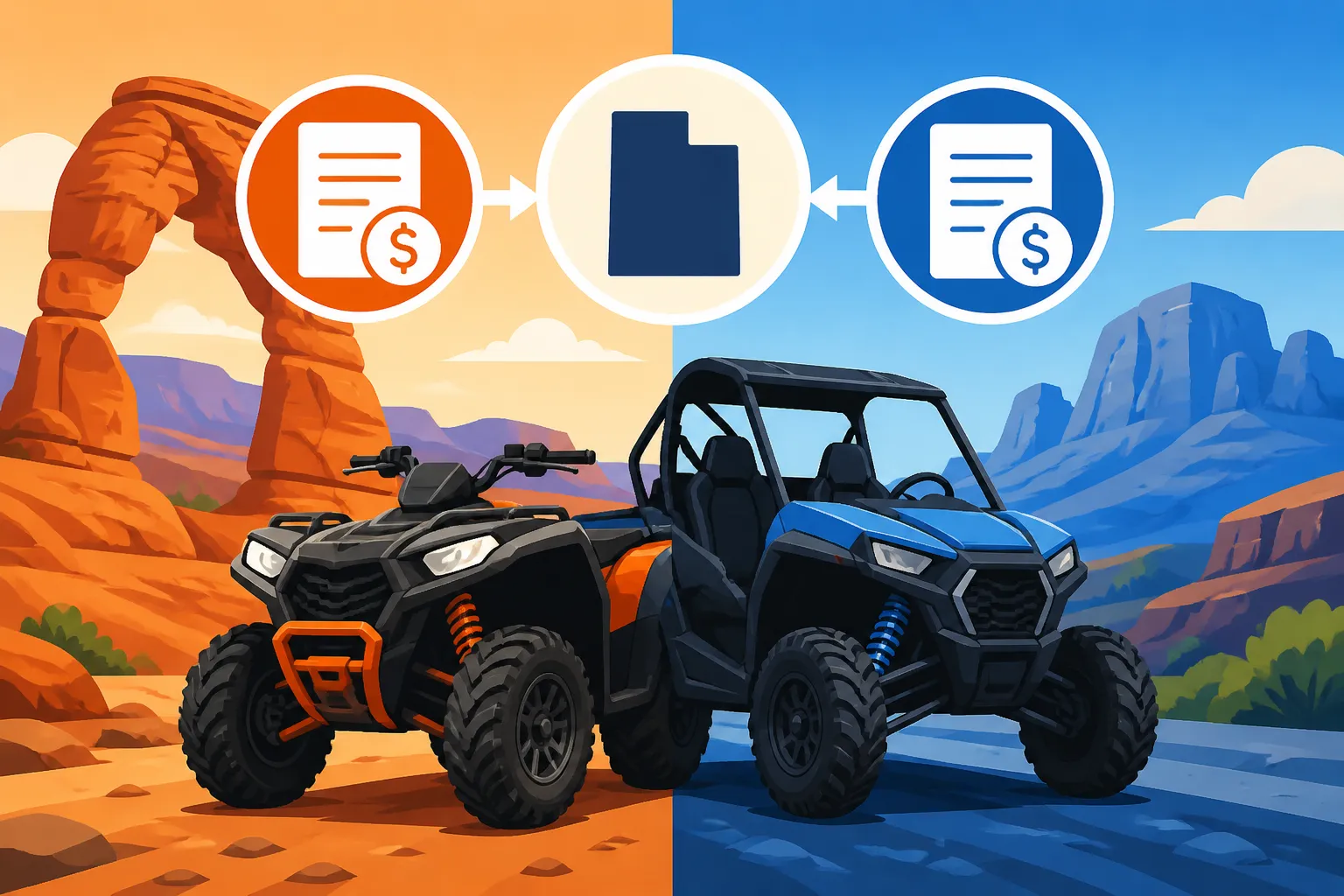
Utah is a dream for off-road enthusiasts, offering everything from slickrock to sand dunes, and miles of dirt roads. But to truly unlock all that adventure, many riders find themselves in a unique situation: registering their machine not just as an off-highway vehicle (OHV) for the trails, but also making it street-legal for cruising through trail towns and accessing remote trailheads by road. This dual capability, while incredibly convenient, naturally comes with a dual set of requirements and, yes, often two distinct sets of fees. It’s not a mistake; it's just how the system works to grant you maximum flexibility.
Why Two Registrations Exist
At its heart, the reason for two potential registrations is simple: an ATV or UTV can serve two fundamentally different purposes in Utah. First, it's an off-highway vehicle, designed and intended for unpaved roads, trails, and open riding areas. This is its primary identity. The state needs to know these machines are out there, collect fees to support the trail systems, and ensure they meet basic safety standards for off-road use. This is where your standard OHV registration comes in, granting you those crucial [Utah OHV Decals and Where They Go] that allow you to ride legally on designated trails.
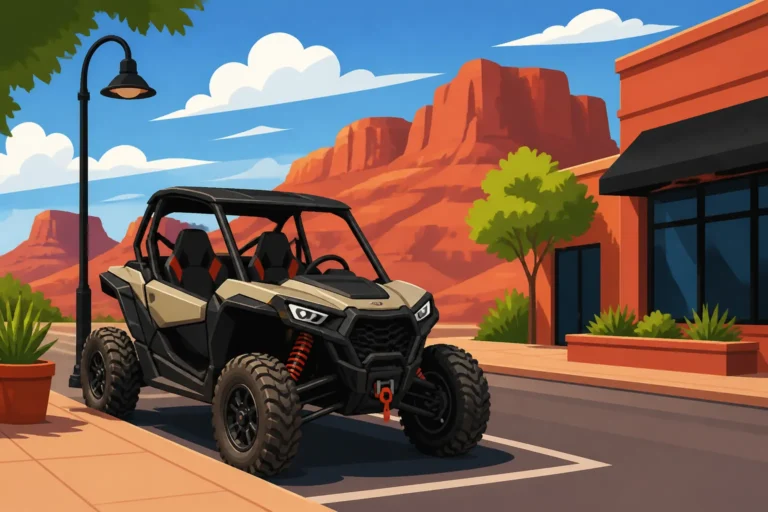
However, many riders want more. They want to connect trails, grab a burger in town without trailering, or simply enjoy the freedom of riding through scenic byways to get to their next adventure. For this, your OHV needs to shed its "off-highway only" label and gain street-legal status. This isn't just a simple add-on; it's a transformation that brings your machine under a completely different set of regulations—those governing vehicles on public paved roads. When you think about it, a car, a motorcycle, and a street-legal UTV all share the same public roads, so it makes sense that the state would treat them similarly in terms of licensing and fees for that privilege.
The Core Difference: Off-Highway vs. Street-Legal
Let’s talk about the philosophical difference, if you will. The standard OHV registration is all about supporting the off-road infrastructure. The fees collected go towards maintaining trails, creating new riding areas, educating riders, and even funding search and rescue efforts. It’s a dedicated fund to keep our playgrounds pristine and accessible. When you pay these fees, you're contributing directly to the health of Utah's OHV program. For a deeper dive into what these fees actually fund, you can check out [What the Utah OHV Registration Fee Pays For].
The street-legal registration, on the other hand, is about integrating your OHV into the broader vehicle ecosystem. When your UTV becomes street-legal, it's essentially treated like a very specialized car or motorcycle for road use. This means it needs to meet specific safety equipment requirements (like turn signals, horn, mirrors, and proper lighting, often found in a comprehensive SuperATV street-legal kit) and, crucially, it becomes part of the Department of Motor Vehicles' (DMV) traditional vehicle registration system. The fees for this aspect contribute to the general transportation fund, just like your car's registration, helping maintain roads, bridges, and other public infrastructure that all vehicles use. It's a different pot of money for a different purpose, hence the separate fees. This fundamental distinction is why Utah requires [Utah OHV Registration vs Street-Legal Registration] for machines that want to do both.
Breaking Down the Costs: What You're Really Paying For
So, you're looking at your wallet and wondering about these "two fees." It's important to understand that while they both lead to stickers and legal riding, they are for distinctly different purposes and support different state programs. It's not the state trying to nickel-and-dime you; it's a reflection of the multifaceted role your machine can play.
OHV Registration Fees and What They Support
The first set of fees you'll encounter is for your basic OHV registration. This is mandatory for almost all off-highway vehicles operating on public land in Utah, regardless of whether you plan to make it street-legal or not. These fees typically include:
- Registration Fee: A base fee to get your machine into the OHV system.
- Uniform Fee: This is often based on the value or age of your machine and is essentially an in-lieu-of-property-tax for off-highway vehicles. It's a way for counties to collect revenue from these machines without the complexity of traditional property taxes.
- Decal Fee: A smaller charge for the physical sticker itself.
- Non-Resident Permit (if applicable): If you're visiting from out of state and your home state doesn't have reciprocity with Utah, you'll pay an additional non-resident permit fee to ride on Utah's trails.
These funds, as mentioned earlier, are critical for the Utah Division of Parks and Recreation's OHV program. They pay for trail construction and maintenance, signage, mapping, law enforcement patrols on trails, and educational programs that keep riders safe and informed. So, when you pay this fee, you’re directly investing in the future of off-road riding in Utah. For a comprehensive overview, read [Utah OHV Registration Fees, Start to Finish].
Street-Legal Conversion and Associated Costs
The second set of "fees" comes into play when you decide to make your OHV street-legal. This isn't just a simple form at the DMV; it's a process that involves both equipment upgrades and a new registration class. The costs here can be broken down into:
- Equipment Upgrades: This is often the most significant initial investment. Your machine needs specific components to comply with Utah's street-legal requirements, such as a horn, mirrors on both sides, turn signals, brake lights, headlights, a license plate bracket with a light, and sometimes a windshield. Many riders opt for aftermarket kits, like those from SuperATV, that bundle these components for easier installation. This is where you might find yourself adding considerable dollars to your setup.
- Safety Inspection Fee: Before your OHV can be legally registered for street use, it must pass a safety inspection by a certified mechanic. This ensures all the required equipment is present and functioning correctly, confirming it's safe to share the road with other vehicles.
- Road-Use Registration Fees: Once your machine passes inspection and you have the necessary documentation, you’ll head to the DMV for the actual street-legal registration. This will involve standard vehicle registration fees, which are typically annual and similar to what you'd pay for a car. This fee might also include a uniform fee or other county-specific charges, but it's specifically for the privilege of operating on public roads.
It’s crucial to understand that these street-legal costs are in addition to your OHV registration. Think of it this way: your ATV still needs its OHV registration to hit the dirt trails, even if it can also drive to the grocery store. The street-legal status simply adds another layer of capability and, consequently, another layer of fees. If you're curious about the full picture, [Cost to Make a UTV Street Legal in Utah] offers a detailed breakdown.
The Annual Renewal Cycle for Both
One of the common points of confusion is the renewal cycle. Once you’ve gone through the initial setup, you'll typically be renewing both types of registration annually.
- OHV Registration Renewal: This is usually a straightforward process. You'll receive a renewal notice, often in the mail or via email, and you can pay the fees online, by mail, or in person at a DMV office. You'll then receive new OHV decals to affix to your machine. [Renewing Your Utah OHV Registration] has all the details.
- Street-Legal Registration Renewal: This will follow the standard vehicle registration renewal cycle, similar to your car. You’ll get a renewal notice, pay the associated fees, and receive your new license plate sticker. Unlike your OHV decal, your street-legal status doesn't typically require another physical inspection every year unless there's a specific change or issue.
It's vital to keep both current. An expired OHV registration can lead to fines on the trail, and an expired street-legal registration will net you a ticket on the road, just like any other vehicle. They are two separate entities, each requiring its own upkeep.
Navigating the Paperwork and Process
The thought of dealing with two different sets of paperwork for one machine might seem daunting, but it's a manageable process once you understand the steps. The key is knowing the order of operations and what to bring to each appointment.
The Order of Operations: OHV First, Then Street Legal
You can't make an unregistered OHV street-legal. The machine needs to be recognized by the state as an OHV first and foremost. So, the logical and legally required sequence is:
- Obtain your primary Utah OHV registration. This means you'll have either bought a new machine from a dealer who handles the initial registration, or if it's a private sale or out-of-state purchase, you'll need to go to the DMV or online to register it as an OHV. Make sure you have the proper title or bill of sale and any other required documentation. Once complete, you’ll have your OHV decal.
- Equip your machine for street-legal compliance. This is where you install all the necessary safety equipment: turn signals, horn, mirrors, license plate light, and so on. Many riders find that a purpose-built kit, like those offered by SuperATV, simplifies this step significantly, as they often include wiring harnesses and components designed for specific UTV models.
- Get a Utah safety inspection. Take your now-equipped OHV to a certified inspection station. They will check all the street-legal components to ensure they meet Utah's standards. If anything isn't quite right, they'll tell you what needs to be fixed before it can pass.
- Visit the DMV for street-legal conversion. With a passing inspection certificate and your existing OHV registration documentation, you can now apply for the street-legal registration and license plate. They will verify your OHV registration is current and then process the new street-legal registration, adding it to your vehicle record.
This structured approach ensures that at each step, you're building on a solid foundation, minimizing potential hiccups or wasted trips.
What to Expect at the DMV for Each Step
Dealing with the DMV can sometimes feel like a test of patience, but being prepared makes a world of difference.
For your initial OHV registration: You'll need your title (or MSO for a new machine), a bill of sale if it's a private purchase, and possibly a VIN inspection if it's an out-of-state or previously untitled machine. You'll pay the applicable OHV registration fees and uniform fees. They'll issue your registration card and decals right there, or mail them to you if processing online. Remember, some [Which Utah DMV Offices Handle OHV Paperwork] might be better equipped to handle OHV specific transactions.
For your street-legal registration: This typically occurs after you've already completed the OHV registration and passed the safety inspection. You'll bring your current OHV registration, the completed safety inspection certificate, and your driver's license. The DMV clerk will process the application, assigning your machine a standard license plate and issuing a new registration card that reflects both its OHV and street-legal status. You'll pay the annual road-use registration fees at this point. It’s a good idea to bring [What Paperwork Utah Riders Must Carry] for both registrations to ensure a smooth process. Sometimes you can get both the street plate and your new OHV decal in one visit if you time it right, a definite time-saver described in [Getting a Plate and Sticker in One Visit].
Maintaining Both Registrations Year After Year
Once you've successfully navigated the initial setup, maintaining your dual registration is mostly a matter of staying organized and on top of your renewal dates.
You'll receive separate renewal notices for your OHV registration and your street-legal vehicle registration. It's often easy to forget one or the other, especially if the dates aren't perfectly synchronized. Consider setting calendar reminders or opting for email notifications if available.
When you renew your OHV registration, you'll get new decals. These need to be displayed prominently, typically on the front and rear of the machine, or on the left rear for side-by-sides. If your machine is also street-legal, you'll continue to keep that OHV decal visible, alongside your license plate. Don't worry, the state expects you to keep both – [Keeping the OHV Decal After Going Street Legal] explains this further.
For your street-legal registration, you'll receive a new license plate sticker annually, which goes on your rear license plate. The good news is, as long as your machine remains in compliance and you keep up with renewals, you typically won't need annual safety inspections for the street-legal part, unless a state law changes or your vehicle is involved in an accident that requires re-inspection.
Here’s a quick overview of the dual registration components:
| Feature | OHV Registration | Street-Legal Registration (Additional) |
|---|---|---|
| Purpose | Legal access to designated OHV trails/areas | Legal access to public paved roads and highways |
| Primary Fee Types | Base registration, uniform fee, decal fee | Road-use registration, safety inspection fee |
| Key Output | OHV Decals, OHV Registration Card | License Plate, License Plate Sticker, Registration Card |
| Governing Authority | Utah Division of Parks and Recreation | Utah Department of Motor Vehicles |
| Required Equipment | Spark arrestor, working brakes, muffler (basic) | Horn, mirrors, turn signals, brake lights, plate light, etc. |
| Renewal Cycle | Annual (typically) | Annual (typically, with new plate sticker) |
| Funds Support | Trail maintenance, OHV education, law enforcement | General transportation infrastructure, road upkeep |
The Benefits and Trade-offs of Dual Registration
Okay, so we've established that it's two sets of fees for different purposes. Now, let's look at why riders go through this process, and if it's truly worth the extra effort and expense. Most riders who've experienced the freedom of a street-legal UTV will tell you it's a game-changer for their riding adventures.
The Unbeatable Freedom of Street-Legal Access
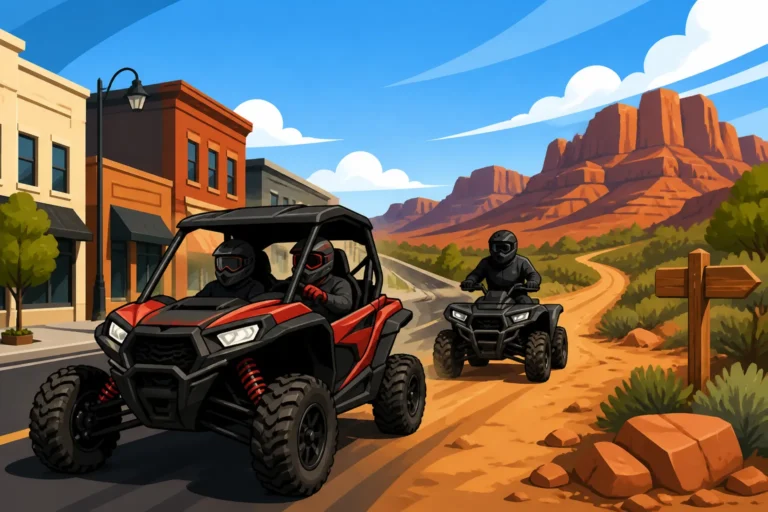
Imagine this: You're at your campsite in Moab or near Sand Hollow. Instead of loading your UTV onto a trailer, strapping it down, driving it to the trailhead, unloading, parking, and then reversing the whole process at the end of the day – you just hop in your side-by-side, turn the key, and drive right from your campsite onto the road. You cruise through town, maybe stop for gas or a quick bite, and then turn off onto the designated route that leads directly to the trailhead. That, my friends, is the freedom that dual registration offers.
This capability significantly enhances your riding experience. It allows you to:
- Connect Trails: Seamlessly transition between different trail systems without having to trailer your machine. Many of Utah's vast trail networks, like the Paiute Trail, have segments that require road use to link one section to another.
- Access Amenities: Drive your UTV directly to restaurants, grocery stores, or fuel stations in trail-friendly towns. This is a huge convenience, especially after a long day on the trails.
- Save Time and Hassle: No more time-consuming loading and unloading. You spend more time riding and less time messing with trailers. For folks who live near trailheads or travel extensively, this is a major win.
- Explore More: Open up new possibilities for multi-day adventures where you can ride point-to-point, staying in different towns along the way, all from the seat of your UTV.
The convenience and expanded access truly transform how you experience Utah's outdoor playground.
Weighing the Extra Expense Against Convenience
Of course, this freedom isn't free. The additional equipment costs, the inspection fee, and the ongoing street-legal registration fees do add up. It’s a trade-off that each rider needs to evaluate based on their individual riding habits and budget.
Consider these points when making your decision:
- How often will you use the street-legal capability? If you only ride on private land or exclusively at a single, contained OHV park where you never need to touch public roads, then the extra investment might not be worth it. However, if you're regularly exploring vast trail systems, staying in trail towns, or connecting different riding areas, the convenience factor quickly outweighs the costs.
- What are the alternative costs? If you don't make your machine street-legal but still want to access different trailheads, you'll be spending money on fuel for your tow vehicle, wear and tear on your trailer, and the time commitment of loading and unloading. For many, the street-legal fees effectively replace or reduce these other expenses.
- Long-term value: A street-legal conversion, especially one using quality components like those from SuperATV, can add value to your machine if you ever decide to sell it. Many buyers actively seek out machines that are already set up for street use.
Ultimately, paying what feels like two registration fees on one machine in Utah is simply the cost of doing business for maximum versatility. It's the state's way of ensuring that both the off-road trail system and the public road network are properly funded and that your machine meets the appropriate safety standards for wherever you choose to ride it. For most avid riders, the freedom and convenience gained from being able to transition seamlessly between trails and towns are priceless, making the dual investment well worth every penny.
Disclaimer
This article is for general informational purposes only and does not constitute professional advice. Laws, prices and regulations vary by location and change over time. Consult a qualified professional for guidance on your specific situation.