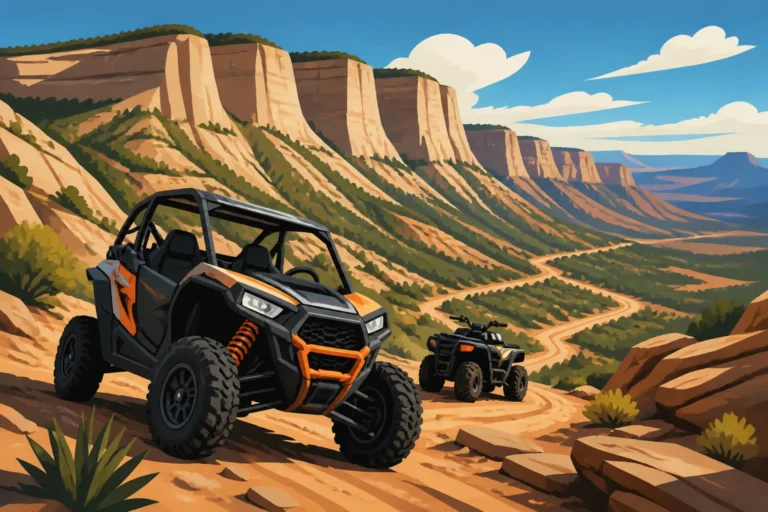
Utah’s Sand Mountain and Its Red Sand
The red dunes at Sand Mountain can look inviting from a distance, but soft sand, steep faces, changing wind conditions, and busy staging areas can make a ride more challenging than expected. This guide explains what the terrain is like, how to prepare your ATV or UTV, what to consider when choosing a route, and how to make a safer day near Hurricane and St. George.
What to expect at Sand Mountain
The red sand and surrounding terrain
Sand Mountain is known for its vivid red-orange dunes and broad sandy riding areas in southern Utah. The color comes from the region’s iron-rich soils and rock. It is striking in person, but it can also make it harder to judge the shape and steepness of a dune, especially when light is flat or dust is hanging in the air.
The riding experience is not just a matter of pointing your machine toward the biggest slope. Sand can be firm in one section and loose in another, and dune shapes shift over time. You may encounter gradual bowls, rolling ridges, sharper faces, and areas where sand meets rock or established routes. That mix is part of the appeal, but it means riders should keep an eye on the surface immediately ahead rather than assuming the terrain is consistent.
The name Sand Mountain is sometimes used casually alongside Sand Hollow because the riding areas and destinations are closely associated in trip planning. Still, the precise boundary between state park property, public land, and designated riding areas matters. Don’t assume every visible dune or connecting track is open to OHV use. Check current maps and posted signs before riding beyond a familiar staging area.
Where it is and how the area fits together
Sand Mountain is in Washington County, near Hurricane and within reach of St. George. The broader area attracts riders who may also visit Sand Hollow State Park, nearby desert routes, and local trail towns. If you’re staying in Hurricane or St. George, it can be tempting to treat the entire landscape as one continuous riding zone. In reality, routes, access points, land managers, and fees can differ from one section to another.
Before you tow out, identify where you plan to unload and which area you intend to ride. Check the route from your lodging or campground, not just the riding destination itself: a road that looks like a convenient connector on a phone screen may not be open to OHVs. A map can also help you distinguish riding routes from roads that are for regular traffic or lead to private property.
For an overview of how the surrounding riding options fit together, read [Sand Hollow and Sand Mountain: A Rider's Guide]. If you’re interested in a particular connection between the park and the dunes, [Sand Hollow State Park's Tunnel to the Dunes] can help you plan your research. Verify the route and access rules before you set off, since conditions and closures can change.
Choosing a ride that matches your group
The best route is not automatically the one that looks most dramatic. A first-time sand rider, a family with young passengers, and a group of experienced dune riders may need very different plans, even if they are all driving similar machines. Think about the least experienced person in the group and choose a ride that gives them room to practice without pressure.
For newer riders, the goal can be as simple as learning how the machine responds on sand, practicing smooth turns, and riding manageable terrain near a known route. More experienced riders may want longer loops or steeper climbs, but they still need to consider visibility, traffic, fuel, and the skill level of everyone joining them. Dunes can conceal oncoming machines, so a route that feels easy when it is quiet may become more demanding when the area is busy.
If your group is deciding between a dune day and other nearby options, compare the terrain and riding style before committing. [Utah's Sand Dune Riding Areas] gives you another way to think through the state’s dune destinations, while [Choosing Between Moab and Sand Hollow] can help if your trip is still flexible.
Preparing your ATV or UTV for sand
Tires, traction, and machine setup
Soft sand asks different things of a machine than packed dirt or slickrock. Tires can sink, wheel spin can build quickly, and sudden steering corrections may cause the machine to bog down or slide. Before the trip, check your owner’s guidance for tire pressure and setup rather than copying a number from someone with a different tire, load, or vehicle. The right pressure depends on the machine and equipment, and lowering pressure too far can create its own problems.
Inspect tires for damage, check that wheels and lug nuts are secure, and make sure the machine is in good working order. Sand can hide sharp objects and rough transitions, and a small issue that seems manageable at home can become a bigger headache when you’re far from the staging area. UTV drivers should also check seat belts, doors or nets, and passenger restraints before each ride.
A machine built for utility work can ride sand, but its weight, tires, gearing, and load may affect how it performs. Avoid filling cargo space with unnecessary gear, and don’t assume that adding horsepower solves every traction problem. Smooth throttle, steady momentum, and choosing an appropriate line often matter more than an aggressive launch.
Flags, visibility, and protective gear
A whip flag is important in dune country because rises and ridges can block your view of other riders. Follow the posted requirements for the area and make sure the flag is secure, visible, and in good condition. A flag doesn’t make it safe to crest a dune blindly: slow down, approach with caution, and avoid crossing a ridge where you can’t see the other side.
Wear a helmet and eye protection suited to the dust and sand. Goggles can help keep grit out of your eyes, while gloves improve grip and help protect hands from abrasion. Long sleeves, sturdy footwear, and clothing that covers exposed skin can make a dusty day more comfortable. Carry extra eye protection if you have it; a lens coated in fine dust can make it harder to see ruts and traffic.
Passengers need to be prepared, too. Explain how to hold on, when to keep hands and arms inside the machine, and why they should stay buckled or seated as designed. Review [Whip Flag Rules at Sand Hollow] as part of your pre-trip checklist, and make sure everyone in the group understands that visibility and safe spacing are shared responsibilities.
Packing water, tools, and recovery gear
Southern Utah’s dry air and sun can catch visitors off guard, especially if the day includes long stretches outside the machine. Bring more drinking water than you think you’ll need, and make it easy to reach without unloading everything. Pack food, sun protection, and any personal medication your group may need. A cooler is useful only if it fits securely and does not interfere with passenger space or safety equipment.
Carry basic tools and supplies that match your machine and your ability to use them. That might include a tire repair kit, a suitable inflation method, a first-aid kit, and recovery equipment appropriate for your vehicle. Recovery gear is not a substitute for experience: a poorly chosen pull point, a sudden tug, or a person standing in the wrong place can turn a stuck machine into a serious hazard. If nobody in the group knows how to use a tool safely, learn before the trip or leave it out.
Plan for the possibility of a delayed return. Let someone know where you intend to ride and when you expect to be back, and keep your phone or navigation device charged. For a more detailed packing checklist, see [Water to Pack for a Summer Utah Ride] and [What to Carry on a Utah Day Ride].
Riding sand more confidently and safely
Reading dunes and choosing a line
A dune can look smooth from below while hiding a drop, a rut, or a machine on the opposite side. Before climbing, look for a clear route and avoid cresting a blind ridge at speed. If you can’t see where your line goes, choose another approach or stop to assess it. Never assume that another rider has checked the far side for you.
Build speed gradually and keep your movements smooth. Abrupt throttle changes can dig the tires in, while sharp turns on a slope may upset the machine or send it sliding. If the machine starts to bog down, don’t keep spinning the tires in the same spot; that can bury it deeper and make recovery more difficult. Pause, assess your options, and ask the group for help from a safe position.
Spacing matters. Leave room between machines so dust does not block the next rider’s view and so nobody is forced to react suddenly if the vehicle ahead slows or stops. When you meet another machine near a narrow ridge or on a slope, give each other time and space to pass safely rather than trying to squeeze by.
Staying oriented in a changing landscape
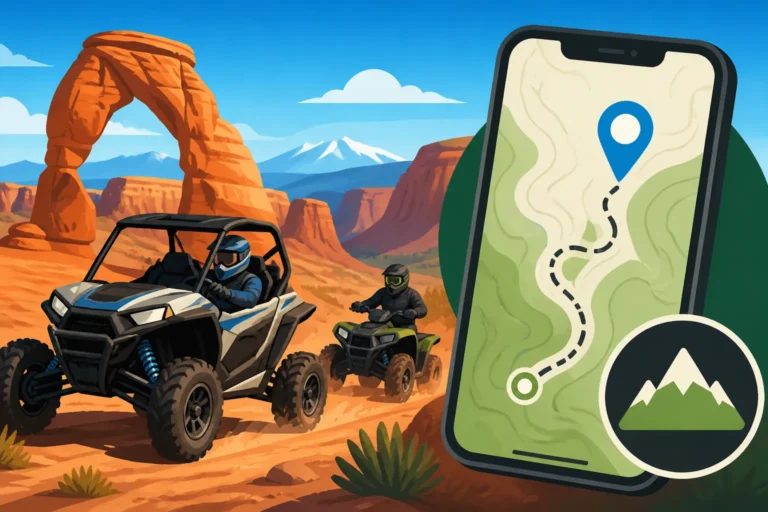
Dunes can make a familiar route feel unfamiliar. Wind can soften tracks, traffic can create new lines, and dust can reduce the visibility of landmarks. A phone map is useful, but don’t depend on a single device or a map display that requires a strong signal. Download maps for offline use before leaving reliable service, and carry a backup plan such as a second device or a paper map.
Navigation tools such as onX Offroad can help you review routes and plan ahead, but map information should be treated as one part of your decision-making. Check the map against signs, closures, and land boundaries on the ground. If a route is marked closed or the way forward is unclear, don’t ride around a barrier just because a digital line appears to continue.
Before leaving the staging area, agree on a simple group plan: the intended route, a turnaround point, and what to do if riders become separated. Keep the group together at junctions and wait for the last machine before continuing. For help with map-reading basics, see [Utah OHV Trail Maps and How to Read Them] and [Downloading Utah Trail Maps for Offline Use].
Recovering from a stuck or stalled machine
Getting stuck is common enough in sand that it should be part of your planning, not a surprise you hope to avoid. If a machine loses momentum, stop before repeated wheel spin turns a small problem into a deep hole. Ask passengers to remain seated or move only when it is safe, and keep bystanders clear of tires, straps, and moving parts.
Choose recovery methods based on the machine, the terrain, and the equipment you have. Use only approved recovery points, keep people out of the line of pull, and avoid standing near a tensioned strap or winch cable. Don’t connect a recovery strap to a bumper or component that is not designed for pulling. If you are unsure how to recover the machine safely, pause and seek help rather than improvising.
A recovery plan should also account for the group’s experience. A capable driver with proper equipment may be able to handle a routine sand recovery, while a remote breakdown or difficult slope may require outside assistance. Give yourself enough time and supplies to deal with a delay. Don’t split up to look for help without agreeing on a safe plan and a reliable way to communicate.
Planning a practical Sand Mountain visit
Timing, weather, and busy periods
Heat is a major factor in southern Utah, particularly for visitors who are used to cooler weather. Plan breaks and water stops before anyone feels unwell, and avoid treating the hottest part of the day as an endurance test. Cooler portions of the day can be more comfortable, but visibility, temperature, and traffic still need attention.
Wind can affect both comfort and visibility. Blowing sand and dust may make it harder to see other riders, while recent weather can change the condition of routes and access areas. If conditions make it difficult to see or communicate, shorten the ride or wait rather than pushing ahead to keep a schedule.
The area may be busier during holidays, school breaks, and popular travel periods. Crowds can mean more dust, more machines near staging areas, and less room to make a last-minute route choice. For a quieter experience, consider a less popular day when your schedule allows, and arrive with a clear plan for where to unload. [Sand Hollow's Busiest Days for Riders] can help you think through crowd planning before you tow.
Access, boundaries, and fees
Access rules depend on where you ride and which land manager oversees the area. Do not assume that a day-use fee, park pass, vehicle registration, or permit for one part of the region covers every place you may visit. Confirm what applies to the specific staging area and routes in your plan, and follow signs at entrances and junctions.
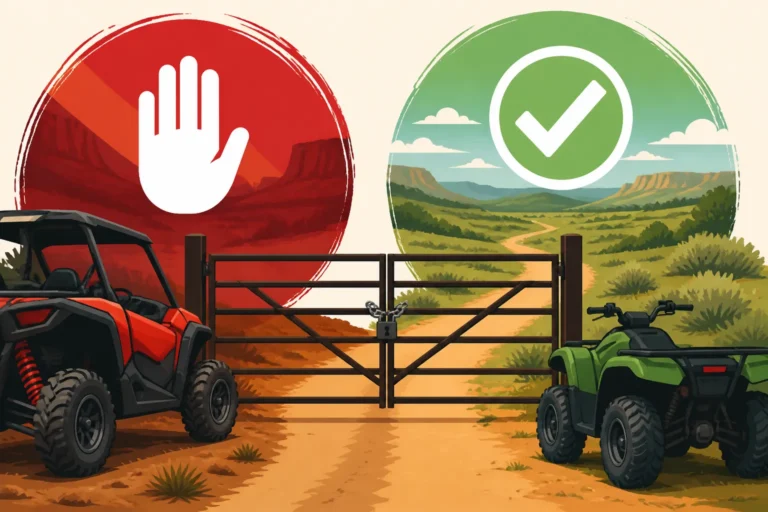
Keep your machine on routes or riding areas that are open to OHVs. A visible track is not automatically an authorized route, and cutting across vegetation or around a closed gate can damage the landscape and create problems for other riders. If you see conflicting map information or an unclear boundary, stop and check with the relevant land manager rather than guessing.
For route planning near the dunes, [West Rim and Sand Dune Way at Sand Hollow] may be useful background reading. If you are trying to understand access options in more detail, [Free Ways Into the Sand Mountain OHV Area] is another relevant topic to review. Confirm entry requirements and local conditions before leaving home, since access and fees can vary by location and change.
A simple day-ride checklist
A short checklist can prevent the familiar trailhead scramble: someone can’t find the flag, a passenger has no goggles, or the group realizes the route was never downloaded. Handle the basics before departure and do one last check at the staging area.
| Before the trip | At the staging area | During the ride |
|---|---|---|
| Check access rules, maps, and closures | Inspect tires, restraints, and safety gear | Keep a safe distance between machines |
| Download maps for offline use | Secure water, tools, and recovery gear | Stop before blind crests and unclear routes |
| Confirm machine condition and fuel plan | Review the route and regroup points | Turn back if visibility or conditions worsen |
| Tell someone your plan and return time | Make sure flags and protective gear are ready | Keep the group together at junctions |
Before unloading, confirm that every rider understands the route and the group’s regroup plan. Keep the first loop modest if anyone is new to sand, and give riders permission to turn around without feeling they are holding everyone back. A relaxed day with room to learn is usually more enjoyable than an ambitious route that pushes the least experienced person beyond their comfort level.
Sand Mountain rewards preparation. Know which area you’re entering, choose terrain that suits your group, and treat changing sand, dust, and visibility as real parts of the ride. With a well-maintained machine, a clear route plan, enough water, and sensible riding habits, you can spend more time enjoying the red dunes and less time sorting out avoidable problems.
Disclaimer
This article is for general informational purposes only and does not constitute professional advice. Laws, prices and regulations vary by location and change over time. Consult a qualified professional for guidance on your specific situation.