Riding Utah’s West Desert in Cool Weather
A cool-weather ride across Utah’s West Desert can be a welcome break from summer heat, but chilly starts, wind, muddy ground, and long stretches without services make preparation matter. This guide covers when to go, how to choose a route, what to pack, and how to ride responsibly around areas such as Knolls and Five Mile Pass.
Choose the right time and riding area
What cool weather feels like in the West Desert
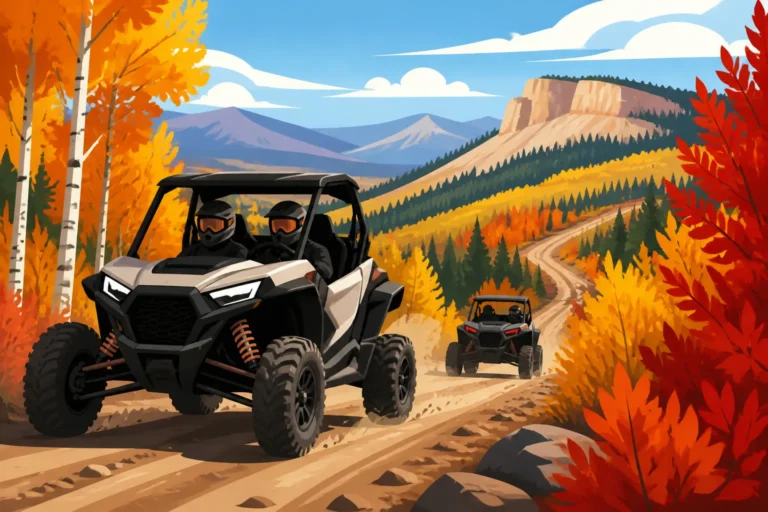
The West Desert is not one uniform riding area. Conditions can shift with elevation, exposure, and recent weather, and a sunny afternoon may follow a cold, windy morning. In spring and fall, plan for a wide temperature swing: the air may feel comfortable once you are moving, then noticeably colder when you stop or ride into a headwind.
Wind can be as tiring as low temperatures. It can chill exposed skin, blow dust across open ground, and make it harder to hear other riders. Check the forecast for the specific area and the full day—not just the temperature in the nearest town. If rain or snow has recently fallen, find out whether your planned routes are muddy, snow-covered, or closed before you tow out.
Cool weather does not automatically mean easier riding. A dry, firm route may be pleasant, while a muddy track can quickly become rutted or difficult to turn around on. If the ground is soft, choose a conservative route and be willing to shorten the ride. [Riding Utah Trails After a Storm] offers useful context for deciding when it is better to wait for conditions to improve.
Picking a West Desert destination
Knolls OHV Area is a recognizable option in the western part of the state, while Five Mile Pass is another popular choice for riders looking for desert terrain within reach of Utah’s more populated areas. They are not interchangeable: the landscape, route choices, access points, and day’s conditions can differ. Check current land-manager information for your destination and make sure the route you plan to ride is open to your type of machine.
Think about your group’s experience, daylight, and appetite for remote riding before choosing a destination. A newer rider may prefer a shorter outing with straightforward ways to return to the staging area. A group that knows the area can plan a longer loop, but should still leave room for navigation mistakes, repairs, or a slower-than-expected return. The guides to [Knolls OHV Area in Utah's West Desert] and [Five Mile Pass in Utah County] can help you compare the character of these areas before deciding.
| Riding consideration | What to check before leaving | Why it matters in cool weather |
|---|---|---|
| Recent precipitation | Rain, snow, muddy sections, and local closures | Soft ground can become rutted or difficult to cross |
| Wind and temperature | Forecast for the riding area through the afternoon | Wind and a long stop can make a mild day feel cold |
| Daylight | Sunrise, sunset, and the time needed to return | Cold-weather gear and slower conditions can stretch a ride |
| Route access | Open routes, land boundaries, and staging access | A familiar route may be closed or unsuitable after weather |
| Group ability | Rider experience, machine range, and navigation skills | A shorter, easier route is safer for a mixed-ability group |
Plan a route that fits the day
Check maps, access, and closures
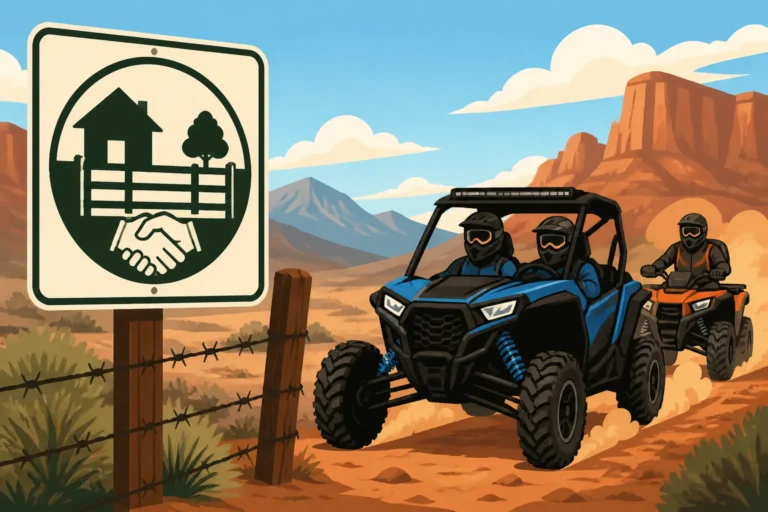
Before you load the machines, identify your staging area, intended route, turnaround point, and a backup option. Public-land routes can pass near private property, restricted areas, or land with separate rules. Stay on routes designated for motorized use, respect signs and gates, and do not assume that an old track visible on a map is currently open.
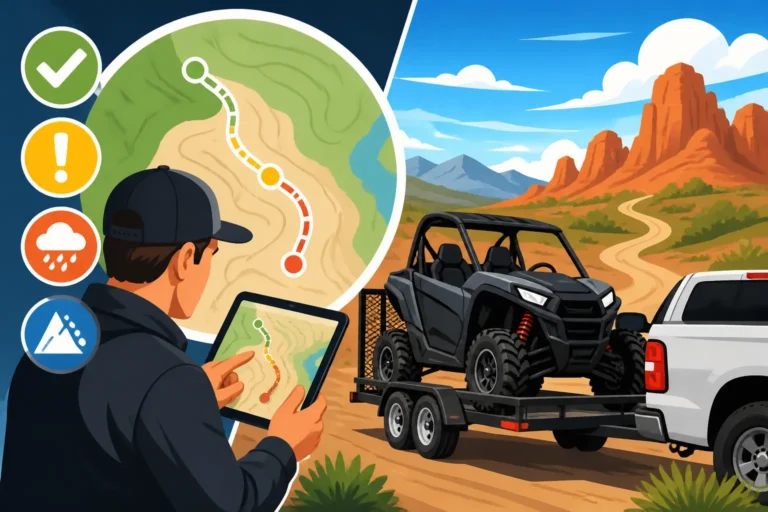
A mapping app such as onX Offroad can be useful when comparing routes and checking your position, but no single map should replace land-manager notices or signs on the ground. Download maps for offline use before leaving reliable service, and make sure someone in your group knows how to read them. If you use onX Offroad, familiarize yourself with the map and route information before the ride rather than trying to learn the interface in the cold at a trail junction. For more guidance, see [Utah OHV Trail Maps and How to Read Them] and [Downloading Utah Trail Maps for Offline Use].
Cell service can be inconsistent in remote desert areas. Save the trailhead location and key turns, carry a paper map or another backup, and tell someone who is not riding where you plan to go and when you expect to return. A route that looks short on a screen may take longer once you account for terrain, navigation checks, and stops to warm up.
Match the ride to daylight and group experience
Work backward from sunset when setting your turnaround time. The last part of a ride can feel much colder once the sun drops, and an unexpected flat tire or wrong turn can consume the daylight you expected to have in reserve. Keep the planned loop modest if the group includes first-time riders, children, or anyone unfamiliar with the area.
Agree on a pace and regrouping plan before you start. Decide what to do if riders lose sight of one another, and choose clear places to stop rather than letting faster riders disappear over the next rise. If conditions worsen, turn back together. [What to Carry on a Utah Day Ride] can help you build a practical checklist, and [Checking Utah Trail Conditions Before You Tow] is a useful reminder to verify conditions close to departure.
Prepare your machine, clothing, and safety gear
Dress for wind, stops, and changing temperatures
Wear layers that let you adjust without getting chilled. A moisture-managing base layer, an insulating layer, and a wind-resistant outer layer are more adaptable than one bulky garment. Bring gloves that keep your hands warm while still allowing you to operate the controls. A neck covering, warm hat for stops, and spare dry socks can make a meaningful difference if the day turns colder or damp.
Protect your eyes and face from wind and dust. Goggles or suitable eye protection can help when the group is moving across exposed ground, while a face covering can make a windy ride more comfortable. Keep a dry layer in a sealed bag so it is available if your clothing becomes wet. Even on a cool day, drink water regularly; concentrating on warmth can make it easy to forget hydration.
Inspect the machine and pack for a delay
Check your ATV or UTV before loading it, including tires, brakes, lights, fuel, battery, and basic controls. Cold conditions can make a weak battery more noticeable, and a machine that starts at home may not behave the same after a long, cold stop. Carry the tools and repair items appropriate to your vehicle, along with a first-aid kit, food, water, and a reliable way to contact help. The right recovery gear depends on the terrain and your group’s experience; learn how to use it before you need it.
Do not rely on a single machine to carry the whole group’s essential supplies. Spread out shared items where practical, and keep emergency layers, water, and navigation tools accessible rather than buried beneath cargo. [Recovery Gear for Utah Sand and Slickrock] can help you think through recovery needs, while [Satellite Messengers for Remote Utah Rides] covers an option for trips where ordinary phone service may not be dependable.
Ride responsibly and handle changing conditions
Protect the route and respect land boundaries
Stay on designated routes and avoid creating new tracks around mud, snow, or obstacles. Going around a soft section can widen damage and create confusing parallel paths. If a route is too wet or blocked, turn around rather than forcing a machine through it. Follow posted closures and respect private land, gates, and restricted boundaries; in the West Desert, an open-looking landscape does not mean every track is available for riding.
Pack out trash, keep noise considerate, and give other trail users room. Slow down near people, animals, and vehicles, and avoid kicking up dust when passing. Before heading out, make sure your machine and paperwork meet the rules that apply to your situation. Utah residents and visitors may have different registration or permit requirements, so check [Visiting Utah With an Out-of-State Machine] and [Utah OHV Rules for Visiting Families] if your group includes nonresidents or younger riders.
Know when to shorten or cancel the ride
Turn back if visibility drops, wind becomes uncomfortable, a route turns slick, or the group is losing daylight faster than expected. A planned destination is not worth risking a cold, exhausted ride back in the dark. If one rider is struggling, adjust the pace and route for the whole group instead of splitting up. You can always return on a better day.
After the ride, check the machines for mud or damage and note any route problems while they are fresh in your mind. If conditions changed substantially from the forecast, use that experience to plan a more conservative start time or route next time. With flexible plans, reliable navigation, and warm gear, riding Utah’s West Desert in cool weather can be a rewarding way to enjoy the open landscape without the intensity of summer heat.
Disclaimer
This article is for general informational purposes only and does not constitute professional advice. Laws, prices and regulations vary by location and change over time. Consult a qualified professional for guidance on your specific situation.