Sand Flats Recreation Area Fees and Camping
Sand Flats Recreation Area is close enough to Moab to feel convenient, but its campsites, trail access and fee rules can be confusing when you arrive with a trailer or a full weekend planned. This guide explains how to think through day-use fees, camping, busy periods and trail choices so you can plan a smoother visit and avoid relying on assumptions at the entrance.
Understanding Sand Flats fees and access
What the entrance fee covers
Sand Flats Recreation Area sits just east of Moab, Utah, and is a popular starting point for desert riding and other outdoor recreation. Visitors should expect a fee for entering the area, with the amount and available payment options subject to change. Check the current Sand Flats information before leaving town, and read posted instructions when you arrive. Don’t assume that a pass for another nearby recreation site automatically covers Sand Flats.
A fee for entering the recreation area is not necessarily the same thing as a campsite charge. If you intend to camp, confirm which charges apply to your visit and how payment works for both day use and overnight stays. This is especially worth checking if different people in your group are arriving separately, or if you expect to come and go during the day.
It can help to budget for the visit as a few separate pieces: access, camping if needed, fuel, food and any other recreation expenses. For a broader look at access charges in the area, see [Sand Flats Fees Above Moab, Utah]. If you are comparing several destinations, [Day-Use Fees at Utah OHV Destinations] can help you remember that a trail-area entrance fee and an OHV registration or permit are different things.
Confirm the details before you drive in
A short check before departure can prevent a frustrating conversation at the entrance. Look for current details on access fees, payment methods, camping availability, facility conditions and any temporary restrictions. If you are staying in Moab, this is easy to do before you load the trailer; if you are already on the road, make a point of checking before you reach the recreation area.
Do not plan around a fee amount or payment method you heard about from a friend several seasons ago. Rules and arrangements can change, and older trip reports may describe conditions that no longer apply. Carry a backup way to pay when practical, and avoid assuming that weak cell service at the entrance will let you look everything up at the last moment.
It is also useful to separate recreation-area access from the rules governing your machine. An entrance payment does not by itself establish that your ATV or UTV is properly registered, that you have any permits you need, or that every route is open to your vehicle. Review [What Utah Riders Must Carry on Public Land] and [Utah Trail Maps and How to Read Them] as part of your pre-trip check.
| Planning question | What to verify before you go |
|---|---|
| Day visit | Current entrance fee, payment method and access conditions |
| Overnight stay | Whether camping is available, how camping is paid for and which facilities are open |
| Trail choice | Route status, vehicle access, difficulty and current restrictions |
| Trailer arrival | Parking and unloading options for your vehicle and trailer |
| Group visit | Whether everyone is arriving together and how each party should handle access |
| Longer Utah trip | Separate registration, permit or destination fees that may apply elsewhere |
Camping at Sand Flats
Know what kind of campsite to expect
Camping at Sand Flats is a practical option if you want to be near the riding area rather than driving back into Moab after a long day. Treat it as a rustic recreation-area campground, not a full-service RV park. Before you commit, check the current campground information for the facilities, vehicle arrangements and rules that apply to the sites. Services and site features should never be assumed based on a different campground you have used nearby.
A simple campsite can be a good fit for riders who bring their own water, food, lighting and basic supplies. It may be less convenient for visitors expecting hookups, extensive services or a quick resupply run from their site. Think through your group’s needs before choosing to camp: a family with young children, a large trailer and a need for frequent amenities may plan differently from two experienced riders sleeping in a tent.
Also consider how your camp setup will work after dark. Arriving late, backing a trailer into an unfamiliar site, and sorting out gear while tired can turn a straightforward trip into a stressful one. If possible, arrive with enough daylight to get settled, keep essential items easy to reach, and avoid spreading equipment across the campsite where other visitors need room.
Plan for availability rather than counting on a particular site
Camping arrangements can be especially important during busy Moab travel periods. Check whether sites are reservable or handled another way, and make a backup plan before you leave home. If the campground is full or your preferred site is not available, you do not want to be searching for an alternative after a long drive with children, pets or a loaded trailer.
A useful plan includes a second place to stay and a decision point. For example, you might agree that if Sand Flats camping is unavailable when you arrive, you will head to a confirmed campground or lodging option rather than spending the evening circling the area. The guide [Sand Flats Camping Without a Reservation] is a helpful companion when you are trying to understand the practical considerations of arriving without a booked site.
Respect the campground’s posted boundaries and instructions. Keep vehicles and trailers where they are permitted, use designated facilities as directed, and leave the site ready for the next visitor. If you are traveling with a group, talk through quiet hours, cooking and shared equipment before arrival. A little coordination helps everyone settle in without the campsite becoming a cluttered staging area.
Choosing trails and matching them to your group
Know what your machine and experience are suited for
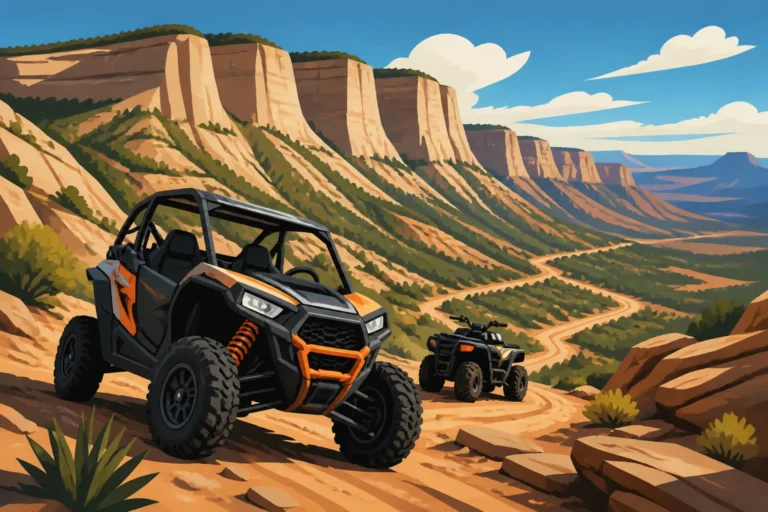
Sand Flats is strongly associated with slickrock riding, but a well-known trail is not automatically the right trail for every driver, passenger or vehicle. Surface, steepness, ledges, exposure, route-finding and driver experience all matter. A trail that feels manageable to a confident local rider can feel intimidating to a first-time visitor who is unfamiliar with slickrock or driving a side-by-side.
Before choosing a route, consider the least experienced person in your group. Ask whether they have driven comparable terrain, whether they are comfortable with steep climbs and descents, and whether passengers are prepared for a bumpy day. For more context, read [Hell's Revenge, Utah's Signature Slickrock] and [Fins and Things for First-Time Slickrock]. They can help you understand why researching the character of a route matters more than choosing one because it is famous.
Your vehicle also shapes the day. Width, turning room, ground clearance, tires, drivetrain and passenger load can affect how a route feels. Do not assume that a trail is suitable simply because another model of UTV completed it. Check current route information, know your machine’s limits, and be willing to choose an easier outing or turn around if conditions or confidence change.
Separate motorized routes from other recreation uses
Sand Flats attracts more than ATV and UTV riders. The area is also known for mountain biking and other outdoor activities, so route designations matter. Stay on routes where your vehicle is allowed, follow signs and respect closures. A track visible on a phone or map is not proof that it is open to motorized use.
Plan your route before setting off, and share the plan with everyone in the group. Mapping tools such as onX Offroad can be useful for reviewing route options and keeping track of your location, but digital mapping should support—not replace—posted signs and current official information. Download maps for offline use before entering areas where cell coverage may be unreliable.
For a trip with mixed interests, coordinate activities instead of expecting everyone to share the same route. One person may want a technical ride while another would rather hike or mountain bike. Agree on meeting points and times, and be realistic about how long it takes to travel between them. [Moab Trails That Fit a Half Day] can help with choosing a ride that fits a shorter schedule, while [Trail Closures Utah Riders Should Check First] is a reminder to verify access before you leave camp.
Arriving with a trailer and organizing your ride day
Make the approach and parking part of the plan
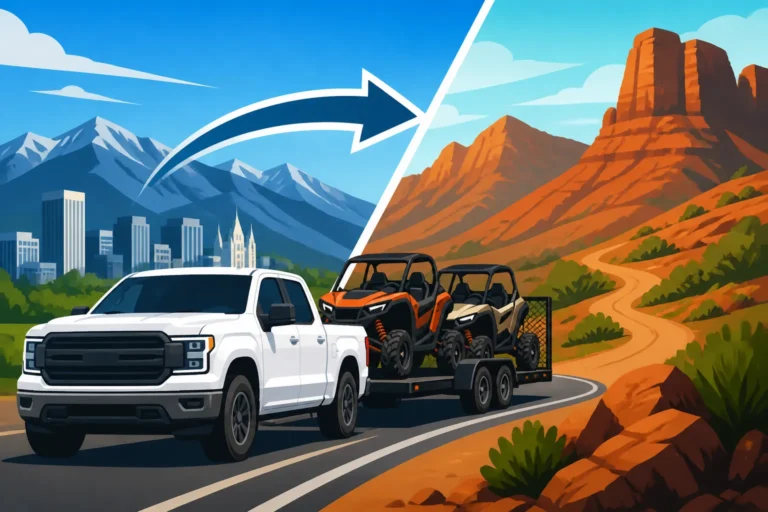
Driving through Moab with a trailer and finding a place to unload can take more time than expected, particularly when traffic and visitor activity are heavy. Think about your trailer’s length, turning radius and the space needed to unload safely. Avoid treating a roadside shoulder or an unmarked area as a convenient staging spot unless signs and conditions make it clear that stopping is allowed.
If you are staying elsewhere, decide whether you will tow to Sand Flats each day or leave the trailer at an appropriate location and travel another way. If you are camping at the recreation area, confirm how vehicles and trailers are meant to be arranged at the site. [Where to Stage a Trailer in Moab] and [Utah Trailhead Parking That Fits a Trailer] are useful reads for working through these logistics before you arrive.
Build extra time into your schedule for the entrance, parking, unloading and basic checks. A group that plans to start riding immediately after arrival may end up feeling rushed while trying to secure gear, sort helmets and confirm the route. Give yourself a buffer, particularly if you are new to the area or need to get oriented before driving.
Carry the basics and set expectations
A day ride goes more smoothly when essential items are packed where you can reach them. Bring water, sun protection, food, a first-aid kit, tools appropriate to your machine and any recovery equipment your route may call for. Check fuel before setting out and carry only what you can store safely. Dust, heat, changing weather and rough terrain can make an apparently short ride more demanding than expected.
Agree on a few simple group rules before you leave. Decide who leads, who follows, what to do if someone gets separated, and where you will stop to regroup. Make sure passengers understand that they should stay seated and follow the driver’s instructions. If anyone in the group is nervous, discuss the route honestly rather than promising that a challenging section will be easy.
An offline map can be especially helpful if the group’s phones do not maintain a signal. onX Offroad may help with route planning and location awareness, but bring a backup navigation plan and keep an eye on physical signs. For a broader packing list, see [What to Carry on a Utah Day Ride]. The goal is not to carry every possible item; it is to bring the essentials that fit your machine, group and route.
Safety, etiquette and low-impact visits
Ride within your comfort zone
Slickrock and desert routes can make it difficult to judge how a slope or ledge will feel until you reach it. Stop in a safe place to assess unfamiliar terrain, and do not let pressure from a faster group push you into a line you are not comfortable riding. A calm pause is better than committing to an obstacle without knowing how you will handle it.
Use the right protective gear and make sure passengers are properly prepared. Helmets, eye protection, suitable clothing and secure footwear help make a ride more comfortable and safer. Keep an eye on heat and hydration, especially when the day is warm or the ride takes longer than expected. If a driver or passenger becomes tired, overheated or uneasy, adjust the plan rather than treating the original schedule as fixed.
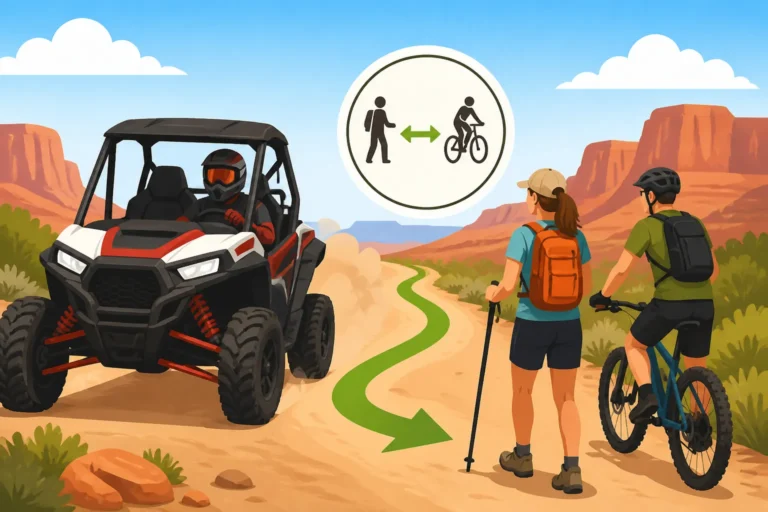
Be considerate around other recreationists. Slow down when appropriate, give people space, minimize dust where you can, and yield according to posted rules and safe conditions. Quiet behavior at camp also matters: late-night noise carries in an open desert setting, and nearby visitors may be trying to rest before an early start.
Leave the area ready for the next visitor
Stay on designated routes and avoid driving over vegetation or creating new tracks. The surrounding landscape can look empty, but desert soils and plants are easily damaged. Do not bypass a closed gate or ride around a barrier. Closures may protect visitors, wildlife, cultural resources or the condition of a route.
Pack out the trash you bring in, including small items that are easy to lose in sand or gravel. Keep food and supplies managed at camp, use facilities as posted, and avoid leaving equipment behind when you depart. If you encounter damaged signs, blocked routes or an access issue, make a note of the location and report it through the appropriate recreation-area channel rather than trying to fix it yourself.
Finally, treat your plan as flexible. Weather, crowding, trail conditions and group energy can all change the day. Check current official information before heading out, follow signs on the ground, and choose the route that suits the conditions you actually encounter—not just the one you hoped to ride. That mindset makes Sand Flats easier to enjoy and helps preserve the area for the next group.
Disclaimer
This article is for general informational purposes only and does not constitute professional advice. Laws, prices and regulations vary by location and change over time. Consult a qualified professional for guidance on your specific situation.