Trailering to Marysvale From Salt Lake City
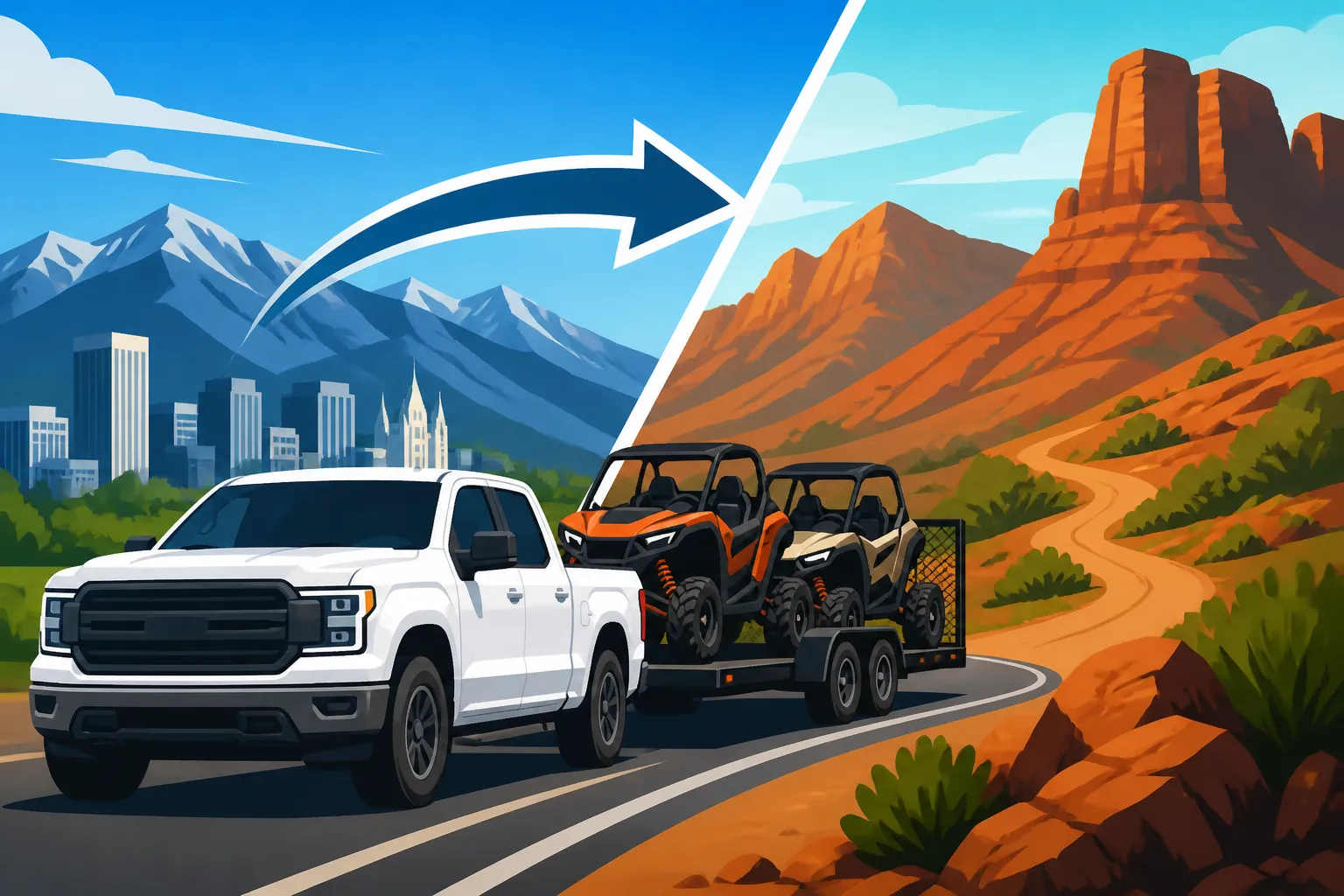
Trailering from Salt Lake City to Marysvale is manageable until a long tow, a crowded fuel stop, or an unexpected road condition turns the trip into a headache. This guide walks through route planning, trailer checks, arrival logistics, and the details that make it easier to unload and start riding near the Paiute Trail.
Plan the drive from Salt Lake City to Marysvale
Choose a practical route before you leave
A common route is to head south from Salt Lake City on I-15, take US-50 east near Scipio toward Salina, then continue south toward Marysvale on US-89. It gives you a straightforward general plan, but the best route for your trip depends on your starting point, trailer setup, weather, and any roadwork or closures.
Before setting out, enter the route into a navigation tool that accounts for your tow vehicle and trailer. A standard car route may send you through a tight turn, a steep grade, or a small-town street that is awkward to navigate with a loaded trailer. Check your route on a full-size map as well as your phone so you understand where the major turns and services are.
Leave flexibility in the schedule. A trip that seems simple on a map can take longer when you’re towing, especially if you need to stop for fuel, stretch, recheck a strap, or wait for traffic to clear. If you’re traveling with a group, agree on a meeting point before leaving Salt Lake City instead of trying to keep every vehicle together through every interchange.
Make towing comfort and fuel stops part of the plan
Fuel planning is different when you’re hauling. Your vehicle may use more fuel than usual, and a station that is easy to enter with a car may be uncomfortable with a long trailer. Look for larger, easy-access stops along your route, and avoid letting the tank get low before you start searching. If your trailer is wide or long, think about how you’ll pull in and get back out before committing to a busy station.
A practical stop should give you room to park, check your load, and make any needed adjustments without blocking traffic. After the first stretch of driving, take a moment to confirm that straps remain tight, the trailer is tracking normally, and tires look sound. Repeat the check after rough pavement or a significant change in weather.
For the destination portion of your planning, [Marysvale, Utah as a Paiute Trail Base] is a useful related read. If your trip includes a longer loop, check [Fuel Stops Along the Paiute Loop] before you leave; don’t assume every stretch of trail has fuel or services nearby.
Check conditions before you hitch up
Weather and road conditions can change the character of a tow. Rain, snow, strong wind, or heat may affect both your drive and your riding plans. Check the forecast for Salt Lake City, the route, and Marysvale—not just the conditions at home. If a storm is expected, consider whether you need more time, a different departure window, or a revised riding plan.
Also check for roadwork, closures, and access updates before departure. A navigation app may not reflect every local change, and a route that works for a passenger vehicle may be unsuitable for your trailer. [Checking Utah Trail Conditions Before You Tow] can help you make conditions-checking part of your pre-trip routine.
Get your truck, trailer, and machines ready
Inspect the towing setup before loading
A little preparation at home is much easier than troubleshooting at a roadside pullout. Check the tow vehicle’s tires, lights, mirrors, hitch connection, and braking setup. Inspect the trailer tires for visible damage and appropriate inflation, and confirm that the spare and tools you need are actually with you.
Before loading, make sure the trailer is positioned on level ground and secured against rolling. Distribute the ATVs or UTVs so the load is stable, then secure each machine using suitable tie-down points. Avoid relying on a single strap or on soft accessories that could shift or tear. Once everything is tied down, inspect the machines from more than one side and confirm that ramps, helmets, tools, and loose gear are stowed.
A final walk-around is worth the extra few minutes. Test the trailer lights, check the coupler and safety chains, and make sure the load is not blocking your view or rubbing against the trailer. If you have not towed this setup before, practice turning, backing, and braking in a quiet area before taking it onto a busy road.
Bring the paperwork and riding essentials
Keep important documents somewhere you can reach them without unpacking the whole vehicle. That may include your machine’s registration documents, identification, insurance information if applicable, and any required permits or education certificates for your riding plans. Requirements can depend on the machine, rider, and where you’ll ride, so check the relevant rules before leaving.
Bring basic riding supplies as well as towing equipment. A tire repair kit, air source, first-aid supplies, water, snacks, gloves, eye protection, and a way to communicate are easy to overlook when most of your attention is on the trailer. For a fuller packing checklist, see [What to Carry on a Utah Day Ride].
If you rely on digital maps, save the areas you’ll need before leaving reliable service. onX Offroad can help you plan routes and review mapped riding areas, but make sure you understand the route rather than depending on a phone screen alone. Downloading maps ahead of time and carrying a backup navigation option is especially helpful if you expect to ride beyond reliable cell coverage.
Know where the trailer will fit
Before you arrive, think through where you’ll park, unload, and leave the truck and trailer while riding. A motel lot, campground, or trailhead may have limited space, and a large trailer can be difficult to reposition once other vehicles arrive. Contact your lodging or staging location if you’re unsure about trailer parking.
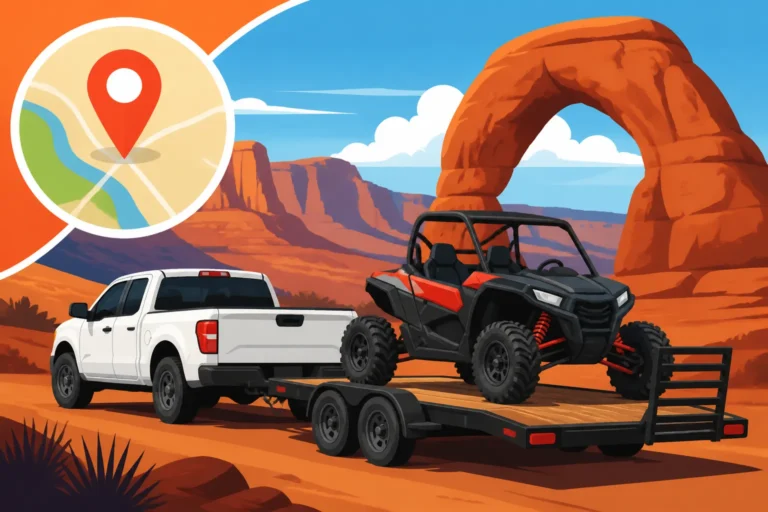
Use a route map to identify likely staging options, but confirm the details locally when possible. Look for a place with enough room to unload safely without blocking other visitors or creating a traffic hazard. [Utah Trailhead Parking That Fits a Trailer] offers more guidance for evaluating parking, while [Reading a Motor Vehicle Use Map] can help you distinguish mapped routes from roads or trails that aren’t open for your intended use.
Arrive in Marysvale ready to unload and ride
Give yourself time to settle in
If you can, arrive with enough daylight to check in, unload, and get oriented without rushing. After a long drive, it’s tempting to unhitch and head straight for the trail. But a few minutes spent checking the machines and organizing gear can prevent a frustrating start the next morning.
Park on stable ground, set the tow vehicle and trailer securely, and unload where you have room to move safely. Keep ramps clear of foot traffic, and make sure no one is standing behind a machine while it comes off the trailer. Once unloaded, check that each machine’s tires and controls look normal and that nothing shifted during the drive.
If you arrive late or feel tired, consider waiting until morning to ride. Familiarizing yourself with the area when you’re rested is a better start than navigating an unfamiliar trail system after a long tow.
Match the first ride to your group
Marysvale is a popular base for riders exploring the Paiute Trail, but a group should choose its first outing based on the experience, comfort, fuel range, and equipment of its least-prepared rider. Don’t let an ambitious plan set the pace if someone is new to riding or unfamiliar with the machine.
Review the route before you leave, including turnarounds, likely rest points, and options to shorten the ride. onX Offroad can be useful for reviewing route lines and orientation, but pair digital navigation with a paper or offline backup. The [Utah's Paiute Trail: Main Loop and Side Trails] guide can help you understand the broader trail network, and [Cell Service Along the Paiute Trail] is worth considering before you assume you’ll be able to call or load a map everywhere.
A sensible first ride lets everyone get used to the machines, the terrain, and the group’s communication habits. Agree on who leads and who rides last, establish a regrouping point if riders get separated, and avoid letting faster riders disappear around a bend.
Keep the trailer plan simple for the ride home
Before riding, decide where the truck and trailer will stay and how you’ll get back to them. If your route is a loop, confirm that it returns you to the right staging area. If it’s an out-and-back, set a turnaround time that leaves room for the return ride and loading.
When you get back, let the machines cool as appropriate before securing them for transport, and remove loose items that could bounce out on the road. Check tie-downs again after the first short stretch of the return drive. It’s also a good time to note anything that needs attention before your next trip, such as a strap that loosened, a tire that needs inspection, or gear you wished you had packed.
Quick trip-planning checklist
| Before leaving Salt Lake City | On the drive | Before the first ride |
|---|---|---|
| Check route, weather, and road conditions | Stop somewhere with room to maneuver | Confirm parking and unloading space |
| Inspect tow vehicle, trailer, tires, lights, and hitch | Recheck tie-downs after an early stretch | Review route, fuel plan, and turnaround options |
| Secure machines and loose equipment | Watch for changes in wind, traffic, and road conditions | Carry required paperwork and riding supplies |
| Save maps and plan fuel stops | Avoid pushing on when tired | Tell your group where you’ll regroup |
onX Offroad is one possible planning aid for reviewing mapped routes and saving information for use away from a signal. Use it as a support tool rather than a substitute for checking access, closures, and local conditions. A little preparation before departure—and a deliberate check before unloading—can make the tow to Marysvale feel like the start of the trip instead of its hardest part.
Disclaimer
This article is for general informational purposes only and does not constitute professional advice. Laws, prices and regulations vary by location and change over time. Consult a qualified professional for guidance on your specific situation.