Utah Day Rides Two Hours From Provo
A good ATV or UTV day ride from Provo should feel like an escape, not a second job spent towing to a trailhead or guessing whether a route is open. Fortunately, several riding areas are within roughly two hours, from open desert and sand to mountain forest roads. This guide compares the options and explains how to plan a safer, more rewarding day.
Utah day rides within two hours of Provo
Drive times below are rough planning estimates, not guarantees. Your starting point in the Provo area, traffic, road conditions, and the exact staging area can all change the trip. Before towing, check the route you plan to ride, not just the name of the general recreation area.
| Riding area | Approximate drive from Provo | Best fit | What to plan for |
|---|---|---|---|
| Five Mile Pass | About 1 hour | A flexible desert ride and varied terrain | Dust, exposure, and checking open routes |
| Little Sahara Recreation Area | About 1.5 to 2 hours | Dune riding, sand bowls, and open riding areas | Sand skills, wind, and recreation-area fees |
| Manti-La Sal National Forest routes | About 1 to 2 hours, depending on access | Forest roads, mountain scenery, and cooler-weather options | Seasonal access, elevation, and route-specific rules |
| Uinta-area routes near Strawberry | Around 1.5 to 2 hours, depending on the trailhead | A mountain ride and a change from desert terrain | Snow, changing conditions, and designated-route limits |
The estimates are best treated as a starting point. A route that appears close on a map may take longer with a trailer, and a named riding area can have several possible entrances or staging areas. Confirm the driving directions and riding access separately.
Five Mile Pass for a flexible desert day
Five Mile Pass is one of the more practical choices when you want a day ride without spending most of the morning on the highway. West of Utah Valley, the area offers desert terrain and a network of routes that can suit different kinds of outings. It can work well for a short ride, a longer loop, or a group where riders prefer to adjust the plan as they go.
The trade-off is that open desert can be exposed and dusty. On a busy day, visibility may drop behind other machines, and the landscape can make it easy to lose track of a turn or route boundary. Bring eye protection, water, and a navigation plan, and agree on where the group will stop if riders get separated. For more area-specific planning, see [Five Mile Pass in Utah County].
Before unloading, use a current map to identify open routes and legal staging locations. onX Offroad can help you review routes and orient yourself, but an app should not replace posted signs, land-manager directions, or closure notices. If a map line and a sign disagree, follow the sign and investigate before continuing.
Little Sahara for sand and dune riding
Little Sahara Recreation Area is the most obvious pick near Provo if your group specifically wants sand. Its dunes and sand bowls create a very different ride from a forest road or rocky desert route. Riders who enjoy changing lines, climbing, and reading the terrain may find that a day here feels full without covering a long distance.
Sand asks more of the rider than it may appear to from the parking area. A line that looks manageable from below can become steeper, softer, or more crowded as you approach it. Keep room between machines, avoid following too closely up a dune, and pick routes that match the least experienced rider in your group. A utility quad, a sport quad, and a side-by-side may each handle the same terrain differently. The guide [Utah's Little Sahara and Its Sand Bowls] can help you think through the area’s terrain and riding style.
Wind, heat, and sand in the air can make the day tiring. Goggles or sealed eye protection, water, sunscreen, and a way to cover your face can make a real difference. Check access, fees, and local rules before setting out; riding-area entry arrangements are separate from vehicle registration or visitor permit requirements.
Forest and mountain routes for a cooler change
If you want trees, higher elevation, and a break from the desert, look at designated routes in the Manti-La Sal National Forest or Uinta-area routes near Strawberry. These options can be appealing when the valley is hot, but they are not interchangeable: access depends on the specific trailhead, route designation, weather, and seasonal conditions.
For a forest ride, start by identifying the road or trail you are legally allowed to use. A route that looks suitable for an ATV on a general map may have restrictions, gates, or seasonal closures. The overview [Manti-La Sal National Forest Rides] is a useful jumping-off point, while [Utah's Uinta Mountains in Summer] offers context for planning at higher elevations.
Mountain conditions can change quickly. A warm Provo morning does not tell you whether a high trail is muddy, snow-covered, or affected by a closure. Confirm access shortly before you leave, carry an extra layer, and make a turnaround plan if the route becomes rougher or wetter than expected. If a route is unfamiliar, plan a conservative first outing rather than trying to complete the longest loop on the map.
Choose a ride that matches your group
The closest area is not always the best one. Think about the experience your group wants, the machines you are bringing, and how comfortable everyone is with the terrain. A few minutes spent choosing the right kind of ride can prevent a long day of frustration.
Match the terrain to the least experienced rider
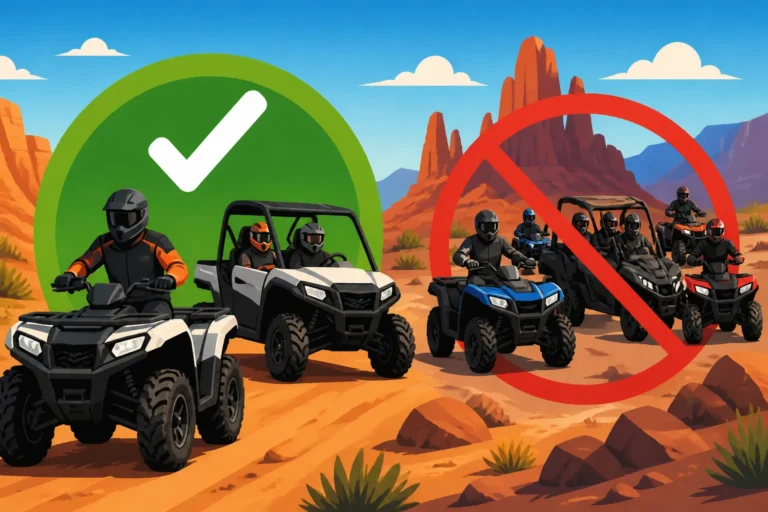
For a mixed-skill group, plan around the newest rider rather than the most confident one. A beginner on a steep dune or rocky descent may need more time, more breaks, and a calmer route than an experienced rider expects. Agree on a pace before leaving the staging area, and let riders know that turning around is a normal option—not a failure.
Consider the whole group’s machines, too. A route that is comfortable for a narrow ATV may feel tight in a wide side-by-side. Conversely, an open area may offer room to spread out but require confidence on loose sand. If you are choosing between terrain types, [Choosing Between Moab and Sand Hollow] is not a local comparison for a Provo day trip, but it may help clarify what kind of Utah ride your group enjoys. For the areas closer to home, use that preference to choose between sand, desert, and mountain routes.
Check route access, closures, and boundaries
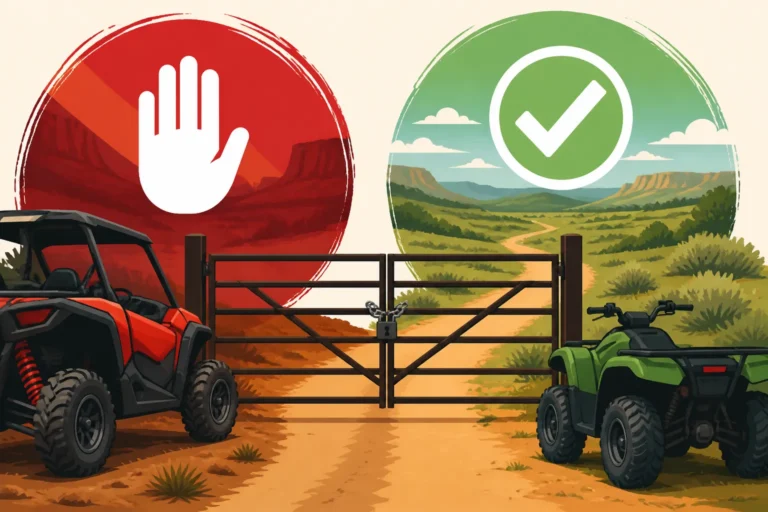
Do not assume every visible track is an authorized route. Public-land boundaries, private parcels, seasonal closures, and vehicle restrictions can be difficult to spot on the ground, especially in open desert. Check a land-manager map and route information before the trip, then watch for signs and gates while riding. [Utah OHV Trail Maps and How to Read Them] and [Reading a Motor Vehicle Use Map] explain how to interpret map information rather than treating every line as permission to ride.
A navigation app can make it easier to follow your planned route and notice when you have drifted away from it. onX Offroad can be useful for reviewing mapped routes and land boundaries before a ride, but map layers may not show every temporary change or on-the-ground instruction. Download the information you need before leaving cell coverage, and use official signs and current land-manager notices to resolve uncertainty.
If a route is closed, do not ride around the gate or assume the closure applies only to larger vehicles. The right response is to choose an open alternative. A backup loop is especially helpful when riding in mountain areas, where weather or seasonal access can change what is practical on the day.
Plan for the season, not just the forecast
Spring can bring wet, muddy routes and lingering snow at higher elevations. Summer may bring heat in the desert and cooler conditions in the mountains, while fall can offer pleasant temperatures but shorter daylight. These are broad patterns, not a guarantee that a particular route will be open or comfortable.
Check trail conditions shortly before departure, especially after storms or during snowmelt. The article [Checking Utah Trail Conditions Before You Tow] is a useful reminder to verify the riding area before committing to a long drive. If the forecast suggests strong wind or high temperatures, reconsider a dune or exposed desert ride, or shift your start time so the hardest part of the day does not fall in the hottest hours.
Make the day ride work from driveway to trailhead
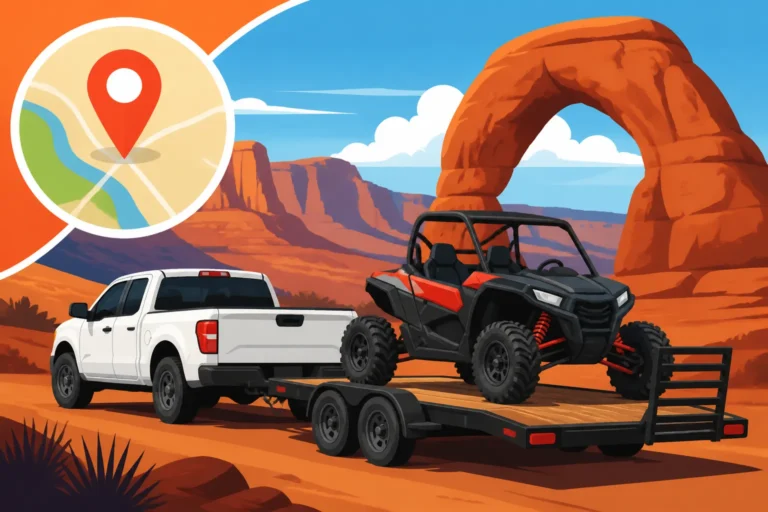
A smooth ride starts before you leave Provo. Build time for loading, fuel, a trailer check, and a brief group discussion at the staging area. When the plan is realistic, riders are less likely to rush through safety checks or push farther than they intended just to make the outing feel worthwhile.
Check registration, permits, and education requirements
Confirm that each machine has the registration, decal, or permit required for the people and places involved. Requirements can differ for Utah residents and out-of-state visitors, and they can depend on the machine’s status and where it will be ridden. Visitors should review [Utah's Non-Resident OHV Permit Explained] before heading out; Utah OHV registration is not automatically a substitute for every visitor requirement.
Education requirements can also depend on a rider’s age and circumstances. Review [The Utah OHV Education Certificate] before taking a young rider on public land. Do not assume that a child’s age, a parent’s presence, or a machine being used for a short ride removes a requirement. If you are unsure, check the applicable Utah guidance before the trip rather than trying to resolve it at the trailhead.
Keep required documents accessible and make sure the decal or permit is displayed as directed. A phone photo can be a useful backup for your own records, but do not rely on it as a replacement for a required physical item. Conditions vary by machine and ride location, so check the rules for the particular trip you are planning.
Pack for a day outside the vehicle
A short drive from Provo does not mean a short or low-risk day on the trail. Carry drinking water, food, basic first aid supplies, tools appropriate for your machine, a tire repair option, and a way to contact someone if the group has trouble. Pack layers for mountain routes and sun protection for desert rides. A helmet and eye protection are essential parts of a sensible riding plan.
Before leaving the staging area, tell someone who is not riding where you plan to go and when you expect to return. Within the group, choose a lead rider and a sweep rider, set regrouping points, and agree not to leave anyone behind. The checklist in [What to Carry on a Utah Day Ride] can help you tailor your gear to the weather and terrain.
Navigation needs deserve their own check. onX Offroad may help you plan and follow a route, but download maps in advance and bring a backup method, such as a paper map or a second device with offline data. Cell service can be unreliable away from towns, and a dead phone should not turn a straightforward ride into a search for the way back.
Set a turnaround time before you start
It is easy to underestimate how long a ride will take. A group may stop for photos, help a rider over a difficult section, or take a wrong turn and need to retrace its route. Set a turnaround time that leaves daylight for loading and the drive home, then stick to it even if the group has not reached the day’s most ambitious point.
Check the machine before unloading and again before heading back to the trailer. Look for obvious damage, loose items, low tires, or anything that changed during the ride. If a machine develops a problem, pause somewhere safe, assess whether it can continue, and avoid turning a minor issue into a bigger one by pushing on.
Most importantly, make the route serve the day rather than letting the route dictate it. Five Mile Pass can suit a flexible desert outing, Little Sahara is the sand-focused choice, and forest or Uinta-area routes offer a higher-elevation alternative when access and conditions cooperate. Pick one that fits your group, verify the details, and leave enough margin to enjoy the ride without racing the clock.
Disclaimer
This article is for general informational purposes only and does not constitute professional advice. Laws, prices and regulations vary by location and change over time. Consult a qualified professional for guidance on your specific situation.