Moab Trails That Fit a Half Day
A half day in Moab can disappear quickly between town, trailhead traffic, vehicle checks, and the ride itself. The best route depends on your group’s experience, machine width, appetite for slickrock, and how much time you want behind the wheel. This guide compares half-day-friendly options and helps you plan a ride that ends before everyone is tired.
How to Choose a Half-Day Moab Trail
Plan for the whole outing, not just trail time
A “half-day ride” usually means more than the time spent moving along the route. You may need to drive from your lodging to a staging area, air down or check your machine, review the route, and allow time for breaks and photos. If you’re renting, pickup instructions, a safety briefing, and the return trip can take a meaningful part of the day too.
For a relaxed outing, think in terms of a morning or afternoon block rather than trying to squeeze in a long route because the map looks short. A group with new drivers, kids, or several machines will generally move more slowly than a pair of experienced riders. Build in a buffer for dust, stops, and the occasional wrong turn. The guide to [Moab Trails With River Views] can help if scenery and a less technical outing matter more to your group than obstacles.
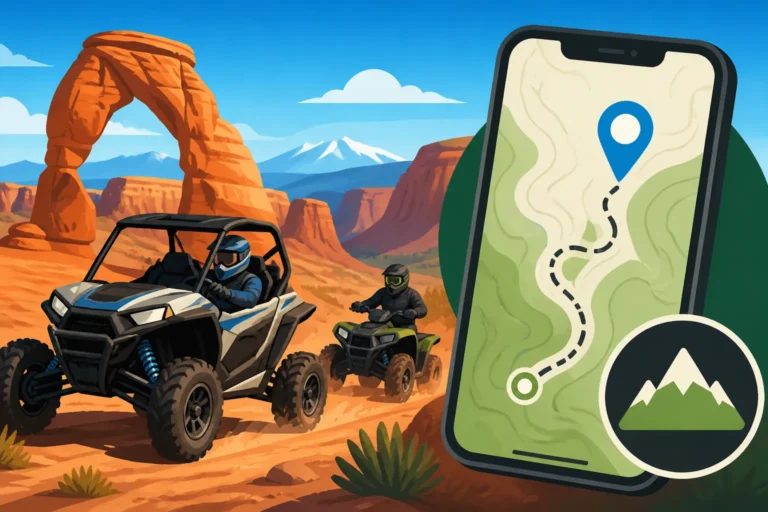
Before leaving, check route access and conditions. Rain can make some surfaces difficult or unsafe, and a route that looks straightforward on a screen may include rough sections, ledges, or narrow spots. Use an up-to-date land manager map alongside a navigation app such as onX Offroad, and download your route information before you leave service. [Checking Utah Trail Conditions Before You Tow] is a useful reminder to look beyond the route line and confirm what’s open.
Match difficulty to the least experienced rider
Choose a trail for the least confident driver and passenger—not the most adventurous person in the group. On slickrock, a short ledge or steep-looking climb can feel intimidating even when an experienced driver finds it manageable. A passenger may also have a very different idea of a fun ride than the person holding the steering wheel.
Ask what “easy” means for your group. Are everyone’s comfortable with uneven ground? Does anyone get nervous on exposed-looking slopes? Are you prepared to turn around if a section feels wrong? Those questions can help you avoid the familiar half-day mistake: spending more time negotiating a difficult obstacle than enjoying the trail.
Machine size matters as well. A wide side-by-side can be a poor fit for a route that feels comfortable on a smaller quad, and some trail segments or obstacles call for careful line choice. Check your vehicle’s dimensions and the route’s requirements before you set out. For more on that tradeoff, see [Picking a Moab Trail by Machine Width].
| Trail option | Best fit | What can use up your half day | Planning note |
|---|---|---|---|
| Fins and Things | Riders looking for a focused slickrock outing | Technical sections, photos, and repeated obstacle attempts | A good choice when the group is comfortable with slickrock |
| Hell’s Revenge | Experienced riders seeking a more demanding ride | Steep-feeling slickrock, optional obstacles, and cautious driving | Decide in advance which obstacles your group will skip |
| Gemini Bridges | Groups prioritizing a scenic outing | Trailhead access, stops, and walking to the viewpoints | Confirm route conditions and allow time for the hike |
| Monitor and Merrimac | Riders wanting a varied desert loop | Rough sections, route-finding, and scenic stops | Check the route map and conditions before choosing it |
Half-Day Trails for Slickrock and Technical Riding
Fins and Things
Fins and Things is a popular choice for riders who want a concentrated slickrock experience without planning an all-day expedition. The route combines open views with rolling rock features and sections where drivers need to choose a careful line. It can feel like a satisfying half-day outing when your group is prepared for a steady pace and doesn’t try to turn every obstacle into a challenge.
This is not an automatic beginner recommendation just because the ride can fit into a shorter window. New drivers should understand the route’s character before committing, and passengers should be comfortable with uneven terrain and slow, deliberate maneuvering. If someone is unsure about slickrock, consider choosing a milder route or going with a guide rather than letting the group’s most experienced driver set the pace for everyone.
The route is easier to enjoy when you leave room for stops and don’t plan another major activity immediately afterward. Check access, staging, and route details before setting out; [Fins and Things for First-Time Slickrock] offers a more focused look at what first-timers should consider. If the group is debating between this and a more demanding ride, compare the descriptions of [Hell's Revenge, Utah's Signature Slickrock] before choosing.
Hell’s Revenge
Hell’s Revenge is a memorable option for experienced drivers who want a challenging slickrock ride close to Moab. Its reputation comes from steep-feeling rock features and exposed-looking sections that can make even capable riders pause. The route may fit within a half-day outing, but difficulty and group pace matter more than the map’s apparent size.
A useful way to plan is to agree before you start that nobody has to attempt every obstacle. Optional challenges can turn a manageable ride into a stressful one if riders feel pressured to follow the group. If a line doesn’t look comfortable, stop in a safe place, assess it, and choose a permitted alternative or turn around. Avoid blocking other users while you make that decision.
Conditions and confidence can change the experience considerably. A dry, clear day with an experienced driver is different from a ride with nervous passengers, poor visibility, or a machine that feels unfamiliar. Check that your vehicle is suited to the route, and don’t assume a rental or borrowed UTV can go everywhere. For additional planning context, [Moab Trails That Fit a Half Day] is the relevant comparison to keep in mind when deciding whether a shorter, less technical outing better suits your group.
Scenic Options With a More Relaxed Pace
Gemini Bridges
Gemini Bridges is often a strong choice when your group wants a scenic desert outing rather than a day built around difficult obstacles. The route takes you through open country, and the natural bridges are a highlight for visitors who want time to get out, look around, and take a break from driving. That walking stop can be part of the appeal, but it also means you should include it in your schedule.
Don’t treat “scenic” as a guarantee of easy or quick. Road conditions, dust, other traffic, and the time needed to reach the route can change the outing. The drive from central Moab to the trail area also belongs in your half-day calculation. Check the route and access information before you go, and make sure your machine is permitted on the roads you plan to use.
This can work particularly well for a mixed-experience group that prefers steady travel and viewpoints over repeated technical attempts. Still, everyone should be prepared for a bumpy ride and should know the day’s turnaround plan. See [Gemini Bridges as an Easy Moab Day] for more detail on the route’s scenic appeal and what to expect.
Monitor and Merrimac
Monitor and Merrimac offers a different kind of half-day outing, with desert scenery and a route that can feel more like an exploration than a short obstacle course. It may suit riders who want variety and don’t need a trail to be packed with technical features. As with other Moab routes, the experience depends on current conditions, your machine, and how often the group stops.
Route-finding deserves attention. Before leaving, review the line you intend to follow and note where the route connects with other roads or trails. Apps such as onX Offroad can help you follow your planned track, but a navigation screen is not a substitute for signs, land-use restrictions, or sound judgment. Download maps in advance; cell service can be unreliable away from town.
If the group includes less experienced riders, set expectations clearly: a scenic route can still include rough ground, loose surfaces, and sections that take concentration. Don’t let a desire to finish within a set time push anyone into driving faster than feels safe. Carry enough water, basic recovery supplies, and the equipment appropriate to your machine. [What to Carry on a Utah Day Ride] can help you make a practical checklist without packing as though you’re crossing the desert for a week.
Build a Half-Day Plan That Works in Real Life
Set a turnaround time before you leave
A fixed turnaround time is one of the simplest ways to keep a half-day ride enjoyable. Choose it before the group gets absorbed in the trail, and make sure everyone knows that reaching a particular landmark is less important than returning safely. This matters especially when one driver wants to add an obstacle or take a side route while the rest of the group is watching the clock.
A practical morning plan might allow time for getting to the staging area, a pre-ride check, several hours on the route, and a return to town with a little breathing room. An afternoon outing needs the same discipline in reverse: allow for the drive out and back, and don’t let a late start turn into rushed riding near sunset. The right schedule depends on where you’re staying, your route, and whether you’re bringing your own machine or renting.
Check the route’s access and regulations before departure, and make sure you understand any area-specific fees or permits. [Sand Flats Recreation Area Fees and Camping] may be useful if your plan includes riding in that area. If you’re visiting from outside Utah, review [Utah's Non-Resident OHV Permit Explained] and confirm what applies to your machine and trip.
Prepare for heat, dust, and changing conditions
Moab’s dry climate can make riders underestimate how much water they need. Pack more than you expect to drink, and take breaks before anyone feels depleted. Dust protection matters too: goggles, appropriate clothing, and a way to keep water and essentials accessible can make a short ride much more comfortable. For a hot-weather trip, read [Moab in July: Riding Around the Heat] and adjust your plan to the conditions rather than sticking to a schedule made in cooler weather.
Before loading up, inspect tires, fuel, lights, and basic recovery gear. Tell someone where you’re riding and when you expect to return, especially if your route takes you away from busy areas. If you’re using a navigation app such as onX Offroad, save the route offline and carry a backup way to orient yourself. A phone can lose service, run low on battery, or become difficult to use in dust and bright sunlight.
Finally, treat turning around as a sensible decision, not a failed ride. A storm, a tired driver, a machine issue, or an unexpectedly difficult section can change the plan. The most successful half-day outing is one where the group gets back with enough energy to enjoy the rest of the day—and with a clear reason to come back for another trail.
Disclaimer
This article is for general informational purposes only and does not constitute professional advice. Laws, prices and regulations vary by location and change over time. Consult a qualified professional for guidance on your specific situation.