Sand Hollow With a Two-Wheel-Drive Machine
A two-wheel-drive ATV or UTV can make a Sand Hollow trip feel uncertain, especially when the route includes loose sand, steep dune faces, or a climb that looks easier from the bottom. The good news is that 2WD does not automatically rule out riding here. This guide explains where it may work, how to prepare, and when turning back is the smarter call.
Can a two-wheel-drive machine ride at Sand Hollow
What 2WD can and cannot do in soft sand
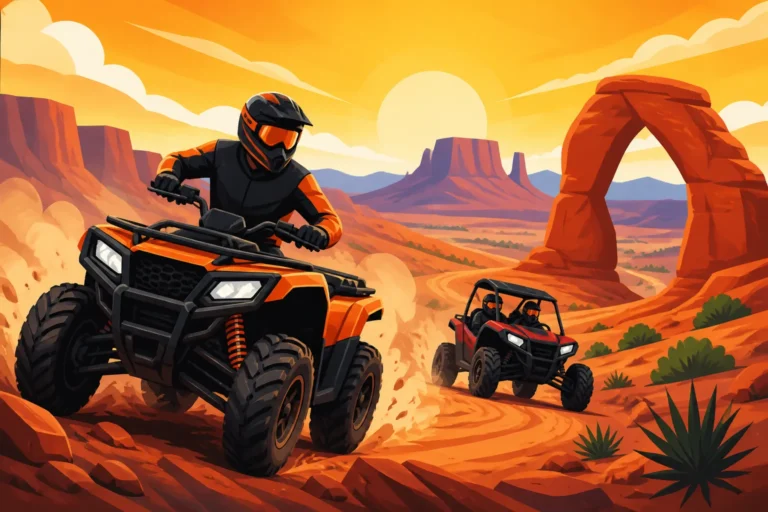
A 2WD machine can ride some Sand Hollow terrain, but it has less traction available than a comparable 4WD model when the ground gets loose or steep. On a two-wheel-drive ATV or UTV, engine power reaches only two wheels. If those tires spin, the machine may lose forward momentum quickly, especially on a dune face or in a soft patch.
That does not mean every sandy stretch is off-limits. Firm, relatively level ground and gradual routes may be manageable for a capable machine and a rider who keeps a measured pace. Deep, churned-up sand, sharp climbs, and loose approaches can be more demanding. Conditions also change with traffic and weather, so a spot that felt manageable earlier may be softer or more rutted later.
A useful way to think about it is that 2WD narrows your margin for error. You may need to pick lines more carefully, avoid stopping on a slope, and be willing to turn around before a difficult section. A group should choose its route around the least capable machine—not assume everyone can follow the most confident rider.
Know your machine before choosing a route
“Two-wheel drive” alone does not tell you exactly how a machine will perform. Tire type and condition, ground clearance, weight, engine response, suspension, and the load you carry all matter. A heavy machine with passengers and cargo may behave differently from a lightly loaded ATV, even if both send power to two wheels.
Check the owner’s manual and inspect the machine before leaving. Look for worn tires, low pressure, loose steering or suspension parts, and damaged tow points. Use the tire-pressure guidance for your specific machine and riding conditions; there is no single setting that suits every tire, vehicle, and surface. Avoid making a drastic pressure change just because you see another rider doing it.
Be realistic about power and experience, too. A small or heavily loaded machine may struggle on a climb where a larger machine with suitable tires keeps moving. If you are new to sand, start with gentle, open terrain and practice smooth acceleration and steering before attempting a dune. For a broader overview of the area and its riding options, see [Sand Hollow and Sand Mountain: A Rider's Guide].
Set expectations before you unload
Sand Hollow is not a place where every route is equally suitable for every machine. Think of your first ride as an assessment rather than a mission to reach a particular landmark. If you arrive with a 2WD machine and discover that the terrain is softer or steeper than expected, changing the plan is part of good judgment—not a failed outing.
Before towing out, compare your machine’s abilities with the kind of riding your group wants to do. If the main goal is challenging dune climbing, a 2WD machine may not be the best fit. If your group is comfortable exploring conservatively and staying within the machine’s limits, you may still have a worthwhile day. You can also compare options in [Beginner Lines at Utah's Sand Mountain] and [Sand Hollow's Busiest Days for Riders] when planning your route and timing.
How to ride a 2WD machine more confidently
Keep momentum smooth, not reckless
In sand, stopping abruptly can make it harder to get moving again. Use steady, controlled throttle and avoid sudden steering inputs that can dig the tires in or unsettle the machine. Smooth momentum helps, but it is not a reason to charge into terrain you cannot see or cannot safely climb.
Look ahead and choose a line before reaching a soft patch. On an ATV, keep your body position balanced and follow the manufacturer’s guidance for riding on slopes. In a UTV, keep passengers seated and belted, and do not lean or shift in a way that compromises the vehicle’s stability. If the machine starts losing traction, ease off and reassess rather than repeatedly spinning the tires.
Avoid stopping halfway up a climb if you can safely choose another line or turn around before starting. Never attempt a slope simply because another vehicle made it. Different tires, weight, driver skill, and machine setup can change the outcome substantially. If you are unsure whether a climb is appropriate for your 2WD machine, choose a less demanding route.
Choose lines for visibility and room to recover
On a dune or sandy rise, do not climb over a blind crest without knowing what is on the other side. Another rider, a drop, a sharp turn, or a change in surface may be hidden from view. Approach with enough control to stop safely, and give other machines room rather than bunching up at the bottom or top.
Pay attention to who is around you. Sand Hollow can bring together riders on different types of machines, traveling at different speeds and with different levels of experience. Keep a safe following distance, use your whip flag as required for the area, and avoid cutting across another rider’s line. Review [Whip Flag Rules at Sand Hollow] before heading out.
Navigation tools can help you stay oriented, but they do not replace signs, local closures, or good judgment. A mapping app such as onX Offroad can help you review an area and keep track of your location, especially when your phone has no signal. Download or prepare what you need before leaving service, and cross-check your route against posted information on site.
Turn around before a recovery becomes necessary
A sensible turnaround point is one you choose while you still have room to stop, back out, or take another route. If the rear tires are spinning, the machine is sliding sideways, or the surface is getting softer with each attempt, stop and reassess. Repeatedly applying throttle can dig the machine in and make recovery harder.
Do not ask passengers to stand near a moving or stuck machine on a slope. Keep people clear of tires, tow lines, and recovery points. Use only equipment and attachment points approved for your vehicle, and follow the instructions for the recovery gear. Avoid improvising a tow from a bumper or other part that may not be designed for pulling.
A small recovery kit is helpful, but it is not a substitute for choosing appropriate terrain. Consider bringing items suited to your vehicle and trip, and learn how to use them before you need them. [Recovery Gear for Utah Sand and Slickrock] can help you think through what to carry and how to plan for a stuck machine.
Plan a Sand Hollow trip around your 2WD machine
Check conditions, closures, and navigation before riding
Before unloading, review current access information and posted signs. Route availability and surface conditions can change, and a map line should never be treated as permission to ride somewhere that is signed closed or restricted. Respect boundaries, stay on routes open to your vehicle, and do not assume an open-looking track is legal or suitable.
Use a map to plan a conservative loop with options to shorten the ride or return the way you came. onX Offroad may be useful for reviewing mapped routes and saving information for offline reference, but verify details against signs and official land-management information. Phone reception can be limited, so do not rely on being able to search for help once you are already on the trail.
Check weather and recent conditions as well. Wind, rain, traffic, and changing sand can affect how a route feels. If conditions are unfamiliar, ask at the staging area or an appropriate local information point about recent access issues, then make your own assessment when you see the terrain. For practical trip prep, see [Checking Utah Trail Conditions Before You Tow].
Bring the essentials and keep the day manageable
A shorter ride with a clear return plan is a better first outing than a long route that leaves no easy way back. Tell someone where you intend to ride and when you expect to return. Carry water, basic first-aid supplies, food, sun protection, and the tools and recovery items appropriate to your machine.
Keep your load secure and avoid carrying more than necessary. Extra weight can affect handling and traction, particularly when the machine is already working hard in sand. Make sure everyone knows where the group will stop, how to communicate if separated, and what to do if a vehicle has a problem. A checklist in [What to Carry on a Utah Day Ride] can help you organize the basics.
A satellite messenger or other communication device may be worth considering for remote riding, especially if the group is traveling beyond areas with reliable cell coverage. Whatever you bring, learn how it works before the trip. A device stored in a bag with a dead battery is not a meaningful backup plan.
Compare your choices before committing to the ride
If the planned route depends on repeated steep dune climbs, consider renting or borrowing a suitable 4WD machine instead of asking a 2WD vehicle to do something beyond its capability. Another option is to choose a more conservative outing, ride with a capable group, or leave the machine behind and explore a different way. The right choice depends on the terrain, machine, rider experience, and comfort level.
| Riding situation | What a 2WD rider should consider | Safer planning choice |
|---|---|---|
| Firm, open terrain | Traction may be manageable, but stay alert for softer patches | Start slowly and reassess as conditions change |
| Loose, churned sand | Tires may spin and momentum can disappear quickly | Avoid steep or heavily disturbed sections |
| Steep dune approach | A stop or loss of traction can make recovery difficult | Choose a gentler route or turn back |
| Blind crest | You may not see riders or terrain beyond the top | Do not cross until the far side is visible and clear |
| Unfamiliar route | Maps may not show current surface conditions or restrictions | Confirm access, carry offline navigation, and keep a return option |
If you are traveling with friends in different machines, agree in advance that nobody will pressure the 2WD rider to attempt a climb. A group that pauses to assess conditions and changes course when needed is far less likely to turn a fun day into a recovery problem. That flexibility is especially valuable when the route is unfamiliar or the sand has changed since your last visit.
Common mistakes to avoid on a 2WD Sand Hollow ride
Treating another machine’s success as a guarantee
Watching a 4WD UTV climb a slope can make it look straightforward. But its tires, drivetrain, power, weight, and driver may differ from yours. Even two similar models can behave differently because of tire wear, cargo, passenger weight, or setup.
Do not let group momentum make the decision for you. If a section looks too steep or the approach is too soft, step aside and let others pass while you choose another route. A good riding group will respect that choice. If you are planning a new area, explore [The Best ATV and UTV Trails in Utah] for alternatives that may suit your group’s abilities.
Relying on a phone as the only plan
Maps and navigation apps are useful, but screens can be hard to read in dust and bright sun, batteries drain, and cell service is not guaranteed. onX Offroad can support route planning and offline reference, but carry a backup plan and know how to return without depending on a live connection. Save important information ahead of time and keep your phone protected.
A paper map or another independent navigation method can add resilience. Make sure the group knows the general direction back to the staging area and agrees on a meeting point if riders become separated. Never ride beyond your comfort level just because a digital route line appears to continue.
Skipping preparation because the ride seems short
Even a short outing can involve heat, dust, a flat tire, or a stuck vehicle. Check the machine before unloading, confirm that everyone has suitable protective gear, and carry enough water for delays. Be especially careful about heat and dehydration in southern Utah; riders can underestimate how quickly they become uncomfortable while concentrating on the trail.
Plan for a slower pace than you might use on a familiar ride. Stop before fatigue affects decision-making, and keep the group together at turns and junctions. A cautious day may feel less adventurous in the moment, but it gives you a much better chance of ending the ride with everyone and every machine safely back at the trailer.
Disclaimer
This article is for general informational purposes only and does not constitute professional advice. Laws, prices and regulations vary by location and change over time. Consult a qualified professional for guidance on your specific situation.