Paddle Tires at Sand Hollow and Little Sahara
Paddle tires can make a sandy ride feel smoother and more controlled, but the wrong setup can turn a fun day at Sand Hollow or Little Sahara into a frustrating one. This guide explains how paddle tires work, how to choose a setup for your machine and riding style, and what to check before unloading in Utah’s dunes.
How paddle tires work in Utah sand
What makes a paddle tire different
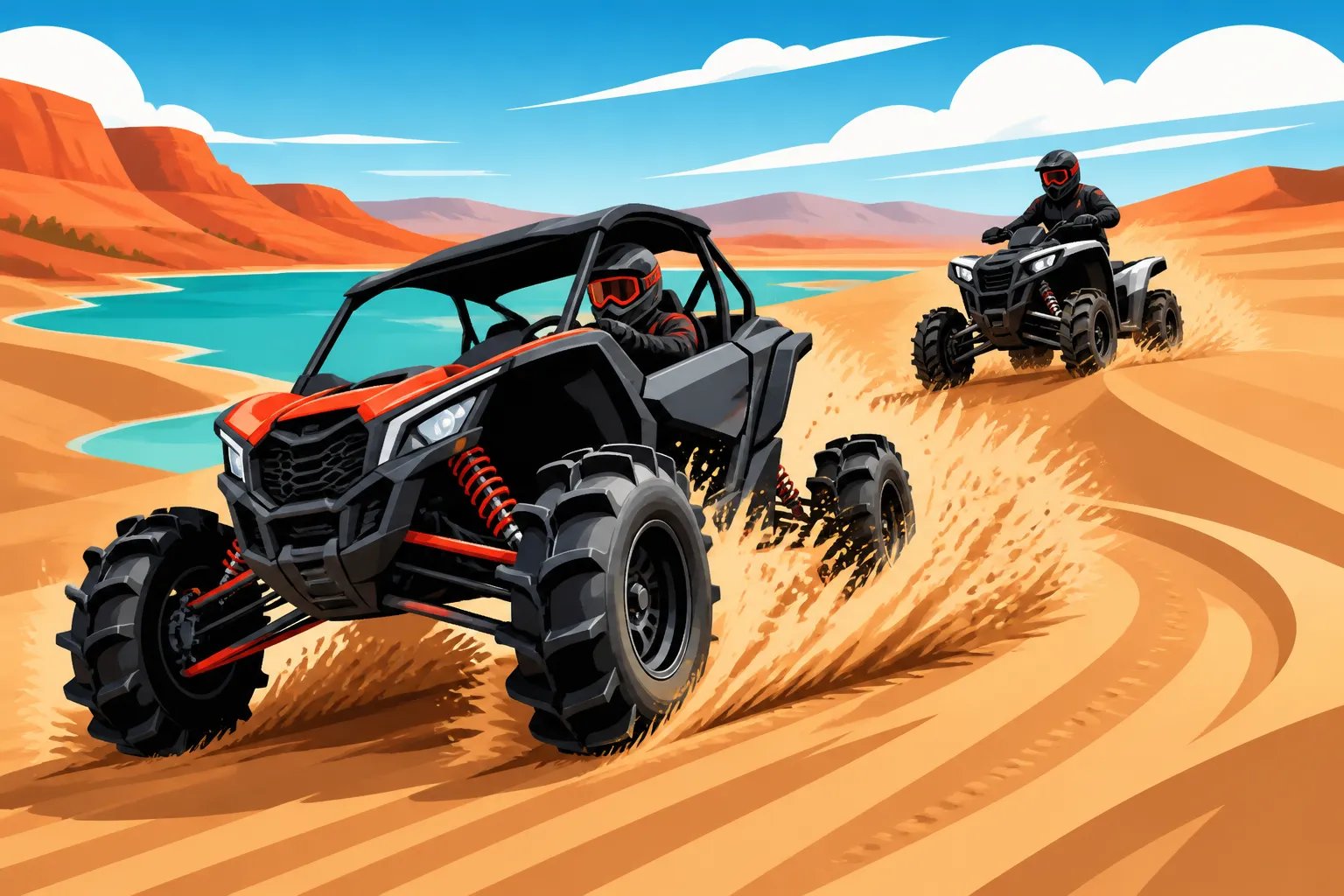
A paddle tire has raised bars across its tread. Those bars scoop and push loose sand backward, helping the tire move the machine forward instead of spinning without much traction. That extra bite can be useful on dune faces, where ordinary trail tires may dig in, struggle to climb, or throw sand without making much progress.
Paddles are generally used on the rear wheels, which provide the main drive force on many ATVs and UTVs. The front tires serve a different purpose: they help the rider steer. Sand-specific front tires are often narrower or have a ribbed design intended to track through loose sand, rather than using rear-style paddles that could make steering feel awkward.
That distinction matters when you shop. A set advertised as “sand tires” may include different front and rear designs, and a rear paddle that fits your wheel does not automatically make a good front tire. Check the tire maker’s intended use, the wheel fitment, and your vehicle manufacturer’s requirements before buying.
Paddle tires also trade versatility for sand performance. Their raised tread can wear quickly on pavement, gravel, rock, or other firm surfaces. They may feel less predictable when a route moves from soft dunes to hard ground, so they are usually best treated as a specialized setup for a sand-focused outing rather than an all-purpose tire.
What they change about the ride
On soft sand, the right paddles can help a machine gain traction with less wheelspin. That can make it easier to climb a dune at a steady pace, provided the vehicle has the power, the rider chooses a suitable line, and the sand conditions are appropriate. Tires are only one part of the equation: momentum, throttle control, machine weight, and rider judgment still matter.
The added traction can also change how the vehicle responds. A machine may accelerate more assertively, and a tire that hooks up well can place more demand on the drivetrain. That is one reason to confirm that a tire is suitable for your ATV or UTV instead of choosing solely by appearance or by what another rider uses.
On a side-by-side, account for the vehicle’s weight, passenger load, cargo, and intended speed. On an ATV, fit and handling are just as important, even if the machine is lighter. Use manufacturer guidance for tire size, load, and pressure rather than copying a number from a different machine or a social media post.
If this is your first dune trip, a useful starting point is to read [The Best ATV and UTV Trails in Utah] and [Sand Hollow and Sand Mountain: A Rider's Guide]. They can help you think beyond the tire purchase and plan for the riding area as a whole.
Choosing paddles for Sand Hollow or Little Sahara
Match the tire to your machine and riding style
Start with the owner’s manual and the tire manufacturer’s fitment information. Confirm the approved or appropriate tire dimensions, wheel size, load capacity, and any other restrictions that apply to your machine. A tire that physically mounts may still be a poor match if its size or load rating is unsuitable.
Next, consider how you actually ride. A rider who spends most of the day on open sand may value strong forward traction. Someone who expects to cross firmer sections, access roads, or mixed terrain may prefer a less aggressive setup or may decide that a sand-specific tire is not worth the tradeoff for that trip. Think about the whole route, not just the steepest dune in a video.
The number and shape of the paddles can affect how a tire behaves, but more aggressive tread is not automatically better for every machine. A setup that works for a light sport ATV might not be a sensible choice for a heavier four-seat UTV. Ask a knowledgeable tire retailer or the manufacturer about the intended vehicle class and use, and be prepared to provide the machine’s make, model, year, and current wheel size.
| What to check | Why it matters | Practical next step |
|---|---|---|
| Tire size and wheel fit | Incorrect fit can affect clearance and handling | Compare the tire specifications with your manual and existing wheels |
| Load rating | UTVs, passengers, and cargo add weight | Confirm the tire is suitable for the fully loaded machine |
| Front and rear design | Front tires steer while rear tires provide drive | Choose a matched setup intended for your type of vehicle |
| Terrain mix | Paddles can wear on firm surfaces | Plan how much of the ride is actually soft sand |
| Pressure guidance | Pressure affects the tire’s footprint and behavior | Follow the vehicle and tire makers’ recommendations |
| Storage and transport | Dedicated tires may not suit the drive to the riding area | Arrange a safe way to transport or install them |
If you are comparing a few options, use the machine’s specifications as your baseline rather than relying on a friend’s setup. A tire that works well on one model, with one rider and one load, may not behave the same on a heavier or differently balanced machine.
Consider how the two areas differ
Sand Hollow and Little Sahara are both popular Utah sand destinations, but a trip to one does not guarantee that the same tire choice will feel ideal at the other. Your route, the type of machine you bring, the amount of firm ground you need to cross, and the day’s sand conditions all affect what makes sense.
At Sand Hollow, riders often plan around the dunes and the broader mix of riding opportunities in the area. Before setting out, review route access and restrictions for your planned ride. For trip planning, [Utah's Sand Mountain and Its Red Sand] and [Sand Hollow State Park's Tunnel to the Dunes] offer useful context for the area. Keep in mind that access details and closures can change; check relevant land-manager information before you head out.
Little Sahara is another destination where riders may spend substantial time in dunes, but it still pays to plan for the full outing rather than selecting tires for one feature. Read [Utah's Little Sahara and Its Sand Bowls] and [Are Little Sahara's Dunes Good for Beginners?] if you are deciding whether the area and terrain suit your group.
A map app such as onX Offroad can help you review routes and orient yourself while planning, especially when you are comparing a sand-focused loop with nearby connections. Use it as a planning aid, not as a substitute for current official maps, posted signs, or closures from the relevant land manager. The same caution applies at both Sand Hollow and Little Sahara: a line visible on a map is not necessarily open or appropriate for every machine.
Preparing your machine and tires for a dune day
Check fit, condition, and pressure before unloading
Inspect the tires before the trip, not in the staging area when everyone is waiting. Look for cuts, cracking, damaged sidewalls, loose or damaged hardware, and anything caught in the tread. Check the wheels and mounting points as well. A tire problem that seems small in the driveway can become a long delay once you are away from your trailer and tools.
Confirm that the paddles are mounted in the correct direction if the manufacturer specifies a direction of rotation. Check that the front and rear tires are in their intended positions, and verify that the tire clears suspension and bodywork through the range of movement. Do not assume clearance based only on the machine sitting still on level ground.
Pressure deserves care. The correct setting depends on the tire, wheel, machine, load, and conditions. Too little pressure can increase the risk of tire or wheel problems; too much can reduce the tire’s useful contact with soft ground. Do not copy a pressure setting from a different model or assume that a number used by another rider is safe for your setup. Follow the vehicle and tire makers’ recommendations, and get qualified advice if their guidance is unclear.
Before the ride, check that you have the basic tools and equipment your machine requires, and think about how you will deal with a flat or a tire that comes off its bead. A tire repair kit may be useful, but it is not a replacement for understanding what repairs are suitable for your particular tire. For a broader preparation list, see [What to Carry on a Utah Day Ride] and [Recovery Gear for Utah Sand and Slickrock].
Adjust your riding habits to the tires
Paddles can help the machine move through sand, but they do not make steep slopes automatically safe. Approach dunes with room to see the route and other riders. Avoid following too closely, and do not climb a face if you cannot see what is beyond the crest. A smooth, controlled input is generally easier to manage than sudden acceleration or abrupt braking.
Leave space between machines. Sand thrown by a rear tire can hit the rider behind, and a vehicle that loses momentum may need room to turn or back away safely. Agree on simple group signals before leaving the staging area, especially if riders have different experience levels or machines with different capabilities.
Be mindful of changing terrain. A machine can transition from loose sand to firmer ground quickly, and the tires may respond differently once they do. Reduce speed when visibility is limited, keep a safe distance from other riders, and avoid sharp maneuvers that could unsettle the vehicle. Passengers should use their restraints and follow the vehicle maker’s guidance.
If you are new to dunes, consider riding with an experienced person or choosing a route that matches your comfort level. [Utah's Sand Dune Riding Areas] can help you compare options, while [Utah Trail Maps and How to Read Them] is useful for thinking about navigation before the ride. If you use onX Offroad to save or review a route, download what you need before entering an area where phone reception may be unreliable, and carry a backup navigation plan.
Common paddle-tire mistakes to avoid
Buying for appearance instead of use
A tall, aggressive paddle can look impressive, but the best choice is the one that suits the machine, rider, and terrain. A tire selected without checking fitment or load suitability can create clearance, handling, or durability problems. If you are uncertain, ask the tire maker or a qualified retailer to confirm the application before ordering.
Another common mistake is buying rear paddles without considering the front tires. Rear traction may improve while steering remains vague or difficult if the front setup is not appropriate for sand. Treat the front and rear as a system, and verify that the combination is intended for your vehicle type.
It is also easy to overlook the practical side of a sand-only setup. If you have to travel on firm ground to reach the dunes, consider how you will transport the tires and where you will change them. Riding paddles over hard surfaces can accelerate wear, so plan the logistics instead of assuming the tires can stay on for every mile of the trip.
Treating the tires as a substitute for planning
Paddles cannot replace route knowledge, safe spacing, or sound judgment. Before leaving, check current access information, weather and local conditions, and any rules that apply to the area. A route planner can make it easier to organize a trip, but verify details with official information and signs on the ground. onX Offroad can support route research, while official sources should guide decisions about access and closures.
Do not assume the same setup will perform identically every visit. Sand conditions, vehicle load, tire wear, and rider experience can all change how a machine behaves. If the tires feel unstable, the vehicle is not steering as expected, or the route is beyond your comfort level, stop somewhere safe and reassess rather than pushing on.
A little preparation usually saves more time than a last-minute tire swap or repair. Confirm fitment, inspect the machine, understand the route, and choose a riding plan that suits the least experienced person in your group. That approach leaves you better prepared to enjoy the dunes without expecting a set of paddles to solve every challenge.
Disclaimer
This article is for general informational purposes only and does not constitute professional advice. Laws, prices and regulations vary by location and change over time. Consult a qualified professional for guidance on your specific situation.