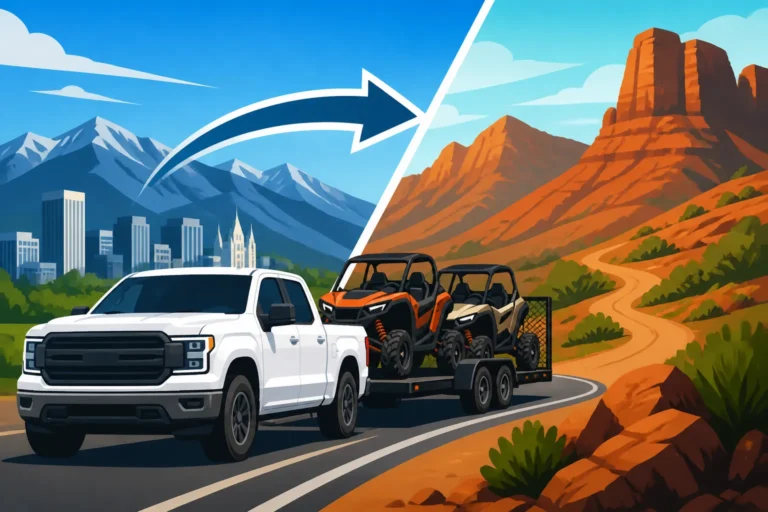
Southern Utah ATV Trips Worth Planning
Southern Utah is spectacular ATV and UTV country, but choosing a ride can feel harder than loading the trailer: sand, slickrock, narrow trails, changing weather, and long gaps between services all matter. This guide compares memorable riding areas, helps match a trip to your group and machine, and walks through the planning details that can keep a great day from becoming a stressful one.
Choose a Southern Utah Ride That Fits Your Group
A trail can look inviting on a map and still be a poor fit for your vehicle, experience, or passengers. Before choosing a destination, think about what kind of riding you enjoy, how much time you have, and whether everyone in the group is comfortable with the terrain.
| Riding area | Best suited to | What to expect | Planning consideration |
|---|---|---|---|
| Sand Hollow and Sand Mountain | Riders who want sand, open dunes, and nearby trail options | Dune faces, sandy routes, and varied terrain | Check closures, staging details, and conditions before unloading |
| Coral Pink Sand Dunes | Riders who want a scenic dune-focused trip near Kanab | Soft sand and memorable color, with terrain that can challenge less experienced riders | Confirm riding boundaries and prepare for heat, wind, and sand |
| Kanab-area routes | Riders interested in desert scenery and a base near town | A mix of route types and landscapes, depending on the route | Confirm that every planned segment is open and appropriate for OHVs |
| Three Peaks near Cedar City | Riders looking for a convenient day ride near Cedar City | A network of routes and riding opportunities in a high-desert setting | Conditions can change with weather and season |
| Grand Staircase area roads | Riders who prefer big landscapes and route-finding | Long, remote-feeling drives and wide-open scenery | Check land rules, route status, fuel, and communications carefully |
Start with the kind of riding you actually enjoy
If your group wants to climb dunes, carve turns in soft sand, or watch a rider crest a ridge against a wide desert skyline, the Sand Hollow and Sand Mountain area may be a natural fit. Dune riding is lively and demanding, though. A newer driver can find the constant changes in traction tiring, and a passenger who dislikes bouncing or leaning may not enjoy a long session on sand.
For a more varied trip, look at areas where you can choose among different route types instead of committing the whole day to one surface. The broader Kanab area, for example, can suit riders who want desert scenery and access to town services, provided they take time to plan routes rather than assuming any visible road is open to motorized use. A route’s appearance on the ground does not establish that it is legal to ride.
If your group prefers a less dune-centered outing, Three Peaks near Cedar City can be worth considering. It offers a different feel from the sand country farther south, and the town makes it easier to organize food, fuel, and an overnight stay. Still, “easier to reach” does not automatically mean easy riding: look at route details and conditions before choosing a loop.
Match the trip to your machine and passengers
Machine width can limit which routes are suitable, especially if you are bringing a wide side-by-side. Narrow tracks, tight turns, rough ledges, or vegetation close to the route can make a large vehicle awkward even when the surface itself looks manageable. If you have a group with mixed machine sizes, choose a route that the widest vehicle can navigate safely, not just one that works for the smallest quad.
Passengers shape the day too. A four-seat UTV may keep a family together, but a rough route can feel long to a child or an adult who is new to off-road travel. Build in breaks, carry enough water, and be honest about whether the passenger enjoys bumps, dust, and sustained engine noise. A shorter ride that leaves everyone smiling is usually a better family trip than a long route that becomes an endurance test.
Before you commit, compare your experience with the route’s actual demands. Riders who have never driven in deep sand may want a supported first outing or a gentler area before tackling steep dune faces. Riders new to slickrock should learn how their tires behave on rock before attempting difficult ledges. For more route-planning context, see Southern Utah ATV Trips Worth Planning is not an appropriate link format, so use the requested internal-link style: [Utah Dunes or Utah Mountains for a First Trip].
Sand Hollow and Sand Mountain for a Dune-Centered Trip
The Sand Hollow area near Hurricane is one of the region’s best-known destinations for off-highway riding. It gives riders the chance to combine sandy terrain with a southern Utah getaway, but that variety also means the group needs to understand where it is staging, which routes are open, and what the machine can handle.
Plan around Sand Hollow’s terrain and staging
Sand Hollow State Park and the surrounding Sand Mountain riding area are not one interchangeable riding space. Park boundaries, recreation-area rules, route access, and fees can differ. Before departure, confirm where you intend to ride and where you will unload. A map pin that looks close to a trail does not necessarily indicate a legal or convenient staging location.
The sand itself can change the character of the ride. On a cool morning, a route may feel firm and predictable; later, warmth and traffic can loosen the surface. Soft sand asks for steady momentum and smooth steering. Abrupt braking or sharp turns can bog a machine down or unsettle a less experienced driver. Give your group time to learn the surface in an open, appropriate area before heading toward more demanding terrain.
If you are visiting during a busy period, expect more activity at popular access points. Keep a safe distance from other machines, avoid stopping where riders cannot see you, and do not assume a dune face is clear just because it looks empty from below. A ridge can hide riders on the far side. Use established staging areas and keep your route plan flexible if parking or trail conditions are not what you expected.
Make a safer first day in the sand
First-time dune riders often focus on choosing a line and forget how quickly sand drains energy. Set a conservative pace. Let drivers take turns practicing in open terrain, and agree on a meeting point before the group spreads out. A simple plan such as “stop at the marked staging area after the first loop” can prevent a confusing search when dust reduces visibility.
Avoid following another machine so closely that you cannot see its wheels or its line. Dust can make even a familiar route difficult to read, and a rider ahead may suddenly brake or turn. Use a whip flag where required, keep it visible, and stay alert at intersections and ridgelines. Don’t crest a dune blindly; approach in a way that allows you to see what lies beyond before committing.
For trip details and destination-specific ideas, browse [Sand Hollow and Sand Mountain: A Rider's Guide]. If you are comparing riding areas for a group, [Sand Hollow With a Two-Wheel-Drive Machine] and [Beginner Lines at Utah's Sand Mountain] can help frame the terrain questions to investigate. Always confirm local access information before the trip, especially if your plan depends on a particular trail or staging location.
Coral Pink Sand Dunes and the Kanab Area
Coral Pink Sand Dunes State Park, near Kanab, offers a memorable landscape and a distinctly different riding experience from rocky routes or forest trails. The color of the dunes is part of the draw, but soft sand, wind, and sun deserve as much attention as the scenery.
Build a Coral Pink visit around the conditions
A Coral Pink trip works best when you treat it as a destination rather than a quick stop on a long driving day. Give yourself enough time to unload, review the riding boundaries, and get comfortable with the sand. If you arrive tired after a long tow, it may be wiser to settle in, check the conditions, and ride the following morning rather than rushing onto the dunes.
Wind can move sand and reduce visibility, while hot weather can make exposed riding feel punishing. Carry water within reach, not buried under other gear, and protect eyes and skin from blowing sand and sun. Goggles are often more practical than ordinary sunglasses in dusty conditions. Bring a backup way to protect your face and eyes if the wind picks up, and make sure children have gear that fits them properly.
The dunes may look open, but access and permitted riding zones matter. Follow posted signs and local instructions, and do not cross into closed or protected areas for a better view or a shortcut. If a route or boundary is unclear, pause and check before proceeding. A little patience at the start is far better than discovering mid-ride that the group has entered an area where machines are not allowed.
Use Kanab as a base, not an excuse to improvise
Kanab is a useful base for a southern Utah trip, with lodging, food, and services that can make a multi-day visit more comfortable. It also puts travelers within reach of several scenic areas. That convenience can tempt visitors to make up routes as they go, but desert roads may cross different land jurisdictions and have different restrictions. Plan specific routes before leaving town.
A good Kanab itinerary leaves room for a weather or condition change. If wind makes dune riding unpleasant, shift to a legal route that suits your machine and experience rather than forcing the original plan. If rain has made a road muddy or vulnerable, postpone it. Driving on a wet route can create damage and increase the chance of getting stuck, even if the ground looked dry when you began.
For a more detailed look at the area, see [Kanab Area Trails and Hog Canyon] and [Coral Pink Dune Hours and Unloading Areas]. If your group is bringing smaller machines or young riders, [Coral Pink for a Family With Small Quads] offers a useful planning angle. Keep the day realistic: a scenic stop, a manageable ride, and a relaxed meal in town can make a better family outing than trying to cover every nearby destination at once.
Three Peaks and Cedar City Area Riding
Three Peaks, outside Cedar City, offers a different kind of trip from the region’s dune destinations. Its location can make it convenient for a day ride or as part of a larger southern Utah itinerary, especially for travelers who want to spend less time driving between town and trail.
Why Three Peaks can work well for a day out
A nearby riding area can be a relief when you have already spent hours towing. You can stay in Cedar City, organize supplies, and head out without turning the entire day into a long transfer. That makes the area appealing for families, mixed-experience groups, and visitors who want a shorter ride before continuing toward other southern Utah stops.
The setting is still high desert, so do not assume the route is effortless because it is close to town. Loose ground, rocks, uneven surfaces, and changes in visibility can challenge new riders. Check the route length and terrain against the least experienced driver in the group. If a beginner is nervous, choose a conservative loop and agree in advance that turning back is a perfectly acceptable option.
Weather can also influence the experience. A cool day may be comfortable for a longer outing, while wind, rain, or heat can change both traction and visibility. Look at the forecast for the riding area, not only the town where you are staying. Conditions can vary over short distances, and a route that seems straightforward from Cedar City may feel very different once you are exposed on open ground.
Make Cedar City part of the itinerary
Cedar City is a practical place to restock, get a meal, or stay overnight before continuing through the region. If you are combining Three Peaks with a trip toward Kanab, plan the driving time and towing logistics carefully. Distances across southern Utah can feel longer than they appear on a map when you are towing, making fuel stops, meal breaks, and daylight important parts of the schedule.
Keep the day’s riding plan distinct from the road-trip plan. It is easy to underestimate the time required to unload, check machines, ride, refuel, and secure everything again. Build in a buffer rather than scheduling a full ride followed by a late-night drive. If a machine has a mechanical problem or a rider needs a rest, that buffer gives the group options.
For more destination ideas, see [Three Peaks Near Cedar City, Utah] and [Utah Rides Within an Hour of Cedar City]. Those topics can help you decide whether to make the area a standalone ride or one part of a broader itinerary. As with every riding area, check route status and land rules before heading out, since access can change with closures, maintenance, or seasonal conditions.
Planning Longer Desert Routes Around Kanab and Grand Staircase
Southern Utah’s open landscapes invite long exploratory days. Routes in the Kanab and Grand Staircase region can reward careful planning with dramatic scenery, but remoteness makes preparation more important than it is on a short ride close to town.
Understand what “remote” means before you go
A route can feel isolated even when it appears near a paved highway on a map. There may be few services, limited cell reception, and long stretches between convenient places to stop. Carry water, food, basic tools, and recovery equipment suited to your machine and the surface. Tell someone where you intend to ride and when you expect to return.
Plan fuel conservatively. Do not rely on a map estimate that assumes ideal conditions, particularly if the route includes sand, climbs, frequent stops, or low-speed technical sections. A machine working hard can use fuel differently from one cruising on a smooth road. Start with a full tank, know the machine’s range in realistic conditions, and identify where refueling is possible before your trip.
Navigation deserves a backup. A phone map is useful, but batteries, signal, dust, heat, or a damaged device can turn it into a poor sole plan. Download maps for offline use where possible, carry a charging option, and keep a paper or independent navigation backup if you are entering unfamiliar country. Apps such as onX Offroad can help riders review mapped routes and orient themselves, but route information should be checked against official land-management information and signs on the ground.
Treat maps as planning tools, not permission slips
A route shown on a digital map is not automatically open to motorized travel. Roads may cross private land, tribal lands, public lands, or areas with different rules. A route can also be temporarily closed or have restrictions that a general-purpose map does not make obvious. Check current land information and posted notices before riding.
When the route is unclear, stop and verify rather than pushing forward. Do not bypass a gate, drive around a closure, or assume that an existing tire track means public access is allowed. Respecting a boundary protects the land and helps keep routes available for future riders. If you are unsure whether a road is open, choose a clearly identified route instead.
Keep your itinerary modest. On a long desert ride, the goal is not to cover the greatest distance possible. Allow time for navigation checks, breaks, changing conditions, and a slow return. A route that looks manageable on a screen can take much longer when the group stops for scenery or encounters rough ground. More route-planning guidance is available in [Reading a Motor Vehicle Use Map] and [Telling Open Routes From Closed on a Forest Map].
Plan by Season, Weather, and Daylight
Southern Utah is not one uniform climate. A sunny afternoon near Hurricane can feel very different from a cold, windy morning at a higher elevation. A successful trip depends on choosing a suitable season and adjusting the day to the conditions rather than relying on a broad regional forecast.
Spring and fall often reward flexible planning
Spring can bring comfortable riding weather, but it can also bring changing conditions, wind, and wet ground. A route that is pleasant one day may be muddy or vulnerable after precipitation. Check conditions close to departure and be willing to postpone a ride if the surface is too wet. Leaving a muddy route alone is a practical choice, not a missed opportunity.
Fall can be an appealing time to visit because daytime temperatures may be more comfortable than during the hottest part of summer. Shorter daylight still matters, especially for groups planning remote routes. Start early enough to return before dark, and make sure the group’s lights and communications are ready if the ride runs later than expected.
Holiday periods and popular travel weekends can bring heavier traffic to well-known areas. Consider a weekday visit if your schedule allows, and have an alternate staging plan in case the preferred access point is busy. On crowded days, patience and predictable riding matter: keep space between machines, watch for people walking near staging areas, and avoid creating dust or noise where others are setting up.
Summer and winter require different safeguards
Summer heat is a serious planning factor, particularly in exposed sand and desert terrain. Begin early, take regular water breaks, and build a turnaround time into the plan. If anyone develops headache, nausea, unusual fatigue, confusion, or other concerning symptoms, stop the ride and respond promptly rather than pushing through to finish a loop.
In winter, lower temperatures, shorter days, and occasional snow or ice can affect both road access and trail conditions. A route that is easy in warm weather may be uncomfortable or unsafe when shaded sections are slick or when a cold wind cuts through riding gear. Layer clothing so riders can adjust as temperatures shift, and check whether the access roads are suitable for your tow vehicle.
Weather can change quickly in exposed country. Carry layers even if the forecast looks warm, protect electronics from dust and moisture, and keep food and water accessible. If wind or visibility makes it hard to maintain safe spacing, slow down or stop in a safe place. Choosing not to ride in poor conditions is often the best decision of the day.
Permits, Safety, and Practical Trip Logistics
The trip plan is only complete when the paperwork, equipment, and return plan are sorted out. Rules can vary by residency, vehicle type, destination, and land manager, so take time to verify what applies to your specific machine and route.
Check the rules for your machine and destination
Before traveling, make sure your ATV or UTV has the registration or permit required for its use and for the places you plan to ride. Requirements can differ for Utah residents and visitors from other states, and a state registration does not necessarily replace every destination-specific permit or fee. Review the current rules for your circumstances rather than relying on an old forum post or a friend’s experience.
Riders may also have education or age-related requirements. Families should verify what applies to each young rider and passenger, including whether a certificate is needed and what supervision rules apply. Keep required documents accessible, not packed beneath camping gear, and understand whether digital copies are accepted where you are riding.
Do not assume a street-legal machine is automatically exempt from every off-highway rule or area fee. Conversely, do not assume an OHV registration gives access to every route. Start with the destination’s rules, confirm machine eligibility, and keep proof of required documents with you. Relevant background includes [Utah's Non-Resident OHV Permit Explained] and [The Utah OHV Education Certificate].
Prepare the machine and the people
A basic pre-ride check can prevent a frustrating breakdown far from help. Inspect tires, brakes, steering, lights, belts or chains, fluids, and visible fasteners. Bring tools and spare items appropriate to your machine, such as tire repair supplies and a way to inflate a tire. If your group is riding somewhere remote, add recovery gear and make sure at least one person knows how to use it.
Pack for the actual ride, not just the drive to the trailhead. Bring water, sun protection, eye protection, a first-aid kit, food, navigation, and a way to communicate. Keep gear secured so it cannot fall out on rough ground. A cooler or bag that shifts around can become a distraction and may interfere with controls or passenger space.
Set expectations before anyone starts the engine. Agree on a lead rider and a sweep rider, choose a regrouping plan, and explain what to do if someone becomes separated. Keep the pace appropriate for the least experienced person. For a fuller packing checklist, see [What to Carry on a Utah Day Ride] and [Water to Pack for a Summer Utah Ride].
Sample Southern Utah Itineraries
The best itinerary depends on how far you are traveling, how much riding your group wants, and whether you prefer one base or several overnight stops. The examples below are starting points, not fixed route instructions. Confirm that each planned route is open before setting out.
A relaxed three-day trip based in Kanab
Day one: arrive and prepare. Use the first day to reach Kanab, settle in, check machine and paperwork requirements, and confirm the next day’s conditions. If you arrive with enough daylight and energy, take time to review the planned access and staging details rather than squeezing in an unplanned ride.
Day two: ride Coral Pink or another confirmed local route. Choose a manageable outing that suits the group’s sand experience. Give new riders time to acclimate, keep the route flexible, and leave room for a break or an early return. Afterward, check the machines and make any needed repairs before the next day.
Day three: choose a different kind of ride or enjoy a slower departure. If conditions and access allow, explore a suitable route in the wider Kanab area. Alternatively, take the morning to pack without rushing and save the riding for another visit. An itinerary with breathing room is especially valuable when traveling with children or towing a large trailer.
A four-day trip linking Cedar City and Hurricane
Day one: stage in Cedar City. Arrive, unload if appropriate, and use the evening to prepare for a day ride at Three Peaks. Check the route plan, fuel, weather, and machine condition before bed. This avoids the scramble of discovering a missing strap or low tire in the morning.
Day two: ride near Cedar City. Keep the outing to a realistic length, especially if your group is new to the area. Allow time to return, pack securely, and drive toward the next overnight stop. If the ride takes longer than planned, adjust the evening schedule rather than rushing on the road.
Day three: base near Hurricane and plan Sand Hollow. Confirm where you will stage and which areas are appropriate for your machine. A group that has been riding rocky routes may still need time to adjust to sand. Start with terrain that matches the least experienced driver.
Day four: ride a shorter loop or keep a weather backup. If the group is eager, choose a route that fits the conditions and leaves time to pack. If wind, heat, or fatigue has built up, use the day for a shorter outing or a relaxed departure. That flexibility can make a multi-stop vacation feel like a holiday instead of a checklist.
A checklist for deciding whether to ride today
Before leaving the staging area, ask:
- Is the route open and permitted for our machine?
- Does the forecast suit the terrain and the group?
- Does everyone have enough water, protective gear, and fuel?
- Does someone know our route and expected return time?
- Is the route appropriate for the least experienced rider?
- Do we have a backup plan if weather or access changes?
- Can we turn around without pressure if the ride feels wrong?
If any answer gives you pause, revise the plan before starting. The best southern Utah ATV trip is not necessarily the longest or most technical. It is the one where the group gets to enjoy the landscape, rides within its limits, and returns with enough energy to talk about coming back.
Disclaimer
This article is for general informational purposes only and does not constitute professional advice. Laws, prices and regulations vary by location and change over time. Consult a qualified professional for guidance on your specific situation.