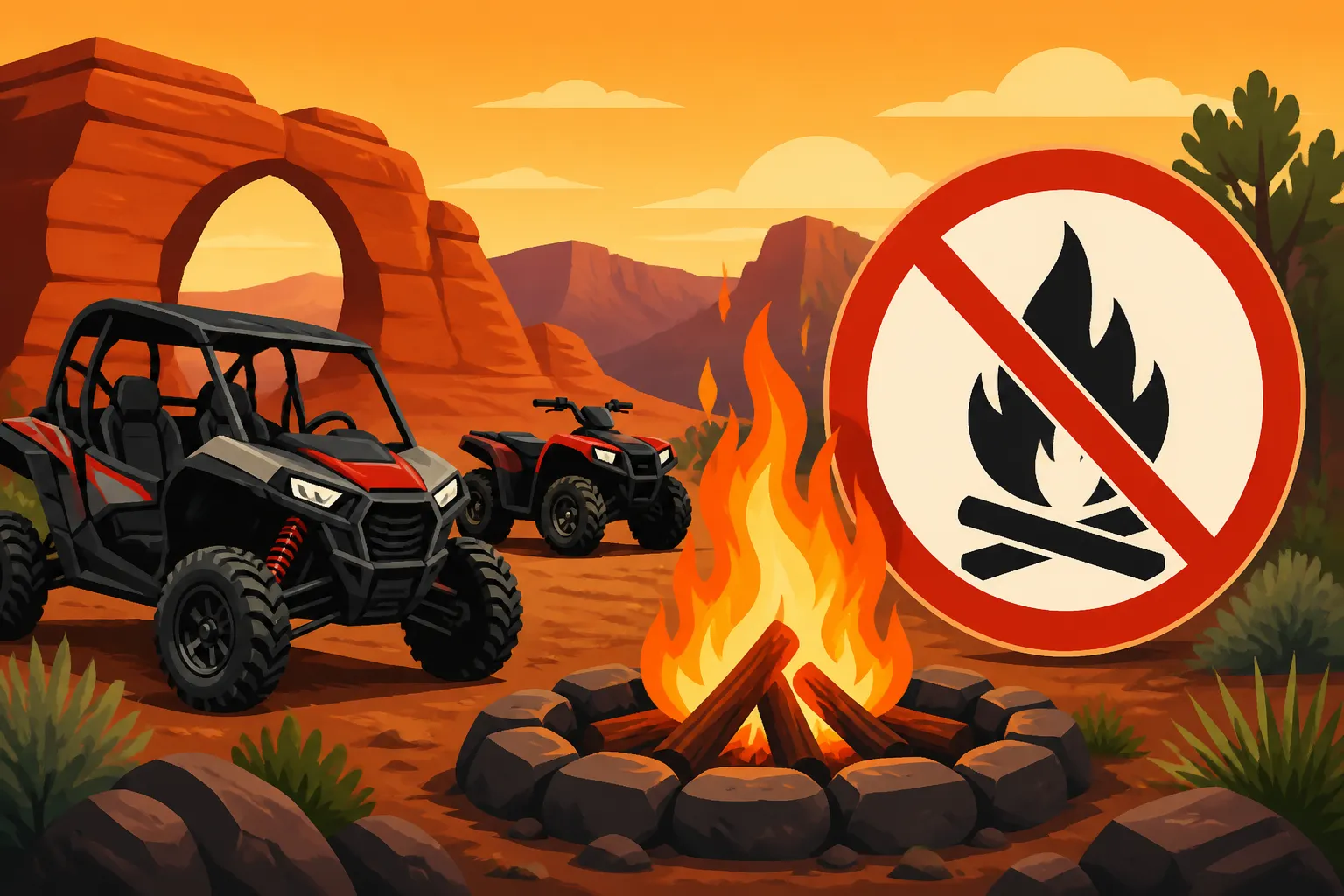
Campfire Rules During a Utah Fire Season
A ride can end with a quiet campfire—or a citation, a fast-spreading wildfire, and a ruined trip—depending on the rules in effect where you stop. Utah fire restrictions can vary by land manager, county, and conditions, and they may change while you’re traveling. This guide explains how to check the rules, choose a safer alternative, and leave camp without creating a fire hazard.
Check the rules for the exact place you plan to camp
“Utah fire restrictions” is not one statewide rule that applies identically everywhere. A campsite near Moab may fall under different orders than a spot outside Marysvale, and a ride can cross land managed by more than one agency. The practical first step is to identify where you’ll stop, not just which town or trail system you’re visiting.
Identify the land manager before you light anything
A developed campground, a state park, a national forest, Bureau of Land Management land, and private property can all have different rules. Restrictions may be issued for a specific area or land-management unit, and county or state orders can add another layer. If your route crosses several jurisdictions, the rules at your overnight campsite may not be the same as those at your lunch stop.
Look for the exact campground or dispersed camping area on a map, then identify who manages it. Check that land manager’s current fire notices and any relevant county emergency or fire information. Utah Fire Info can help you find statewide fire updates, but confirm the rules with the agency responsible for the specific place you plan to use.
Don’t assume a fire ring means a fire is allowed. A metal ring or established pit may be provided for ordinary conditions, but a temporary restriction can prohibit fires even in designated rings. The same goes for a campsite you have used before: yesterday’s permission is not proof that a fire is allowed today.
For a multi-day ride, check the restrictions for the next overnight stop before you leave home and again while traveling. An itinerary might take you from a developed campground to dispersed camping near a trail system, and each stop may be governed by different rules. Guides such as [Camping Beside Utah's OHV Trails] and [Dispersed Camping Rules Near Utah Trails] can help with campsite planning, but neither replaces an active fire order.
Understand what a restriction actually prohibits
A fire restriction can limit or prohibit specific activities rather than banning every possible source of heat. Depending on the order, rules may address wood and charcoal fires, portable stoves, smoking, fireworks, or other activities that could start a wildfire. A full fire ban may be broader than a restriction that allows certain devices under specific conditions.
Read the actual notice, not just a social post or a sign photographed weeks earlier. Pay attention to the area covered, effective dates, permitted equipment, and any conditions attached to an exception. For example, an order may treat a fully enclosed gas stove differently from a wood fire, but that does not mean every stove is automatically permitted in every location.
If the language is unclear, don’t make a guess based on what seems reasonable. Contact the relevant land office or campground operator and ask about the specific device and campsite. When you can’t confirm that a fire is allowed, plan for a no-fire evening. It’s a small inconvenience compared with an escape fire in dry brush.
| Where you plan to stop | What to verify | A safer planning assumption |
|---|---|---|
| Developed campground | Current campground and land-manager rules | A fire ring does not guarantee fires are allowed |
| Dispersed campsite | Land manager, local restrictions, and site-specific rules | Don’t assume a fire is permitted because a previous visitor had one |
| Private land | Owner permission and any applicable fire orders | Permission from the owner does not necessarily cancel public restrictions |
| A route that crosses jurisdictions | Rules for each section and overnight stop | Check again when you reach a new management area |
| A campsite with unclear signage | Current official notice or direct confirmation | Skip the fire until you have a clear answer |
Plan a no-fire option before you get to camp
Riders often think about fire restrictions only when they’re unloading the UTV or setting up a tent. That’s when the alternatives can feel inconvenient: dinner still needs cooking, the temperature is dropping, and there may not be a nearby store. A little preparation makes a no-fire camp routine much easier.
Bring equipment that is allowed under the active order
A portable stove can be useful for a hot meal, but whether it is allowed depends on the current restriction and the device’s design. Check the order before relying on it. Carrying a stove is not a workaround for a restriction that prohibits its use, and a fuel-powered device still needs careful handling around dry vegetation.
Pack meals that don’t depend on cooking in case your stove is not permitted or stops working. Sandwiches, shelf-stable food, fruit, and snacks can cover a simple dinner without a flame. If you’re traveling with children or a group, agree on this backup before the ride; it’s easier to manage expectations at home than after a long day on the trail.
Warmth also deserves a plan. Bring suitable layers, dry sleepwear, and sleeping gear for the conditions rather than counting on a campfire to take the edge off. A fire can feel comforting, but it is not a reliable substitute for insulation, especially if wind picks up or clothing gets damp.
For day rides, include a way to carry drinking water, food, and essential safety items even when the plan changes. [What to Carry on a Utah Day Ride] is a useful companion when you’re building a trail kit. If the campfire plan falls through, you’ll be glad your comfort and meal plans don’t depend on an open flame.
Choose a campsite and trip plan with fire risk in mind
A legal fire can still be a poor choice in the wrong conditions. Wind, dry grass, loose leaves, and nearby brush can turn a small flame into a dangerous one quickly. If conditions feel gusty or unusually dry, choose a no-fire evening even when a fire appears to be permitted. Follow any official wind or fuel-related restrictions rather than trying to judge the risk from the campsite alone.
Be especially thoughtful about where you park and unload. Hot vehicle parts, exhaust, or a dragging chain can ignite dry vegetation. Avoid driving or parking on dry grass when you can use a durable surface, and check your machine and trailer before leaving a staging area. An ATV or UTV can introduce fire risk even when nobody has lit a campfire.
A route-planning tool such as onX Offroad can help you see public-land boundaries and organize a trip, but a map is not a fire-permission notice. Use it to understand where your route goes, then verify restrictions with the land manager for each area. The app can help you notice that a ride crosses a boundary; the agency’s current order determines what is allowed there.
If restrictions change along your route, be ready to change the overnight plan. Check [Checking Utah Trail Conditions Before You Tow] before setting out, and review [Trail Closures Utah Riders Should Check First] when access or conditions may affect your plans. Trail and fire notices solve different problems, so check both.
If a campfire is allowed, reduce the chance of escape
Permission is not a guarantee that conditions are safe. If the current rules allow a campfire and you decide to have one, keep it small, stay present, and make extinguishing it part of the plan from the beginning. A campfire should never become an unattended task while everyone heads to bed or leaves for another ride.
Prepare the area and keep the fire controlled
Use an established fire ring where one is provided and where fires are allowed. Don’t build a new ring beside dry brush or under low branches. Clear away combustible material only as directed by the land manager, and follow any required distance or equipment conditions in the active order. If you cannot prepare the area as required, don’t light a fire.
Keep the fire modest and use only permitted fuel. Never burn trash, plastic, cans, or other materials that can produce hazardous smoke or scatter embers. Avoid adding wood faster than it can be managed, particularly when wind is moving sparks toward grass or trees. If embers are escaping or the flame is difficult to control, put it out.
Have water or another required extinguishing method ready before lighting the fire—not stored in the truck a long walk away. Keep children and pets at a safe distance, and make sure someone responsible is watching the fire at all times. “We’ll be right back” is not supervision if the group is leaving the campsite.
Extinguish it completely before bed or departure
When you’re finished, put the fire out well before you intend to sleep or leave. Follow the land manager’s instructions and use water when appropriate, adding it carefully to avoid spreading embers. Stir the material, wet the remaining coals, and check for heat. Repeat until nothing is warm or glowing.
Don’t bury a live fire and assume the dirt has made it safe. Heat can remain underneath and reach roots or dry material. Likewise, don’t leave a fire ring simply because the visible flames are gone. If you can still feel heat or see a glow, it is not fully out.
Before departing, look around the site for stray embers and hot material, and make sure the fire area is cold. This final check matters when you’re packing in a hurry to catch a trail start or beat afternoon heat. Put fire tools and water back where they belong only after the fire is fully extinguished.
Handle restrictions and warning signs responsibly
Fire orders are one part of trip planning; safe riding and respectful land use matter too. A restriction may appear in a notice, at a campground entrance, or at a trailhead. Treat posted directions as a reason to pause and confirm the rules, not as something to interpret loosely because you have driven a long way.
If you discover a restriction after arriving
Don’t light a fire while you try to work out whether the rule applies. Read the notice carefully, note the location and effective period, and check the land manager’s official update. If you still can’t tell whether your campsite or stove is covered, contact the agency or choose a no-fire plan.
If the restriction makes your planned camping setup impractical, consider moving to a suitable, permitted location or staying somewhere with facilities that fit your needs. Don’t relocate to an unapproved pullout or assume that private-looking land is open for camping. For public-land access, [What Closed Gate Means on Public Land] offers helpful context on why barriers and posted directions deserve attention.
Avoid relying on old screenshots, outdated travel posts, or a friend’s recollection of last season. Conditions and orders can change quickly, and a notice that was accurate earlier in the week may no longer describe the situation. Check again at the trailhead or campground, especially if you’ve traveled through different counties or management areas.
If you see smoke or a possible escaped fire
If you spot smoke or flames that appear uncontrolled, move to a safe place and contact emergency services or the appropriate land-management authority. Share the clearest location information you can, such as a nearby road, trailhead, campground, or visible landmark. Don’t put yourself or your group at risk by attempting to fight a growing wildfire.
If you’re the person whose fire escapes, act quickly: alert others, call for help, and give responders an accurate location. Don’t leave the area without reporting the incident, and don’t assume the fire is out just because flames are no longer visible. A smoldering edge can remain hazardous.
After the trip, review what worked and what didn’t. If the meal plan depended on an open flame, add a no-cook backup to your packing list. If a route crossed into a different jurisdiction, note where you needed to check another agency’s rules. Small adjustments make the next Utah riding trip smoother—and help protect the places riders return to.
Disclaimer
This article is for general informational purposes only and does not constitute professional advice. Laws, prices and regulations vary by location and change over time. Consult a qualified professional for guidance on your specific situation.