Permit Rules After Moving to Utah
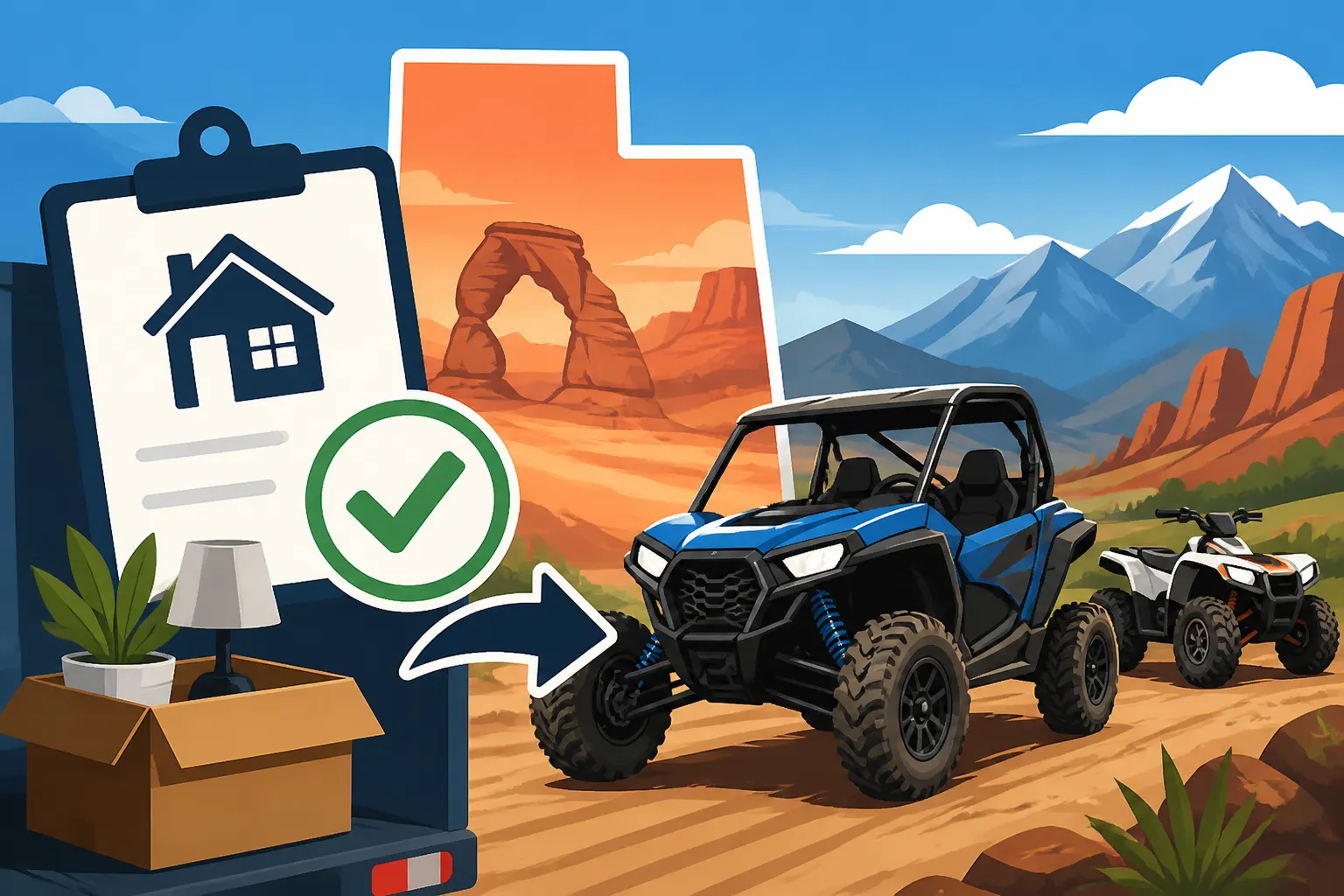
Moving to Utah with an ATV or UTV can leave you wondering whether your out-of-state registration still works, whether you need a visitor permit, and how quickly you must switch paperwork. The key is to separate Utah registration from a nonresident permit: once you become a Utah resident, plan to register your machine under Utah’s rules and confirm the transition requirements before riding public land.
The main rule: a resident’s registration is not a visitor permit
Utah’s nonresident OHV permit is intended for eligible visitors bringing machines registered elsewhere. It is not a substitute for Utah registration once you have moved to the state and become a resident. Utah no longer relies on broad reciprocity for out-of-state OHV registrations, so a registration card from your former state does not automatically settle the Utah requirements for riding public land.
That distinction matters because people often use “registration,” “sticker,” and “permit” to mean the same thing. They are different paperwork routes:
| Your situation | Paperwork to investigate | What not to assume |
|---|---|---|
| You are visiting Utah with an out-of-state machine | Whether a Utah nonresident permit is required or an exemption applies | That your home-state registration is automatically accepted |
| You have moved to Utah and own an OHV | Utah title and registration requirements for your machine | That a visitor permit replaces resident registration |
| Your machine is street legal | Road registration, insurance and OHV requirements that apply to your use | That a road plate removes every OHV obligation |
| You ride only on private property | Whether registration or other rules apply to your exact use and location | That private-land use is a blanket exemption for every circumstance |
For a visitor who still lives elsewhere, start with Utah’s Non-Resident OHV Permit Explained and Utah Ended OHV Reciprocity: What Visitors Do Now. Those explain the visitor process, not the process for someone who has established Utah residency. If you are moving, the relevant question is how to bring the machine into compliance as a Utah-owned vehicle.
The practical takeaway is straightforward: do not buy a nonresident permit simply because it seems like the quickest way to keep riding after your move. First establish which category you are in, then confirm what the state requires for a new resident’s machine. A permit intended for visitors may not resolve a resident’s title or registration obligations.
A move can also involve two different timelines. You may be changing your personal residency while also transferring ownership records, obtaining a Utah title, or correcting a mismatch between the machine and its documents. The deadline and steps can depend on details such as the machine’s type, its title status, and where it was previously registered. Confirm those requirements with Utah’s official sources rather than relying on a visitor-permit rule or advice from another state.
What to do with an out-of-state ATV or UTV
Treat the move as a paperwork transfer, not just a sticker change. Before you ride, gather your ownership documents and check how Utah handles your machine’s title and registration category. Moving to Utah With an ATV You Already Own covers the broader move-in process, while How Soon New Residents Must Register a UTV focuses on timing. Because deadlines and requirements can change, verify the current rule with the Utah DMV or the relevant state OHV office.
Gather the records before making a trip
Pull together the documents you have for the machine, including its current registration, title if one exists, bill of sale or other ownership record, and identification. Check that the name on the paperwork matches the person who will register it. If there is a lien, missing title, or other ownership issue, resolve it before assuming that an ordinary registration transaction will be enough.
A title from another state may need to be reviewed under Utah’s rules. If you are unsure how that title will be handled, see How Utah Handles a Title From Another State. Requirements can differ depending on whether the machine was titled, whether its identifying information is clear, and whether the paperwork shows a complete ownership chain.
Check the vehicle identification number on the machine against the documents. A mismatch, unreadable number, or missing paperwork can add steps. Do not alter or replace an identification plate yourself. If the VIN needs verification, ask what Utah requires before arranging an inspection. VIN Inspections for Utah ATV Paperwork explains why an inspection may be part of the process.
Identify the machine and its intended use
Utah’s paperwork can depend on whether the vehicle is treated as an OHV and whether you intend to ride it off highway, use it on roads, or both. An ATV, UTV, dirt bike, and a road-registered vehicle may not follow identical steps. If the machine is modified or converted for road use, check that status separately instead of assuming the existing paperwork covers both kinds of riding.
A road plate and an OHV decal serve different purposes. If you intend to use public OHV routes as well as public roads, ask whether your machine needs both types of compliance. A street-legal setup does not automatically mean that every OHV-specific requirement disappears. Utah OHV Registration vs Street-Legal Registration explains the distinction, and Carrying Both Registrations on One Machine is useful if your machine will be used in both settings.
Complete the Utah registration process
Once you know which category applies, follow the Utah process for your machine and title status. Bring the records the state requests and ask about any inspections or additional documentation before you visit. A completed transaction may involve more than receiving a decal; for some owners, title work and registration are separate parts of getting the machine’s records in order.
If the vehicle has no title, an incomplete title, or a problem with the seller’s paperwork, pause before riding on the assumption that an out-of-state registration is enough. The right fix depends on the history of the machine. A missing title is not automatically proof that the machine is ineligible, but it can require a different process. Use the situation-specific resources Registering a UTV in Utah Without a Title and No Title From the Seller: What Utah Requires if they match your circumstances.
What to check before riding during the transition
Moving does not necessarily mean every document changes on the same day. But a pending move or pending application should not be treated as permission to ride. Before taking the machine onto a public trail, confirm which paperwork is valid for your residency status and whether you need a Utah registration, an applicable permit, or both for your particular use.
Do not treat an application as proof of approval
A receipt or confirmation that you submitted paperwork may not serve as the registration document required for riding. Ask what proof you can carry while a transaction is being processed and whether it authorizes operation before the final registration or decal is issued. If you are waiting for a decal, confirm whether the state provides an interim document and follow its display instructions.
Likewise, an old out-of-state decal does not necessarily satisfy Utah’s resident requirements. A nonresident permit may apply to a visitor, but it should not be used to avoid clarifying the rules for a person who has moved. If your application is delayed or the machine’s title needs review, wait until you understand what the state allows.
Keep education requirements separate from registration
Registration and rider education are separate questions. Utah has OHV education requirements for certain riders, and the rules may depend on age or other details. A machine can be registered while a rider still needs a required certificate. Conversely, completing a course does not register the vehicle or replace its permit or title paperwork.
Check The Utah OHV Education Certificate for the education requirement and verify whether it applies to each person who will operate the machine. Do not assume a certificate from another state is accepted without checking Utah’s current rules. Also confirm whether the certificate must be carried or shown in a particular form.
Carry the right documents on the ride
Once the paperwork is in order, make sure the operator can show the documents required for the trip. What you need may depend on whether the machine is registered in Utah, whether a permit applies, and whether the ride is on public land. What Utah Riders Must Carry on Public Land provides a useful checklist. Keep digital copies as backups, but do not assume a phone image will satisfy every document requirement.
If you are riding with family or friends, check the obligations for each machine and each operator. A permit or registration associated with one vehicle should not be assumed to cover another. Education requirements also apply to riders individually, not to a group simply because one person holds a certificate.
Finally, check the land manager’s local rules before heading out. State registration does not guarantee that a route is open, that a park entrance fee is covered, or that the trail allows your vehicle. Utah public lands may have additional route, permit, or access requirements. Treat registration as one part of readiness, not as universal permission to ride anywhere.
A practical move-in checklist
Use this sequence to avoid paying for the wrong paperwork or arriving at an office without the documents needed to finish the transaction.
- Confirm your residency status. If you are still visiting and have not established residency, check the visitor permit rules. If you have moved to Utah, investigate resident registration rather than assuming a nonresident permit applies.
- Identify the machine’s category and use. Confirm whether it is an ATV, UTV, or another type of vehicle, and whether you plan to use it off highway, on roads, or both.
- Gather ownership records. Locate the title, current registration, proof of purchase, lien information if relevant, and identification. Compare the VIN and owner name across documents.
- Check for title or VIN issues. Resolve missing, inconsistent, or unclear records before relying on the machine’s old registration.
- Verify the current Utah process and deadline. Ask the Utah DMV or the appropriate state OHV office what applies to a new resident with your machine’s specific paperwork. Confirm any deadline rather than relying on an old checklist.
- Complete registration and title work. Follow the instructions for the machine’s category and obtain the required proof and decal before riding where they are needed.
- Check rider education and land rules. Make sure operators meet any applicable education requirements and check the rules for the specific trail or recreation area.
- Carry required proof. Keep the relevant registration, permit, or education documents accessible, and verify whether digital copies are acceptable.
This order also helps separate issues that often get mixed together. A machine may need title work even if its registration is current in another state. A rider may need an education certificate even after the vehicle is registered. And a valid Utah registration does not automatically cover a state park entrance fee or local trail restriction.
If you have recently arrived and are unsure what applies, describe your situation precisely when contacting the state: say that you are a new Utah resident, explain the machine type, mention whether it has an out-of-state title, and state where you plan to ride. That is more useful than asking only whether “the sticker” transfers, because a sticker might mean a visitor permit, registration decal, or park pass.
Disclaimer
This article is for general informational purposes only and does not constitute professional advice. Laws, prices and regulations vary by location and change over time. Consult a qualified professional for guidance on your specific situation.