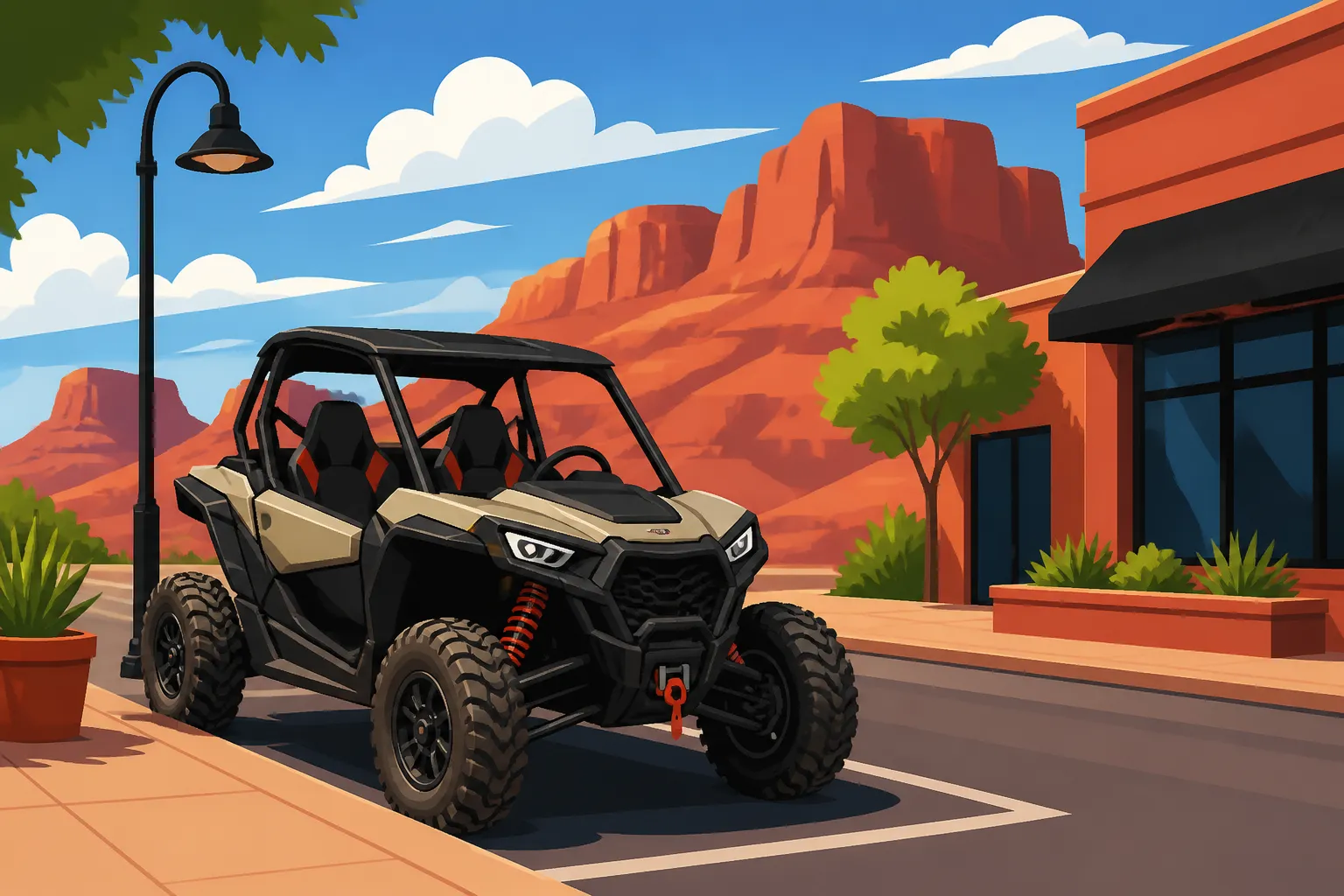
Parking a UTV on a Moab Street
You've packed up the side-by-side, driven hours to the iconic red rock landscape, and you're finally in Moab, Utah, ready to hit the trails straight from your lodging. It's incredibly convenient to have a street-legal UTV that can navigate city streets, but then you pull up to your favorite diner or an outdoor outfitter, and the question hits: where on earth do I park this thing? Parking a UTV on a busy Moab street can feel like a riddle wrapped in an orange dust cloud, especially when you're just trying to grab a burger or gear up for an epic ride. This guide is here to untangle the rules, offer practical tips, and ensure your Moab adventure stays smooth, both on and off the trail.
Understanding Moab's Unique OHV Landscape
Moab isn't just a destination; it's practically a pilgrimage site for off-highway vehicle (OHV) enthusiasts. The town embraces the riding culture, making it one of the most UTV-friendly places in the country. This welcoming attitude, however, comes with its own set of responsibilities, especially when it comes to navigating and parking within city limits.
The Allure of Street-Legal Riding in Moab
There's something truly liberating about having a street-legal UTV in Moab. You roll out of bed, hop in your side-by-side, and within minutes, you're either heading to a trailhead like Hell's Revenge or cruising down Main Street to pick up supplies. The seamless transition from pavement to dirt is a huge part of Moab's appeal, eliminating the need to constantly load and unload your machine onto a trailer. This convenience means less time fussing with logistics and more time soaking in the stunning scenery and tackling challenging terrain. Riders often come to Moab specifically for the ability to [Riding to a Trailhead From a Moab Motel] or [Riding Through Town to the Trailhead in Utah], making parking a crucial part of the overall experience. Imagine the frustration of having this freedom curtailed by an unexpected parking ticket!
Local Ordinances and State Laws
While Utah state law generally allows properly equipped and registered street-legal UTVs on public roads with speed limits up to 50 mph, cities and counties retain the authority to implement their own local ordinances. Moab, being such a popular OHV hub, has specific considerations that riders need to be aware of. You might be perfectly legal to drive your UTV down Main Street, but that doesn't automatically mean you can park it anywhere you'd park a regular car. The city has had to balance the booming OHV tourism with the needs of local businesses, residents, and general traffic flow. This creates a nuanced environment where knowing the specific local rules, like [Moab's Speed Limit for OHVs on City Streets] and [Moab's Noise Ordinance and What It Measures], becomes incredibly important, especially when you consider that a parked UTV can sometimes take up more space or be seen differently than a sedan.
The Nitty-Gritty of Parking a UTV on Moab Streets
Let's get down to the brass tacks of parking your side-by-side in Moab. It's not rocket science, but understanding the local nuances can save you a headache, or worse, a ticket.
General Street Parking Rules
For the most part, when you're parking your street-legal UTV in Moab, you need to treat it exactly like any other passenger vehicle. This means adhering to all standard parking laws that apply to cars, trucks, and motorcycles. Don't park in front of fire hydrants, within marked crosswalks, too close to intersections, or blocking driveways. Always ensure your UTV is parked parallel to the curb (unless angled parking is specifically marked) and within any painted lines. The city isn't going to give you a pass just because your machine has knobby tires. They're looking for compliance with general traffic and parking codes. A well-equipped machine with visible turn signals and mirrors from a brand like SuperATV might make you feel street-legal, but it doesn't exempt you from basic parking decorum. [What a Utah Officer Looks for on a Street-Legal ATV] often includes proper parking.
Time Limits and Restricted Zones
This is where things can get a little trickier, especially in Moab's bustling downtown area. Many street parking spots, particularly along Main Street and near popular attractions, are subject to time limits. You might see signs indicating "2-Hour Parking," "30-Minute Parking," or "No Parking Anytime." These signs are there for a reason: to encourage turnover and ensure everyone has a chance to access businesses. It's crucial to read these signs carefully, as they might be easily missed when you're distracted by the excitement of Moab. Ignoring them can lead to a parking citation. Similarly, pay attention to "No Parking" or "Loading Zone" signs. These areas are usually designated for specific purposes, and parking your UTV there, even for a few minutes, can result in a fine. Always scan for any curbs painted red, yellow, or white, which typically signify restricted parking.
Overnight Parking Considerations
Leaving your UTV parked on a Moab street overnight is generally allowed where standard parking rules permit it, but it's not always the wisest choice. While the risk of theft might not be as high as in a major metropolis, it's still a possibility. UTVs are valuable assets, and leaving them unattended on the street, especially with any gear or accessories visible, can be an invitation for trouble. Many riders prefer the security of their lodging's parking lot. If your hotel, motel, or rental home offers a dedicated parking spot, especially one that's well-lit or secured, it's almost always the better option. [Riding a Street-Legal UTV in a Utah Neighborhood] might be fine during the day, but overnight presents different concerns. Consider if your [Street-Legal Conversion Costs in Utah] are worth risking by leaving your machine exposed.
Residential vs. Commercial Areas
Moab has a distinct downtown commercial zone, flanked by residential neighborhoods. Parking rules can subtly shift as you move from one to the other. In commercial zones, time limits are more prevalent, and parking spaces might be at a premium. In residential areas, street parking might be less restricted by time, but you still need to be mindful of driveways, mailboxes, and any signage indicating resident-only parking or other specific restrictions. Always be a good neighbor, even if you're just visiting. Avoid blocking views or creating inconveniences for local residents who might be less enthusiastic about a steady stream of OHVs outside their homes.
| Parking Location | Pros | Cons | Key Considerations |
|---|---|---|---|
| Street | Convenience, direct access to shops | Time limits, security risk, harder to find | Check all signs for restrictions; treat as a regular car. |
| Lodging | Security, often free, close to room | May be limited space, not always secured | Confirm UTV parking policy with your hotel/rental. |
| Designated OHV Staging | Secure, often free, trailer-friendly | Requires trailering UTV to city, not close | Ideal for non-street-legal machines or if city parking is unavailable. |
| Private Lot | Often plentiful, secure | May require payment | Look for signs for paid parking lots, ensure it's UTV-friendly. |
Practical Tips and Best Practices for Moab UTV Parking
Navigating Moab's streets in your UTV is part of the fun, but knowing the best way to park can save you a lot of hassle. Here are some seasoned tips to make your experience smoother.
Scout Ahead for Parking
Before you even leave your lodging, especially if you're heading to a popular spot during peak season, it's a smart move to have a parking plan. If you're going to a specific restaurant or outfitter, a quick look on a map app might give you an idea of the available street parking or nearby lots. Better yet, if you're passing by the area earlier in the day, make a mental note of where spots tend to open up or where there are less restrictive parking signs. Trying to find a spot last-minute on a busy Saturday evening can be incredibly frustrating and might even lead you to break a rule in desperation. Consider the size of your machine; a four-seater with a SuperATV cargo box might need a bit more space than a smaller two-seater.
Utilizing Lodging Parking
This is often the easiest and safest solution. Most hotels, motels, and vacation rentals in Moab are accustomed to guests arriving with OHVs and often provide ample parking for trucks, trailers, and the machines themselves. Before you book, or certainly before you arrive, make a point to ask about their specific UTV parking policies. Do they have dedicated spots? Is there security? Is it a well-lit area? Parking your UTV on your lodging's property not only offers peace of mind regarding security but also keeps it off the public streets, where it might take up valuable space that could be used by other visitors or residents. Plus, it's usually free, which is always a bonus. For those wanting to learn more about setting up their UTV, information on [What a Street-Legal Kit Includes] is essential.
Trailer Parking and Staging Areas
For those who are trailering their UTVs and perhaps only making short street-legal trips into town, or for those whose machines aren't street-legal, proper trailer parking is paramount. Moab has several designated OHV staging areas just outside of town where you can leave your truck and trailer while you ride. If you're planning to ride into town from one of these areas, remember that you'll still need to find parking for your UTV once you arrive. However, if your plan is to simply drop the UTV off the trailer for a short city cruise, you'll need to find appropriate parking for both your truck and trailer, which is a much bigger challenge in the city center. Always look for parking lots that specifically accommodate larger vehicles and trailers to avoid blocking traffic or taking up multiple spaces intended for cars. You might have to park a little further out and ride in.
Security and Awareness
Regardless of where you park your UTV, security should always be a consideration. These machines are expensive and highly desirable. When leaving your UTV unattended, even for a short while:
- Remove Valuables: Take out anything easily snatched, like GPS units, phones, wallets, cameras, or even loose tools.
- Lock It Up: If your UTV has a locking glove box or console, use it. Consider a steering wheel lock or a cable lock for exposed parts. While it won't stop a determined thief, it can deter opportunistic ones.
- Don't Leave Keys: This might seem obvious, but always take your keys with you!
- Check Frequently: If you're parked on the street overnight, or for an extended period, try to check on your UTV periodically if possible.
- Situational Awareness: Park in well-lit areas. If you have a choice between a dark, secluded spot and a busy, visible one, always opt for visibility.
Thinking about security extends to the actual setup of your UTV. Durable components, perhaps from SuperATV, can withstand the rigors of the trail, but they don't necessarily deter theft. For details on what paperwork to keep handy, check out [What Paperwork Utah Riders Must Carry].
Common Misconceptions and Fines
It's easy to get caught up in the excitement of Moab and overlook the fine print, but ignoring parking rules can quickly put a damper on your trip. Let's clear up some common misunderstandings.
"It's Just a UTV, It's Different"
This is perhaps the biggest misconception. Once you've made your UTV street-legal in Utah, it is largely treated as any other motor vehicle when it comes to road rules and parking. The fact that it's an OHV by design doesn't grant it special parking privileges or exemptions from signage. Whether it's a sleek Polaris RZR or a rugged Kawasaki Teryx, if it's on a public street, it's expected to follow the same rules as a car. This includes everything from parallel parking regulations to time limits. Don't assume that because it looks different, the rules are different. The [The Utah Law Behind Street-Legal ATVs] lays out the framework, but local ordinances fill in the specifics.
Consequences of Illegal Parking
Getting a parking ticket while on vacation is nobody's idea of a good time. It's an unnecessary expense and a frustrating hassle. In Moab, the consequences of illegal parking can include:
- Fines: Parking tickets carry monetary penalties that vary depending on the infraction. These can add up quickly, especially if you get multiple tickets.
- Towing: In more severe cases, such as parking in a fire lane, blocking traffic, or being repeatedly cited, your UTV could be towed. This is a much more expensive and time-consuming headache, involving impound fees, daily storage charges, and the effort of retrieving your machine.
- Wasted Vacation Time: Dealing with a ticket or a towed vehicle means time spent at city offices or impound lots, rather than on the trails. It's a real buzzkill.
It’s definitely worth a few extra minutes to find a legal spot rather than risking these penalties. Understanding [Utah Traffic Rules for Street-Legal Side-by-Sides] is just as important for parking as it is for driving.
Who to Ask If You're Unsure
If you find yourself genuinely confused about a specific parking sign or area, don't guess. It's better to ask. Here are a few reliable sources:
- Local Businesses: Shop owners or restaurant staff in the immediate vicinity might have insights into local parking norms, especially for their patrons.
- Your Lodging: As mentioned, hotel staff are a great resource for guest parking rules and sometimes local street advice.
- City of Moab Offices: For official and definitive answers, the City of Moab's administrative offices or police department can provide clarification on specific ordinances. A quick, polite phone call can save you a lot of trouble.
- Fellow Riders: While anecdotal, other experienced Moab OHV enthusiasts might offer practical tips based on their own experiences, though always cross-reference with official sources if possible.
By being informed and cautious, you can ensure your street-legal UTV adventure in Moab is memorable for all the right reasons, with no unpleasant surprises from the parking enforcement.
Disclaimer
This article is for general informational purposes only and does not constitute professional advice. Laws, prices and regulations vary by location and change over time. Consult a qualified professional for guidance on your specific situation.