Is Devil’s Racetrack Worth the Drive?
Devil’s Racetrack can be worth the drive if you enjoy remote desert scenery and a slow, demanding ride—but it may disappoint if you’re expecting a quick, easy loop or a wide-open place to speed. This guide helps you judge the route against your machine, group, and plans, then prepare for the real challenges of riding in Utah’s San Rafael Swell.
What Makes Devil’s Racetrack Worth Considering
The appeal is the landscape and sense of remoteness
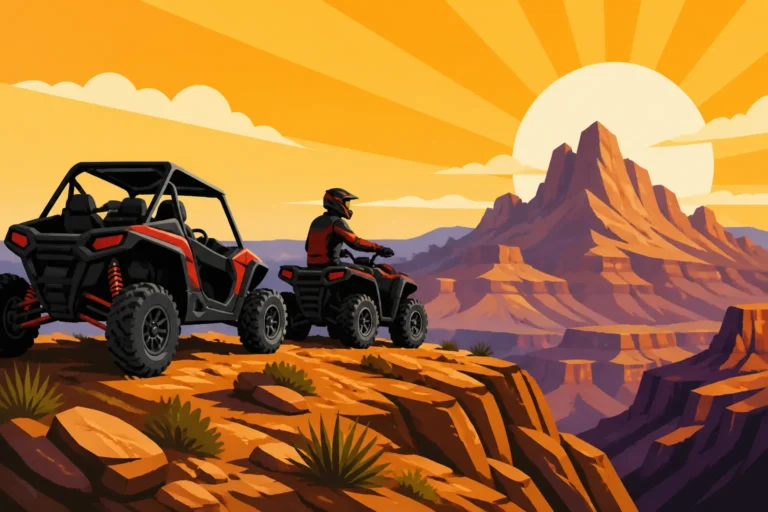
The Devil’s Racetrack area sits in the San Rafael Swell, a broad stretch of rugged country where pale sandstone, dark rock, open desert, and distant ridgelines create a very different feel from a developed OHV park. The ride is as much about being out in that landscape as it is about covering miles. If you like stopping to look across a canyon or taking your time over uneven ground, the area can make for a memorable day.
That remoteness is also part of the commitment. You may not have services, dependable cell coverage, or quick assistance close at hand once you leave the highway and head into the backcountry. A route that looks modest on a screen can take longer than expected when the surface is rough, the group needs breaks, or a driver wants to inspect a tricky section before proceeding.
Devil’s Racetrack is most likely to suit riders who enjoy exploring rather than ticking off distance. If your ideal outing is a scenic, unhurried route with time for photos and pauses, it may be a good fit. For a wider look at nearby terrain and planning considerations, see [San Rafael Swell: Utah's Desert Maze] and [San Rafael Swell Loops From Green River].
It is not a guaranteed fit for every rider or machine
The name can suggest a place for fast riding, but don’t treat it as a promise of a smooth, high-speed course. Desert routes can change from firm dirt to rock, ledges, loose material, or rutted sections. A route that feels manageable to an experienced driver in a suitable machine may be stressful for a new rider or a group with mixed experience.
Vehicle width matters too. A narrow ATV and a wide side-by-side don’t necessarily fit the same lines comfortably, and a route shown as open to motor vehicles is not automatically a good match for every UTV. Check the legal route designation, width restrictions, surface, and current conditions before setting out. An onX Offroad map can help you inspect route options and understand how a planned ride connects to surrounding tracks, but use it alongside official land-management information rather than as a substitute for it.
If your group is looking for a gentle family ride, an easy outing near facilities, or a route where everyone can drive at their own pace, compare other options before committing to the trip. The Swell has varied terrain, so the better choice may be a different route in the same general area.
How to Decide Whether the Drive Is Worth It for You
Match the route to your experience and expectations
Ask what you want from the day before you decide. If you enjoy rocky, remote country and are comfortable turning around when a section doesn’t feel right, Devil’s Racetrack may be appealing. If you’re hoping for a predictable route with frequent services, clear cell reception, or an easy place to regroup, the area may feel more demanding than relaxing.
Be honest about the least experienced person in your group, not just the most capable driver. A confident lead driver cannot make a difficult route comfortable for a nervous passenger or a less experienced rider. Talk through expectations before leaving the staging area: how you’ll signal a stop, how much space to leave between machines, and what the group will do if someone wants to turn back.
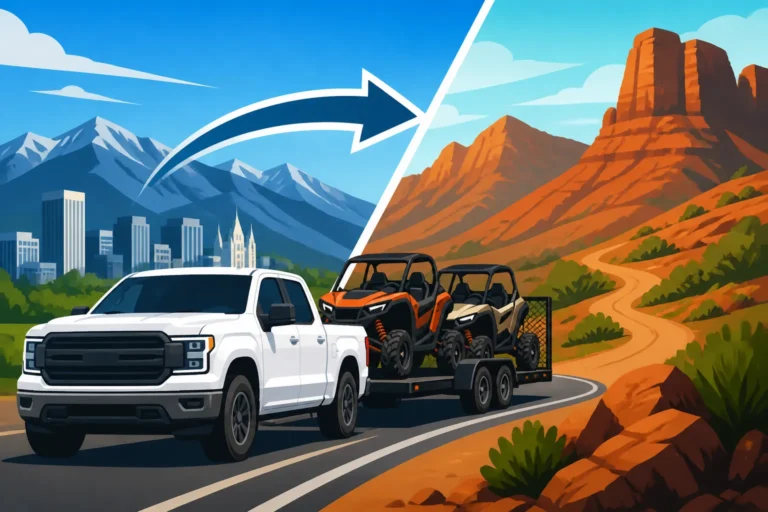
Also consider the time cost. The drive to a remote trail area, unloading, checking maps, riding slowly, and loading again can turn a short-looking route into most of the day. If you’re coming from Green River or another nearby base, build in time for fuel, food, and the return trip. Don’t plan a tight schedule that depends on reaching a particular point by a specific hour.
Compare the payoff with other nearby options
The drive is easier to justify if you’re already planning to explore this part of the Swell or combine the ride with other stops. Nearby scenery and historic features can make an outing feel more complete, but don’t assume every point of interest is directly accessible by your machine or lies on the route you intend to ride. Confirm access and route connections before adding stops to the plan.
For example, Buckhorn Wash is a well-known part of this region, but visiting it does not automatically mean Devil’s Racetrack is the best ride for your group. You can compare the terrain, access, and likely day length with [Devil's Racetrack and Buckhorn Wash] and [Buckhorn Wash Pictographs by UTV]. If the group would rather choose a route with a clearer loop plan, review [San Rafael Swell Loops From Green River] before towing out.
| Devil’s Racetrack may be worth the drive if… | Consider another ride if… |
|---|---|
| You enjoy remote scenery and a slower pace | You want an easy, predictable outing |
| Your machine and skills suit the route conditions | Your group includes riders who are uneasy with rough terrain |
| You’re prepared to navigate without relying on cell service | You need dependable signal or nearby assistance |
| You have time for delays, stops, and a careful return | Your schedule leaves little room for the ride to run long |
| You’ve checked access, closures, and vehicle suitability | You’re relying on an old map or an unverified route description |
Planning a Safer, Less Stressful Ride
Check access and conditions before you tow
A route can be open on a map and still be a poor choice on the day you arrive. Recent weather, washouts, seasonal closures, fire restrictions, and land-management rules can affect access. Check official notices and route maps before you leave home, then check again close to the trip. [Trail Closures Utah Riders Should Check First] is useful background, and [Checking Utah Trail Conditions Before You Tow] can help you build that final check into your routine.
Confirm that the route is legal for your vehicle type and dimensions. Pay attention to posted signs at junctions and gates; don’t assume a track is open simply because it appears on an app or is visible in the dirt. A Motor Vehicle Use Map can clarify which routes are designated for motorized use, while a planning app such as onX Offroad can help you follow your position and compare route options. Download maps for offline use before heading out, because a phone without service may still show saved information, but it cannot reliably fetch new details.
Give someone outside the group your general plan and expected return window. That person should know the vehicle descriptions, where you intend to stage, and what to do if you’re overdue. It’s a simple step that matters more in remote country, where a breakdown or navigation mistake can take longer to sort out.
Pack for a remote ride, not just a short ride
Carry enough water and food for a delay, even if the route looks brief. Desert heat, dry air, and wind can wear people down before they realize how much water they’ve lost. Bring sun protection and clothing for changing conditions; the Swell can feel very different in direct sun, shade, and wind.
Before leaving the trailer, check fuel, tires, belts, fluids, lights, and basic recovery equipment. Pack tools and supplies appropriate for your machine, along with a first-aid kit and a way to communicate when phone service is unavailable. Your load should reflect your group’s size and the route’s remoteness, not just what fits in the cargo box. [What to Carry on a Utah Day Ride] offers a practical starting point, while [Getting Unstuck Alone in the Utah Desert] and [Recovery Gear for Utah Sand and Slickrock] can help you think through what to do when a machine cannot move under its own power.
Keep the group together without crowding one another. Leave enough space for the rider ahead to choose a line, and stop in a safe place before checking maps or discussing a turn. If the terrain becomes more difficult than expected, pause and reassess rather than letting pressure to “finish the route” make the decision for you.
A Practical Go or No-Go Checklist
Decide at the staging area, not after you feel committed
Before unloading, review your planned route and make sure everyone understands the day’s priorities. Confirm that your machine is suitable, your maps are available offline, and your group has the supplies to manage a delay. Check the sky and recent weather, as rain can change the character of dirt and wash sections. If a route is closed, unclear, or beyond the ability of the least-experienced rider, choose another option.
A good plan includes a turnaround point. Agree in advance that the group can stop or change course if conditions are worse than expected, a machine develops a problem, or the pace becomes uncomfortable. That agreement helps avoid the common trap of continuing simply because the group has already driven a long way.
For trailer logistics, look into the staging area before you arrive. A narrow pullout or limited parking can make a large trailer difficult to manage, especially when other riders are present. Check [Utah Trailhead Parking That Fits a Trailer] and make sure your parking plan won’t block traffic or access.
Use a simple decision rule
Choose Devil’s Racetrack if the group is prepared for an unhurried, remote ride and your research confirms that the route suits your machine. Go with a different route if the main goal is an easy family outing, a quick ride, or a low-stress first experience in the Swell. There’s no prize for completing a route that has stopped being enjoyable.
If you’re unsure, plan a flexible day: identify a primary route and a less demanding backup, then decide after checking conditions and talking with the group. Use onX Offroad or another offline mapping option to keep track of your intended route, but verify closures and permitted access through official sources. That combination—realistic expectations, current route information, and permission to turn around—makes a remote ride more enjoyable whether you choose Devil’s Racetrack or somewhere else in the San Rafael Swell.
Disclaimer
This article is for general informational purposes only and does not constitute professional advice. Laws, prices and regulations vary by location and change over time. Consult a qualified professional for guidance on your specific situation.