Camping in Utah’s San Rafael Swell
Camping in Utah’s San Rafael Swell can put you close to dramatic desert scenery and long OHV routes, but the distance between trailheads, services, and reliable cell coverage catches many visitors off guard. This guide explains how to choose a campsite, plan rides from camp, pack for remote conditions, and check the land-use details that can make or break a trip.
Choose a base camp that fits your ride
The San Rafael Swell is a broad, rugged region rather than a single campground or trail system. Your best place to camp depends on the kind of riding you want to do, how much ground you plan to cover, and whether you need developed facilities. A campsite that looks central on a map may still leave you with a long drive on rough roads before you reach a particular route.
Start by choosing one riding zone for each day instead of trying to cover the whole Swell from one base. Routes near Buckhorn Wash, the Wedge, and the San Rafael River country can involve very different approaches and road conditions. For a broader look at nearby options, see [San Rafael Swell: Utah's Desert Maze] and [San Rafael Swell Loops From Green River].
Decide between developed and dispersed camping
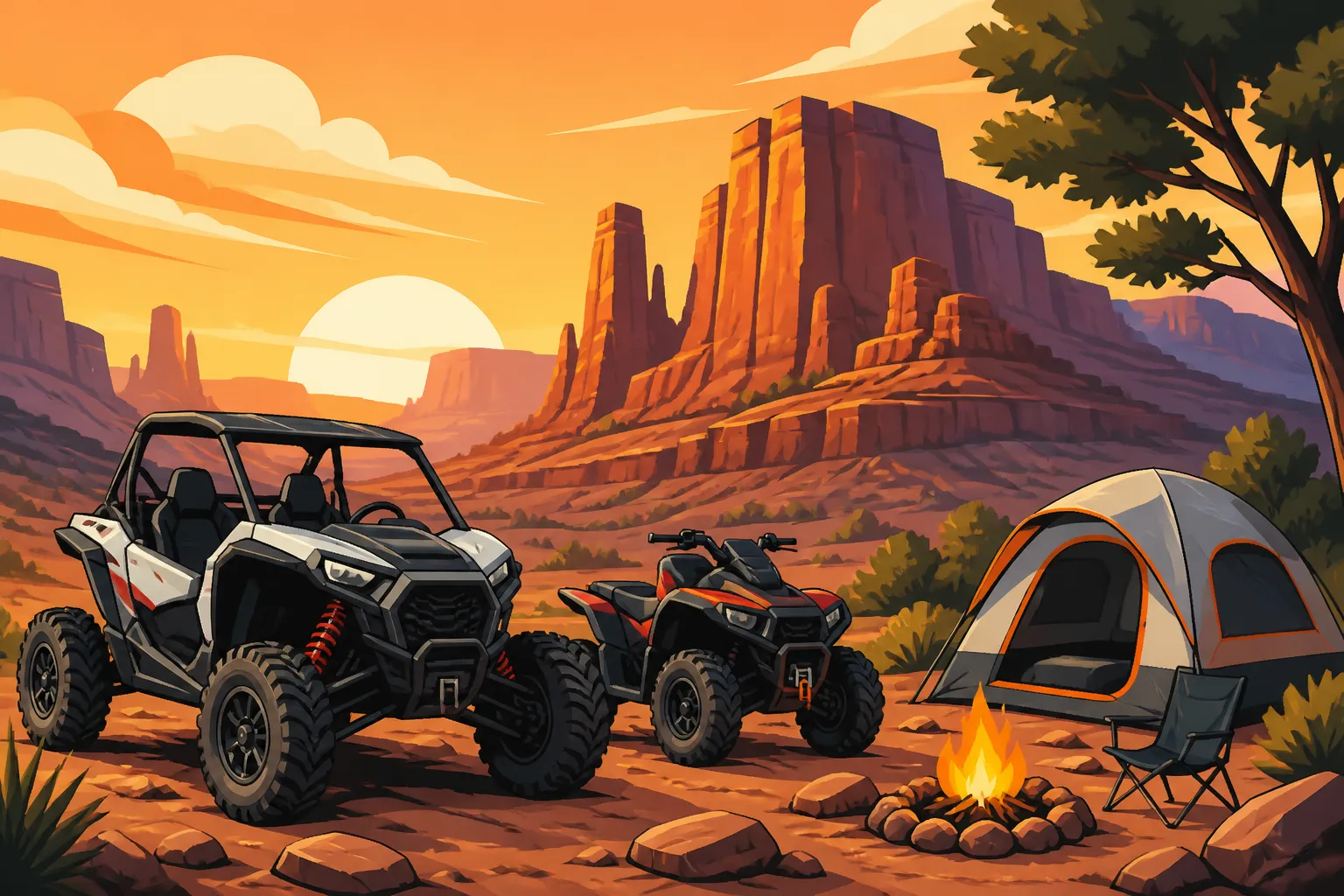
Developed campgrounds can be the more comfortable choice if you want a defined place to park, set up, and sleep. Depending on the site, facilities may include a prepared campsite, a vault toilet, or other basic amenities. Do not assume that a campground has water, hookups, a dump station, or room for a large trailer; confirm what is available before you tow in.
Dispersed camping offers more flexibility, but it also makes you responsible for choosing a legal, durable spot and bringing what you need. A flat-looking patch of ground is not automatically a valid campsite. Land ownership and restrictions can change across a short distance, so check the applicable land-management information and posted signs before setting up. Keep vehicles and camping gear in previously disturbed areas where permitted, and avoid creating new tracks or spreading into fragile desert ground.
| Camping style | Best fit | Plan for |
|---|---|---|
| Developed campground | Riders who prefer an established site and clearer facilities | Confirm available amenities, access, and space for your vehicle or trailer |
| Dispersed camping | Visitors seeking a simpler, more flexible base | Verify land status and camping rules, bring all supplies, and leave no trace |
| Town lodging with day rides | Riders who want services nearby and prefer not to camp remotely | Allow for the drive from town to the trail area and back |
The right choice often depends on your crew. A family with young riders may appreciate a defined campsite and a predictable evening routine. A group with a self-contained trailer may be comfortable camping farther from services, as long as everyone understands the access road and the limits of the site.
Match your camp to your daily route
A camp near one riding area may save time in the morning but put you far from the routes you want to ride the following day. Before committing to a multi-night site, mark your intended trailheads, likely fuel stops, and the roads you will use to reach them. Also consider whether your trailer can safely travel those roads. A route that is manageable in a high-clearance vehicle may be a poor choice for a long trailer or a low-clearance tow vehicle.
If Buckhorn Wash is on your itinerary, treat it as a destination that deserves its own planning rather than assuming you can add it as a quick detour. The same goes for remote overlooks and routes across the Swell: travel time can be slower than the distance suggests. [Buckhorn Wash Pictographs by UTV] can help you think through one specific area, while [Devil's Racetrack and Buckhorn Wash] offers another route-planning topic to review.
A practical plan is to choose a primary ride for each day and keep a shorter backup option in mind. If the access road is rougher than expected, a storm has affected the route, or someone in the group is tired, you can change plans without feeling committed to a long loop.
Prepare for remote camping and riding
The Swell’s open desert views can make a trip feel easy to navigate, but remote terrain leaves little margin for forgotten supplies. You may be far from fuel, food, repair help, and dependable phone service. Make your preparations before leaving a town or highway corridor, not after reaching a trailhead.
Pack for limited services
Bring more drinking water than you expect to use, especially when riding in warm, dry conditions. Account for the whole group, time at camp, and the possibility that a ride takes longer than planned. Keep some water accessible in each machine or support vehicle rather than storing all of it in one place at camp.
Food planning matters for the same reason. Carry meals and snacks that do not depend on finding a nearby store, and keep them secured against animals and weather. If you need fuel, do not build a remote-day plan around the assumption that a convenient station will be open or close to your route. Check the route and service options before departing, then start with enough fuel for the planned ride and a reasonable buffer.
A well-prepared camp and machine kit commonly includes:
- Drinking water for camp and riding, with extra capacity for delays
- Food for the planned stay and an unplanned extra stretch
- First-aid supplies and any personal medication
- A tire repair kit, basic tools, and recovery gear suited to your machines
- A paper map or offline map, plus a charged navigation device
- Headlamps or flashlights and spare power
- Sun protection, warm layers, and rain protection
- Trash bags and supplies for packing waste out
It is easy to focus on the vehicle and forget the people riding in it. Dust protection, comfortable clothing, and extra layers can make a long day much more manageable. For a more detailed day-ride checklist, read [What to Carry on a Utah Day Ride].
Plan for navigation without cell service
Do not rely on a live phone connection to tell you where you are. Download or save your maps before leaving reliable service, and make sure the device can display your location offline. A paper map provides a useful backup, particularly if a phone battery runs down, an app fails, or the device gets damaged.
An app such as onX Offroad can help you review routes and map information before the trip, but no digital map should replace checking official land-management information and signs on the ground. Compare the route you intend to ride with the relevant motor-vehicle-use information, and note where a route ends or crosses land with different rules. Take a screenshot or save the information offline rather than assuming it will load later.
Share your plan with someone who is not on the ride. Include where you expect to camp, which area you intend to ride, and when you plan to check in. If your route changes, update that person when you can. In a remote area, a simple plan shared in advance can be more useful than trying to explain your location after a problem occurs.
Ride responsibly around camp
A good camp is more than a place to park machines. It is also part of the landscape other people came to enjoy. Keep noise and dust in mind, follow posted access rules, and avoid turning a quiet campsite into an extension of the riding area.
Check route status and land rules before each ride
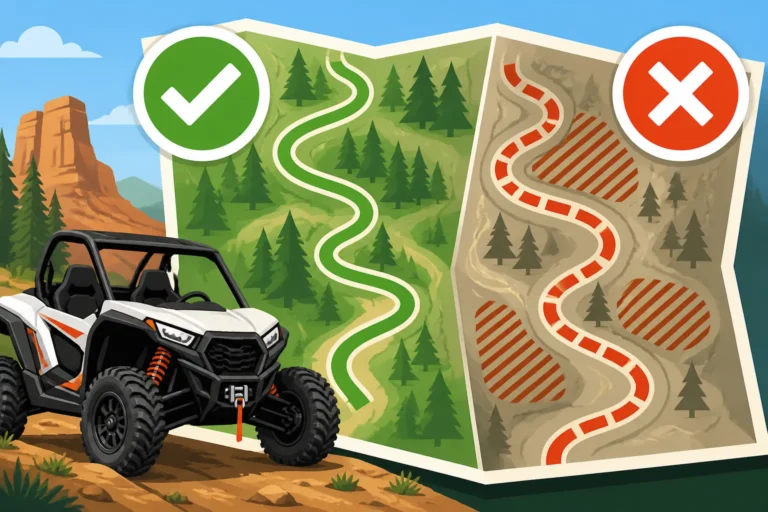
Public-land routes can have different rules, and a route shown on an app is not proof that it is open to motorized travel. Look for current notices from the relevant land manager, follow on-site signs, and do not ride around a closed gate or barrier. A tempting track across open ground can lead to resource damage or take you onto land where motorized travel is not allowed.
Use a map to distinguish roads and designated routes from informal tracks. That distinction matters in a region where trails, roads, washes, and access corridors can look similar from the seat of a machine. [Reading a Motor Vehicle Use Map] explains the kind of map riders should understand, and [Trail Closures Utah Riders Should Check First] is a useful reminder to verify access before towing.
Also consider weather. A road that seems manageable in dry conditions can become difficult after rain, and riding wet or muddy ground can leave lasting damage. If you encounter conditions that could damage the route or put your group at risk, turn around rather than trying to push through. For more guidance, see [Riding Utah Trails After a Storm].
Leave camp and shared routes in good shape
Pack out food waste, packaging, and anything else you brought in. Do not leave trash beside a fire ring or assume that someone else will collect it. Keep camping equipment within your site, and avoid spreading into nearby vegetation or creating new vehicle tracks.
If campfires are permitted, follow the restrictions in effect for that location and time, and use an established fire ring where one is provided. Conditions and fire rules can change, so check notices before lighting a fire. Never leave a fire unattended, and make sure it is fully out before walking away. When restrictions or conditions make a fire unwise, a camp stove is a practical alternative if its use is allowed.
Keep speeds low around camp, trailheads, and other areas where people may be walking or unloading. Give hikers and mountain bikers room, slow down around livestock, and follow established right-of-way guidance. If you encounter a gate, leave it as you found it. A closed gate is not an invitation to find another way through; respect the route and land access as posted.
Build a practical San Rafael Swell itinerary
A successful trip usually has enough structure to avoid wasted driving and enough flexibility to handle rough roads, changing conditions, or a tired rider. Think of your itinerary as a set of choices rather than a rigid schedule.
Use a simple planning sequence
- Choose your main riding area. Pick a zone that suits your group’s experience and the type of route you want to ride.
- Confirm access and land status. Review official route information and any applicable notices before departure.
- Select a suitable camp. Check whether the site is developed or dispersed, what facilities are available, and whether your tow vehicle and trailer can reach it.
- Estimate the full day, not just the ride. Include travel from camp to the trailhead, unloading, breaks, and the return trip.
- Prepare backup options. Identify a shorter route or a less demanding ride in case weather, fatigue, or access conditions change the plan.
- Tell someone your plans. Share your route, campsite, and expected check-in time with a person who is staying outside the riding group.
For a first visit, avoid stacking several distant destinations into one day. The Swell can look compact when you are studying a map, but road conditions and the time needed to unload can make a packed itinerary frustrating. One well-planned ride, a relaxed camp setup, and a backup plan are often more enjoyable than trying to check off every point of interest.
Make the trip comfortable for the whole group
Before the trip, have an honest conversation about riding ability, machine range, and comfort with remote travel. A route that feels straightforward to an experienced driver may be stressful for a new rider or a passenger who is not used to rough terrain. Agree on a pace that keeps the group together, and make sure everyone knows what to do if machines become separated.
Plan breaks before the group is exhausted. Desert heat, dust, and uneven routes can wear people down gradually, and riders may not notice how tired they are until they are ready to turn back. Keep water easy to reach, stop in safe places, and be willing to shorten the ride. If your group includes children or beginners, choose conservative routes and leave extra time for instruction and rest.
Finally, do a brief camp check before leaving for the day. Secure loose gear, protect food, and make sure valuable items are not visible from the road. When you return, check machines for damage, clean up the site, and confirm that all waste is packed out. A few small habits make camp easier to manage and help keep the landscape in good condition for the next group.
Disclaimer
This article is for general informational purposes only and does not constitute professional advice. Laws, prices and regulations vary by location and change over time. Consult a qualified professional for guidance on your specific situation.