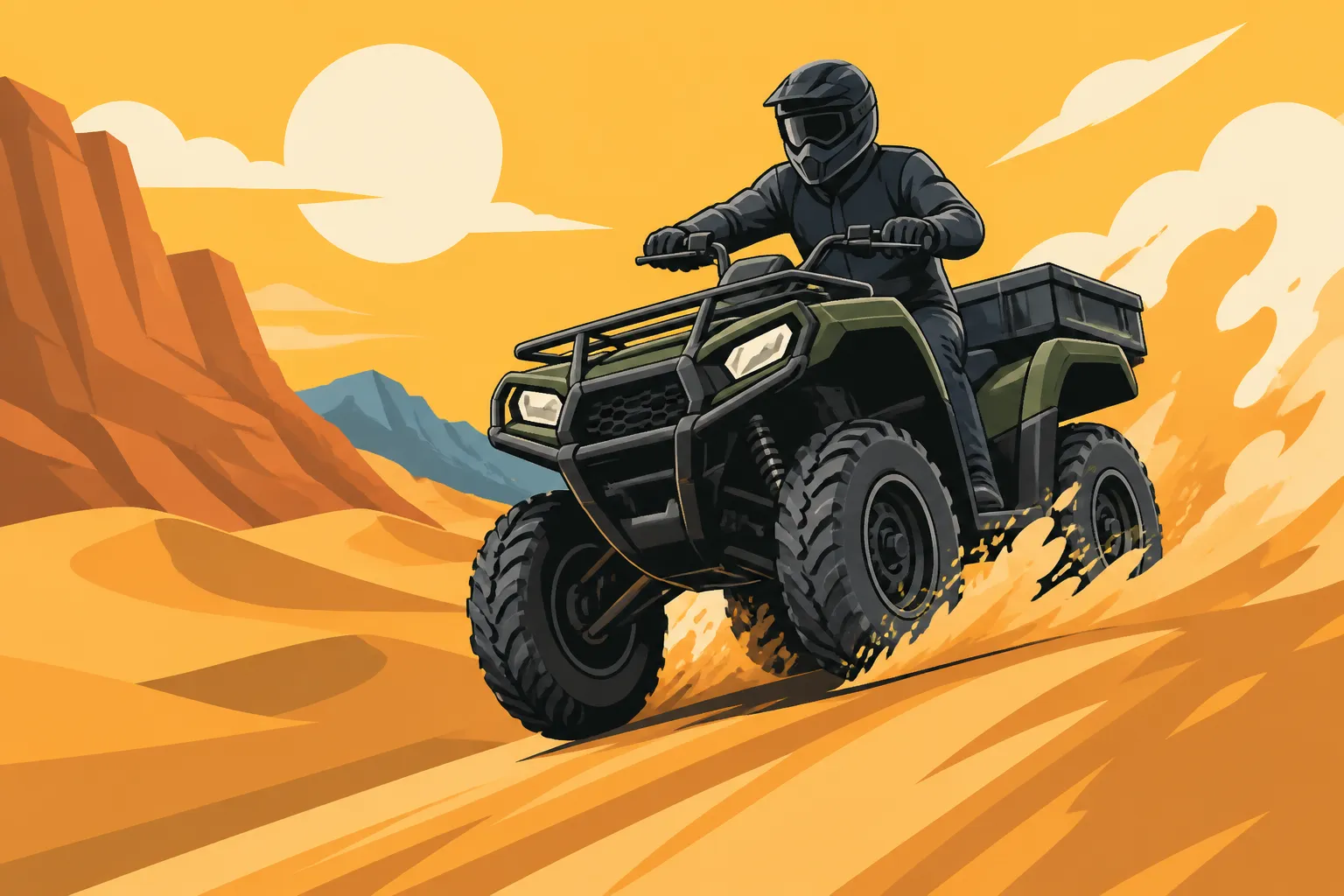
Riding Little Sahara With a Utility Quad
A utility quad can handle Little Sahara’s sand, but its extra weight, high ground clearance, and work-focused tires can make soft climbs and tight turns feel very different from riding a sport ATV. This guide covers how to prepare your machine, choose manageable routes, ride more safely, and avoid common problems such as getting bogged down or overheating.
Prepare your utility quad for Little Sahara
Check the machine before you reach the sand
Little Sahara’s dunes and sandy routes put a sustained load on an ATV. A utility quad’s four-wheel drive can help with traction, but it does not make every slope manageable. Before you leave home, check the tires, brakes, throttle, steering, battery, and fluid levels. Make sure the air filter is clean and correctly seated: fine sand and dust can quickly become a problem if the filter is damaged, poorly fitted, or overdue for service.
Look over the drive belt and cooling system according to your owner’s manual, especially if the quad has been working hard or has not been serviced recently. Sand riding can keep the engine and drivetrain under load for longer than a short trip around a field. If you notice unusual smells, slipping, warning lights, or rising temperatures, stop somewhere safe and let the machine cool rather than trying to power through.
Think about what your quad is designed to do. A utility model may be heavier and have a longer wheelbase than a sport quad, which can make it stable on some terrain but less nimble when you need to change direction quickly. Stock tires may also be built for mixed terrain rather than soft dunes. Don’t assume that adding throttle will compensate for a setup or route that isn’t working.
Pack for a full day, not just the ride in
Bring water, food, eye protection, gloves, and clothing that can handle dust and changing desert conditions. Pack basic tools suited to your machine, a tire repair kit, and recovery gear you know how to use. A shovel and suitable recovery strap can be useful, but recovery equipment is only helpful when it can be attached safely and used without putting someone in the path of a moving machine. For a broader checklist, see [What to Carry on a Utah Day Ride] and [Recovery Gear for Utah Sand and Slickrock].
Navigation matters even when the riding area looks open. Carry a map or offline navigation that you have checked before leaving service. onX Offroad can help riders review routes and save map information for offline use, but don’t treat any app as permission to ride wherever a line appears. Confirm that a route is open and appropriate for your vehicle, and follow posted signs and barriers. [Utah OHV Trail Maps and How to Read Them] and [Reading a Motor Vehicle Use Map] offer useful background on understanding route information.
Tell someone where you plan to ride and when you expect to return. If you’re riding with a group, agree on a meeting point and what to do if someone gets separated. Cell reception can be unreliable in remote areas, so don’t make a phone your only way to navigate or ask for help.
Sort out permits and area information before unloading
Check the current requirements for your machine and the riding area before your trip. Registration and permit rules can depend on where the quad is registered and whether you are a Utah resident. Riders bringing an out-of-state machine should look into the state’s non-resident OHV permit rules well ahead of time. The guide [Utah's Non-Resident OHV Permit Explained] is a useful place to start.
Also check the current Little Sahara access information, including any fees, closures, and riding restrictions. Those details can change, so confirm them through the relevant official channel before you travel. [Little Sahara Entrance Fee and Camping Areas] can help you plan the logistics, while [Little Sahara on a Holiday Weekend] discusses why timing can affect the experience.
If the quad will be ridden by a young person, check applicable age, supervision, helmet, and OHV education requirements before the trip. A family ride is much less stressful when everyone knows the rules and has the right equipment before arriving.
Choose terrain that suits a heavier ATV
Start on forgiving sand and build confidence
If Little Sahara is new to you, don’t begin by following the steepest dune you can see. Start with a broad, relatively gentle area where you can get a feel for how your utility quad responds. Sand changes the way the tires steer and brake, and a machine that feels predictable on hard ground may drift, push wide, or slow quickly in soft patches.
Use smooth, steady control rather than sudden bursts of throttle or sharp braking. Keep your body relaxed and adjust your weight naturally to the terrain, without making abrupt shifts that could unsettle the quad. If a small rise starts to feel uncomfortable, turn around in a safe, open place while you still have room. There is no prize for completing a climb that exceeds your comfort or the machine’s capability.
A utility quad can be especially useful for exploring gentler routes and firmer connecting areas, but its weight can make it harder to recover once it is deeply stuck. If you want a first-ride overview of the terrain and expectations, read [Are Little Sahara's Dunes Good for Beginners?]. Beginners may also find it helpful to start with an experienced riding partner who knows the area.
Treat steep faces and blind crests with caution
Dunes can hide riders, sudden drops, and changing surface conditions. Before approaching a rise, make sure you can see what is beyond it and that the route is clear. Don’t climb directly toward a crest if you cannot see the far side, and avoid stopping where another rider might come over the top behind you. Keep a generous distance from other machines, particularly in busy riding areas.
A heavier utility quad may need more room to turn and may not respond as quickly to a mid-slope correction. Avoid attempting a steep climb simply because another vehicle made it look easy. Different machines, tires, rider experience, and sand conditions all affect how a climb goes. If the quad loses momentum or begins to feel unstable, don’t make a panicked turn across a slope. Follow your training and the machine manufacturer’s guidance, and choose a safer route back down when possible.
Sidehilling—travelling across a steep slope—can also be risky. The quad’s weight and high center of gravity may increase the chance of a tip if the surface gives way or the machine slides. Pick routes that keep the machine on terrain you can manage, and leave extreme lines to riders with the right equipment and experience.
Ride with control and look out for others
Keep visibility and spacing in mind
Sand dunes can block sightlines, so assume someone may be approaching from the other side of a rise. A safety flag can make a machine easier to see in dune areas, but requirements and specifications may vary. Check the current local rules and obey posted signs before riding. Don’t rely on a flag to make a blind crest safe; speed, route choice, and spacing still matter.
Stay on designated open routes and respect closures. onX Offroad may help you orient yourself, but compare what you see on a screen with official maps and signs on the ground. A mapped line is not a guarantee that a route is currently open or suitable for your particular quad. If you see a closure marker, do not ride around it to continue the route.
Give other riders room to make mistakes or adjust their line. Avoid stopping in the middle of a route or just below a crest. When you do need to stop, choose a visible, stable spot away from the path of moving machines. Use clear hand signals within your group, and agree on who leads and who stays at the back before setting off.
Manage pace, breaks, and changing conditions
A utility quad can feel comfortable on firm ground and suddenly bog down where the sand is deeper or softer. If you notice the machine working harder, slow down and reassess rather than repeatedly applying more throttle. Spinning tires can dig the quad in, and trying to force it forward may make recovery more difficult. Stop before you are exhausted, overheated, or low on water; fatigue makes it harder to judge slopes and react smoothly.
Plan a route that allows for breaks and a return to your staging area without rushing. Heat, wind, visibility, and traffic can change the feel of a ride. In hot weather, carry enough water for the whole outing and take breaks in shade where available. [Water to Pack for a Summer Utah Ride] has more practical hydration planning advice.
If you get stuck, pause and make a plan before anyone starts pulling or pushing. Keep people clear of the tires, use only recovery points approved for your machine, and avoid jerking a strap under tension. If the quad is tilted, partly buried, or positioned on a steep slope, don’t risk a rollover trying to free it quickly. A cautious recovery—or asking for experienced help—can be safer than turning a minor bog-down into a damaged machine or an injury.
Make the day enjoyable and manageable
Pick a realistic first outing
For a first visit with a utility quad, plan a shorter ride rather than trying to cover the entire area. A simple loop gives you time to learn how your machine handles sand, take breaks, and return before fatigue sets in. Keep an eye on fuel, water, daylight, and the distance back to your trailer or campsite. If you’re unsure how much terrain your group can handle, start conservatively and extend the ride only if everyone is comfortable.
A practical approach is to ride with a partner, agree on a turnaround time, and choose a route with clear options for shortening the outing. Keep the group together without riding bumper-to-bumper. If one machine struggles, stop in a safe area and make sure everyone is accounted for before deciding whether to continue.
If the dunes feel too challenging, there is no need to force the day. You can explore more manageable terrain, take a longer break, or call the ride early. [Little Sahara Entrance Fee and Camping Areas] can help with staging and overnight planning, while [Utah's Sand Dune Riding Areas] provides context for other dune destinations to consider on a future trip.
Use a simple pre-ride checklist
Before unloading, take a few minutes to confirm that people, paperwork, and equipment are ready. This small routine can prevent the frustrating discovery that something important is missing after you have driven out to the riding area.
| Check | What to confirm |
|---|---|
| Machine condition | Tires, brakes, steering, controls, air filter, fluids, and warning indicators |
| Required paperwork | Registration and any applicable permit or education documentation |
| Safety gear | Helmet, eye protection, gloves, suitable clothing, and safety flag if required |
| Navigation | Route information saved for offline use and checked against official information |
| Recovery supplies | Appropriate tools and gear, with safe attachment points identified |
| Group plan | Lead and sweep riders, meeting point, turnaround time, and emergency plan |
| Supplies | Water, food, first-aid basics, and enough fuel for the planned outing |
A utility quad can be a capable Little Sahara machine when the route, pace, and preparation match its strengths. Take time to learn how it behaves in soft sand, stay within your comfort zone, and be willing to turn back when conditions change. A controlled ride with room to adjust is usually more enjoyable than a difficult climb that leaves you stuck, overheated, or worried about getting home.
Disclaimer
This article is for general informational purposes only and does not constitute professional advice. Laws, prices and regulations vary by location and change over time. Consult a qualified professional for guidance on your specific situation.