Getting to Coral Pink From Kanab
If you’re staying in Kanab, Coral Pink Sand Dunes can feel deceptively close—until you’re towing a trailer, looking for the correct turn, or trying to find the OHV unloading area. This guide walks through the drive, what to expect on arrival, and how to plan for maps, fuel, permits, and a smoother ride day.
Driving from Kanab to Coral Pink Sand Dunes
The usual route from town
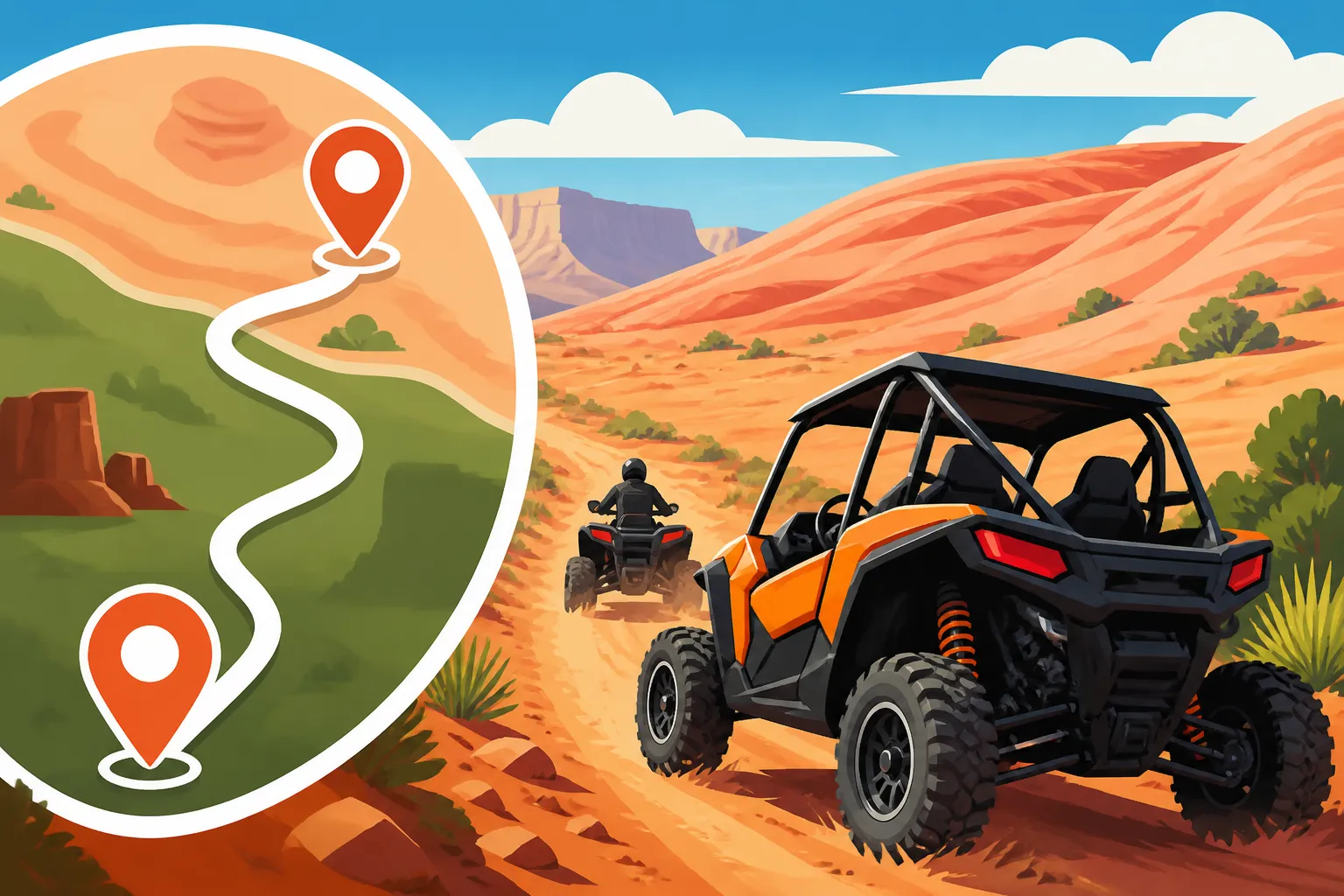
From Kanab, head north on US-89 for roughly 9 miles, then turn west onto Hancock Road and follow signs toward Coral Pink Sand Dunes State Park. The access drive from the highway is about 8 miles, putting the park roughly 20 miles from Kanab overall. Allow around half an hour for the drive, with extra time if you’re towing or traveling with a group.
The turn is easy to miss if you’re focused on scenery or watching traffic, so slow down as you approach the signed junction. Navigation apps may label the access road differently, or direct you to a park pin that isn’t the most convenient place to unload. Follow the state park signs once you leave US-89, and check that your destination is the park entrance or the specific staging area you intend to use.
For a straightforward trip, enter the park as your destination and review the route before leaving Kanab. If you’re hauling machines, make sure your map route does not send you onto an unpaved shortcut. A few extra minutes on a clear, appropriate route are preferable to discovering that a road is unsuitable for your trailer.
What the drive is like
The route takes you from Kanab’s services and town streets into a quieter, open landscape. Once you turn off US-89, expect a more rural drive with fewer places to stop. Keep an eye out for wildlife, changing road conditions, and vehicles turning toward the park, especially during busy riding periods.
The drive itself is manageable in a regular vehicle, but towing changes the rhythm. Leave more room between you and the vehicle ahead, avoid abrupt braking, and give yourself extra time at turns. If you’re traveling with several trucks and trailers, agree on a place to regroup before leaving Kanab rather than trying to coordinate by pulling over on a narrow shoulder.
There’s no need to rush the final miles. Passengers may be tempted to look for the dunes from the road, but keep the driver focused and wait until you’re safely parked to take photos or check the route. If your group is unfamiliar with the area, share the destination and basic directions before the convoy departs.
Build in a navigation backup
Mobile reception can be inconsistent once you leave town. Save the destination and route before you set out, and don’t assume you’ll be able to load a new map if you take a wrong turn. onX Offroad can be useful for preparing an offline map and viewing your position when service is weak; download the relevant map area while you still have a reliable connection.
A mapping app is a backup, not permission to take any visible track. Stick to signed, open roads and routes, and avoid treating an unmarked path across public or private land as a shortcut. If a screen display conflicts with a closed gate or posted sign, follow the sign. A quick map review before departure can also help everyone in the group recognize the correct turn.
It’s worth sharing the route with another driver if you’re traveling separately. One person can lead while others follow the same saved destination, reducing last-minute calls and roadside stops. For broader route planning, [Utah OHV Trail Maps and How to Read Them] can help you think through map symbols and route choices before you head out.
Arriving, unloading, and getting oriented
Confirm where you plan to unload
Reaching the park does not automatically mean you’re at the correct place to unload an ATV or UTV. Before leaving Kanab, check the park’s current directions and identify the designated unloading and riding access areas. The entrance, visitor facilities, camping areas, and OHV staging locations may not all be the same spot.
That detail matters when you’re towing. A trailer that fits comfortably in a designated staging area may be awkward to turn around in a smaller parking area. Keep the trailer attached until you know where you’re allowed to unload, and don’t block traffic or occupy spaces intended for other visitors while you sort out straps and gear.
For arrival details, including access and unloading considerations, see [Coral Pink Dune Hours and Unloading Areas]. If you’re bringing a longer trailer or more than one machine, [Utah Trailhead Parking That Fits a Trailer] offers useful planning points for choosing a practical staging setup.
Give yourself time at the entrance
Plan for a short arrival routine rather than pulling in and immediately heading for the dunes. Locate the permitted riding area, review any posted signs, and make sure each machine is ready before unloading. This is a good moment to check tire condition, fuel, water, helmets, goggles, and any required registration or permit paperwork.
The dunes are a distinctive landscape, but not every patch of sand is automatically open to riding. Boundaries and designated areas matter, and they can be easy to misjudge when the terrain looks continuous. Check posted information and official park guidance before riding away from the staging area. [How Much of Coral Pink Is Open to Riding] is a helpful companion if you want to understand why checking the riding boundary matters.
If you’re visiting with children or newer riders, take a few minutes to agree on a meeting point and a simple plan for regrouping. A group can get spread out quickly when riders choose different lines or stop to explore. Make sure everyone knows who is leading, who is sweeping behind, and what to do if someone loses sight of the rest of the group.
Plan for the park’s rules and costs
Check the park’s entry information before the trip and budget for applicable fees. Park entry and OHV paperwork are separate considerations: paying to enter a recreation area does not necessarily satisfy the registration or permit requirements for a machine. The details can depend on where the machine is registered and who is riding it, so check the relevant rules before leaving home.
For information about park access charges, see [Day-Use Fees at Utah's Coral Pink Dunes]. If you’re visiting from outside Utah, review [Utah's Non-Resident OHV Permit Explained] before assuming your home-state registration covers every Utah requirement.
Keep the documents and proof you need easy to reach rather than buried under luggage. A small folder or waterproof pouch can prevent an annoying search at the trailhead. [What Utah Riders Must Carry on Public Land] is useful when you’re checking what to bring beyond the machine itself.
Preparing for a comfortable ride day
Handle fuel and supplies before leaving Kanab
Treat Kanab as the place to make your final supply stop. Top off the tow vehicle, bring the fuel your machines need for the planned ride, and pack water, snacks, sun protection, and basic tools. Don’t count on finding fuel or a full selection of supplies beside the access road or at the dunes.
Fuel planning is especially important if your group includes different machines. A utility quad, a sport ATV, and a side-by-side may have different range and fuel needs, and one rider’s estimate won’t necessarily work for the whole group. Start with full tanks, know which machine has the shortest practical range, and plan the ride around that vehicle rather than the most efficient one.
Heat, wind, and blowing sand can make a day feel more tiring than the mileage suggests. Pack more drinking water than you expect to need, and keep it accessible rather than buried in a trailer. A basic ride-day checklist is available in [What to Carry on a Utah Day Ride].
Match the ride to your group and machine
Coral Pink’s sand can challenge riders who are used to hard-packed roads or forest trails. A machine that feels easy to handle on gravel may respond differently in soft sand, particularly when climbing, turning, or slowing down. Start conservatively, give riders time to get comfortable, and avoid following a more experienced driver onto a line that feels beyond your machine or skill level.
New riders and children may benefit from a calmer first outing rather than trying to cover as much ground as possible. Talk about spacing, safe stopping places, and how to signal if someone needs help. If you’re planning a family visit, [Coral Pink for a Family With Small Quads] can help you think through the needs of younger riders and smaller machines.
Also be honest about vehicle setup. A heavily loaded machine, worn tires, or a vehicle with limited power may handle soft sand differently from a lightly loaded machine in good condition. If you’re uncertain, ask park staff about current guidance and keep the first ride short enough to return easily while everyone gets a feel for the terrain.
Check conditions and keep the route flexible
Weather and surface conditions can change the experience. Wind may reduce visibility, and rain can affect access roads or make travel less comfortable. Before towing from Kanab, check the forecast and any available park or land-management updates. If conditions look unpleasant or unsafe, changing your start time or postponing is better than pressing ahead because you’ve already loaded the trailer.
Use onX Offroad or another navigation tool to help orient yourself, but keep it paired with official signs and current local information. Save maps before leaving town and consider carrying a charged phone, a vehicle charger, and a paper note with the access route. If your group separates, a prearranged meeting point is more dependable than assuming everyone will have service to message one another.
For road and trail readiness, [Checking Utah Trail Conditions Before You Tow] is a sensible step before departure. Keep your plan flexible: you can spend more time near the staging area, choose a shorter ride, or head back to Kanab if conditions or group energy aren’t right. The goal is a safe, enjoyable day—not completing a route at any cost.
A practical Kanab-to-dunes checklist
Before pulling out of Kanab, confirm the route, the park’s access and unloading information, and the requirements that apply to your machines. Check fuel in both the tow vehicle and the OHVs, pack water and protective gear, and tell your group where to regroup if anyone gets separated. Save your navigation map offline while you still have service.
As you approach the park, follow posted directions rather than improvising a shortcut. At arrival, verify that you’re in the right place to unload, review the riding boundaries, and make sure everyone knows the plan before starting the machines. If you’re uncertain about a rule or an access point, pause and ask park staff rather than guessing.
With a little preparation, the drive from Kanab is simple: take US-89 north, follow the signed westbound access toward the dunes, and arrive with enough time to get oriented. The extra planning is especially worthwhile when you’re towing, traveling with kids, or visiting Coral Pink for the first time.
Disclaimer
This article is for general informational purposes only and does not constitute professional advice. Laws, prices and regulations vary by location and change over time. Consult a qualified professional for guidance on your specific situation.