Coral Pink for a Family With Small Quads
Coral Pink Sand Dunes can be a memorable family ride, but soft sand, changing slopes and mixed vehicle sizes can make it challenging for children on small quads. This guide helps you decide whether the area fits your family, choose a manageable riding plan, prepare the right gear and keep the day enjoyable without pushing young riders beyond their comfort level.
Is Coral Pink a good fit for families with small quads
What the riding area is like
Coral Pink Sand Dunes State Park, near Kanab in southern Utah, is known for its striking dunes and wide-open sandy terrain. Riding in sand is different from following a firm, clearly defined trail: the surface shifts under the tires, slopes can change, and a route that looks simple from a distance may feel harder once a small quad is moving through it.
That variety can be a big part of the fun for confident young riders, but it also calls for realistic expectations. A child who is comfortable on a compact quad at home may need time to adapt to sand. Even a modest dune can feel steep when the tires start digging in or the machine loses momentum. Plan to watch and learn before heading toward more demanding terrain.
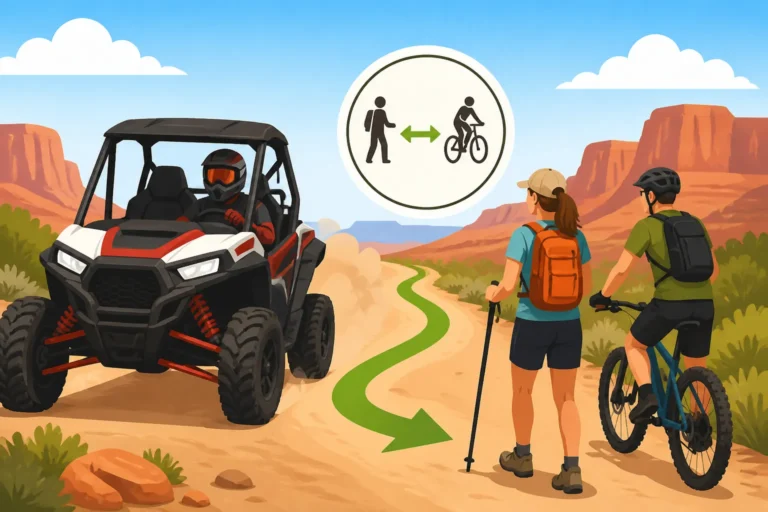
Coral Pink is not just a family practice track. Other visitors may be riding larger, faster machines through the area. Keep children well away from traffic, don’t assume other riders can see a small quad over a dune, and choose open, visible places for short practice runs. For an overview of where riding is permitted, see How Much of Coral Pink Is Open to Riding.
Match the ride to the child, not the destination
A useful family goal is a relaxed first outing, not a long loop or a summit reached at any cost. If a young rider is new to sand, start with a short, open stretch where you can supervise closely. Let the child get used to how the quad responds, then pause to check for fatigue, worry or difficulty controlling the machine. Turning back early is a good decision, not a failed trip.
The quad itself matters just as much as the child’s confidence. Use a machine that fits the rider’s age, size and experience, with controls the child can reach and operate reliably. A vehicle that is too powerful, heavy or large can become difficult to manage when the sand gets soft. A small quad should not be expected to climb the same lines as a full-size UTV or adult ATV.
Families planning around younger riders may also want to review [Riding Age Minimums on Utah Public Land] and [Utah OHV Rules for Visiting Families]. Rules and requirements are only part of the decision, though. A child may meet the applicable requirements and still need a much gentler route, closer supervision or a shorter ride.
Plan a safe, manageable ride
Scout the terrain before children ride
Before unloading, take a few minutes to observe the area. Notice where other vehicles are moving, which slopes appear especially soft or steep, and whether there are clear, open places to begin. If you can, walk a small portion of the intended practice area first. Looking at the sand from ground level can reveal ruts or abrupt changes that are hard to judge from a vehicle.
Keep your group together and agree on a simple plan. Choose a visible meeting point, tell children not to follow other riders, and make sure they know to stop and wait if they lose sight of the adults. Avoid spreading family members across opposite sides of dunes, where the terrain can block both visibility and sound.
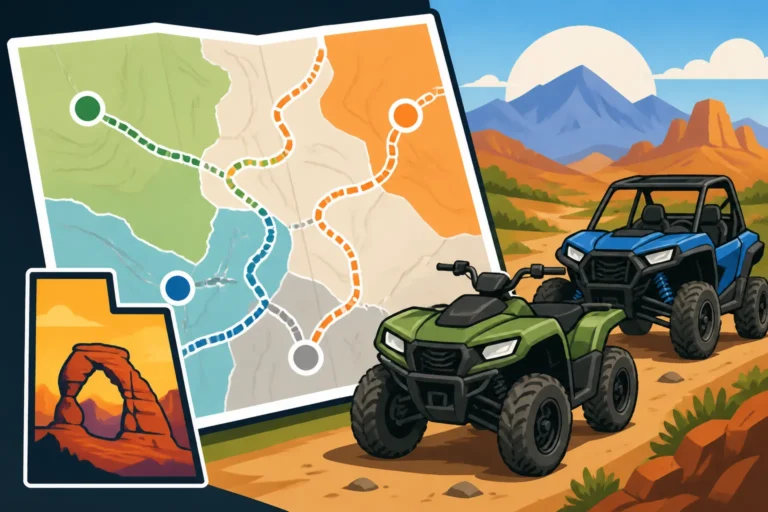
A trail map can help with general orientation, but it cannot tell you exactly how a slope or sand patch will feel on the day. Some families use onX Offroad to review mapped routes and help keep track of where they are. Treat it as a planning aid rather than a substitute for posted park information, current closures or your own judgment on the ground.
Set practical riding limits
Before anyone starts, agree on boundaries that are easy for children to remember. For example: stay within sight of an adult, stop when asked, don’t cross a dune crest without permission, and never race another vehicle. Simple rules are more useful than a long list that a tired child may forget once the riding gets exciting.
A flag can improve visibility in dune terrain, where vehicles may be hidden by rises in the sand. Check the park’s rules and Utah requirements before your trip, and make sure any required flag is installed securely and can be seen above the vehicle. A flag does not make it safe to crest a dune blindly; approach rises carefully and avoid crossing into the path of unseen riders.
Build in breaks and watch for signs that a child has had enough. Frustration, slow reactions, trouble following instructions or repeated stalling are reasons to stop, even if the child insists on continuing. If sand is making the ride feel stressful, switching to observation, a snack break or a shorter return route may be the best call. For broader preparation advice, see What to Carry on a Utah Day Ride.
| Family concern | Safer approach |
|---|---|
| A child is new to sand | Begin on open, relatively gentle terrain and keep the first session short |
| Larger machines are nearby | Choose visible practice space away from busy riding lines |
| A slope looks manageable from far away | Scout it on foot and avoid blind dune crests |
| The child is becoming tired or frustrated | Stop, rest or end the ride before control and judgment slip |
| The family is unsure of a route | Check park information and maps, then choose the easier option |
Prepare for the day around Coral Pink
Check access, conditions and logistics
Coral Pink is reached from the Kanab area, so families should plan the drive, unloading and riding time together rather than treating the dunes as a quick stop. Give yourself room to arrive, get everyone geared up and explain the plan before the children start riding. If you are staying in Kanab or passing through on Highway 89, confirm the route and park details before setting out. [Getting to Coral Pink From Kanab] can help with that part of the plan.
Park access, riding areas, services and seasonal conditions can affect the day. Check official state park information before you travel, especially if your plans depend on a particular entrance, riding zone or facility being available. For practical planning details, see Coral Pink Dune Hours and Unloading Areas and [Coral Pink Dunes State Park for OHVs]. Keep in mind that a map or an older trip report may not reflect a current closure or temporary change.
Weather also matters on exposed sand. Heat can wear children down faster than they expect, while wind can make dust and visibility more difficult. Bring enough drinking water for the group, sun protection and clothing suited to the forecast. If conditions are uncomfortable or visibility is poor, postponing the ride is safer than trying to make the day work at all costs. Before towing, review [Checking Utah Trail Conditions Before You Tow].
Pack for small riders and sandy terrain
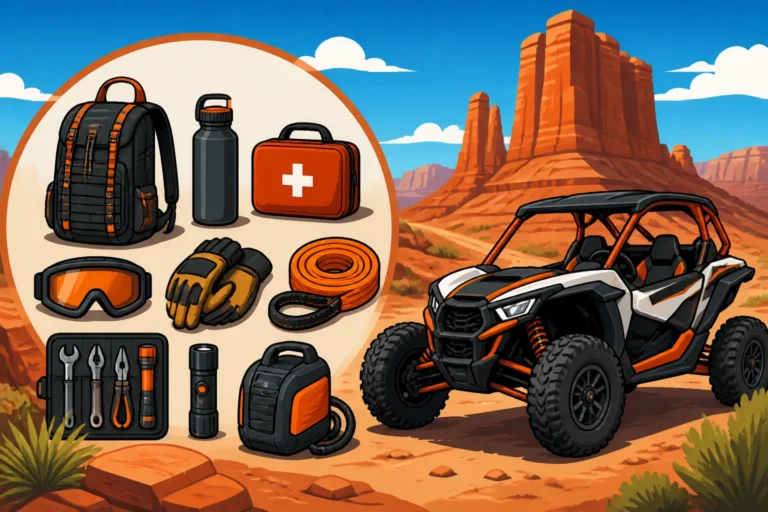
Small quads and young riders benefit from preparation that makes the ride easy to pause or end. Bring helmets that fit correctly, eye protection and suitable clothing. Dust can be irritating, so goggles that seal well may be more comfortable than ordinary sunglasses. Gloves and sturdy footwear can also help protect hands and feet during normal riding and while getting on or off the quad.
Carry basic tools and the equipment needed to deal with common minor problems, but don’t let a repair kit become a reason to take unnecessary risks. If a quad becomes stuck, first make sure the child is safely away from moving vehicles. Adults can assess whether it is sensible to recover the machine or whether help is needed. Avoid asking a child to push or pull a quad on unstable sand.
Some riders use onX Offroad to save an area for offline navigation before leaving home, which can be useful where phone reception is limited. Downloading a map ahead of time is a practical backup, but keep your phone charged and don’t rely on a device alone to navigate. A simple agreed meeting location and clear family instructions matter just as much. If your group wants more route-planning guidance, Utah OHV Trail Maps and How to Read Them is a helpful companion topic.
Make the outing enjoyable without overdoing it
Use a flexible first-day itinerary
A child’s first day riding Coral Pink doesn’t need to be a full day on the quad. Start with unloading, a safety talk and a chance to watch other riders from a safe place. Then let each child try a short ride in a suitable open area while an adult stays close. Pause afterward and ask what felt comfortable and what felt difficult.
If the child is having fun and operating confidently, you can decide together whether to continue a little longer. Keep the next step modest: a longer practice session on similar terrain is often a better progression than immediately attempting a steep climb. If the child is nervous, accept that response. Watching, exploring the park on foot where permitted, or ending the ride early can still make for a worthwhile family visit.
Adults may be tempted to chase the dramatic view from a dune crest or explore farther because the area looks open. With small quads in the group, make decisions based on the least experienced rider, not the most capable adult. A conservative plan gives everyone a better chance of finishing the day with energy left and wanting to ride again.
Know when to turn around
Turn around when you lose a clear view of the group, encounter terrain that feels beyond a child’s ability, or can’t confidently identify a safe route back. The same applies if the quad is struggling repeatedly, a rider is uncomfortable, or the weather changes. In sand, continuing simply because you are close to a destination can turn a manageable outing into a stressful one.
It helps to agree on a turnaround point before setting out. That might be a particular landmark, a planned time or simply the point where the terrain becomes too steep for the smallest machine. Keep the route and pace flexible, and remember that one adult may need to stay with a child while another handles the vehicle or guides the rest of the group back.
A family ride at Coral Pink can be rewarding when the plan leaves room for breaks, beginner-level terrain and an early finish. Review Utah's Sand Dune Riding Areas if you are weighing Coral Pink against other dune destinations. Whatever area you choose, keep the ride suited to the children who are actually there that day, not the ride you imagined while planning at home.
Disclaimer
This article is for general informational purposes only and does not constitute professional advice. Laws, prices and regulations vary by location and change over time. Consult a qualified professional for guidance on your specific situation.