Riding a Street-Legal UTV Into Arizona
It's incredibly exciting to plan an adventure that takes your street-legal UTV beyond Utah's borders, especially with Arizona's vast and beautiful landscapes calling. However, many riders hit a wall of confusion when trying to figure out if their Utah-plated side-by-side is truly legal to ride on Arizona's roads and trails. This guide is here to untangle the complexities of cross-border UTV riding, giving you the clear, actionable information you need to confidently drive your street-legal machine from Utah right into the heart of Arizona's trails.
Navigating Arizona's OHV and Street-Legal Landscape with a Utah Plate
Crossing state lines with your beloved UTV opens up a world of new riding opportunities, but it also means understanding a new set of rules. Arizona has its own specific requirements for Off-Highway Vehicles (OHVs) and what it means for a machine to be "street-legal" within its borders. The good news is that Arizona generally respects valid out-of-state registrations, but there are crucial nuances you need to be aware of to avoid any unwelcome surprises or fines. It's not as simple as "if it's legal in Utah, it's legal everywhere," and understanding these distinctions is key to a smooth trip.
Reciprocity: Does Arizona Honor My Utah Street-Legal Status?
One of the biggest questions riders have is about reciprocity. Will Arizona look at your Utah street-legal registration and say, "Yep, you're good to go"? The answer is, largely, yes, for street use. Arizona Revised Statutes generally provide that vehicles properly registered and plated in another state are allowed to operate on Arizona roads in accordance with Arizona law. This means your Utah street-legal license plate and registration usually grant you the privilege of driving on Arizona's designated public roads, provided your machine also meets Arizona's operational and equipment standards for such vehicles.
However, the "OHV" part of the equation is a bit different. Arizona has a specific OHV decal program for off-highway use. While your Utah registration covers your off-highway privileges in Utah, Arizona requires all OHVs, including those from out-of-state, to display an Arizona OHV decal if they are going to be operated on public lands and trails within Arizona. This is a critical distinction many riders miss. Your Utah plate covers the "street-legal" aspect, but for the actual dirt trails, canyons, and designated OHV areas, you'll need that Arizona decal. Think of it as a user fee to help maintain their extensive trail system.
Arizona's OHV Decal Requirement for Out-of-State Riders
Let's dive deeper into that Arizona OHV decal because it’s a non-negotiable for true off-road adventures. Even if your UTV is street-legal and registered in Utah, if you plan to hit the incredible trails of places like Quartzsite, Lake Havasu, or the rugged routes around Kingman, you absolutely need an Arizona Non-Resident OHV Decal. This decal is required for any OHV operating on Arizona's public lands and trails, regardless of whether it's street-legal or where it's registered.
The process to get one is relatively straightforward, and it's designed to be accessible for visitors. You can often purchase these decals online through the Arizona Game and Fish Department website, or sometimes at authorized vendors in Arizona. It’s important to get this done before you head out on the trails. Don't wait until you're pulled over by a game warden or sheriff's deputy; the fines for riding without one can quickly put a damper on your vacation. This decal helps fund trail maintenance, signage, and enforcement efforts, much like Utah’s own OHV program. It's a small fee that goes a long way in ensuring these amazing riding areas remain open and well-maintained for everyone to enjoy.
Key Differences in Street-Legal Equipment: Utah vs. Arizona
Even with reciprocity for registration and the proper Arizona OHV decal, it’s vital to remember that "street-legal" isn't a universally identical standard. While Utah and Arizona share many common-sense requirements, there can be subtle differences in required equipment that could lead to issues if an Arizona law enforcement officer decides to perform a vehicle inspection. It's always best practice to ensure your Utah-plated machine meets or exceeds the requirements of the state you're visiting. Many riders, realizing this, invest in comprehensive street-legal kits from reputable brands like SuperATV that often exceed minimum requirements, ensuring compliance across various states.
Essential Equipment for Street-Legal Operation in Arizona
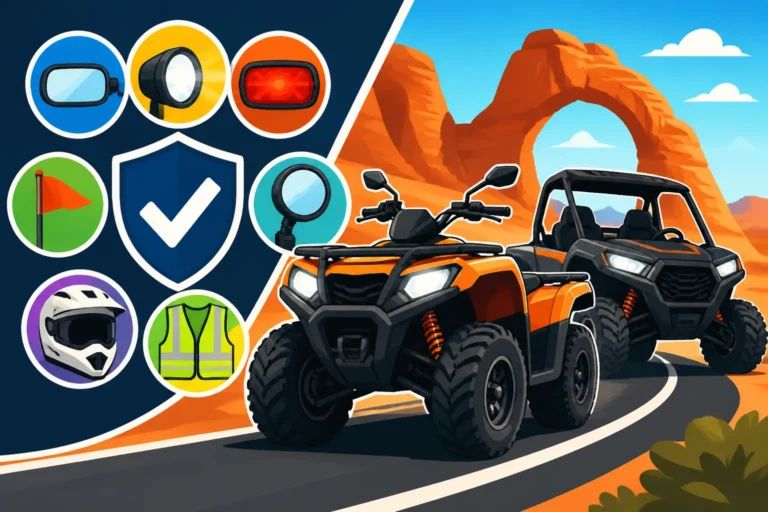
Both Utah and Arizona require fundamental safety equipment for any vehicle operating on public roads. This generally includes things like headlights, tail lights, brake lights, turn signals, and a horn. However, details can vary. For instance, while Utah has specific rules about mirrors, Arizona might have slightly different interpretations or minimum requirements for visibility. Similarly, questions often arise around windshields, wipers, and even tire types.
Here's a breakdown of common equipment and what to generally expect:
- Headlights and Taillights: Standard for both. Ensure they are fully operational, properly aimed, and visible from the required distances.
- Brake Lights: Essential. They must illuminate when the brakes are applied.
- Turn Signals: Required for road use. Make sure they are visible from front and rear.
- Horn: A working horn is a must for signaling intentions or alerting others to your presence.
- Mirrors: You'll need at least one rearview mirror, typically mounted to provide a clear view of the road to the rear. Many riders opt for a full set of side and rearview mirrors, often found in high-quality aftermarket kits from companies like SuperATV, for maximum visibility and compliance.
- Windshield/Eye Protection: Arizona, like Utah, often requires eye protection for occupants, which can be achieved through a windshield or by wearing goggles/safety glasses.
- License Plate Light: Your Utah license plate needs to be illuminated at night.
- Muffler/Exhaust: Both states have noise ordinances. Your UTV must have an adequate muffler to prevent excessive noise. A spark arrestor is also usually required for off-road use to prevent wildfires.
- Brakes: Your UTV must have a functional braking system, including a parking brake.
It's a good idea to review Arizona's specific statutes on street-legal OHV equipment before your trip. A quick check of the Arizona Department of Transportation (ADOT) or Arizona Game and Fish Department websites will give you the most current, precise information. Remember, enforcement can be subjective, and a polite officer might just issue a warning, but a strict one could issue a citation.
Comparing Utah and Arizona Street-Legal Requirements
To help you visualize the potential differences, here’s a simplified comparison of typical street-legal requirements in both states. Keep in mind that specific laws can have nuanced details, so always refer to official state resources.
| Feature | Utah Street-Legal Requirement (Typical) | Arizona Street-Legal Requirement (Typical) |
|---|---|---|
| Registration | Valid Utah OHV registration with street-legal conversion. | Honors valid out-of-state registrations for street use. |
| OHV Decal (Off-Road) | Utah OHV Decal (required for public lands). | Arizona Non-Resident OHV Decal (required for public lands). |
| License Plate | State-issued license plate, illuminated. | State-issued license plate, illuminated. |
| Headlights | At least one, white light, visible 500 ft. | At least one, white light, visible 500 ft. |
| Tail Lights | At least one red light, visible 500 ft. | At least one red light, visible 500 ft. |
| Brake Lights | At least one, red, visible 500 ft. | At least one, red, visible 500 ft. |
| Turn Signals | Required, front (amber/white) and rear (amber/red). | Required, front and rear. |
| Horn | Audible from 200 ft. | Audible from 200 ft. |
| Mirrors | At least one rearview mirror. | At least one rearview mirror. |
| Windshield/Eye Prot. | Windshield or eye protection (goggles/glasses). | Windshield or eye protection (goggles/glasses). |
| Muffler/Spark Arrestor | Required, within noise limits, spark arrestor for off-road. | Required, within noise limits, spark arrestor for off-road. |
| Brakes | Functional service brake and parking brake. | Functional service brake and parking brake. |
| Speedometer | Required. | Generally required. |
Remember, this table is a general guide. Always consult the official Arizona Department of Transportation (ADOT) and Arizona Game and Fish Department resources for the most up-to-date and precise information.
Planning Your Arizona UTV Adventure: Practical Steps and Best Practices
So, you've got your Utah street-legal registration, you've purchased your Arizona Non-Resident OHV Decal, and you've double-checked your equipment. Now it's time to plan the actual trip! There are a few practical considerations that will make your cross-border UTV adventure as seamless and enjoyable as possible. Think about what you'd typically do for a big Utah trip, and then add a layer of interstate travel planning. [What Paperwork Utah Riders Must Carry] is a great resource, and many of those principles apply when you're traveling out of state.
What to Carry: Documents, Gear, and Emergency Preparedness
When you're venturing across state lines, especially into remote areas, being prepared is absolutely essential. Beyond your usual trail riding gear, a few extra items and checks can make all the difference:
- Proof of Utah Registration: Always carry your physical Utah OHV registration card. While some states accept digital proof, having the original is always safest.
- Utah Street-Legal License Plate: Make sure your plate is securely mounted and clearly visible, with its illumination working if you plan on any night driving.
- Arizona Non-Resident OHV Decal: This is critical for trail riding in Arizona. Ensure it's properly displayed on your UTV according to Arizona's guidelines. Don't just toss the receipt in your glove box; it needs to be affixed to the machine.
- Proof of Insurance: Just like in Utah, Arizona requires liability insurance for any motor vehicle operating on its public roads. Make sure you have your current insurance card or declaration page that covers your UTV. It’s a good idea to confirm with your insurance provider that your policy extends coverage to out-of-state operation and any specific Arizona requirements.
- Driver's License: Of course, your valid driver's license is a must. [Driver License Rules on Utah Roads] are similar to Arizona's in requiring a standard driver's license for street-legal operation.
- OHV Education Certificate: While your Utah OHV education certificate (if you have one) might not be explicitly required for adults in Arizona, it demonstrates safe riding practices and is always good to have. Arizona does have youth certification requirements, so if you have young riders, ensure they meet those. You can learn more about this in [The Utah OHV Education Certificate].
- Emergency Kit: This is especially important for remote Arizona trails. Think about extra water, first-aid supplies, a tire repair kit, basic tools, a tow strap, and a satellite messenger or good communication device, as cell service can be spotty.
- Physical Maps & GPS: While your phone might have GPS, consider downloading offline maps or bringing physical maps. Arizona's vast desert landscapes can be confusing, and a dead phone battery is no fun when you're lost.
Understanding Arizona's Road Designations and Restrictions
Just because your UTV is street-legal doesn't mean you can drive it everywhere on the road in Arizona. Similar to Utah, Arizona has specific rules about where OHVs, even street-legal ones, can and cannot operate.
- Highways and Interstates: Generally, OHVs are prohibited from operating on interstate highways or controlled-access highways. This is a common restriction in many states, including Utah. Stick to secondary roads, county roads, and designated OHV routes.
- City and County Ordinances: While your state street-legal status grants you access to most public roads, individual cities and counties in Arizona might have specific ordinances or restrictions on OHV use within their municipal limits. For example, some towns might have specific speed limits or noise curfews for OHVs on city streets. Always look for local signage and be respectful of residents. Places like Quartzsite, for example, are very OHV-friendly, but even there, basic traffic laws and courtesy are expected.
- Designated OHV Routes: Arizona boasts an extensive network of designated OHV routes and trails. Use these to your advantage! Many of these are clearly marked and offer incredible scenery and challenging terrain. Remember, this is where your Arizona OHV decal comes into play.
- Crossing a Highway: You might need to cross state highways to get from one trail system to another. Typically, this is allowed at designated intersections, but always exercise extreme caution and follow all traffic laws.
What to Watch Out For: Common Pitfalls and Enforcement
Even the most prepared rider can encounter unexpected situations. Knowing the common pitfalls and how law enforcement generally approaches OHV operation in Arizona can help you navigate any potential challenges smoothly. A little bit of awareness goes a long way in preventing a minor issue from becoming a major headache. Just like [What a Utah Trooper Checks at a Trailhead], Arizona officers have specific things they're looking for.
Potential Legal Issues and Enforcement
Arizona law enforcement, including local police, county sheriffs, and Arizona Game and Fish Department officers, are generally well-versed in OHV laws. They patrol both trails and roads, and they're looking for compliance with both street-legal and off-highway regulations.
- Missing Arizona OHV Decal: This is arguably the most common violation for out-of-state riders. If you're caught on an Arizona public land trail without the decal, you'll likely face a fine. Don't try to argue that your Utah registration covers it for off-road use; it doesn't.
- Equipment Violations: While minor equipment differences might sometimes be overlooked, significant issues (like missing brake lights or turn signals) can lead to citations. Make sure your UTV is in top working order before you cross the border.
- Improper Road Use: Operating on prohibited roads (like interstates) or ignoring local ordinances can lead to tickets. Always pay attention to signage.
- Reckless Operation/Speeding: This applies everywhere, of course. Riding aggressively or speeding on trails or roads is not only dangerous but will certainly draw the attention of law enforcement.
- Environmental Violations: Arizona is serious about protecting its natural resources. Stay on marked trails, don't litter, and respect sensitive habitats. Violations can carry heavy fines.
- Alcohol/Drug Impairment: Operating any vehicle, including a UTV, while impaired is illegal and extremely dangerous. Arizona has strict DUI laws that apply to OHVs, just like any other vehicle.
Tips for a Smooth Cross-Border Experience
To ensure your trip is as enjoyable and trouble-free as possible, consider these final tips:
- Plan Your Route Thoroughly: Use good maps and GPS to plan your trail and road routes. Know where you're going and what types of terrain to expect.
- Stay Informed: Before you travel, check the Arizona Game and Fish Department and ADOT websites for any recent changes to laws, trail closures, or fire restrictions.
- Be Visible: Especially when riding on roads, ensure your UTV is highly visible. Bright colors, working lights, and a whip flag (often required in dune areas) can help significantly.
- Ride Responsibly: Always ride within your skill level, follow speed limits, and be courteous to other riders, hikers, and residents. A positive image of OHV riders helps keep trails and roads open.
- Ask Locals for Advice: Once you're in Arizona, don't be afraid to ask local OHV enthusiasts, rental shops, or visitor centers for advice on current trail conditions, local rules, or must-see spots.
- Carry the Right Gear for Arizona Conditions: Arizona's desert can be extreme. Factor in intense heat, sudden dust storms, and flash flood potential. Hydration, sun protection, and a keen eye on weather forecasts are crucial.
By taking the time to understand both Utah and Arizona's requirements, getting the necessary Arizona OHV decal, and ensuring your machine is properly equipped, you're set for an incredible adventure. Arizona offers some truly magnificent riding, and your street-legal UTV is the perfect way to explore it all! If you're considering [Crossing Into Nevada on a Utah-Plated UTV], many of these same principles of research and preparation will apply there too.
Disclaimer
This article is for general informational purposes only and does not constitute professional advice. Laws, prices and regulations vary by location and change over time. Consult a qualified professional for guidance on your specific situation.