What a Street-Legal Kit Includes
Many riders dream of smoothly transitioning their ATV or UTV from the rugged dirt trails of Utah onto public roads, making those short connections between trailheads or even cruising through towns like Moab or Kanab. However, the thought of piecing together all the individual components to meet Utah's street-legal requirements can feel like an overwhelming scavenger hunt. This guide is designed to demystify that process, breaking down exactly what a typical street-legal conversion kit includes and what other crucial elements you'll need to transform your off-highway vehicle into a fully compliant, road-ready machine.
The Core Components Found in a Utah Street-Legal Kit
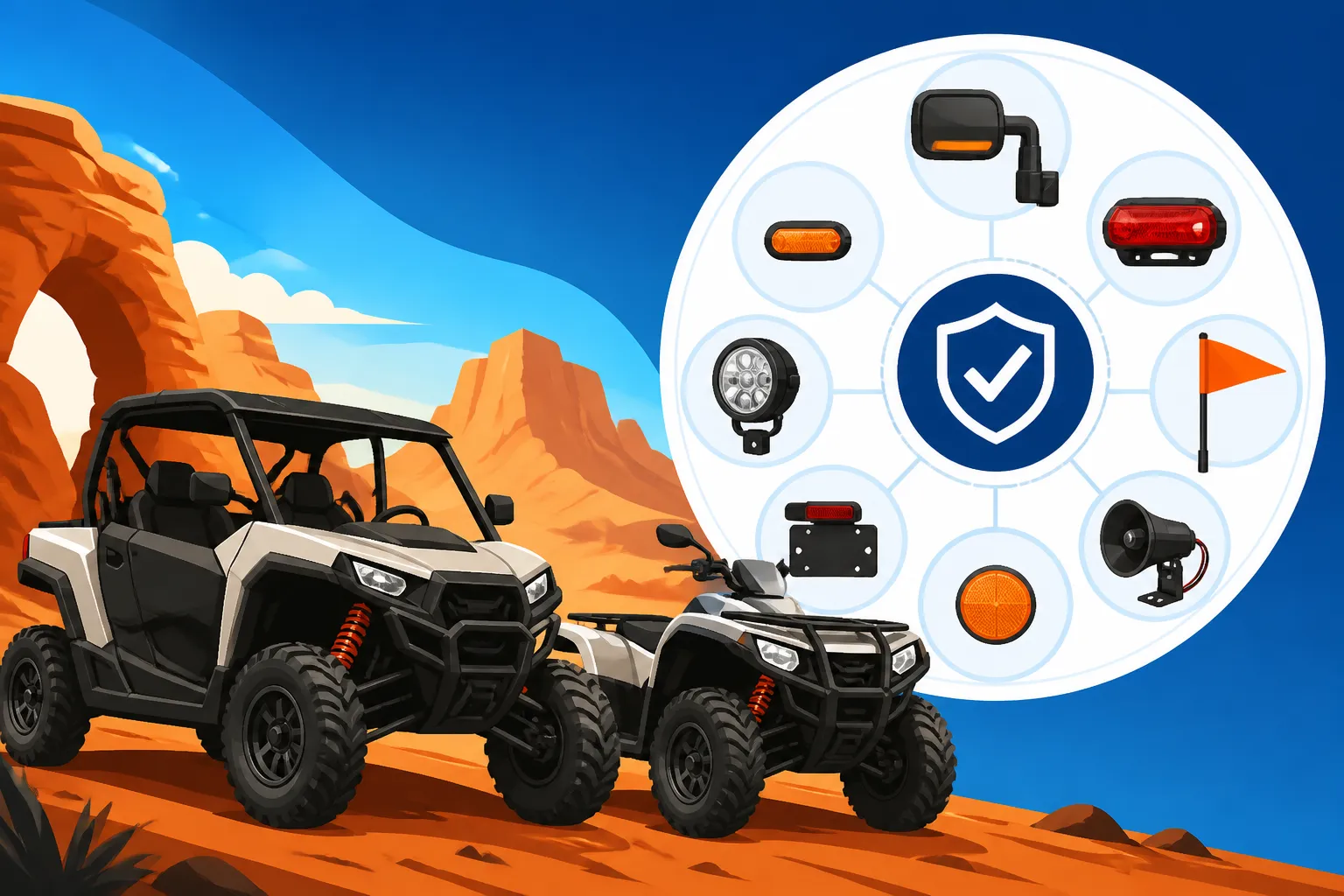
When you first start looking at street-legal kits for your side-by-side or quad, you’ll notice they generally bundle the essential items that most off-highway vehicles lack right out of the factory. These are the non-negotiables that Utah law mandates for any OHV venturing onto public asphalt. Think of these as the fundamental building blocks that bring your trail machine up to road-going standards, much like how you’d add safety gear to your riding ensemble.
Turn Signals and Wiring Harness
One of the most immediate visual differences you’ll see between a trail-only machine and a street-legal one is the presence of turn signals. Most ATVs and UTVs don't come with them, as they're not needed for off-road use. A street-legal kit will always include a set of amber-colored LED turn signals – typically two for the front and two for the rear – designed to be easily visible to other drivers. These aren't just decorative; they're vital for indicating your intentions on the road, preventing confusion and potential accidents, especially when merging or changing lanes on busier streets.
Accompanying these lights will be a comprehensive wiring harness specifically designed for your machine, or a universal one that can be adapted. This harness connects the turn signals to a control switch, usually a rocker switch or a small lever mounted on the steering column, allowing you to activate them with ease. The quality of this wiring and the simplicity of its connection can vary between kits, with some providing plug-and-play solutions for popular models, while others require more intricate splicing into your machine's existing electrical system. It's the circulatory system that brings your signals to life, ensuring your directions are clearly communicated.
Many riders turn to reputable brands like SuperATV for their comprehensive street-legal kits, which often feature robust wiring harnesses that are either machine-specific or offer adaptable universal designs. This can save a lot of headaches during installation, especially for those who aren't electrical wizards. The goal is to have a reliable system that works every time you hit that switch, whether you’re making a turn off Main Street in Kanab or navigating a busy intersection in Hurricane before heading to Sand Mountain.
Horn and Its Placement
Imagine trying to warn a distracted driver in a car that you're there, but all you have is your voice. That's why a horn is absolutely critical for street legality. Utah law requires a horn that can be heard from at least 200 feet away, ensuring you can grab attention when necessary. Street-legal kits include a compact, typically electric horn, along with a button for activation. This button is usually designed to be mounted within easy reach on your handlebars or dash, allowing for quick access in an emergency or when needing to signal a passing driver.
The type of horn can range from a simple, high-pitched "beep-beep" to something a bit more robust, though they're all designed to meet the legal sound requirements. Installing the horn often involves finding a suitable, protected location on your machine where it won't be exposed to too much mud or water, yet its sound won't be muffled. This seemingly small component plays a huge role in your safety on public roads, giving you an auditory presence in addition to your visual one.
Finding a good mounting spot for the horn and integrating its wiring into the main harness is usually straightforward. Some kits might offer more aesthetically pleasing options, tucking the horn away discreetly, while others prioritize ease of installation. What matters most is that it works when you need it and clears the necessary sound test during your street-legal inspection.
Rear View Mirrors
Just like any car or truck, your street-legal ATV or UTV needs to provide a clear view of what's behind you. Utah law specifically requires two rear-view mirrors for street-legal machines. A standard kit will include a pair of side mirrors that clamp onto your roll cage or handlebars, providing that essential visibility. These aren't your tiny off-road mirrors meant to break away easily; they're generally larger and more robust, designed to offer a stable, wide view of the road behind you.
These mirrors are crucial for safe lane changes, checking for traffic before turns, and simply being aware of your surroundings on multi-use roads. Depending on the kit, the mirrors might be simple round or rectangular designs, or they could be more stylized to match the look of modern UTVs. Some kits might even include an optional center mirror to clip onto your windshield, offering an additional perspective, though two side mirrors are the legal minimum.
When installing, you'll want to ensure the mirrors are positioned correctly to give you the best possible field of vision without obstructing your forward view or being easily knocked out of adjustment. For those planning to ride often between trails and towns, having clear, stable mirrors is just as important as having good headlights for nighttime visibility.
License Plate Mount and Illumination
Once your OHV is registered for street legal use, you'll be issued a standard license plate from the DMV, just like a car. A street-legal kit will include a bracket or mounting plate designed to securely affix this plate to the rear of your machine. This isn't just about holding the plate; it's also about ensuring it’s clearly visible and, crucially, illuminated at night.
The kit will typically come with a small LED light, sometimes integrated into the bracket itself, to shine directly onto your license plate after dark. This ensures that law enforcement and other drivers can easily identify your vehicle's registration number, a basic requirement for any road-going vehicle. The placement of this mount is critical – it needs to be high enough to be seen but not obstruct any existing taillights or signals. It also needs to be sturdy enough to withstand the vibrations and occasional jostling of both trail and road use.
Many kits focus on creating a streamlined look, offering discreet plate mounts that blend into the machine's rear bodywork while still providing ample illumination. This attention to detail is important, as an unlit or improperly mounted plate is an easy way to get pulled over. A good quality mount and light are often features found in comprehensive kits, ensuring compliance with [License Plate Lights and Mounting in Utah].
Beyond the Basics: What Else Might a Kit Offer or Imply?
While the core components of turn signals, horn, mirrors, and license plate illumination are standard, some street-legal kits go a step further, or their existence highlights other essential considerations for full compliance. These additional elements, while not always strictly in every basic kit, are often integral to the spirit of making your OHV truly road-ready and safe. Understanding them helps you piece together the full picture of what it takes.
Windshields and Eye Protection
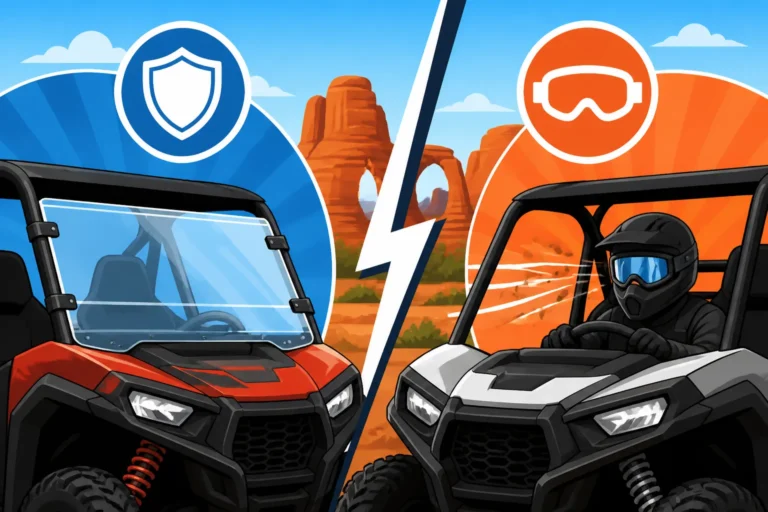
Interestingly, while a windshield provides immense comfort and protection from road debris, it's not always a mandatory component of a street-legal kit itself, nor is it explicitly required by Utah law as the sole form of eye protection. What is required is that all operators and passengers on street-legal OHVs wear eye protection. This can be a full windshield, a half windshield, or simply goggles or safety glasses. Many riders, however, find that a full windshield greatly enhances the road-driving experience by keeping wind, dust, and bugs out of their face.
Because of this, many accessory manufacturers, including those who offer street-legal conversion components, also sell windshields separately that are designed to integrate seamlessly with their kits. Some premium kits might even bundle a half or full windshield, recognizing the practical benefit. When shopping, you might notice different levels of kits, with some offering more extensive wiring harnesses or higher-quality LED components, often found from brands like SuperATV, but the windshield is usually a separate choice. It's a key piece of comfort and safety, even if it's not strictly part of the "street-legal parts" list itself.
Deciding on a windshield style, whether it's a flip-up, a full-fixed, or a low-profile half-windshield, depends heavily on your riding style and the climate you'll be driving in. While not mandated to be in the kit, it’s a wise investment for prolonged road use and contributes significantly to the overall street-legal experience. Remember, even with a windshield, having goggles or glasses on hand for dusty road sections or if the windshield gets too dirty is always a good idea.
Speedometers and Odometers
Modern UTVs and some higher-end ATVs often come with factory-installed digital dashboards that include a speedometer and odometer. For these machines, your street-legal kit won't need to add one. However, if you're outfitting an older quad or a more basic UTV that lacks these instruments, then a speedometer becomes a crucial addition for street legality in Utah. After all, how can you obey posted speed limits if you don't know how fast you're going?
Some comprehensive street-legal kits, or accessory bundles, might include a standalone digital speedometer/odometer. These devices typically use a GPS signal or a wheel sensor to accurately measure your speed and distance traveled. For older machines, this can be a valuable inclusion, saving you the hassle of sourcing and installing one separately. It's not just about compliance; it's about responsible driving.
The installation of a separate speedometer can range from a simple magnetic sensor on a wheel to a more involved GPS antenna setup. It's worth noting that while a kit provides the parts, the installation itself can be a DIY project or require professional help. Many kits, including those from SuperATV, come with detailed instructions, but mechanical aptitude is definitely a plus. Ensuring your machine can accurately track its speed is non-negotiable for road safety and passing inspection. [Speedometers and Night Riding in Utah] covers this in more detail.
Aftermarket Lighting and Reflectors
While your ATV or UTV likely has headlights and taillights from the factory, a street-legal kit might enhance or integrate with these. Some kits include upgraded LED replacement bulbs for your stock headlights, offering brighter and more efficient illumination for night driving on roads. More commonly, the turn signal lights provided in a kit might be designed to also function as running lights, staying illuminated continuously to increase your visibility to other drivers, especially at dawn, dusk, or in inclement weather.
Beyond active lighting, some kits might also include passive reflective elements. These are typically adhesive reflectors in amber for the sides and red for the rear, designed to increase your machine's visibility when viewed from angles where your lights might not be as prominent. These small additions are a simple yet effective way to boost safety, particularly on roads with poor lighting or during times of reduced visibility.
The goal here is not just to see the road, but to be seen by other vehicles. The more visible your OHV is, the safer you and your passengers will be. It’s about creating a presence on the road that matches that of other vehicles, helping to prevent collisions and ensuring you can confidently navigate public thoroughfares.
Braking System Upgrades and Parking Brake Integration
A street-legal kit typically doesn't include entirely new braking systems, as your ATV or UTV's factory brakes are usually more than adequate for road use. What a kit might include, or what needs to be considered in conjunction with a kit, is ensuring your parking brake is fully functional and perhaps adding protection for hydraulic lines. Utah requires a working parking brake, and most OHVs have one, but it's essential to verify its condition.
Some very specialized kits might include components that improve the feel or responsiveness of your existing brakes, but for the vast majority of street-legal conversions, the focus is on adding the legally mandated signaling and visibility components. However, it's a good time to inspect your brake pads, fluid, and lines to ensure they are in top condition for the added stresses of road driving. After all, stopping safely on pavement is just as important as on the dirt.
Ensure your machine's stock braking system is well-maintained and fully functional before attempting any street-legal conversion. If your machine is older, or you've been particularly hard on your brakes, you might want to consider routine maintenance or replacement of wear items as part of your overall preparation, even if these parts aren't supplied in the street-legal kit itself.
What a Street-Legal Kit DOESN'T Cover (But You Still Need!)
While a street-legal kit is a fantastic starting point, it's crucial to understand that it’s not a magic bullet that instantly makes your OHV legal for road use. The kit provides the physical components, but there are several other administrative, legal, and mechanical steps you must take to fully comply with Utah's regulations. Overlooking these can lead to frustration, delays, or even fines when you're just trying to enjoy a ride through places like Marysvale or St. George.
State Registration and Inspection
This is perhaps the biggest misconception. A street-legal kit equips your machine, but the government process is entirely separate. Once your turn signals are blinking, your horn is honking, and your mirrors are adjusted, you still need to get your OHV officially inspected and registered with the state. This typically involves taking your machine to a certified inspection station, where a professional will meticulously check that every required component is correctly installed and functioning according to Utah's standards.
Only after passing this inspection can you head to the Utah DMV or Division of Outdoor Recreation office to complete the registration process, pay the necessary fees, and receive your new license plate. Skipping this step, or thinking the kit alone is enough, is a surefire way to get pulled over. [Cost to Make a UTV Street Legal in Utah] involves more than just the price of parts, often including inspection fees and annual registration. Understanding [How to Register an ATV or UTV in Utah] is key.
This step can sometimes be a bit of a bureaucratic maze, especially if you’re unfamiliar with the specific forms and offices involved. It’s why many riders appreciate a clear checklist and understanding what to expect during [Utah's Street-Legal ATV Inspection, Step by Step]. Without this official blessing, your physically equipped machine is still just an off-highway vehicle in the eyes of the law.
Insurance and Driver's License
Just as you wouldn't drive a car without insurance or a valid driver's license, the same rules apply to your street-legal ATV or UTV in Utah. Your machine is now considered a motor vehicle when on public roads, and as such, it must be covered by at least the state minimum liability insurance. This protects you and others in case of an accident. Your existing off-road insurance policy might not cover street use, so it's critical to verify with your provider and potentially upgrade your coverage. [Insurance for a Street-Legal Machine in Utah] is a must-have before hitting any pavement.
Furthermore, you, as the operator, must possess a valid driver's license. This isn't just an OHV education certificate (though that's important for trail riding); it's a standard driver's license that allows you to operate a motor vehicle on public roads. If you're a new rider or have questions about age restrictions, it's vital to review [Driver License Rules on Utah Roads] to ensure you and anyone else operating your street-legal machine are compliant.
These two requirements are fundamental pillars of responsible road use and are often checked during a routine traffic stop. Don't let your excitement about getting your kit installed overshadow these critical legal necessities. They're about protecting yourself, your passengers, and everyone else on the road.
Tires, Mufflers, and Other Compliance Details
While a street-legal kit handles the signaling and visibility, there are other crucial aspects of your machine itself that must meet road-going standards. For instance, your tires must be Department of Transportation (DOT) approved. Many aggressive off-road tires are not DOT-rated, meaning they're not designed or tested for safe use on pavement. Using non-DOT tires can not only result in a failed inspection but also compromise your safety with poor handling and braking characteristics on hard surfaces. Understanding [Tire Rules for Street-Legal Machines] is essential.
Similarly, your muffler must meet specific noise limits. Many aftermarket off-road exhausts are designed for maximum performance and a throaty sound, which can exceed Utah's noise ordinances, especially in quiet trail towns like Moab or Kanab. If your muffler is too loud, it will fail inspection and could lead to citations. You might need to install a quieter, street-legal exhaust system or at least ensure your existing one has a functional spark arrestor and baffling. Read up on [Horns, Mufflers and Utah Noise Limits] to avoid issues.
Finally, less obvious details like fenders and mud flaps are often required to prevent debris from being thrown onto other vehicles. [Mud Flaps and Fenders Utah Expects] are often overlooked but can be a point of inspection failure. It’s about ensuring your vehicle performs safely and respectfully on the road, not just legally. These are the details that separate a truly street-legal machine from one that merely has turn signals.
Understanding Local Ordinances and Routes
Even with a fully equipped, registered, and insured street-legal OHV, your journey isn't entirely free of restrictions. Utah has a progressive stance on street-legal OHVs, but individual cities and counties retain the right to impose certain local ordinances. This means that while you might be able to ride your UTV on most state and county roads, specific city streets, or even entire communities, might have different rules regarding speed limits, times of operation, or even outright prohibitions on certain roads.
For example, while Moab is incredibly OHV-friendly, it still has specific speed limits for OHVs on city streets and a noise ordinance. [City and County OHV Rules Across Utah] can vary significantly, and it’s your responsibility as a rider to know and adhere to them. It's not enough to simply have the plate; you need to understand [Where Street-Legal ATVs Can Drive in Utah] and be aware of any local caveats. Planning your route and checking for specific signage in towns you plan to traverse is always a good idea.
This is where being a responsible rider comes in, doing your homework before you head out. Don't assume that because it's legal in one town, it's legal in all of them. A quick search for the local ordinances of your destination towns can save you from a ticket and ensure a smooth, enjoyable ride.
| Component Type | Typically Included in Kits | Utah Requirement for Street Legal | Notes and Common Exceptions |
|---|---|---|---|
| Turn Signals (front/rear) | Yes | Yes | Amber, visible from front/rear, activated by switch |
| Horn | Yes | Yes | Audible from at least 200 feet |
| Side Mirrors | Yes | Yes (two required) | One on each side, providing clear rear view |
| License Plate Mount & Light | Yes | Yes | Plate clearly visible and illuminated at night |
| Windshield/Eye Protection | Usually not (sold separately) | Yes (eye protection only) | Goggles, glasses, or windshield can suffice |
| Speedometer & Odometer | Less Common (often stock) | Yes | Must accurately display speed and distance |
| DOT-Approved Tires | No | Yes | Required for safe and legal road use |
| Muffler (Noise Compliance) | No | Yes (meet noise limits) | Stock or aftermarket must be within legal decibels |
| Liability Insurance | No | Yes | Required for all motor vehicles on public roads |
| Valid Driver's License | No | Yes | Standard driver's license required for operator |
| Fenders & Mud Flaps | No | Yes (prevent debris throw) | Can be factory, or aftermarket additions |
Disclaimer
This article is for general informational purposes only and does not constitute professional advice. Laws, prices and regulations vary by location and change over time. Consult a qualified professional for guidance on your specific situation.