Street-Legal Kits That Suit Utah’s Rules
It's incredibly frustrating to be out on the trail, enjoying the vast beauty of Utah, only to hit a paved section or a small town and realize your off-highway vehicle (OHV) can't legally go any further. Many riders dream of extending their adventures from dirt to asphalt, seamlessly connecting trails, grabbing groceries, or just riding from their campsite right into town. This guide will walk you through exactly what "street legal" means for your ATV or UTV in Utah and how to navigate the world of street-legal conversion kits to achieve that freedom.
Decoding Utah's Street-Legal Requirements for OHVs
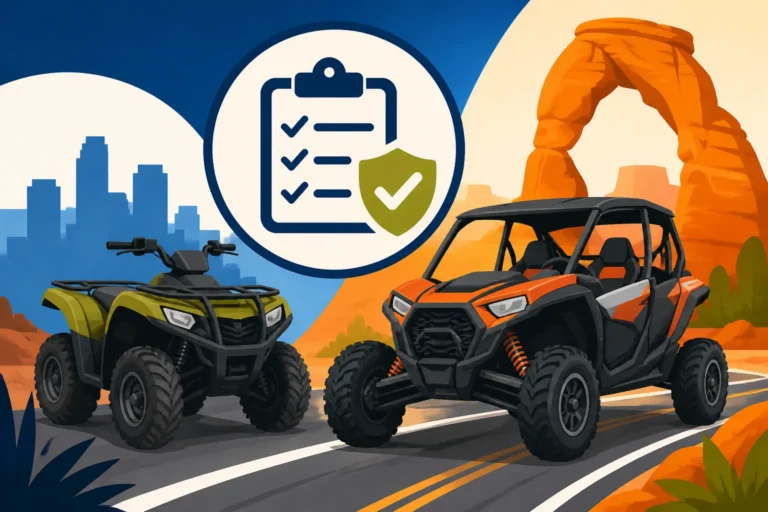
Making your ATV or UTV street legal in Utah isn't just about slapping a license plate on it; it's about meeting a specific set of safety and equipment standards designed to ensure your machine can safely share the road with other traffic. Many riders initially feel overwhelmed by the detailed rules, worried they'll miss something crucial and get a ticket instead of enjoying their ride. The good news is, these requirements are clearly defined, and once you understand them, selecting the right components becomes much easier.
Understanding the Core Legal Framework
Utah has progressive laws that allow OHVs to be made street legal, recognizing the important role they play in both recreation and local economies, especially in trail towns. This isn't a free-for-all, though. The intent is for OHVs to be able to cross or briefly use public roads to access trails, fuel, food, and lodging, not to become primary commuting vehicles. The primary statute governing this allows for properly equipped OHVs to be operated on highways with speed limits 50 mph or less, and prohibits them from interstate highways. This distinction is key: you're getting road access, not unlimited road freedom. Familiarizing yourself with [The Utah Law Behind Street-Legal ATVs] is your first step to feeling confident.
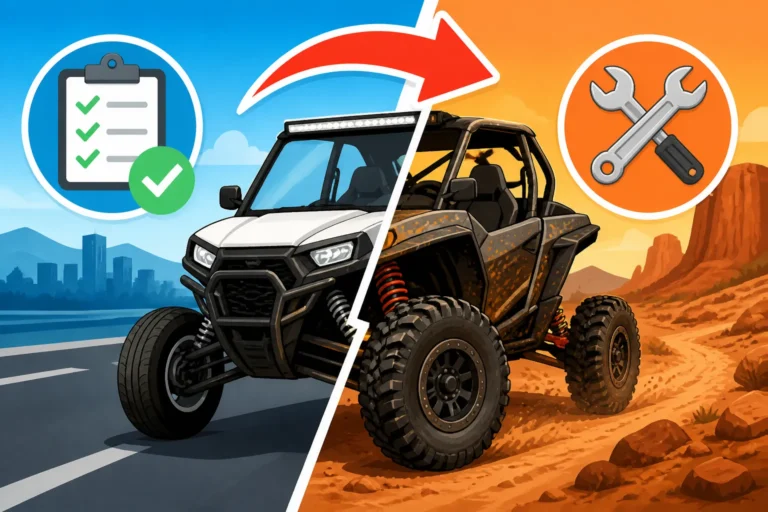
For your machine to qualify, it must pass a safety inspection, which covers everything from brakes to lighting. This isn't just a suggestion; it's a mandatory step before you can even think about getting a license plate. Imagine driving all the way to Moab, excited to ride Main Street, only to find out your machine doesn't pass the initial checks because you overlooked a small detail. It happens more often than you think, and it can really put a damper on your plans. That's why understanding these requirements before you start modifying your rig is so vital.
Key Equipment You'll Absolutely Need
The Utah Department of Motor Vehicles (DMV) and law enforcement agencies have a checklist of items your OHV must possess to be deemed street legal. Think of it like preparing for a big exam; you need to know exactly what topics will be covered. These aren't optional upgrades; they are fundamental safety features.
| Component | Utah Requirement | Typical Kit Inclusion? | Why It's Important |
|---|---|---|---|
| Headlights | At least one, white light, visible from 500 feet. | Yes | Essential for visibility, especially after sunset. |
| Tail Lights | At least one, red light, visible from 500 feet. | Yes | Warns drivers behind you of your presence. |
| Brake Lights | Red light, visible from 100 feet when brakes applied. | Yes | Crucial safety signal when slowing or stopping. |
| Turn Signals | Front (amber) and rear (red or amber), visible from 100 feet. | Yes | Clearly indicates your intentions to other drivers. |
| Horn | Audible from 200 feet, clearly and quickly deployable. | Yes | For warning pedestrians and other vehicles. |
| Mirrors | At least one rear-view mirror allowing 200 feet visibility. | Yes (often two) | Lets you see traffic behind and beside you. |
| Windshield or Eye Protection | Windshield or eye protection (goggles/glasses). | Varies | Protects against debris, wind, and insects. |
| License Plate Light | Illuminates plate with white light, visible from 50 feet. | Yes | Ensures your plate is readable at night. |
| License Plate Mount | Securely mounted, visible. | Yes (bracket) | Proper display of your vehicle's identification. |
| Muffler | Exhaust system must be functional, not excessively loud. | No (typically stock) | Reduces noise pollution and complies with regulations. |
| Brakes | Operable on all wheels, capable of stopping from 20 mph within 25 feet. | No (typically stock) | Fundamental safety for stopping your machine. |
| Tires | DOT-compliant, appropriate for highway use. | No | Crucial for safe handling and traction on pavement. |
Looking at this list, you can see that a street-legal kit is primarily designed to add the signaling and visibility components your OHV lacks for road use. Items like brakes and mufflers are generally assumed to be stock and in good working order, and tires are a separate purchase. For a deep dive into each of these, check out [Utah Street-Legal ATV Equipment Requirements].
Essential Components of a Street-Legal Kit
So, you've decided to make the leap and get your OHV street legal. That's fantastic! The next step is understanding what actually comes in a "street-legal kit." These kits are designed to bundle most of the necessary electrical components into one package, saving you the headache of sourcing each part individually and trying to make them all work together. They're a real sanity-saver for many riders, especially those who aren't electrical wizards.
Turn Signal Systems: The Heart of the Kit
Without a doubt, the turn signal system is the most significant addition a street-legal kit provides. Our ATVs and UTVs aren't typically equipped with factory turn signals because they're designed for off-road use where hand signals (if any) or simply following the leader suffice. On public roads, however, clear communication of your intentions is paramount for safety.
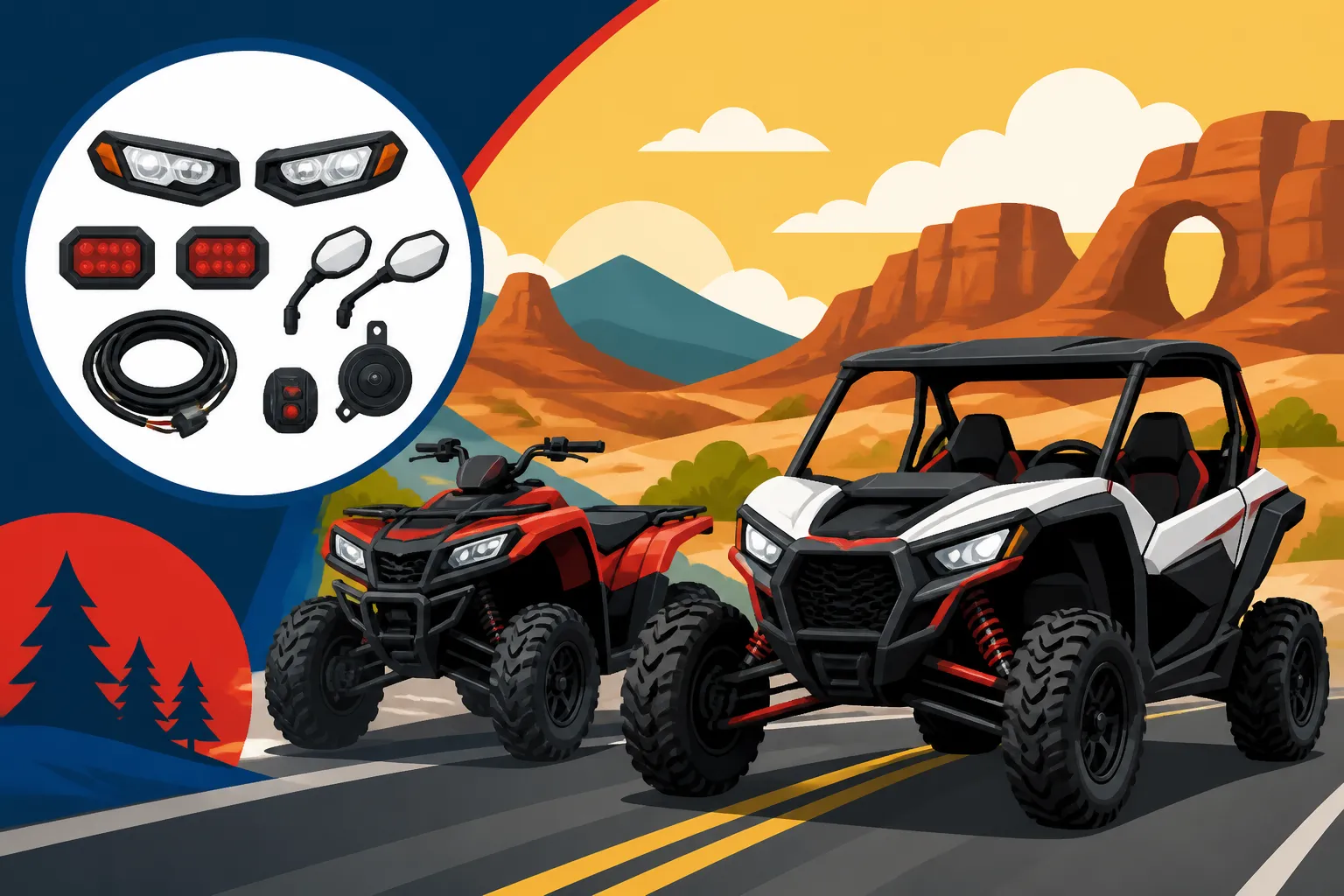
A good street-legal kit will include all the necessary components for a comprehensive turn signal setup. This means amber lights for the front, red or amber lights for the rear, a wiring harness designed to integrate into your OHV's existing electrical system, and a switch—often a column-mounted lever or a dash-mounted rocker switch—that's easy to reach and operate. Some kits, like those offered by SuperATV, come with plug-and-play wiring that makes the installation significantly less intimidating than trying to splice wires from scratch. The frustration of trying to figure out which wire goes where is real, and these pre-made harnesses really help. You'll want to ensure the lights are bright enough to be clearly visible in daylight, which is something you should confirm before settling on a kit. If you're a hands-on type, learning about [Installing Turn Signals on a Polaris RZR] can give you a head start.
Lighting Upgrades Beyond Signals
While turn signals are the star, kits often include or facilitate other lighting requirements. This typically covers brake lights and a license plate light. Most modern UTVs already have tail lights that can double as brake lights with the addition of a pressure switch on the brake line or a toggle switch, but an integrated kit makes this connection seamless.
The license plate light is a small but critical detail that many riders overlook until inspection day. It's a tiny white light that illuminates your license plate, making it readable in the dark. Kits usually provide a small LED light and a bracket that attaches to your rear fender or frame, positioned perfectly to light up the plate without being overly bright or intrusive. This might seem like a minor component, but neglecting it can lead to a failed inspection and delays in getting your plate. It's truly those small, easy-to-miss details that can hold you up, so appreciate it when a kit bundles them in. You can also explore [License Plate Lights and Mounting in Utah] for more ideas.
Horn and Mirrors: Your Eyes and Voice
A horn and mirrors might seem like basic additions, but they are absolutely essential for road safety and are always included in a complete street-legal kit. Your OHV might have a tiny "beep-beep" horn, but for street-legal status, it needs to be an actual horn, audible enough to warn other drivers or pedestrians from a distance.
Kits typically include a compact, yet sufficiently loud, horn and all the necessary wiring to connect it to a dash-mounted push-button switch. It's surprisingly satisfying to finally have a proper horn on your side-by-side! As for mirrors, most kits provide a set of side mirrors that clamp onto your roll cage. These are crucial for seeing traffic behind you, allowing you to change lanes or make turns safely. You need to be able to see at least 200 feet behind you, which means one well-placed mirror is the minimum, but two side mirrors offer much better visibility. Choosing [Mirrors Utah Requires on Both Sides] ensures you're ready for anything on the road.
Choosing the Right Street-Legal Kit for Your OHV
Once you understand what's needed, the next challenge is picking the right kit. This isn't a one-size-fits-all situation. The best kit for your buddy's RZR might not be the best for your Ranger or even a different year RZR. It really comes down to your specific machine, your budget, and how comfortable you are with installation. Don't fall into the trap of buying the cheapest option without checking compatibility; that's a surefire way to create more headaches than it solves.
Vehicle-Specific Kits vs. Universal Solutions
The market offers both vehicle-specific and universal street-legal kits. Vehicle-specific kits are designed to fit your exact make, model, and year, often featuring plug-and-play wiring harnesses that connect directly to your OHV's factory electrical system without requiring extensive cutting or splicing. This makes installation significantly easier and quicker, reducing the chance of wiring errors. Companies like SuperATV excel in offering a wide range of model-specific kits for popular machines like Polaris RZRs, Can-Am Mavericks, and Honda Talons. While they might be a bit pricier, the time and frustration saved can be well worth the investment, especially if you're not an experienced mechanic.
Universal kits, on the other hand, are designed to be adaptable to a broader range of vehicles. They typically require more custom wiring and mounting, as you'll need to splice into your OHV's power source and find suitable locations for all the components. These kits can be more budget-friendly, but they demand a higher level of DIY skill and patience. If you're comfortable with electrical work and enjoy a challenge, a universal kit can be a viable option. However, if the thought of running wires and figuring out relays makes you break into a sweat, investing in a vehicle-specific kit will be a much smoother experience.
Budgeting and Feature Considerations
When planning your budget for a street-legal conversion, remember that the kit itself is just one part of the total [Cost to Make a UTV Street Legal in Utah]. You also need to factor in potential costs for professional installation (if you're not doing it yourself), new DOT-approved tires if yours aren't compliant, a windshield if you don't have one and prefer it over goggles, and the inspection and registration fees. It's easy to get excited about the kit price and forget the bigger picture.
Beyond the basic requirements, some kits offer additional features that might be worth considering. For example, some turn signal switches include a built-in horn button, streamlining your controls. Others might come with LED lights that are brighter and more durable than standard incandescent bulbs. Think about how you'll be using your OHV on the road. If you anticipate a lot of night riding, investing in brighter, more robust lighting components might be a smart move. If you're mostly doing short hops in daylight, a more basic, compliant kit might suffice. It's all about balancing your needs with your budget and not overspending on features you won't use.
Installation and Inspection: Getting Your OHV Road-Ready
Once you've got your kit in hand, the real work (or the wait for the professional installer) begins. Installing a street-legal kit is generally a manageable DIY project for someone with basic mechanical skills, but it does require attention to detail, especially with the wiring. After installation, the final hurdle is the mandatory safety inspection, which is where many riders get tripped up if they haven't done their homework.
The Installation Process: DIY or Pro?
Deciding whether to install the kit yourself or hire a professional is a crucial choice. If you're comfortable with tools, reading diagrams, and working with electrical systems, a DIY installation can save you a significant amount of money. Most vehicle-specific kits come with detailed instructions and, as mentioned, often feature plug-and-play connectors that simplify the wiring. It can be a rewarding experience to transform your off-roader into a street-legal machine with your own hands. Remember to take your time, double-check all connections, and use proper wiring techniques to avoid future electrical issues.
However, if you're not confident in your mechanical or electrical skills, or if you simply don't have the time, professional installation is a wise investment. Many OHV dealerships, accessory shops, and even some auto shops specializing in aftermarket installations can handle the job. While it adds to the overall cost, you gain peace of mind knowing the job is done correctly and safely. A professional installer will also be familiar with Utah's specific requirements, potentially catching any overlooked details that could cause you to fail inspection. It's often worth getting a few quotes and asking about their experience with street-legal conversions for OHVs.
Passing the Utah Safety Inspection
After installation, your OHV must undergo a state-mandated safety inspection. This is where the rubber meets the road, so to speak. An authorized inspection station will thoroughly check all the newly installed components, as well as existing safety features like brakes, tires, and horn, to ensure they meet Utah's standards. This inspection is not just a formality; it's a critical step to ensure your OHV is safe for road use. Many riders feel a knot in their stomach leading up to this, fearing they've missed something.
Common reasons for failing an inspection include non-functional turn signals, brake lights that don't illuminate, a horn that's not loud enough, or mirrors that don't provide adequate rear visibility. Even something as simple as a burned-out license plate light can cause a fail. The inspector will provide a detailed report if your OHV doesn't pass, outlining exactly what needs to be fixed. Don't get discouraged if you fail the first time; it's a chance to correct any deficiencies and ensure your machine is truly safe. Once your OHV passes, you'll receive an inspection certificate, which is then used to register your machine with the DMV and get your street-legal license plate. For a comprehensive overview of what to expect, read [Utah's Street-Legal ATV Inspection, Step by Step].
Beyond the Kit: Additional Considerations for Street-Legal Riding
Getting the kit installed and passing inspection is a huge milestone, but your journey to fully street-legal OHV enjoyment isn't quite over. There are a few more critical aspects to consider, from ongoing maintenance to understanding where you can actually ride your newly legalized machine. Skipping these steps can quickly turn your excitement into frustration, or even a hefty fine.
Insurance, Registration, and Licensing
Once your OHV passes inspection, you'll need to complete the registration process with the Utah DMV. This involves submitting your inspection certificate, proof of ownership, and paying the necessary fees. You'll then receive your street-legal license plate, which must be securely mounted and illuminated by your license plate light. This plate is your golden ticket to riding on designated public roads.
Another vital consideration is insurance. While regular OHV registration often doesn't mandate insurance for off-road use, making your machine street legal means it will be operating on public roads, and therefore, it typically falls under different insurance requirements. You'll likely need to add liability insurance, at a minimum, to cover any potential accidents involving other vehicles or property. It's always best to check with your insurance provider to understand the specific coverage you need for a street-legal OHV. Don't assume your existing auto or off-road policy automatically covers road use; often, it doesn't. You can learn more about [Insurance for a Street-Legal Machine in Utah]. Lastly, remember that operating a street-legal OHV on public roads still requires a valid driver's license, just like any other vehicle.
Understanding Where You Can Ride (and Where You Can't)
Having a street-legal OHV opens up incredible new possibilities for exploring Utah, but it's crucial to understand the limitations. Utah law generally permits street-legal OHVs on public roads with a posted speed limit of 50 mph or less. This means you can cruise through many small towns like Moab, Kanab, or Marysvale, access gas stations, restaurants, and seamlessly connect between trail systems. This freedom is one of the biggest draws of a street-legal conversion. You can literally ride from your motel to the trailhead, or even head to the grocery store after a long day of riding.
However, interstates and other high-speed freeways are typically off-limits. Additionally, individual cities or counties may have their own ordinances, such as specific hours of operation or noise limits. Always check local regulations for the areas you plan to visit. For instance, Moab has specific rules about noise and speed within city limits. Don't let your excitement overshadow the need to be a responsible rider. Respecting these rules ensures that OHV street-legal access continues to be supported by local communities. A great resource to check is [Where Street-Legal ATVs Can Drive in Utah] to prevent any misunderstandings.
Maintenance and Longevity of Your Street-Legal Conversion
Congratulations, your OHV is officially street legal and ready to conquer both dirt and asphalt! But the journey doesn't end after the first exhilarating road ride. Just like any other vehicle, maintaining your street-legal components is crucial for their longevity and your continued safety and compliance. Neglecting these aspects can lead to failed re-inspections or, worse, safety issues on the road.
Keeping Your Components in Top Shape
The electrical components added by your street-legal kit are exposed to the same harsh conditions as the rest of your OHV – dust, mud, water, and vibrations. Regularly inspect all wiring connections for corrosion or damage. Check that all lights are working, including your turn signals, brake lights, and license plate light. If you notice a flickering light or a horn that's losing its oomph, address it immediately. Loose connections are a common culprit and can often be fixed with a simple tighten or a bit of dielectric grease to prevent moisture ingress.
Your mirrors are also prone to damage from trail debris or vibrations. Ensure they are securely mounted and provide clear visibility. A cracked or missing mirror isn't just an inconvenience; it can lead to a failed inspection and compromise your safety on the road. Also, remember that your tires, while not part of the kit, are a critical component for street legality. DOT-approved tires for road use typically have a different tread pattern and compound than pure off-road tires. Monitor their wear, especially if you're putting more miles on pavement. [Tire Rules for Street-Legal Machines] provides detailed information on what to look for.
Seasonal Checks and Re-Inspection Requirements
Utah requires periodic safety re-inspections for street-legal OHVs, typically every year or every two years, depending on the specific age of your machine. Treat this like an annual check-up for your OHV. Before you head to the inspection station, perform a thorough self-check. Go through the entire list of requirements: do your headlights, tail lights, brake lights, turn signals, horn, and license plate light all work? Are your mirrors intact and functional? Are your tires in good condition? This proactive approach can save you a failed inspection and the hassle of a return trip.
Seasonal changes can also impact your components. Winter weather in Utah brings moisture and road salt, which can accelerate corrosion on electrical connections. Summer heat and prolonged sun exposure can degrade plastic components and wiring insulation. Making these checks a routine part of your OHV maintenance schedule, perhaps with your oil changes or before major trips, will help ensure your street-legal setup remains reliable and compliant. This diligence ensures you can enjoy the freedom of riding on Utah's roads without unexpected issues or penalties.
Disclaimer
This article is for general informational purposes only and does not constitute professional advice. Laws, prices and regulations vary by location and change over time. Consult a qualified professional for guidance on your specific situation.