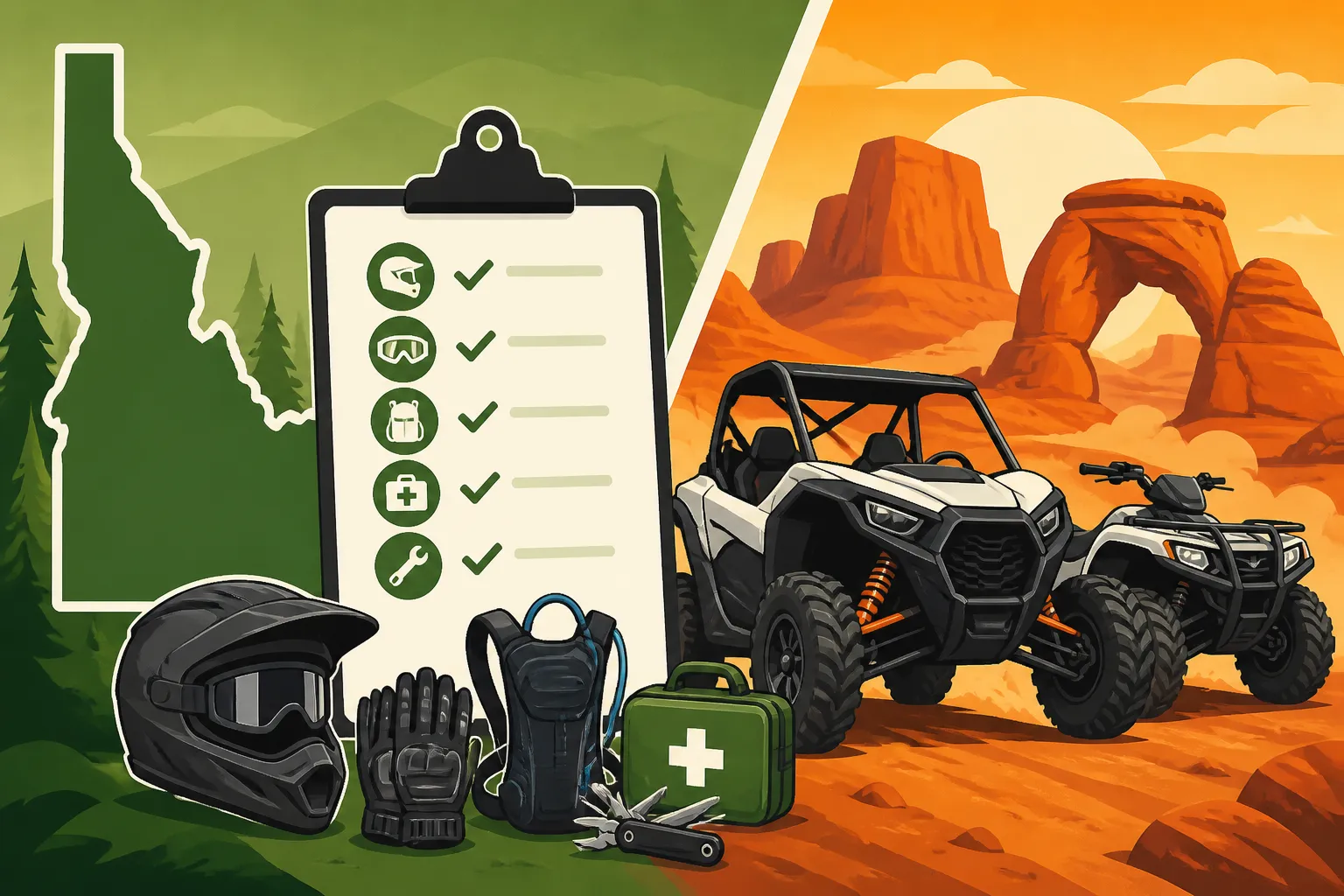
What Idaho Riders Need Before Crossing
Idaho riders can’t assume an Idaho OHV registration or sticker is all they need in Utah. Before crossing the state line, check whether each machine needs a Utah nonresident permit, whether its operator meets Utah’s education rules, and whether the planned route is open to that vehicle. Sorting these out before departure helps avoid a trailhead delay or an expensive mistake.
Check whether each machine needs a Utah permit
Utah ended OHV reciprocity with other states, so an Idaho registration should not be treated as a substitute for Utah’s nonresident OHV permit. For many visitors bringing an off-highway vehicle to ride public land, the permit is a separate requirement. It applies to the machine, not just the person towing or driving it.
The first step is to identify how each vehicle is registered and where you plan to ride. A quad, dirt bike, or off-highway UTV registered in Idaho may need the Utah permit even if its Idaho registration is current. If you are bringing several machines, check them one by one rather than assuming one permit covers the group. For a detailed overview, see Who Needs a Utah Non-Resident OHV Permit and Utah Ended OHV Reciprocity: What Visitors Do Now.
A permit is also different from a recreation-area entry fee. The permit addresses the machine’s eligibility to operate under Utah’s nonresident OHV rules; a state park or other managed riding area may charge a separate entrance or day-use fee. Check both requirements for your destination. Utah Permit Versus State Park Entry Fee explains why having one does not necessarily cover the other.
| What you are checking | What to confirm before leaving Idaho |
|---|---|
| Idaho registration | Whether it is current and applies to the vehicle you are bringing |
| Utah nonresident permit | Whether each machine needs one and how Utah requires it to be carried or displayed |
| Operator education | Whether the rider must have a Utah OHV education certificate or an accepted equivalent |
| Riding area | Whether the route is open to your type of vehicle and what local fees or rules apply |
| Street-legal status | Whether the vehicle’s registration and equipment qualify for the roads you intend to use |
Buy or arrange the permit through Utah’s official process, and follow the current instructions for proof or display. Keep any required documentation accessible while riding. A payment confirmation, email, or phone screenshot may not meet every display or proof requirement, so check what Utah specifies rather than guessing. Buying the Non-Resident Permit Online covers the purchase process, while Carrying Your Certificate and Permit on the Trail focuses on what to have with you.
Do not rely on an old forum post, a previous year’s permit, or a friend’s experience as the final word. Rules and procedures can change. Before travel, confirm the current requirements with the official Utah OHV information and permit pages, especially if you are riding in a managed area or attending an organized event.
Identify the vehicle and its registration status
“ATV,” “UTV,” and “OHV” are often used loosely in conversation, but the vehicle’s legal classification matters. Look at the registration documents and vehicle type, not just the machine’s appearance or the name used in an online listing. If you are unsure which category Utah uses for your machine, check Which Machines Utah Registers as Off-Highway Vehicles.
An Idaho plate or registration document alone does not establish that a machine is street legal in Utah. Conversely, a machine properly registered as street legal may be treated differently from an off-highway-only vehicle for permit purposes and for the roads it may use. Do not assume that a plate automatically permits trail access, or that a Utah OHV permit makes an off-highway machine legal on public roads. Review Street-Legal Vehicles and the Permit Question and confirm how Utah treats your specific registration.
Keep the paperwork for each machine together. Useful documents may include current registration, proof of ownership, permit information, and any paperwork that establishes street-legal status. If the vehicle was recently bought, borrowed, or registered in someone else’s name, resolve questions about ownership and permission before the trip. A mismatch between the machine’s identification details and its documents can complicate a permit check or an interaction with an officer.
Take a moment to confirm the vehicle identification number on the machine matches its paperwork. If a plate is missing, damaged, or difficult to read, address that before arriving at a remote trailhead. Do not alter or replace identification markings yourself. If something does not match, contact the relevant agency or seller before riding.
The question of whether a machine is exempt from a nonresident permit can be especially confusing for an Idaho vehicle that has a plate. Exemptions are specific; they are not a general permission to ride anywhere without checking. Review Machines Exempt From the Utah Permit and Idaho Stickers and Utah Machines. If your situation does not fit a clear example, ask the appropriate Utah office before travel and keep a record of the answer.
Check operator education and route rules separately
A Utah permit and an OHV education certificate address different requirements. The permit relates to the machine’s use in Utah; education rules relate to the person operating it. Having one does not automatically satisfy the other.
Utah’s operator education requirements can depend on the rider’s age and circumstances. Do not assume an Idaho driver license, prior riding experience, or a course taken in another state is automatically enough. Check The Utah OHV Education Certificate and Certificates From Other States Utah Accepts to see what applies to each rider. If a rider needs a certificate, sort that out before the trip rather than counting on being able to complete a course at the trailhead.
This matters when a family brings multiple riders. A child or teenager may have different requirements from an adult, and passengers may be subject to rules that differ from those for operators. Confirm who will be driving each machine and what each person needs to carry. A permit bought for a vehicle does not replace a rider’s required certificate.
Route access is another separate check. A Utah permit does not make every road or trail open to every kind of OHV. Routes can have vehicle-width limits, seasonal closures, land-management restrictions, or rules that exclude certain machines. Private land crossings may also require permission. Check current maps and notices for the specific riding area, and do not use a route simply because it appears on a general navigation app. Does a Utah Permit Cover Federal Land? is a useful reminder that permits do not override land manager rules.
If your route crosses between public lands or passes through a town, check the rules for each segment. A trail may allow OHVs while a connecting public road does not. A street-legal vehicle may have more road options, but its status does not mean every trail is open. For road use, confirm that the vehicle qualifies and that the route allows it; for off-highway use, confirm the trail’s restrictions and the required permit.
Before setting out, check for closures and current conditions. Snow, mud, fire restrictions, construction, or resource protection measures may affect access. Carry an offline map if service may be unreliable, and make sure everyone in the group knows the route and turnaround plan.
Prepare a simple pre-trip checklist
Use this sequence for each trip, especially if you are bringing more than one machine or riders with different experience levels.
- List every machine. Record its type, registration status, and whether it is off-highway-only or street legal. Do not group different vehicles together just because they travel on the same trailer.
- Check Utah’s permit requirement for each machine. Confirm whether a nonresident permit is required, how to buy it, and what proof Utah expects you to carry or display.
- Check every operator’s education status. Verify whether Utah requires a certificate and whether the rider’s Idaho or other out-of-state credential is accepted.
- Review the route and destination rules. Look for vehicle restrictions, closures, land-manager requirements, and any separate entrance or day-use fees.
- Gather the documents. Keep registration, permit proof, education certificates, and any relevant ownership or authorization paperwork accessible.
- Inspect the machine. Confirm that its identification number is legible, the required equipment works, and the vehicle is appropriate for the planned terrain.
- Recheck shortly before departure. Confirm current permit instructions, trail conditions, and access notices rather than relying on details from an earlier trip.
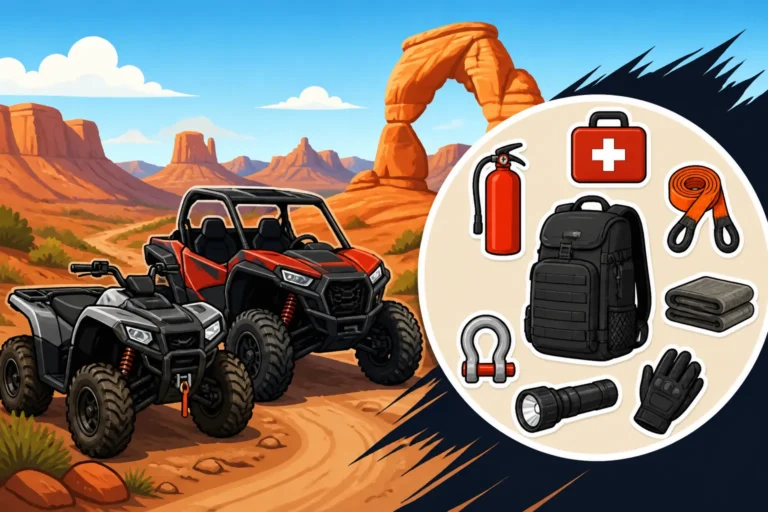
If you are unsure about an exemption, a course equivalency, or a street-legal classification, pause and ask before riding. It is easier to resolve an eligibility question at home than at a remote staging area. For broader planning, Visiting Utah With an Out-of-State Machine brings together other visitor considerations, while What Utah Riders Must Carry on Public Land can help with general preparation.
Amazon may be useful for ordinary trip supplies such as a paper map case or basic maintenance items, but buying gear does not satisfy registration, permit, education, or access rules. Handle the official requirements through the relevant agencies and land managers.
The main point is straightforward: an Idaho registration is not a universal pass for Utah trails. Check the permit, operator education, vehicle status, and route rules independently for every trip. That quick review can prevent confusion when you reach the trail and helps keep the ride within the rules that apply to the machine and the land.
Disclaimer
This article is for general informational purposes only and does not constitute professional advice. Laws, prices and regulations vary by location and change over time. Consult a qualified professional for guidance on your specific situation.