Weight Limits for Hauling Two UTVs
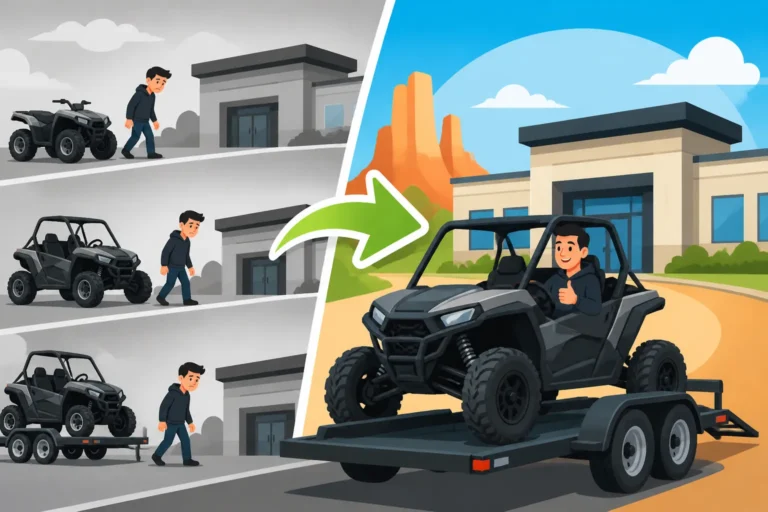
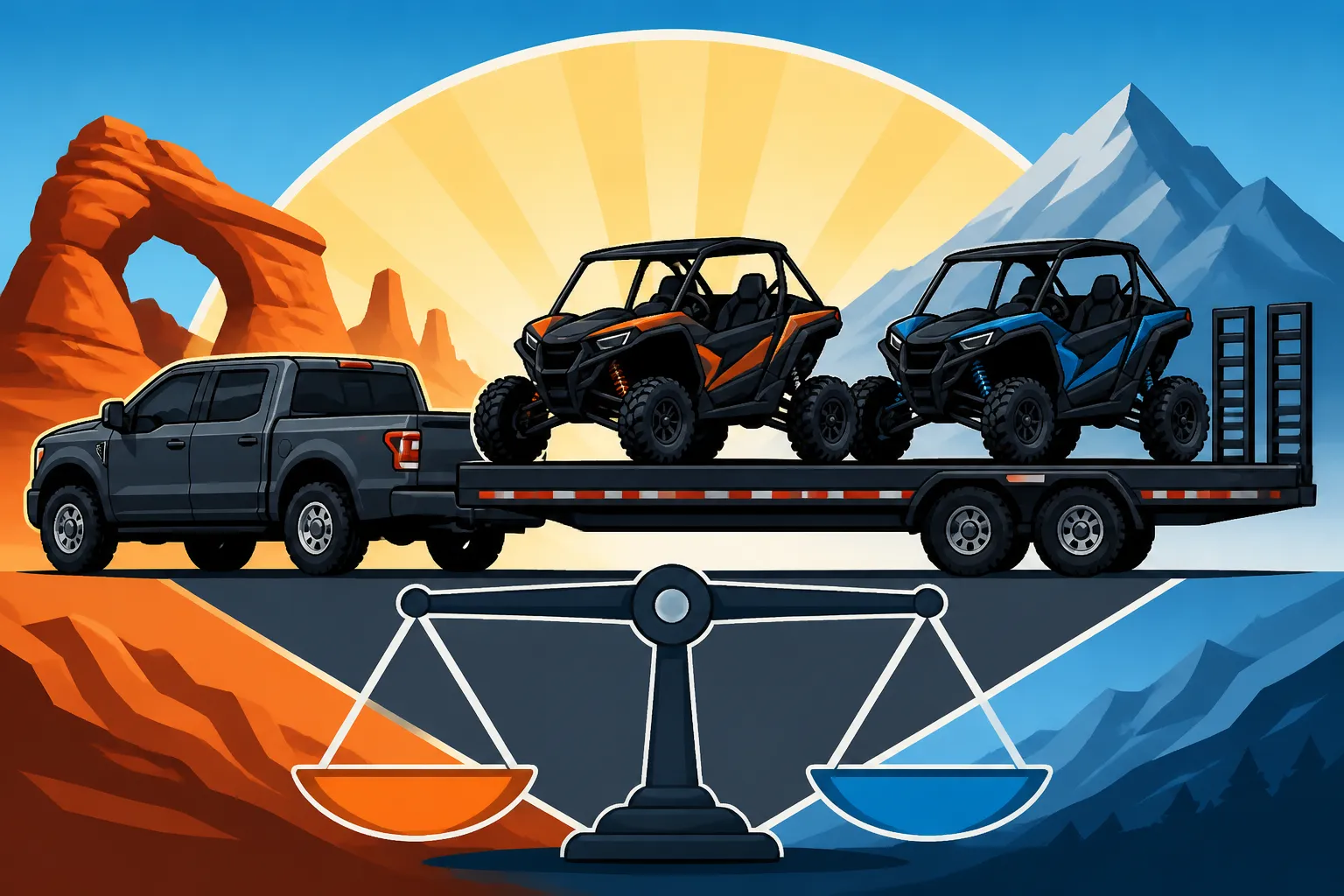
Oh, the dream of loading up two side-by-sides for an epic Utah adventure! It sounds simple enough: back the trailer up, drive two machines on, and hit the road. But anyone who's actually tried to do it knows that the reality can be a tangled mess of numbers, ratings, and a nagging feeling that you might be pushing your luck. You’re not just fitting two UTVs on a piece of metal; you’re managing complex weight dynamics that affect everything from your safety on the highway to your legal standing. This guide is going to meticulously unravel those crucial weight limits and practical considerations you absolutely need to understand for safely hauling two UTVs across Utah's stunning landscapes.
Deciphering the Alphabet Soup: GVWR, GCWR, and GAWR for Your Tow Rig
Let's be honest, trying to understand all the acronyms and numbers stamped on your truck and trailer can feel like reading a foreign language. But these aren't just arbitrary figures; they are critical safety limits that, if ignored, can lead to dangerous situations, hefty fines, and potentially even insurance nightmares. It’s far more than just "Can my truck pull it?" It's "Can my truck safely pull, stop, and control it?"
Your Tow Vehicle's Limits: GVWR and GCWR
First up, let's talk about your trusty tow vehicle – usually a pickup truck or a heavy-duty SUV. You'll often see a "GVWR" (Gross Vehicle Weight Rating) on a sticker, typically inside the driver's side door jamb. This number represents the maximum allowable operating weight of your vehicle, including its own weight, fuel, passengers, cargo, and any tongue weight from a trailer. Exceeding your truck's GVWR can strain its suspension, tires, and frame, making it less stable and harder to control.
Then there’s the "GCWR" (Gross Combined Weight Rating). This is the big one that many people overlook when hauling multiple machines. The GCWR is the maximum allowable weight of the fully loaded tow vehicle and the fully loaded trailer combined. Think of it as the total weight of everything moving down the road. If your truck has a GCWR of 18,000 pounds and your truck alone weighs 7,000 pounds when loaded with family and gear, that leaves 11,000 pounds for your fully loaded trailer. If your two UTVs plus the trailer itself push that total over 11,000 pounds, you’re in violation, regardless of what your truck's individual towing capacity might claim. Pushing past the GCWR severely impacts your vehicle's ability to accelerate, brake effectively, and maintain stability, especially on Utah's mountain passes or during sudden stops. A good reference point for understanding what the authorities might check on the road is [What a Utah Trooper Checks at a Trailhead].
Understanding Your Trailer's Capacities: GAWR and GVWR
Your trailer has its own set of crucial numbers. The "GAWR" (Gross Axle Weight Rating) tells you the maximum weight each individual axle on your trailer can safely support. This is vital for ensuring your load is properly balanced and distributed over the trailer's axles. Uneven loading can put excessive strain on one axle, leading to tire blowouts or structural failure.
Even more important for our discussion of hauling two UTVs is the trailer's "GVWR" (Gross Vehicle Weight Rating). This is the maximum weight the trailer itself can weigh when fully loaded with cargo. So, if your trailer has a GVWR of 10,000 pounds, that means the empty weight of the trailer plus the combined weight of your two UTVs plus any extra gear on the trailer cannot exceed 10,000 pounds. Many trailers designed for a single UTV might have a GVWR of 7,000 pounds or less. While they might physically fit two smaller machines, the trailer's frame, axles, tires, and braking system simply aren't engineered to handle that much weight. Overloading your trailer's GVWR can lead to catastrophic failure on the road, not to mention a significant fine if you're caught. Don't forget, just like your UTV, your trailer needs proper registration. If you're unsure about that process, you can find helpful information in [Trailer Registration Utah ATV Owners Forget].
The Weight of Your UTVs: How Much Do They Really Tip the Scales?
You might know the manufacturer's listed "dry weight" for your UTV, but that number is often just the beginning. When you're talking about hauling, you need to consider the true, ready-to-ride weight, which can be significantly higher. This is where many riders get into trouble, underestimating just how much their machines really weigh.
Estimating Individual UTV Weights
UTV weights vary wildly based on make, model, and year. A compact two-seater like an older Polaris RZR 800 might come in around 1,100 to 1,200 pounds dry. A modern, four-seat, turbo-charged monster like a Can-Am Maverick X3 Max or a Polaris RZR Pro XP 4 could easily be 2,000 to 2,500 pounds dry. That's a huge difference!
But here's the kicker: "dry weight" means without fuel, fluids, or any accessories. Once you add a full tank of gas (a gallon of gas weighs about 6 pounds), engine oil, coolant, a winch, a heavy-duty bumper, a full cage, larger tires, beadlock wheels, a spare tire, a cooler full of ice and drinks, tools, and all your riding gear, you can easily add 100 to 500 pounds (or even more!) to each machine. Suddenly, that 1,800-pound UTV is tipping the scales at 2,300 pounds. It's crucial to factor in these extras. Sometimes it feels like the hidden costs just keep adding up, much like the general expenses discussed in [Hidden Costs After You Buy a Side-by-Side].
Calculating the Combined Load: UTVs + Trailer
Once you have a realistic estimate for each UTV, the math for your combined load is straightforward:
- (UTV 1 weight + all its accessories/fuel/gear) + (UTV 2 weight + all its accessories/fuel/gear) + (Empty trailer weight) = Total Trailer Weight
This "Total Trailer Weight" must be less than or equal to your trailer's GVWR.
However, don't forget about tongue weight. This is the downward force the trailer exerts on your tow vehicle's hitch. Ideally, tongue weight should be 10-15% of the total trailer weight. Too little tongue weight can cause severe trailer sway, making your rig dangerously unstable. Too much can overload your tow vehicle's rear axle and suspension, exceeding its GVWR. Adjusting how your UTVs are loaded on the trailer (often by driving one forward and one backward, or strategically placing them) can help achieve proper tongue weight. Getting this right is a critical part of a safe towing setup. When you're planning for your adventures, thinking about all these details upfront can make your journey smoother, just like having all your documentation ready as outlined in [A First-Time Buyer's OHV Paperwork Checklist in Utah].
Here's a quick table to help visualize how these weights can stack up:
| Component | Typical Weight (Approx.) | Notes |
|---|---|---|
| Mid-Size UTV | 1,200 – 1,800 lbs | Polaris RZR 900, Can-Am Commander (base, fueled, no gear) |
| Full-Size UTV | 1,500 – 2,500 lbs | Polaris RZR Pro XP, Can-Am Maverick X3 (base, fueled, no gear) |
| Utility UTV | 1,500 – 3,000 lbs | Polaris Ranger, Can-Am Defender (base, fueled, no gear) |
| Add-ons Per UTV | 100 – 500 lbs+ | Winch, spare tire, roof, cage, tools, cooler, extra fuel |
| Open Flatbed Trailer (20 ft) | 2,000 – 3,500 lbs | Tandem axle, steel construction, empty weight |
| Enclosed Trailer (20 ft) | 3,500 – 6,000 lbs | Tandem axle, V-nose, with interior cabinets, empty weight |
| Combined UTV Load (2x) | 2,600 – 7,000 lbs+ | Varies wildly based on models and accessories. Ready-to-ride weight. |
| Total Trailer Load | 4,600 – 13,000 lbs+ | Combined UTVs + Trailer Empty Weight. Must be <= Trailer GVWR. |
| Tow Vehicle GCWR | Varies (e.g., 18,000 lbs) | Max of Truck + Passengers + Gear + Trailer + UTVs. Crucial limit! |
Practical Strategies for Safe Hauling
Once you understand the numbers, it's time to put that knowledge into action. Safely hauling two UTVs is about more than just having a big enough truck; it’s about choosing the right equipment, loading it correctly, and performing diligent checks before and during your journey. Cutting corners here isn't just risky for your gear, it's risky for everyone on the road.
Choosing the Right Trailer for Two UTVs
This is perhaps the most critical decision after selecting your tow vehicle. For two UTVs, especially full-size side-by-sides, an open flatbed trailer with a tandem or even triple axle is usually the minimum requirement.
- Axles: A tandem-axle trailer (two axles) distributes weight better than a single-axle, offering more stability and carrying capacity. For heavier UTVs or very long trailers, a triple-axle might be necessary to meet the required GVWR and ensure proper weight distribution.
- Deck Length and Width: UTVs are wide! Measure your machines, especially if they have aftermarket wider A-arms or tires, and ensure your trailer's usable deck width (inside fender to inside fender) is adequate. You'll likely need at least a 102-inch wide trailer for two side-by-sides side-by-side, or a longer trailer to place them front-to-back or at an angle. For length, measure your longest UTV and add plenty of buffer for the second machine and maneuvering space. A 20-foot deck is often a good starting point for two full-size UTVs.
- Ramps and Tie-Downs: Ensure your trailer has sturdy, appropriately rated ramps for the weight of your machines. Don't skimp on tie-downs either. You'll want heavy-duty ratchet straps with a sufficient working load limit for each machine, secured at multiple points to the frame of the UTV and the structural points of the trailer.
Loading and Balancing for Stability
Proper loading is an art and a science. The goal is to achieve the correct tongue weight (10-15% of the total trailer weight) and balance the load side-to-side.
- Tongue Weight: If you have two UTVs, you might need to load one forward and one backward, or stagger them, to shift weight and achieve that ideal tongue weight. Too much weight forward (excessive tongue weight) will overload your truck's rear axle. Too little (negative tongue weight) will cause dangerous trailer sway.
- Side-to-Side Balance: Try to keep the weight evenly distributed from left to right. This often means placing your UTVs as close to the center line of the trailer as possible.
- Securing the Load: Each UTV needs at least four strong tie-down points—one near each wheel or corner of the frame. Ensure the straps are tight and routed to avoid rubbing against tires or other moving parts. Give the machines a good shake after strapping to confirm they're secure. You'd be surprised how often a quick roadside check reveals a loose strap after the first few miles.
Pre-Trip Checks and Ongoing Monitoring
Before you even pull out of the driveway, and especially after the first 10-15 miles of driving, perform a thorough check:
- Tire Pressure: Check the tire pressure on both your tow vehicle and the trailer. Trailer tires often require higher pressures than car tires. Under-inflated tires are a leading cause of trailer sway and blowouts.
- Lights and Brakes: Test all trailer lights (running, brake, turn signals). Ensure your trailer brakes are working correctly and adjusted. If your trailer has electric brakes, confirm your brake controller in the tow vehicle is functioning and set appropriately.
- Straps: Double-check every tie-down strap. The initial bumps and turns on the road can cause them to settle and loosen.
- Overall Stability: Pay attention to how the rig feels. Is it swaying? Is it sluggish? Does it feel unbalanced? If something feels off, pull over safely and investigate. Being prepared and vigilant can prevent major issues. Just as you'd prepare for a trip to the DMV as described in [Preparing for a Utah DMV Visit With an ATV], you should prepare your towing setup. Remember, carrying essential documents, like those listed in [Documents to Bring to the Utah DMV for an ATV], applies to your vehicles and trailer too.
Legalities, Penalties, and the "What If" Scenarios
Ignoring weight limits isn't just a matter of performance or convenience; it has serious legal and financial consequences. In Utah, like everywhere else, there are laws governing vehicle weights, and breaking them can lead to significant headaches and dangers.
The Law on Overloading in Utah
Utah, like other states, has specific laws regarding vehicle and trailer weights. Exceeding your tow vehicle's GVWR or GCWR, or your trailer's GVWR, can result in fines. These aren't usually small traffic tickets; they can be substantial, especially if your setup is significantly overweight. Law enforcement, particularly the Utah Highway Patrol or specialized commercial vehicle enforcement units, can pull you over and even force you to offload your machines until you are within legal limits. This is a scenario no one wants to find themselves in on the side of a highway.
For very heavy rigs (often those with a GCWR over 26,000 pounds), a Commercial Driver's License (CDL) endorsement might even be required, even for personal use. While most recreational haulers won't hit this threshold with two UTVs, it's something to be aware of if you're approaching the upper limits of a heavy-duty pickup and a large enclosed trailer. Understanding what constitutes a violation is key to avoiding penalties, much like knowing the implications of issues like [The Fine for an Expired OHV Registration in Utah]. When in doubt about legal documents or understanding regulations, reliable resources like LawDepot can provide helpful templates and information for navigating paperwork, although they don't provide legal advice for specific towing regulations.
Insurance Implications of Overweight Hauling
This is a really scary "what if." Imagine you're in an accident, even if it's not your fault, and your tow rig is found to be significantly overweight. Your insurance company could deny your claim, arguing that you were operating your vehicle unsafely and outside its design parameters. This could leave you on the hook for repairs to your truck, your trailer, your UTVs, and potentially the other party's damages and medical expenses.
Your personal liability would be immense. Ensuring your UTVs are properly insured is always a good idea, as covered in topics like [Insuring a Utah UTV That Never Leaves the Trail], but that doesn't necessarily protect you from the consequences of an overloaded tow vehicle. Always be honest with your insurance provider about what you're hauling, and confirm your policy covers towing and trailers.
Ensuring Proper Documentation and Planning
Beyond the physical setup, having all your paperwork in order is crucial. This means current registration and titles for your tow vehicle, trailer, and both UTVs, along with proof of insurance. Keep these easily accessible, as a roadside stop could require them. If you're buying or selling UTVs, ensuring you have a proper bill of sale is important, and resources like LawDepot can offer customizable bill of sale templates that meet general legal standards, providing a solid record for your transaction, as highlighted in [Bill of Sale Requirements for a Utah ATV Sale].
Finally, plan your route. If you're pushing the limits of your GCWR, consider avoiding routes with extremely steep grades or notoriously rough sections of road that could put extra strain on your equipment. Taking a slightly longer, flatter route might save you a lot of stress and potential trouble in the long run. Thoughtful preparation and having all your ducks in a row can truly make or break your adventure, from the moment you consider the cost of modifications like those discussed in [Cost to Make a UTV Street Legal in Utah] all the way to arriving at your destination.
Disclaimer
This article is for general informational purposes only and does not constitute professional advice. Laws, prices and regulations vary by location and change over time. Consult a qualified professional for guidance on your specific situation.